

The Easiest Way To Ruin A Pie Crust – And How To Prevent It
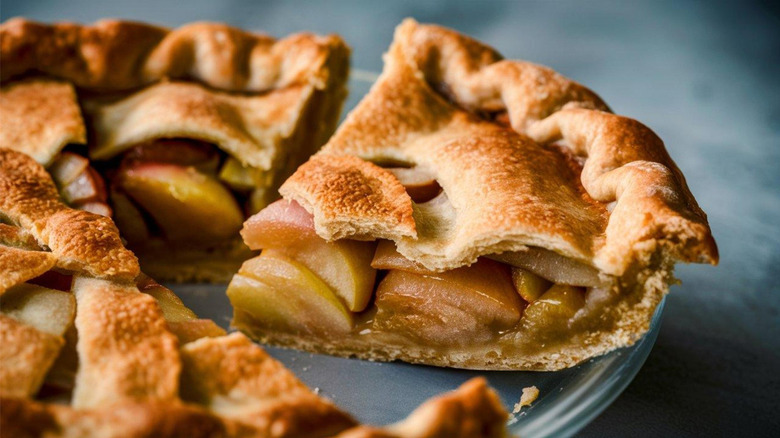
As we approach the final week of November, we are getting into prime pie season. And we've got countless pie recipes to try. While store-bought pie crusts are a helpful shortcut, there's no greater triumph than pulling off a perfectly flaky homemade pie crust. And we've consulted Samantha Merritt, creator of Sugar Spun Run, a baking website known for reliable, from-scratch recipes, to help us make a successful pie crust by avoiding a colossal mistake.
While it might seem inconsequential, the easiest way to ruin a pie crust is by not chilling the fat and liquid ingredients. Chef Merritt emphasized the importance of chilling butter in the freezer for half an hour before working it into her pie crust dough. "This is important," she says, "because you want to have small but distinct butter pieces scattered throughout your dough (think as large as a pea, or as small as a mini chocolate chip). As the crust bakes, the tiny butter pockets steam and cause the crust to puff, giving you a flaky, buttery, and tender crust."
Dry ingredients like flour and sugar are fine at room temperature, but warm butter will ruin your pie crust. Instead of evenly distributed bits of chilled butter throughout your dough, warm butter will smear into the dough. According to Chef Merritt, "You'll no longer have those tiny butter pockets, so you end up with a dough that's dense, tough, rubbery or even greasy and is prone to shrinking when baking."
More pie crust and pie baking tips

Chef Merritt stressed that "fats or liquids like butter, sour cream, ice water, or vodka, should be as cold as possible without being frozen. This will help you achieve flaky layers." Vodka may sound like an unlikely ingredient, but you should consider adding it to your pie crust because it inhibits gluten development, which further promotes a flaky consistency. Merritt's rule of thumb applies to more than just pie crusts. For example, grating frozen butter into a batch of homemade biscuits is a longstanding practice to achieve a golden top and a flaky, fluffy crumb. But we digress!
Chef Merritt has another pro tip for assembling the pie crust while maintaining those chilled bits of butter. While the butter and water you use in the crust may be cold, says Merritt, "You'll be handling the dough with your hands, which are a toasty 98 degrees [Fahrenheit] and also prone to warming the butter." Consequently, she advises us to limit touching the dough with our hands as much as possible. In fact, she recommends "using a recipe that relies on a food processor to minimize your hands-on time."
Overworking your dough is another big mistake people make with pie crusts, so whether you're using your hands or the food processor, keep mixing to a minimum. You should also chill the pie dough before rolling it to make it easier to handle, prevent the dough from shrinking in the oven, and create a flaky crust.