

These 10 Everyday Ingredients Date Back To Ancient Times
Since the beginning of human existence, the culture of food has been in a constant state of evolution. Food has also greatly impacted human evolution. When tribes transitioned from hunting and gathering to agricultural sustenance, nomadic existence underwent a drastic change. The invention of preservation methods allowed cultures to survive during dark periods, and non-perishable goods brought cultures together through trade. Some ancient plant and animal species responsible for such development have gone extinct, while others thrive and continue to influence our lives. In fact, you likely have some of these ingredients in your kitchen as you read these very words and might not know it.
As a chef and recipe designer with a cultural anthropology degree, I've always had a special interest in the study of food and culture. That's why I'm going to list 10 everyday ingredients that date back to ancient times, review their history, impact on our modern world, and how they've evolved in use over time. Perhaps next time you reach into the spice cabinet or pantry, a deeper understanding of your ancient ingredient will make your recipe that much richer. And who doesn't love a fun food fact? Now, let's grab a spatula and take a journey back through time to see how our ancestors discovered, appreciated, and developed the foods that we love today.
1. Honey

Honey is more than just a name we call our babies, pets, and partners. It's the sweetener that brings tea to life, elevates the flavor of fruit, and partners with peanut butter better than jelly. Its botanical sweetness, floral aroma, and sticky texture are captivating from a culinary standpoint. And while honey is sometimes referred to as an "alternative sweetener," it's actually one of the OGs, and is one of the sweetest substances found in nature. Honey's discovery by humans dates back to prehistoric times, with depictions in Spanish cave paintings dating 7,500 years ago, and Egyptian hieroglyphics representing honey bees around 3,000 B.C.
Honey was used for much more than just a sweetener. It was used for food preservation, as well as for medicinal purposes. Honey is naturally antibacterial, which means it never spoils. Because of this, the world's oldest jar of honey is from 3500 B.C., found in the country of Georgia. This superpower encouraged medical use, as it was applied to wounds and infections, as well as taken orally. Honey has been historically used in religious and post-life ceremonies, and is still an integral aspect of several modern spiritual practices. It was even the base of the first-ever candy. Luckily, honey hasn't lost its value as we still use it for medicinal purposes today (think sore throat or cough), skin and hair products, and of course, to delicately sweeten our desserts, sauces, and drinks. We have only nature to thank here, so remember to do your part to protect the bees by growing pollinator plants, avoiding the use of harmful pesticides, and educating yourself about bee habitat preservation.
2. Olive oil
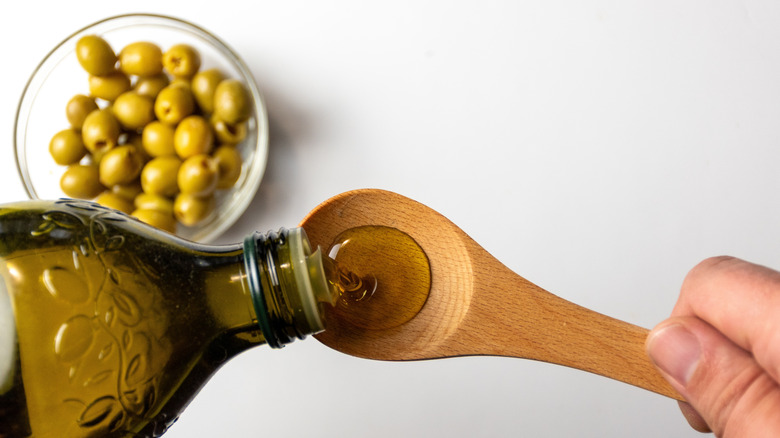
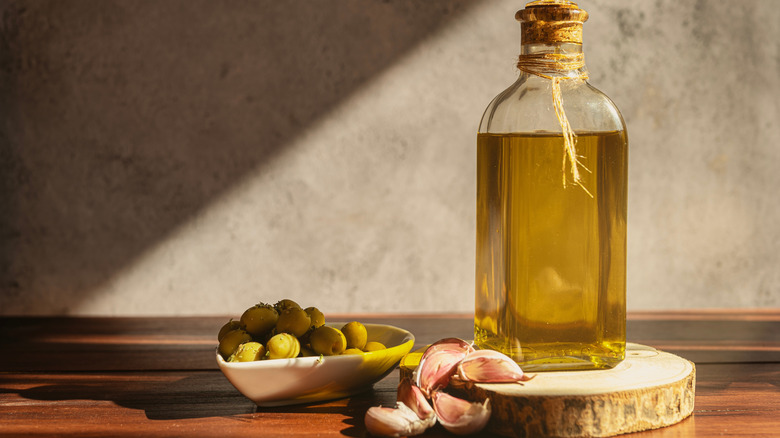
What would we do without olive oil? What would adorn our salads? What would we sautée our veggies or rub our meat with? What would we finish our pasta dishes with? I'm not so sure I'd want to live in a world without it, and luckily, throughout most of human history, we haven't had to. Olive oil is a fatty substance pressed from the olive fruit, with a subtle range of flavor from grassy to peppery. It has a rich mouthfeel, and a quality olive oil makes its presence known. Humans have been using olive oil in one way or another for almost 8,000 years, and to this day, it's a staple in most households.
Because olive oil roots its history in the ancient Mediterranean, it's woven tightly into the fabric of Greek mythology. Crushing basins used for the production of olive oil were uncovered in Kfar Samari (along the coast of modern-day Israel), which was inhabited between 5,600 to 5,000 B.C. Since then, olive oil production has gained popularity and spread around the world. Olive oil's many uses throughout history ranged from culinary applications to medicinal and religious uses. Today, we still use olive oil in our skin care products, oil our pans, and add it to salads and bread. It's a significant part of one of the world's healthiest diets, the Mediterranean diet, with most olive oil coming from Spain. It's great for your body, inside and out, and can enhance any dish, sweet or savory.
3. Garlic
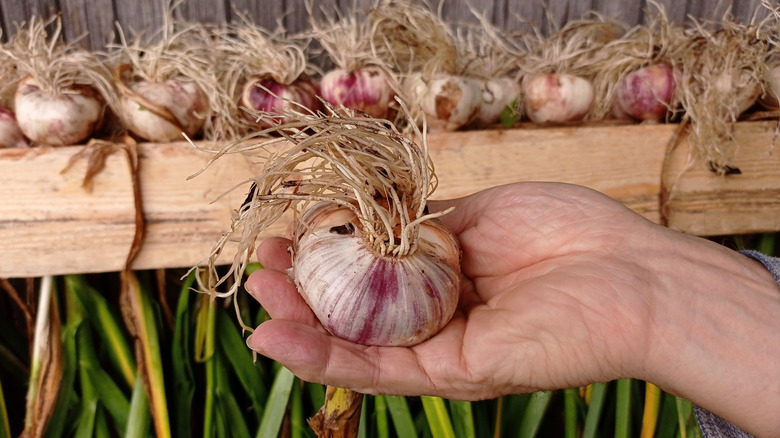
All of these everyday ingredients that date back to ancient times are also some of the most delicious, highly used, nutritious, and flavorful foods you can get your hands on. Garlic is no exception. It's perhaps one of the most powerful tools chefs can use in savory cooking, popular and essential throughout the culinary world, dating back over 5,000 years. This spicy bulb has a potent, pungent, bitter flavor that sweetens and softens when cooked. It enhances nearly every cuisine worldwide and has endless uses beyond cooking.
From the beginning of recorded history, garlic has received honorable mentions. It's been found in Egyptian pyramids, ancient Greek temples, and noted in the Bible and ancient medical texts from around the world. Garlic's historic uses range from culinary to medicinal to its consumption as a performance enhancing food for laborers. Today, garlic is still regarded as a medicinal superfood. Heck, I was even prescribed garlic in capsule form after my wisdom teeth surgery to prevent infection. However, the best thing about garlic is its flavor. If a recipe calls for a few cloves, double it. Bake crushed garlic on bread, mince it raw into your dressings, or sprinkle it in powder form on your avocado toast, stuff it in your roast, or simmer it in your soups and sauces. It's a quick way to add intensity of flavor to most any recipe, and it's hard to overuse it if cooked properly.
4. Cinnamon
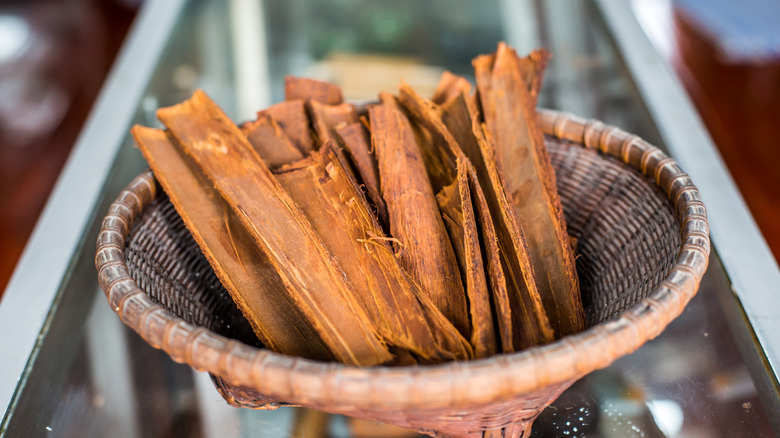
As the oldest known spice used by humans in history, cinnamon has certainly not lost its appeal over the centuries. With its recognizable aroma, ability to meld into both sweet and savory dishes, and universal popularity, cinnamon has ruled the spice cabinet throughout time. In addition, cinnamon's medicinal use in traditional and modern medicine extends worldwide. It was particularly favored in medieval times, popularly mixed with ginger, added to wine, or used in medicinal tonics to cure gastrointestinal discomfort and decaying gums.
Today, we can confirm that cinnamon has many components that are beneficial to our health, especially our cardiovascular system. Although it adorns a variety of recipes from curries to cinnamon buns, most of the world's cinnamon comes from Indonesia, which isn't surprising, based on its climate. In addition, the first ever recorded use of cinnamon took place in Asia, in 2800 B.C. Since then, the tree's bark has been harvested, used in trade systems, and found its way into your spice cabinet.
5. Lentils
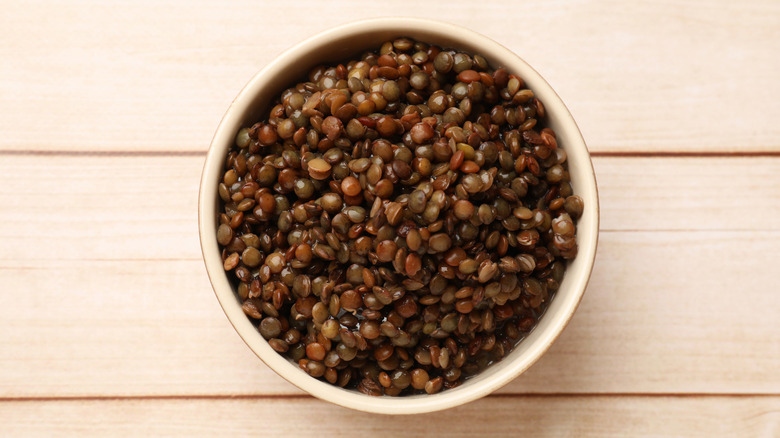
After completing my Cornell certification in Plant-Based Nutrition, I sprinted to the grocery store to stock up on lentils. As it turns out, lentils are the cheap superfood that nobody talks about. They're packed with protein, fiber, and dense with vitamins and minerals. The best part is, they are pure fuel for our bodies, and they have been fueling generations of humans as the world's oldest crop. Lentils were central in the development of agricultural societies, shaping the landscape of human evolution.
Proof of lentil-related agriculture and consumption can be found in 6000 B.C. ancient Greece, 2600 B.C. ancient Egypt, and as early as 8000 B.C. in the Middle East. Today, they are a staple food all over the world, and a central ingredient for folks consuming a plant-focused diet, because of their protein and iron concentration. And folks, you can get 16 ounces of uncooked lentils for between $1-$3. Use it in tacos, lentil loaf, over pasta, or in your soups and salads. Let's take a cue from India, which consumes nearly half of the world's lentils. They are the inexpensive, power-packed foods that helped build pyramids and dig canals, so it's time you started eating more lentils in your diet.
6. Vinegar
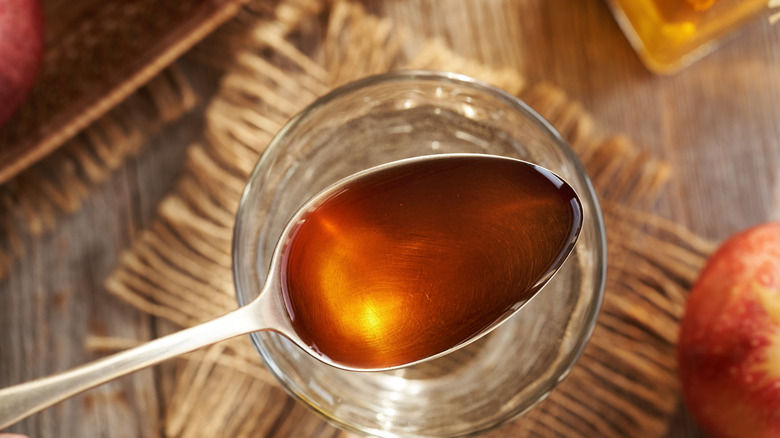
With a history dating back 10,000 years, vinegar is one of the oldest condiments that's still in use today. Personally, I love to use vinegar beyond my french fries and salad dressings. As a chef, I try to use a splash of acidity in just about every recipe to create a rounded mouthfeel, and if citrus clashes, then vinegar it is. Beyond flavor, vinegar has been used as a preservative throughout time (think pickles), and even as a beverage (think switchel). When vinegar was first produced, it was simply a byproduct of winemaking. But as it gained popularity around the world, scientists figured out a way to produce it on its own in just a week. While we are used to a grape-based vinegar, it can actually be made using a variety of fruits, and it was originally made with dates.
Throughout human history, vinegar has made its name known in historical texts. Hippocrates used vinegar for medicinal purposes, Cleopatra used vinegar as a solvent, Greeks used it to pickle anything from vegetables to meats and treat scurvy, and it pops up in the Bible every now and again. By 2,000 B.C., commercial vinegar production was becoming popular, and to this day remains a stable source of vinegar for most households.
7. Coconut oil
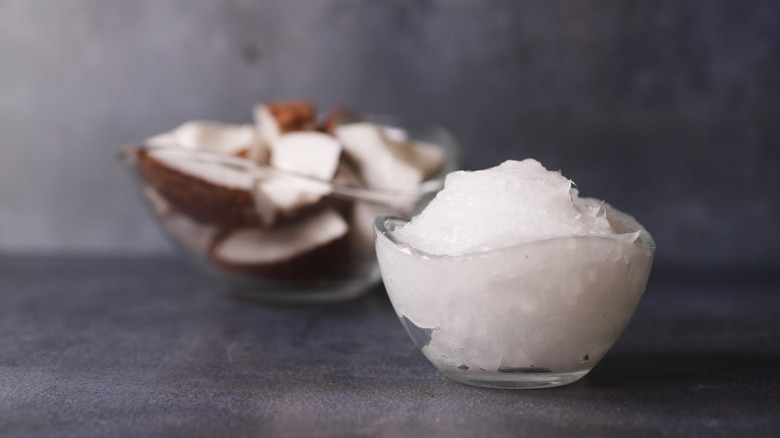
After studying abroad in Samoa, my appreciation for coconut oil exponentially grew. Now, I use it in everything from hot cocoa to stir fry to soup. It's rich, decadent, and can be flavorful if you opt for the unrefined version. Coconut oil continues to gain popularity in the United States after being demonized in the 1950s because of its status as a saturated fat. We know now that coconut oil may lower LDL (bad cholesterol), help with fat burning, and be beneficial for skin and hair health.
The coconut has been used since ancient times, and although it only grows in some climates, its popularity has spread around the world. It's a reliable fuel source, with one coconut containing, on average, 1,400 calories. With evidence of coconut oil being used as many as 4,000 years ago in India and Pakistan, its use bloomed in Asia, particularly the Pacific Islands, before becoming a major lucrative export. Throughout history, coconut oil seems to have touched almost every aspect of culture, from religious use to medicinal and culinary uses. In my home, I use coconut oil to oil my cutting boards, moisturize my skin, soothe sunburns and chapped winter cheeks, prevent split ends, and, of course, for a wide range of culinary purposes. If you don't have a jar on hand, give the ancient ingredient a try in your next roasting or sautéing adventure.
8. Quinoa
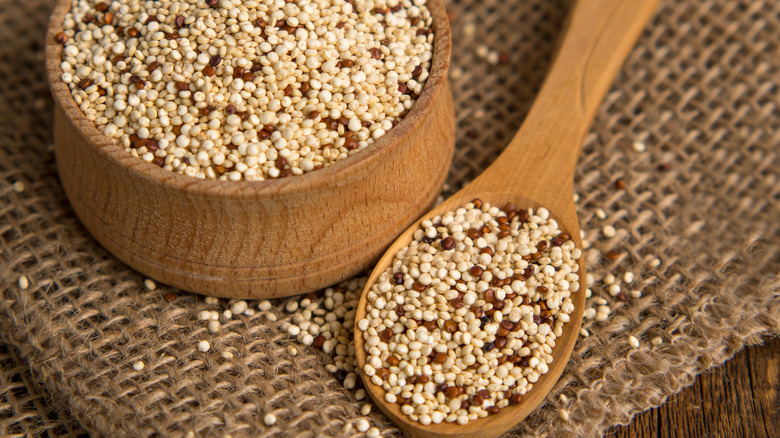
Although quinoa has gained recognition as an ancient grain, it's actually a phony. It's been masquerading around as a grain all this time, when it is, in fact, a seed. But hey, we will let a little white lie slide, especially since it cooks up similarly to a grain and is often used in the same capacities. This ancient seed's use was an integral part of Andes culture in South America due to the plant's hearty nature and the seed's nutritional density. All over South America, different parts of the quinoa plant have been used for medicinal and household purposes, like pest killers, and even the burnt stalks can act as a narcotic.
Until the 1970s, quinoa kept a low profile in most of the world beyond South America. But after gaining popularity, you can't go to a restaurant in the United States without seeing some form of quinoa on the menu. It's a breakfast, lunch, and dinner staple you should absolutely have in your pantry; it all depends on how you season it. And luckily for us, as well as the Incas who first cultivated it, it's a powerful superfood, loaded with concentrated essential nutrients that can promote major health benefits.
9. Salt
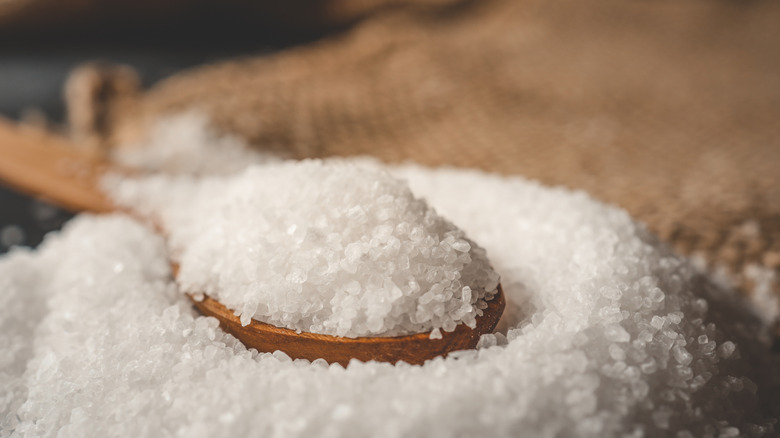
Around the world, cultural cuisine is filled with mountains of spices, filling kitchens with heavenly aromas, staining pans and countertops, and bringing magic to each recipe. The standard American diet does things a little differently, and tends to learn a little harder into two specific seasonings: salt and pepper. Salt is essential for human health and is present in every cuisine. But we enjoy it because it helps to enhance the flavor of our dishes and make our food crave-worthy.
In ancient times, salt was a huge part of the trade system between cultures. Ancient Egyptians were likely the first to use salt as a preservation tool, and even incorporated it into their mummification practice. Ancient cultures created roadways to settle in areas where salt could be extracted for use. Therefore, ancient salt had a major influence on the landscape of ancient transportation systems, influenced trade systems and the connections built between cultures, and helped shape the world we live in today.
10. Freekeh
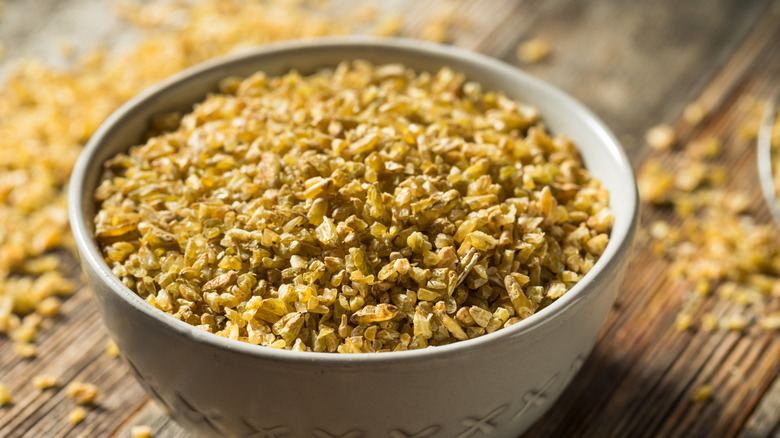
If you haven't heard of freekah, you're not alone. This crop should be a staple in your household, and was one of the world's first ever domesticated crops, originating in the Middle East. However, it's a version of durum wheat, which you've likely cooked with or enjoyed unless you have a gluten intolerance. It's harvested early, and the use of fire helps to dry and prepare it for consumption, giving it a unique smoky flavor. Plenty of folklore surrounding its discovery has been passed down, all involving being struck by lightning or being burned, and it's mentioned often in ancient texts dating back potentially as early as 2000 B.C.
Today, you can find freekah in specialty stores or even order it on Amazon. Enjoy the nutty, smoky flavor in your breakfast porridge, in your soups, as a side, or use it to stuff vegetables. Essentially, you can use it in any way you would rice or quinoa, just with a stronger flavor.