

How 17 Classic Southern Dishes Got Their Quirky Names

When it comes to comfort food, no region in the U.S. does it like the South. Those in-the-know can tell you that there are many Southern side dishes that you should definitely try at least once, and that includes things like fried green tomatoes, succotash, hush puppies, corn fritters, and any number of casseroles. (A sweet potato casserole with bacon? Yes, please!)
That list brings up a question, though, and if you're wondering why so many Southern dishes have such odd names, you're not alone. What the heck does "succotash" mean, anyway? We know what hush puppies are, but ... why? Is it acceptable to order a hoecake in polite company? What is poke salad? If Southern cuisine leaves you with more questions than answers, don't worry. We've got you covered.
Let's talk about some iconic Southern dishes, how they were named, and talk a bit about where they came from. Not only will you get a little inspiration for your meal planning with some seriously outstanding dishes (that might just be easier to make than you think), but we're also going to hook you up with some fun facts to share at the table. You're welcome!
1. Frogmore Stew
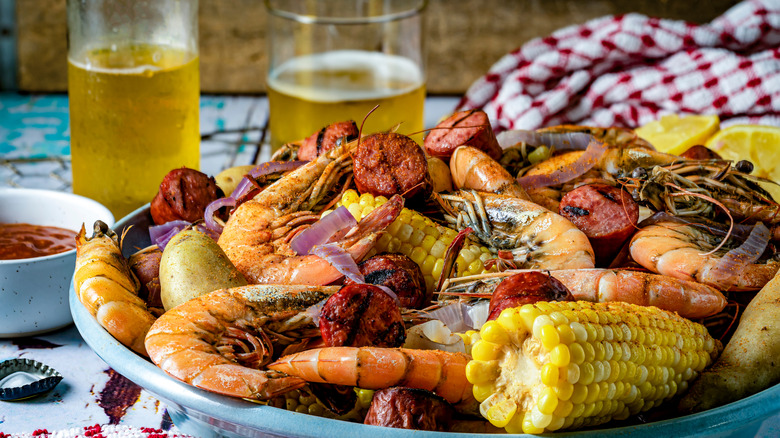
There are a lot of foods and drinks with deceptive or misleading names, and don't worry, we're going to tell you Frogmore Stew is one of them. There's no frogs in this dish, but exactly what goes into particular incarnations of Frogmore Stew can vary quite a bit. Shrimp, sausage, and crayfish are traditional proteins, there's usually corn and potatoes involved, but crabs and crayfish aren't uncommon. Some families also use this as a way to make the most of leftovers.
Everything's boiled together — giving the dish its other names, including Low Country or Tidewater Boil — but where did Frogmore Stew come from? The origins of the dish have been traced back to St. Helena Island off the coast of South Carolina, and it's a stronghold of Gullah culture. Frogmore was the name of a teeny-tiny fishing village that was the home of the shrimper who first served the recipe to the local military, and in turn, that name came from the ancestral home of one of the original British settlers.
2. Poke salad
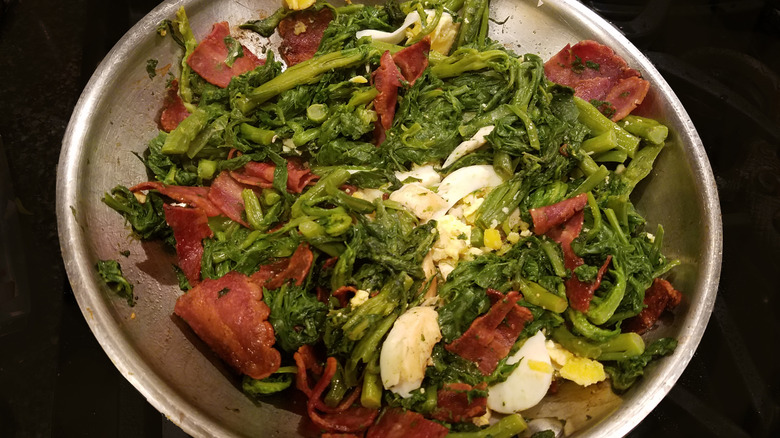
Poke salad is Southern dish that might not be as popular as some of the ones we'll be talking about, but it might sound familiar to comic book fans in particular. It's referenced in the song "Polk Salad Annie," which shows up in a particularly gruesome episode of "The Umbrella Academy." Poke salad (which is also called poke sallet) gets its name because the main ingredient is pokeweed, but this is where we offer a word of caution.
In short: Do not eat pokeweed. In its raw form, it's highly toxic and causes things like vomiting, convulsions, and all kinds of nasty gastrointestinal distress. The toxins can be boiled out through, but it takes multiple boils to make this safe to eat. (Younger leaves are often used.) It's the kind of dish that was made throughout Appalachia and the South, for two reasons. First, it was a convenient green that people could forage instead of buy, and it was also known to act as a de-wormer. Isn't history fun?
3. Hoppin' John
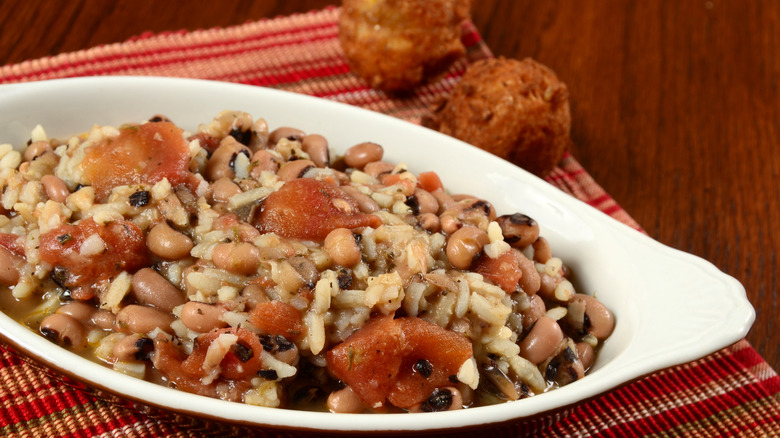
Hoppin' John is a deceptively complex Southern dish made (basically) with black-eyed peas and rice. Recipes can vary greatly, and in some cases, some of the oldest recipes around simply can't be made anymore as the ingredients have disappeared. The roots of the dish go back to Africa, and it was brought to the South with enslaved peoples.
As for the name, there's a few different stories. One of the most commonly-told is that it's a version of a French term for pigeon peas, but the actual connection to "pois à pigeon" is iffy at best. Others say it's a reference to the way children would happily dance around the table when it was time to eat, and yet another theory references "Hop in, John," as an old-school, South Carolina way of inviting someone in to a meal. Still another suggests it's a reference to a real person known for selling this particular dish as a Charleston street food, but no definitive answer has been agreed-upon.
4. Chow Chow
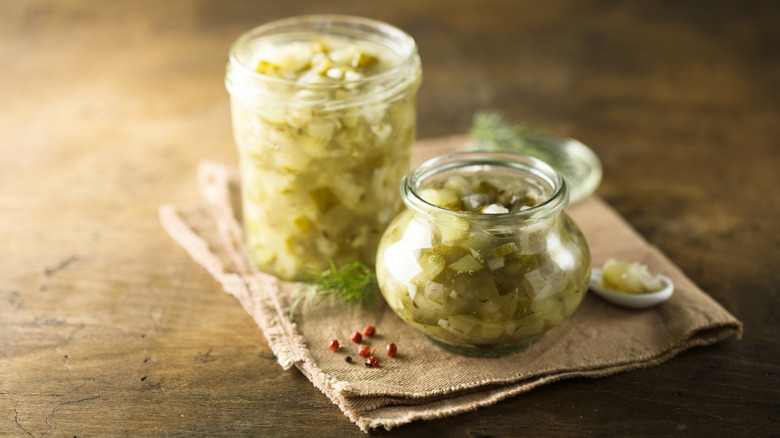
There's no one right way to make chow chow, but what we can tell you is that this is a beloved relish that makes the most of some of the South's finest veg. It's a pickled mix that can include everything from tomatoes and peppers to beans and carrots, and as you might expect, the flavor profile here can vary greatly, too. We're here to talk about the name, and that's connected to one of the most common ingredients: cabbage.
The French word for cabbage is "chou," so you can see how that got turned into chow chow. Interestingly, though, there's a lot of debate about the origins of the dish, which some say have absolutely nothing to do with the French-Canadian settlers that others insist introduced the idea to the South. Another theory is that it came via Chinese immigrants hired to build the U.S.'s vast railway network, and while we'll probably never know, we do know that it's downright delightful.
5. Possum pie
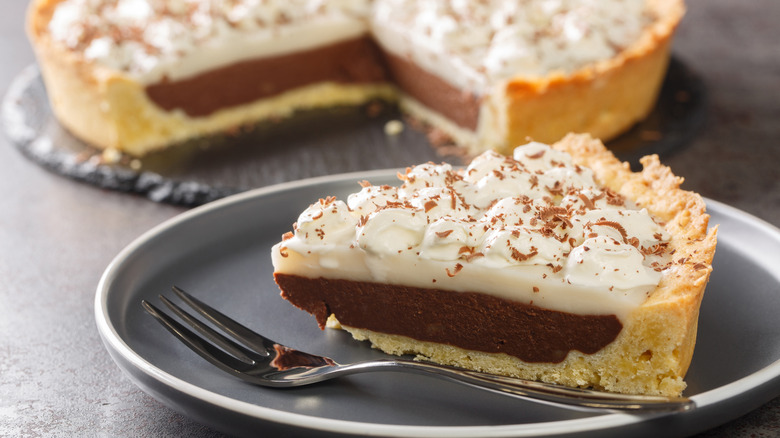
Don't worry, there are no small, furry animals involved here. The Arkansas classic called possum pie has a number of deliciously sweet ingredients, including vanilla pudding, chocolate cream and custards, nuts, grated chocolate, and some kind of fluffy top layer. Sounds incredible, right?
The admittedly strange name is said to be a nod to the heavy, thick, fluffy topping, as it hides what is beneath. Possums famously pretend to be dead when they feel threatened, and here's a bit of science for you. Possums aren't necessarily faking it, they're essentially so stressed that they collapse into a near-death state. The idea is that predators will leave them alone, and just like they're hiding the fact they're still very much alive, that giant fluffy top hides the rest of the pie's deliciousness from diners. Hey, we didn't say all these names were going to make a ton of sense!
6. Hoecakes
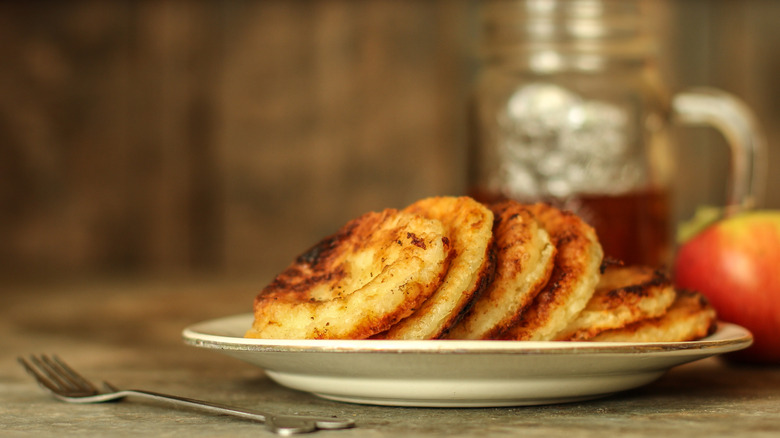
Take a quick glance at hoecakes, and you might think they're pancakes. It's an absolutely understandable mistake, but they're not. These delightfully cakey disks are cornbread, and the very best are made to be crispy on the outside, soft in the center. While they're the perfect accompaniment for any number of dishes, they're also delicious on their own. (Fun fact: Hoecakes were George Washington's favorite breakfast food.)
As for the name, there's something fascinating going on here. The oft-told tale is that these cakes got their name because they were often cooked over an open fire on the flat surface of a garden hoe, which seems like a perfectly reasonable and historically accurate explanation. Not everything is as straightforward as we'd like it to be, and as great a story as that is, etymologists and historians have another explanation. Simply put, for a long time, the other name for a griddle was a hoe.
7. Hushpuppies
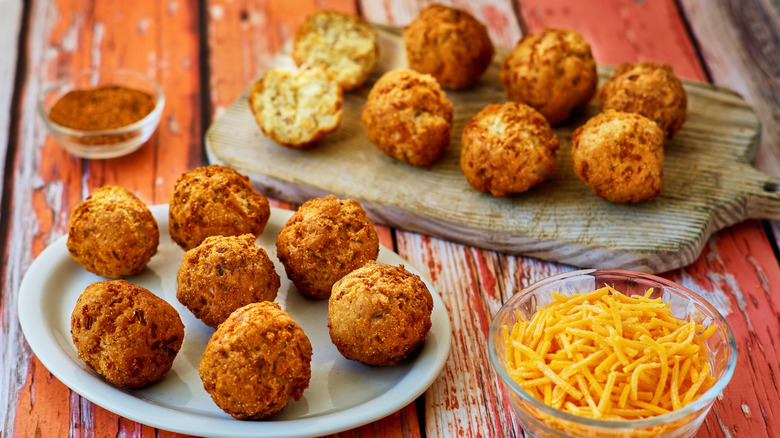
Hushpuppies might be delicious, but no one's really sure where they came from. Origin stories vary from being the ingenious invention of a group of nuns in New Orleans to developing from a dish of deep-fried salamanders. Sometimes they're said to date to the Civil War, while one of the more likely origin stories involves a South Carolina man who was something of a 19th-century celebrity chef known for his fish fries.
The original version of these delicious balls of fried bread were called red horse bread, and no, there are no puppies or horses involved — redhorses are a species of fish. Thanks to old newspaper articles, we know the two terms existed at the same time, but why hushpuppy? The truth is that no one's exactly sure, but we do know "hushpuppy" has meant several things over the centuries. In addition to being slang for covering up illegal activities, it's also referred to a type of gravy and a type of liquor. The running theory is that it's a reference to the fact that eating it will quiet the growling of either hungry dogs or a hungry person's stomach, and that's really about as close as anyone's gotten to explaining this one.
8. Killed Lettuce
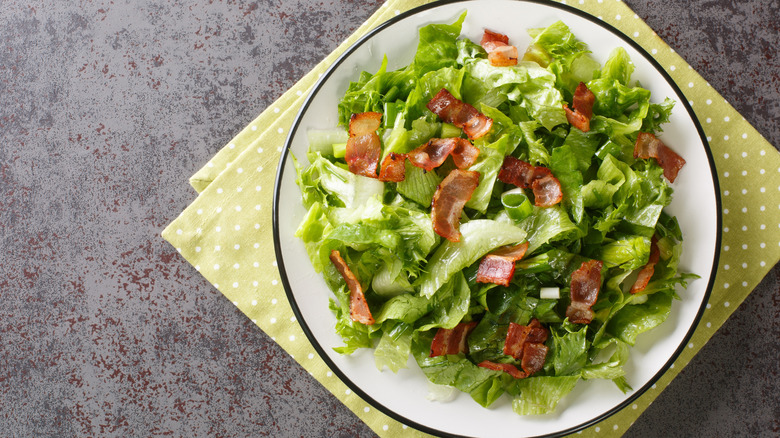
If you ever want to talk about a perfect springtime dish, it might be this one. Early spring greens (like leaf lettuce from the garden or wild dandelion greens) are mixed with spring onions, then everything's wilted beneath a hot vinegar and bacon dressing. A salad made with hot lettuce might sound like it's a bit of a strange thing, but when it's made fresh and eaten immediately, it still has a firm texture and it's downright incredible. (This writer's family always called it wilted lettuce, and the love for this dish is legit.)
Different areas and different families have different names for this particular dish, and other versions of the name include kilt lettuce, hot salat, or fried salad, but it's all the same idea. The strange name isn't nearly as sinister as it seems, and it's just a reference to what happens to the greens when you're dousing them with hot, vinegary, bacon dressing.
9. Hummingbird cake
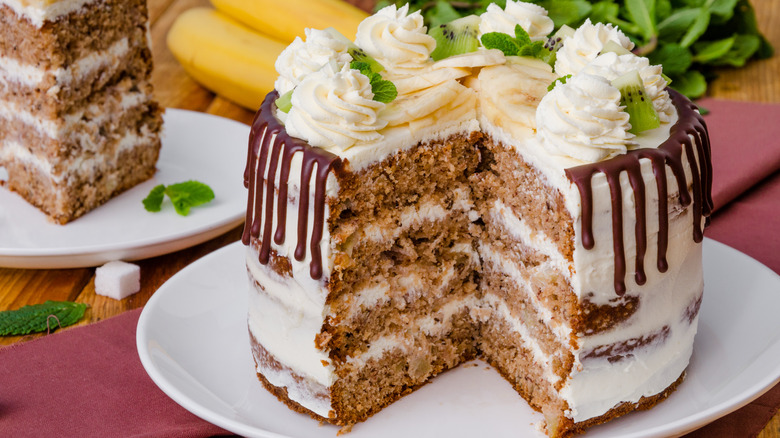
Alongside talking about killing lettuce, possum pies, and salads made from toxic plants, the hummingbird cake sounds absolutely delightful. The hummingbird cake has been popular across the South for years, but traces its origins back to Jamaica — and that's key to understanding the name.
The recipe developer for this one is the Jamaica Tourist Board, who used native fruits to create a light, fluffy, and sweet cake. It was named for the country's national bird, which is — of course — the hummingbird. It wasn't always called that, though, and when it first hit the U.S. back in the late 1960s, it was called the Doctor Bird Cake, after a specific type of hummingbird native to Jamaica. Bakers in the States started making their own versions of the cake, and by the late 1970s it was officially a Southern favorite. With its bananas, pineapple, and sweetness, it was reportedly so sweet that even a hummingbird would love it.
10. Po-boy
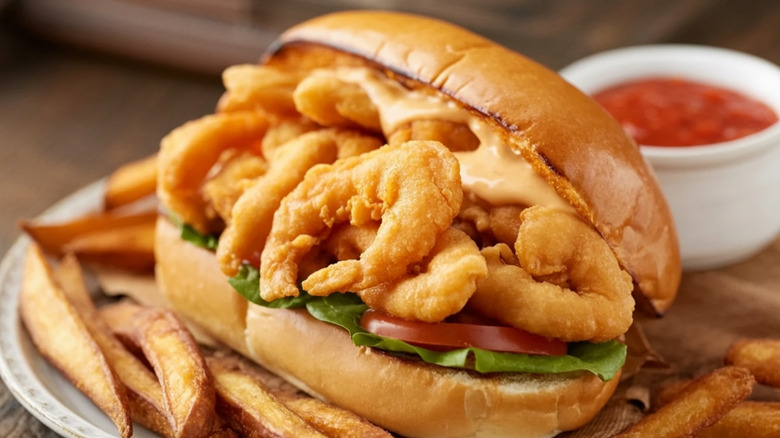
No trip to New Orleans is complete without a legit grilled shrimp po-boy sandwich, as these incredible sandwiches have been a staple of the city's foodie landscape for decades. They're a little strange, too, in that historians know exactly when they showed up and where they came from. We can all thank the Martin Brothers' French Market Restaurant and Coffee Stand for first selling these in 1929, and they created the sandwiches in solidarity with transit workers who went on strike to protest working conditions.
The strike impacted around 1,100 people, and the Martin brothers promised to feed the strikers for free until they were back to work. And they did — the workers were identified as "poor boys," and the sandwiches took on the same name. In case you're wondering what sets them apart, it's the bread. Specially-created to be rectangular instead of tapered, it eliminated a lot of the waste when making both full and half sandwiches.
11. Country Captain
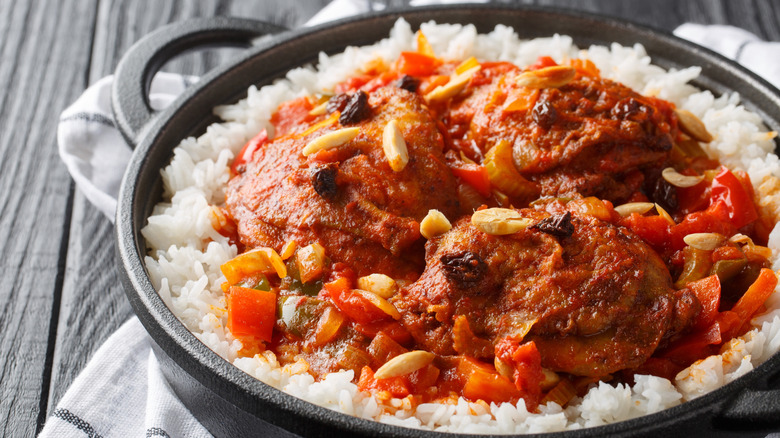
The oddly-named Country Captain might not be as widespread, well-known, or as popular as some of the other Southern dishes we're talking about, but we'd argue that it deserves to be. It's basically a tomato-and-curry chicken dish that's long been associated with Savannah, Georgia, and we know what you're thinking. Curry doesn't really shout Southern-style comfort food, and there's an interesting story behind this one.
The dish itself comes from India, but how it got from there to Georgia is a little unclear. It's believed that merchants traveling between India and the U.S. first served it, and it gets the name from the idea of ship captains trading between countries. Some historians claim that it first made its way out of India thanks to a British military man who took it home with him, hence the name. Similar ideas, but as to which one is true? Who knows!
12. Succotash
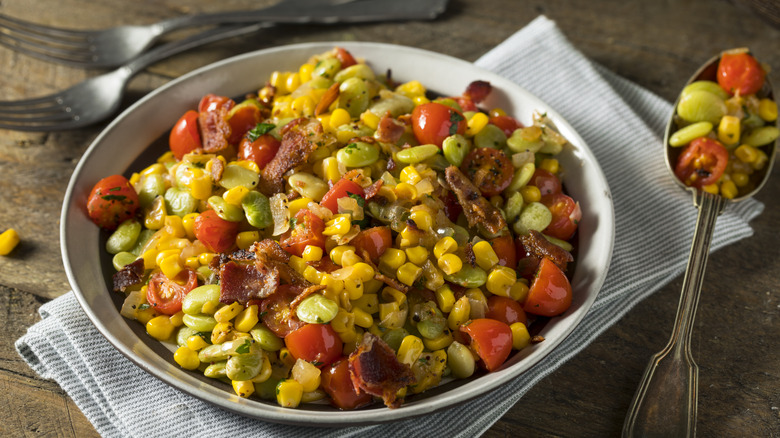
Some dishes are classics for a reason, and anyone looking for a fun way to serve a side of veg needs to look no further than an old-school succotash. Onion, corn, beans, peppers, and tomatoes come together with a handful of seasonings, and it's not an exaggeration to say that it's summertime in a side dish. It's sometimes called the Three Sisters Succotash, and the first part of that is a reference to a bit of Native American wisdom that squash, corn, and beans can and should all be grown together as they all provide benefits — like shade and a way to climb — to the others.
Although it's a Southern favorite, it has Northern roots (and was likely a staple at early Thanksgiving celebrations). And that's important to the name. The Narraganset were a group of Native American peoples who lived in what's now Rhode Island, at least, until a mass slaughter decimated and scattered their people in 1675. Corn was a main crop, and broken kernels were called sohquttahhash, which became "succotash."
13. Burgoo
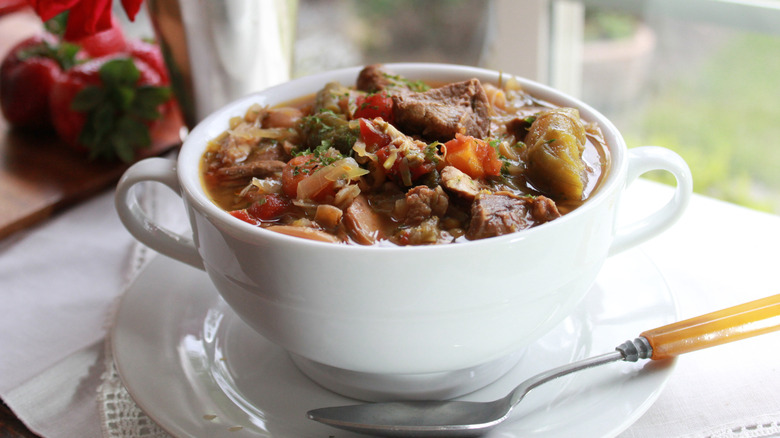
For those outside of Kentucky, it's entirely possible that you may have only heard of burgoo in the context of its connection to the Kentucky Derby. It's been around for a long, long time, and dates back to an era when communities would get together to contribute meat and vegetables that would be combined in a stew pot to feed everyone. That could include deer and game birds, but historically-speaking, you might also find some possums or squirrels thrown in, too.
There are a few theories as to where the name came from, with one suggesting it was adopted from another dish called burgoo. That one was a smooth water dish served to sailors, and the name of that burgoo has been traced back to a Turkish word — bulgur — for cooked wheat. Oatmeal and burgoo don't seem to have much in common, though, which explains why there's also the theory that burgoo is related to the French ragout, which was a meaty and vegetable-filled sauce used on pasta.
14. Pig Pickin' Cake
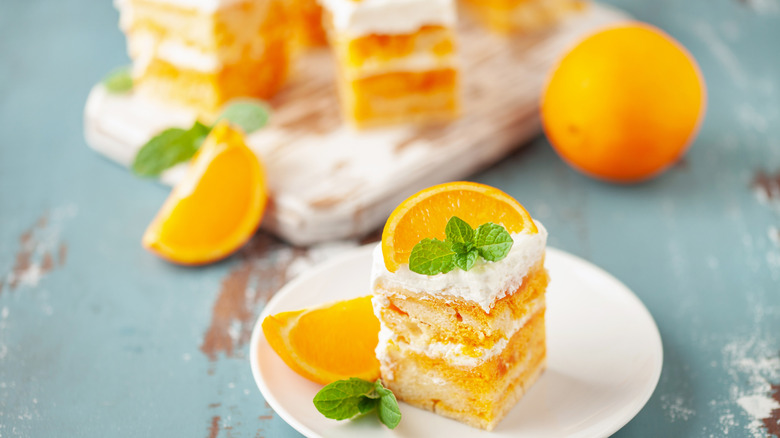
The name is definitely weird, but don't worry, the origin of the pig pickin' cake is almost unexpectedly delicious. This traditionally yellow or vanilla cake gets a kick of flavor from mandarin oranges, pineapple, and a pudding-based frosting, and we'll give you a hint as to the source of the name by saying that this cake almost certainly comes from North Carolina.
Those familiar with the history and characteristics of North Carolina barbecue know that it's all about the pork, and whole hog barbecue is a big deal. Gatherings that featured a whole hog as the centerpiece became known as a pig pickin', and if you've been to one, you know that part of the fun is gathering around to pull off the meat. Along with other side dishes, this particular cake was a favorite at these events — so much so that it became widely known as a pig pickin' cake.
15. Swamp cabbage
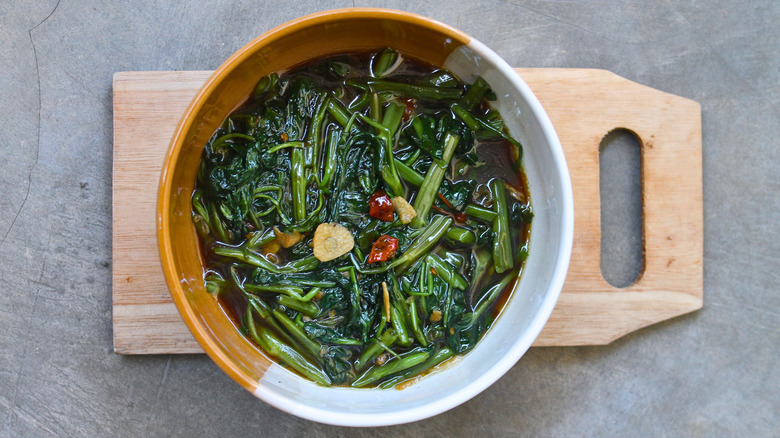
Here's a name that's only slightly misleading, as these native Florida plants do love to grow in swamps, but they're definitely not cabbage. They do, however, taste like cabbage or artichokes when they're cooked, and we're actually talking about sabal palm trees. The inside of the trees isn't just edible, but it's been an important foodstuff for a long, long time, and can be fried, stewed, or turned into a side dish with the help of things like sausage and bacon.
The other name for the sabal palm is the cabbage palm, so the name makes pretty perfect sense now, doesn't it? If you're wondering if you should try this, the answer is definitely an affirmative — and you just might save a panther in the process. Because of Florida's now-developed infrastructure, the ultra-hardy cabbage palms have become a massive problem that's tipping the balance of the state's swampy ecosystem and endangering some species that live there, including panthers.
16. Dirty rice
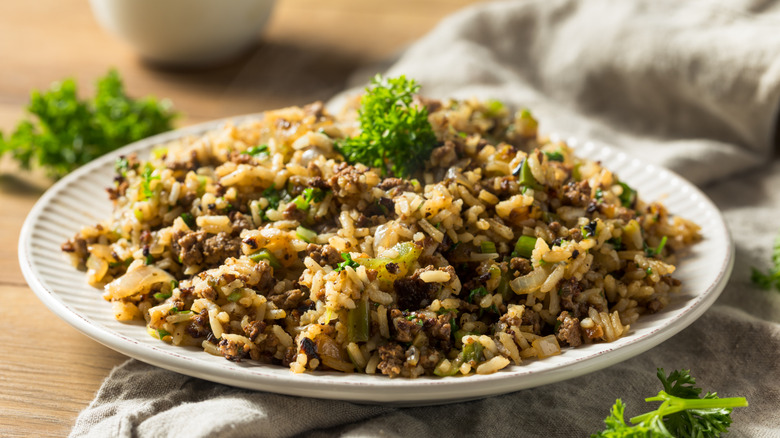
Dirty rice is a Cajun side dish that's packed with history, and those who love Cajun cuisine know that rice is a huge deal. It makes sense, as it's easy to grow in Louisiana, and it's also incredibly versatile. It was also very cheap, and as the history of this dish goes, enslaved people combined white rice with what little meat they were given — and that was usually things like offal, organ meats, hearts, and gizzards. Everything came together for dirty rice, and it's the presence of those off cuts of meat that turns the white rice brown, and gives it the name.
We'd go as far as to call dirty rice a concept rather than a dish, as there's no one right way to make it, or standard, defining ingredients. (You could argue that onions, celery, and green peppers are a must-have, but otherwise, the sky's the limit.) It was simply made from what was available, and still is today.
17. Jambalaya
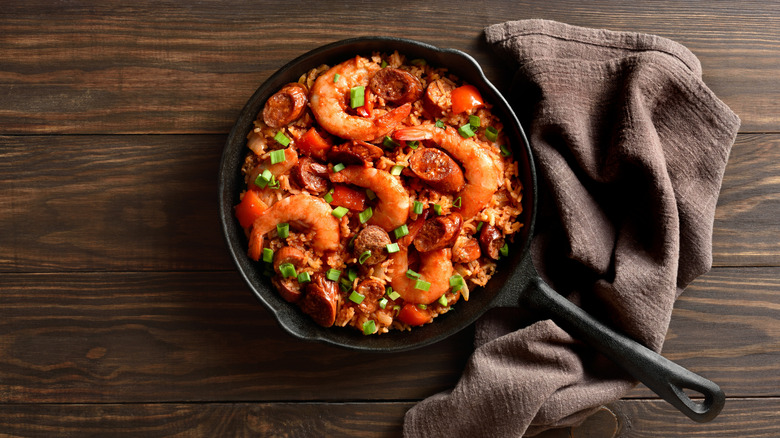
Jambalaya is another dish that no one is really sure how it came about, but what we do know is that it has West African, Spanish, and French influences. As we might recognize it today, it first showed up in print back in the mid-19th century, and was showing up in cookbooks by the end of the century. The origins are murky and interesting, so are ideas about where the name came from.
There are a number of claims, including theories that it's a combination of the French word for ham (jambon) and an African word for rice (aya), or that it's from another French word for a mix of things (jambalaia). There are two other possibilities, too, including an Atakapa word bidding diners to enjoy their meal (Sham, pal ha! Ya!). There's the one that definitely sounds apocryphal, and that's the story that when an inn cook was asked to come up with a meal, the ask (Jean, balayez!) was eventually turned into the name of our dish in question.