

It's Time You Ditch This Old-School Cleaning Method For Dirty Pans

There's no school like the old school ... except for instances in which the old school has been improved. Old reliable steel wool may be a powerful cleaning implement, but for certain cookware materials, it's too powerful. Erasing grime and stains is not a "once size fits all" enterprise. In Tasting Table's list of old-school kitchen cleaning habits to retire immediately, we advise against indiscriminately using steel wool to scrub all of your gunked-up pans. Such a powerful tool demands a more discerning application.
As a rule, never go near nonstick pans with steel wool. Nonstick cookware is prized for its easy cleanup — so prized, in fact, that according to HowStuffWorks, more than 50% of all kitchen pans sold in the U.S. are nonstick. But, sometimes, extra-stubborn stains still manage to end up adhering to the surface. Even so, don't reach for steel wool. Those coarse metallic fibers will make quick work of that nonstick surface layer, leaving your pans largely unusable. Worse, the chemicals used to form that nonstick coating (typically multiple layers of polytetrafluoroethylene resin, aka Teflon) become harmful when the surface is scratched. Loose toxic particles can fleck off into your food and pose serious health risks when ingested.
Instead, the best way to safely clean nonstick cookware is with soft sponges and mild soap — no steel wool. It's best to avoid the dishwasher, too, and to use wooden or plastic utensils when cooking (i.e. no metal spatulas scraping against the pan).
Different cookware may call for certain types of wool
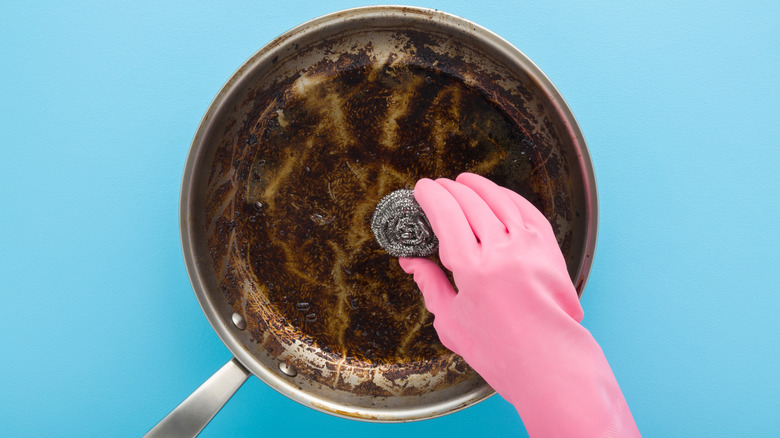
It's important to point out that not all steel wool is created equal. It comes in eight different grades of toughness, running from #0000 (finest) to #4 (coarsest). There is a right way to use steel wool, and used correctly, it can be an effective tool for heavy-duty tasks like cleaning metal oven racks or removing rust from a cast iron skillet. Fine grade steel wool can also be effective for cleaning some enamel pans. However, when it comes to cleaning smoother kitchen surfaces like (yikes) a glass stovetop, steel wool is not (we repeat, not) the tool for the job.
One instance in which steel wool can be effective is for scrubbing stainless steel pans, which can be infamously tough to clean. Here, grade #0000 steel wool proves useful and non-damaging. However, a thicker filament of steel wool can scratch stainless steel's surface, ultimately creating a coarser, beat-up pan that'll make future grime even tougher to remove. Instead, use sponges and gentle scrubbers for the job.
If you're unsure whether a certain pan can be cleaned with steel wool, start by gently scrubbing a small spot, frequently checking for any surface scratches or abrasions. To spare your cookware, opt for the finest grade of steel wool available, gradually increasing coarseness as necessary. Enlist the help of gentler cleaning elements like baking soda, vinegar, and spent coffee grounds (yes, really) to beat extra-tough stains. Your pans will thank you.