

The Caffeine Content Of 9 Types Of Tea, From Lowest To Highest
We may receive a commission on purchases made from links.
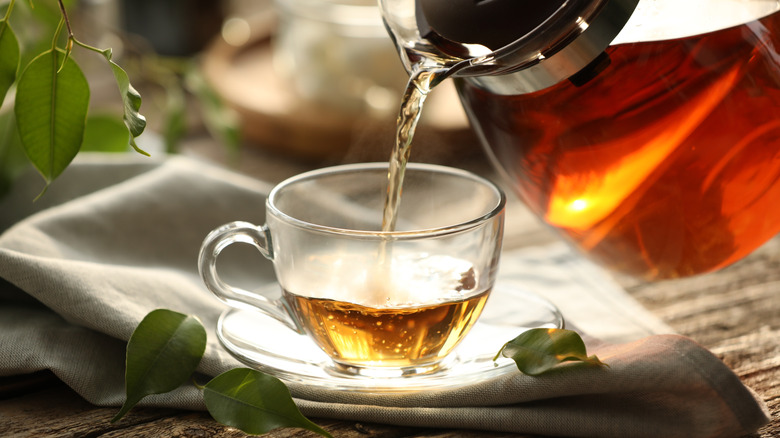
When you need to get your morning started with a bang, chances are it's coffee rather than tea that you'll be reaching for. Likewise, if you're trying to cut down on caffeine, you might think that tea is the safer choice. While it's true that the caffeine content in tea is generally lower than in coffee, there are a lot of variables. The caffeine content in a cup of tea will not only depend on the type of tea you're drinking, but also how you prepare it. Using tea bags rather than loose-leaf tea might give you a more consistent amount, but longer steeping times and hotter water will increase the amount of caffeine released.
There are many drinks we call tea, but the only true teas are those that come from the Camellia sinensis plant. Between these true teas, what differentiates them is which leaves are picked and how the leaves are processed after harvesting. Herbal teas like mint or chamomile are technically infusions or tisanes rather than true teas, and are generally free of caffeine naturally. For the most part, these have been excluded from the list. Whether you're trying to restrict your caffeine intake or you want a little extra energy from your cup of tea, this guide to the caffeine content of tea should help you out.
Rooibos
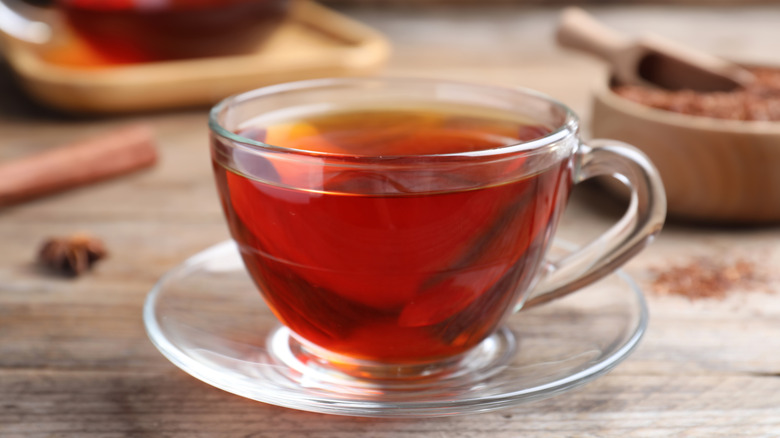
Straight out of the gate, we're hitting you with something that's not a true tea. Rooibos comes from the leaves of the Aspalathus linearis plant native to South Africa, where it is also considered the country's national drink. Rooibos can stand in for breakfast tea, with a slightly earthy but sweet taste that won't become bitter even with extended brewing. Unlike other herbal infusions, it can be enjoyed with milk. You'll even find it in some of your favorite tea flavors, like this Tick Tock Rooibos Earl Grey or Yogi Rooibos Chai. If you want something completely free of caffeine, this is the closest you're going to get to tea.
Decaf tea
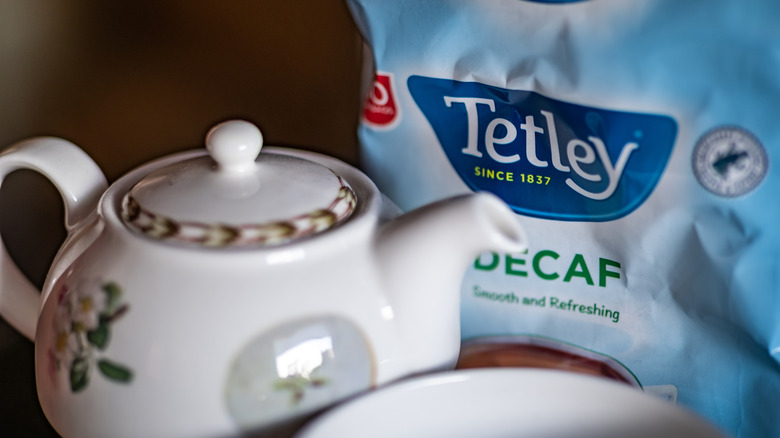
This might come as news to some of you: decaf tea isn't entirely caffeine-free. Caffeine is a naturally occurring compound found in the tea plant, so any decaffeinated tea will need to have been processed first. In a similar manner to how coffee is decaffeinated, this can be done with the use of pressurized CO2, solvents, or, less commonly, water. Even with processing, around 3% of the caffeine usually remains. Depending on the original caffeine content, this could still result in 2-5 mg per 8-ounce cup. This is considerably less than regular black or even green tea, but still something to be aware of if you're particularly sensitive to caffeine.
White tea
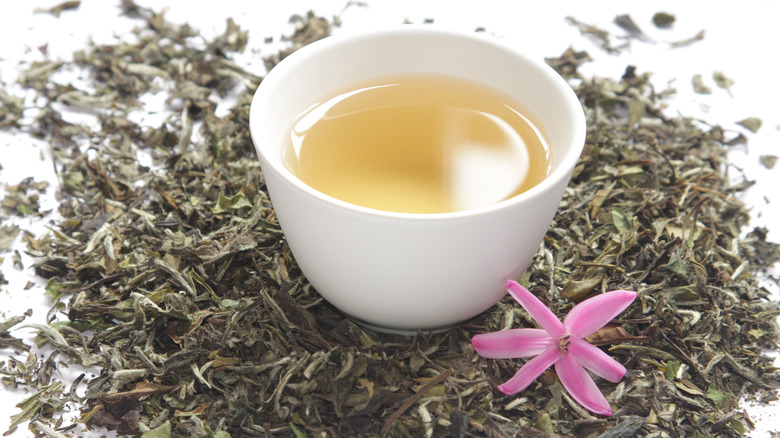
White tea gets its name not from the color of the tea when it's brewed, but from the fine white hairs that cover the first new leaf buds of the tea plant. This early growth is only available for harvest a few weeks a year. White tea is minimally processed compared to black or green, with the leaves gently air- or sun-dried rather than allowed to oxidize. This results in a more delicate, floral, or even fruity taste, and a lower acidity. White tea is naturally lower in caffeine than other teas and is brewed at lower temperatures, resulting in around 15 to 40 mg of caffeine per cup, though some types of white tea may have significantly more.
Green tea
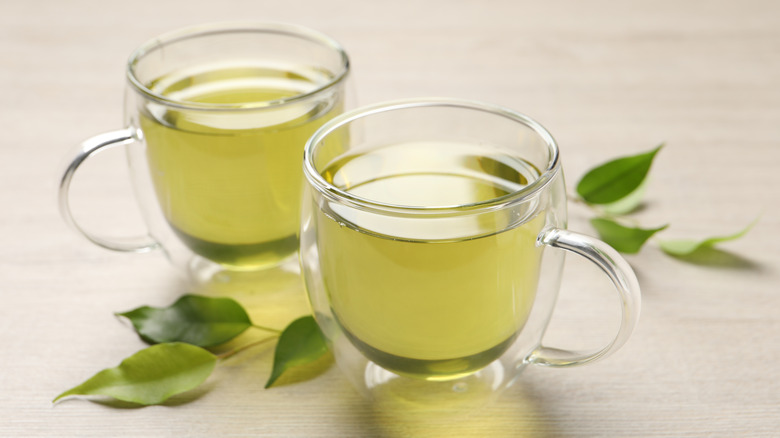
Green tea is often considered the healthy choice, thanks to its high levels of antioxidants compared to black tea. This is due to halting the oxidation process of the leaves by either steaming (Japan) or pan cooking (China) after harvest, which also helps it retain the vibrant green color and fresh grassy flavor. As with other teas, the caffeine content of different brands of green tea will vary significantly with the region, harvest, and variety of plant, but averages around 30 to 50 mg per 8-ounce cup. Green tea can become astringent with extended brewing, so just a short steep is recommended — a factor that could also contribute to it being lower in caffeine than black tea.
Oolong tea
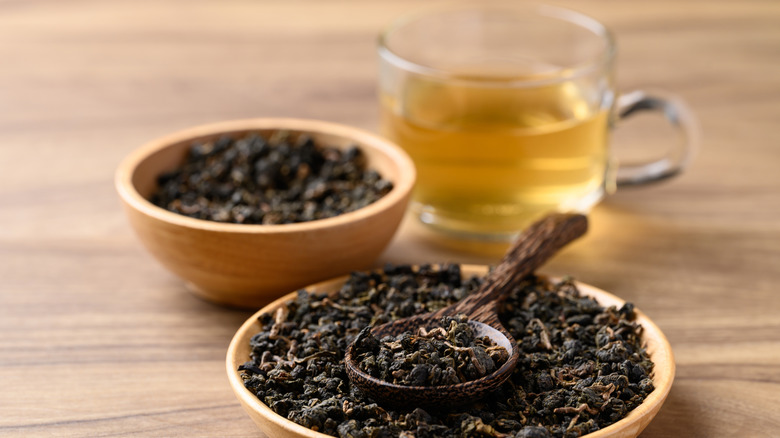
On the spectrum of tea processing, oolong tea falls between green tea and black tea. The tea leaves are partially oxidized, leading to a unique flavor profile, but also a difference in characteristics such as caffeine levels. An 8-ounce cup of oolong tea will contain around 30 to 70 mg of caffeine. Also known as wulong, oolong tea represents just 2% of tea consumed worldwide, but is prized for its complexity of flavor. Offering tastes ranging from light and floral to deep and nutty, it's also one of the best teas for making iced tea.
Mate
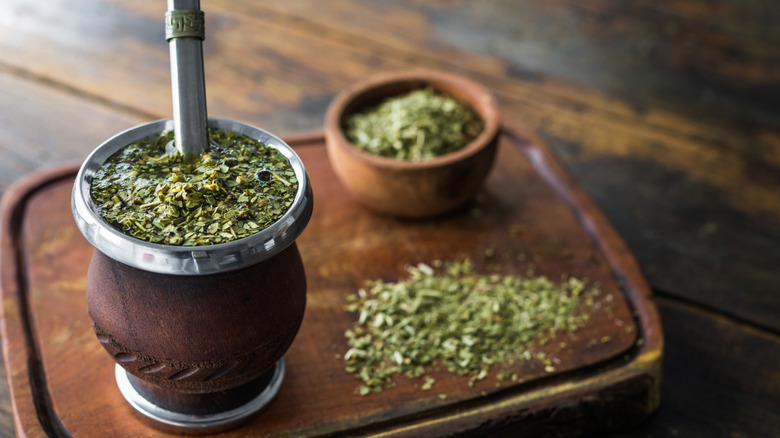
While rooibos tastes like tea but is caffeine-free, mate could be considered the reverse. It has the look and taste of an herbal tea, but it's considerably high in caffeine, with approximately 80 mg per cup. The yerba mate plant is one of the better-known plants that naturally contain caffeine — along with coffee, tea, cacao, and guarana. Although the drink is popular throughout much of South America, and is considered the national drink of Argentina, Uruguayans take the lead for per capita consumption, going through 8-10 kilos of the dry plant per person per year.
Pu'er tea
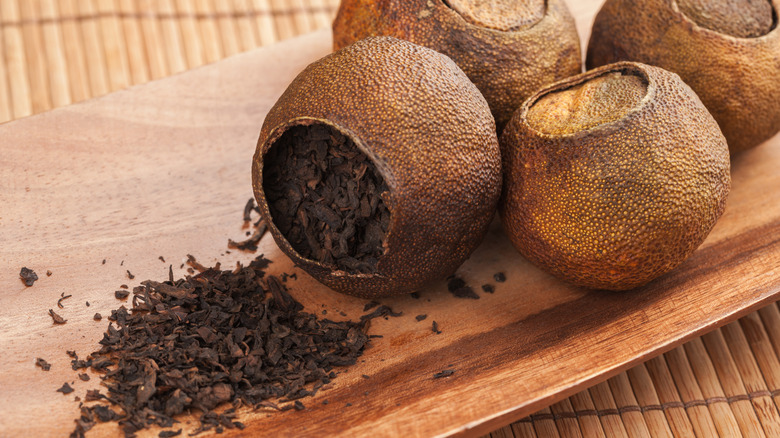
While green teas and black teas are distinguished by their levels of oxidation, pu'er tea is unique in that it's fermented. You'll also notice a difference in how it's sold, with the leaves packed into tight discs, or occasionally into the peels of citrus fruits. Pu'er tea has two main varieties, sheng and shou, which refer to raw and ripe (or dry and wet) processing. While there can be some variation in caffeine between the two, overall, an 8-ounce cup could contain 30 to 100 mg of caffeine.
Black tea
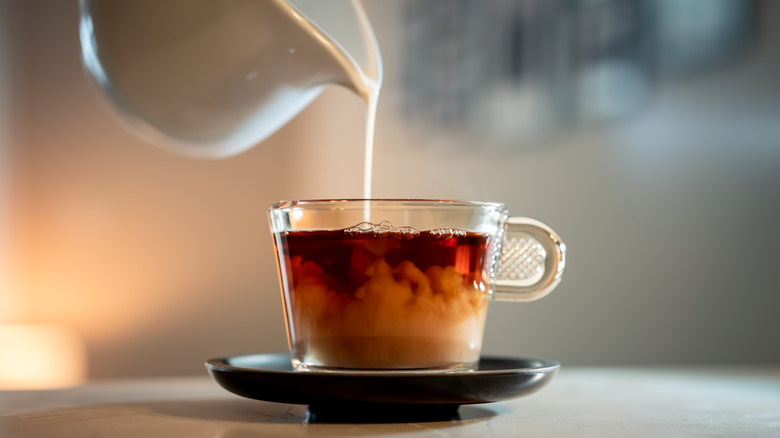
Black tea is the most commonly consumed type of tea in the U.S., and the base of some of your favorite iced teas, chai masala, and the London fog latte. Black tea and green tea start off the same way, but black tea gets its color and bold flavor through a process of oxidation. Black tea is generally considered to have the most caffeine of the different types of tea, and it's true that some preparations could contain up to 112 mg of caffeine per cup. However, with an average of less than 50 mg per 8-ounce serving, it can also be a lower-caffeine choice.
Matcha
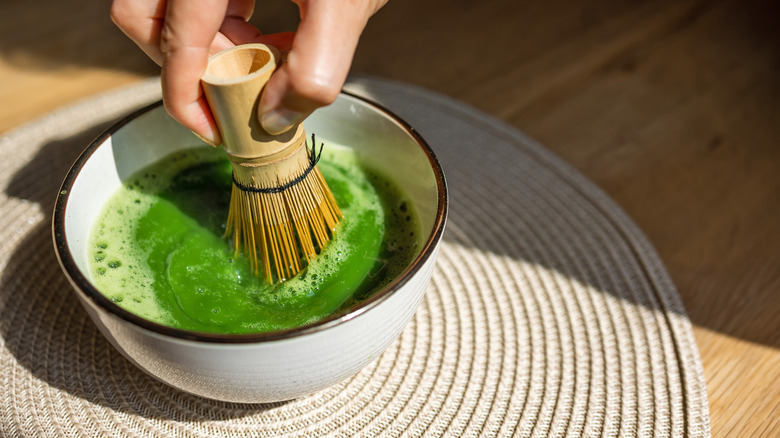
Although matcha is a type of green tea, the difference in how it's consumed warrants its own place on the list. Unlike most tea preparations, where the tea leaves are strained out, matcha is ground to such a fine powder that you end up with the whole lot in your cup. This pushes the amount of caffeine you're consuming up a lot further than regular green tea. Matcha can contain anywhere from 19 to 44 mg per gram of powder, which is around half a level teaspoon. With matcha latte recipes using anywhere from 1 to 1.5 teaspoons per drink, you could be getting as little as 38 grams but as much as 132 grams of caffeine. Compare this with a shot of espresso that has around 63 mg of caffeine.