

Swap Your Classic Lasagna For This Creamy White One

When thinking of lasagna, most of us likely picture the classic layered dish with ribbons of red between noodles, cheesy goodness, and other fillings like ground meat or vegetables, with a beautifully browned and bubbling top. While this tomato sauce-based lasagna is prevalent in the United States, there are many other beautiful versions of lasagna, including ones that use no tomatoes at all, like this white lasagna with sausage and ricotta recipe. White lasagna eschews common tomato-based sauces like ragù or bolognese and relies on a white sauce with French origins known as béchamel. Although it's one of the five French mother sauces, béchamel is essential in traditional lasagna. Before you embark on a lasagna-making endeavor, check out our best tips for making a béchamel sauce.
Known as lasagna bianca, white lasagna is different than red lasagna and might actually be more closely related to the original recipe than its tomato-based counterpart. Lasagna has roots in both Ancient Greece and Ancient Rome, where the dish started as layers of pasta sheets with sauce ladled on top before being cooked in broth or baked, and the dish gained popularity in the Middle Ages, where cheese was used between the pasta sheets. Later, in the 1600s, the first written recipe for lasagna came from Naples, Italy, used cheeses like mozzarella to layer before baking, and evolved to include meat and hard-boiled eggs. It isn't until the 1880s that tomatoes make an appearance in lasagna recipes in Naples.
White doesn't have to mean boring or bland
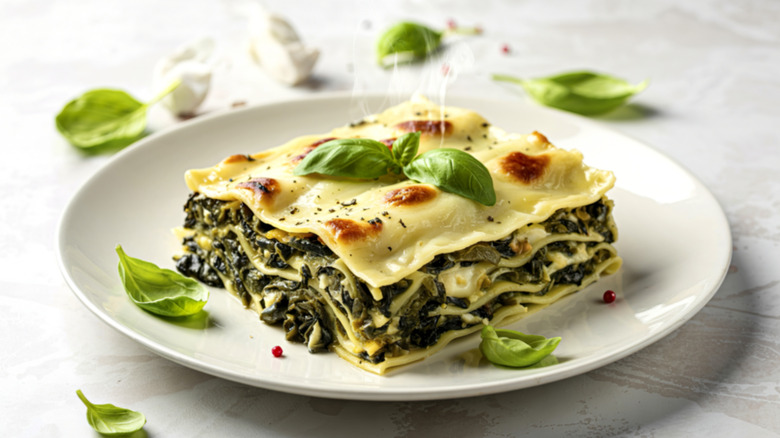
Like many foods from Italy, the exact dish and lasagna recipe can vary greatly from region to region and from family to family, some including tomatoes or some without, and others that include pesto and green spinach-based noodles. In fact, in 2003, the Accademia Italiana di Cucina (Italian Academy of Cuisine) declared green lasagna Bolognese as the original and traditional recipe for lasagna, with not a tomato in sight. Both ricotta and béchamel are common in lasagna, and either would be perfect to use in a white lasagna (or maybe even both, we won't tell).
A white lasagna is the perfect canvas to incorporate spinach or other leafy greens, as they don't have to compete with rich tomato sauce for their flavor and texture to shine through, but rather can be nestled into a creamy, decadent béchamel sauce. Sauteed or roasted mushrooms are also a great addition to a white lasagna speckled with greens. Meat-based sauces complement a white lasagna well, but there's something about a creamy béchamel that lends itself nicely to vegetarian recipes, like this white spinach and artichoke lasagna recipe. The wonderful thing about lasagna, no matter what color it is, is the flexibility and wiggle room to play around with a wide variety of fillings and ingredients, no matter how non-traditional they may be.