

The Old-Fashioned Popcorn Snack We Rarely See Anyone Eat These Days
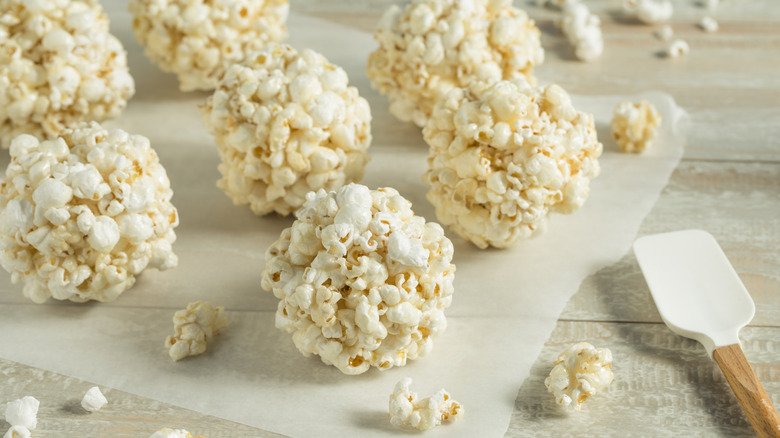
There's a long list of vintage snacks no one remembers anymore, but most modern foodies probably still (at least peripherally) remember popcorn balls. For folks in need of a memory jog, these treats comprised popcorn shaped into apple-sized balls and adhered together with molasses and butter. Other preparations replace the molasses with sweet, sticky elements like corn syrup or simple sugar syrup. Whatever the adhesive ingredient, it's all about the gooey balls of stuck-together popcorn and thick sugary syrup, creating a craveable, salty-sweet flavor profile. Popcorn balls have historically been enjoyed as a Halloween snack, covered in plastic wrap and ribbon and distributed to trick-or-treaters. Some foodies even pressed candy corn into their popcorn balls for a colorful, festive look.
The snack has been around for over a century. A recipe for "Pop Corn Balls" appears in E. F. Haskell's 1861 edition of "The Housekeeper's Encyclopedia" between two recipes for molasses candies. The instructions read simply: "Boil honey, maple, or other sugar to the great thread; pop corn and stick together in balls with the candy." Popcorn balls' heyday came with the first half of the 1900s. During the Halloweens of the time, homemade treats or whole fruits were more commonly handed out to trick-or-treaters than store-bought packaged candy (costumes also tended to be homemade). Popcorn balls were also a popular fixture at Halloween parties of the 1950s, a then-staple event of the holiday that typically gathered small groups of family and friends together for games like bobbing for apples and telling spooky ghost stories.
Popcorn balls faded after their peak in the 1950s
Perhaps further encouraging popcorn balls' distribution during the early-to-mid-1900s is the fact that popcorn was low-cost (which would have been particularly important during the Great Depression era). Likewise, sugar was rationed during World War II, redirecting public attention toward popcorn over candy as a more accessible yet fun snack. Over the years, popcorn balls have even served holiday double-duty as common Christmas tree ornaments. Records of popcorn garland date back to at least 1842, a practice thought to have arrived in the U.S. with German immigrants. This utilization harkens back even further to popcorn's earliest North American origins, as it was being made by the continent's indigenous peoples as far back as over 5,000 years ago as an ornamental decoration for religious ceremonies (momochitl, in Aztec).
Today, this symbol of retro nostalgia remains an old-fashioned, fondly remembered treat from Halloweens of yore. Even though swalty foods are having a moment right now, popcorn balls have decidedly fallen to the wayside over time. Many grocery retailers no longer carry the treat at all, although exceptions apply — a 12-pack of Kathy Kaye's Sweet & Salty Popcorn Balls is sold at Walmart. Fortunately, popcorn balls are simple to make at home and can be elevated to bolder versions like these homemade maple-caramel popcorn balls. The toughest part is nailing the ideal candy temperature (around 250 degrees Fahrenheit on a candy thermometer) and taking care to not burn your hands when working with the warm sugary syrup.