

How Long Does Bread Last In The Fridge?
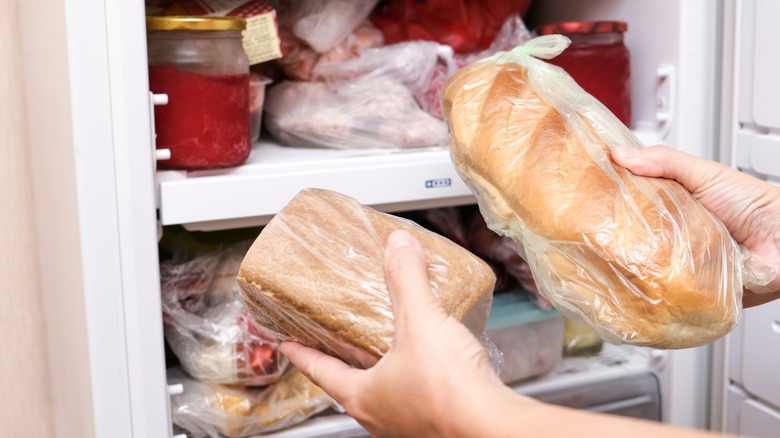
When you slice a sliver of fresh-baked sourdough bread, the crackle of the crust is heavenly. It's sad to think it's already started a countdown, but while nothing lasts forever, the fridge can certainly extend its shelf life. Refrigerated loaves can last one to two weeks, according to the U.S. Department of Agriculture, and that's a big improvement on the standard two to four days you get on the kitchen counter.
The science is simple. If you put bread in the fridge, mold growth slows down. Bread generally contains up to 40% water, creating an extremely moist environment. It also has high levels of carbohydrates for mold to feed on; basically, everything that pesky spores need to thrive at room temperature. To avoid this, the USDA recommends setting refrigerators to 40 degrees Fahrenheit or below, which is cold enough to stunt the growth of many mold varieties.
That said, this hack isn't without its sacrifices. Tasting Table asked Sara Lee for the best way to store bread, and Ernesto Martinez, the brand's R&D senior director, had some telling advice. "While refrigeration can help slow mold growth, it tends to dry bread out faster," he revealed. It sounds like a question of jumping out of the frying pan and into the fire. Clearly, you'll have to polish off that baguette in one sitting. What a shame.
Is refrigeration the way forward?
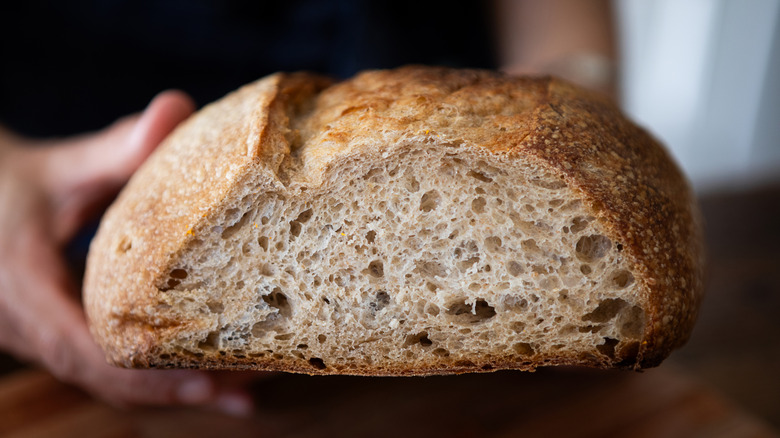
The truth is that refrigerating bread isn't a solve-all solution. Martinez's words of wisdom really pop that bubble, and he's not wrong. Fridge storage might beat bag storage — which tends to sport mold by day five — but refrigerators are fake allies when finding the best ways to keep bread fresh, leaving loaves stale and suitable for nothing more than last-ditch recipes, like making crunchy croutons.
Refrigeration quickens staling by accelerating two processes: recrystallization and retrogradation. Ultimately, starch molecules are responsible for bread's texture and revert to their original crystalline formations at different speeds, depending on storage conditions. Refrigerating may delay mold growth, especially when buying the types of bread that last the longest in the fridge. Anything with preservatives, like sandwich loaves, survives longer than artisanal or organic products, while whole grain is another winner, with its low moisture content. Enriched breads also keep well if wrapped properly.
However, fridge temperatures inevitably increase structural spoilage. Because of this, freezing is the preferred method, as it slows mold growth and starch retrogradation. The USDA says frozen bread is safely stored for three months. Either place your bread in plastic wrap or, if still sealed, keep it in its original packaging. Always use your own judgment, too. Bread is one of the foods you can't salvage once it grows mold. Any discoloration, sour-smelling aromas, or suspicious staleness or sogginess? Demote it to the bin, regardless of where it's been kept.