

The Pantry Staples That Will Clean And Shine Your Stainless Steel Kitchen Sink

Stainless steel is a surface that never lies. You wipe it down after doing the dishes, feel reasonably accomplished, then glance back and see the faint imprints of yesterday's pasta pot or a lingering, greasy film. It can feel demanding, but underneath the streaks, it's just metal with a thin protective layer that responds well to the basics — old-school basics that are already sitting in the pantry. For cleaner stainless steel, look no further than vinegar, baking soda, and lemon.
Start with distilled white or apple cider vinegar, which might sound silly until you remember vinegar is diluted acid. Spray or splash a little across the sink and let it sit until the acetic acid loosens the mineral buildup of hard-water spots and breaks through the thin film of grease. Wipe in the direction of the steel's grain; it has one, if you look closely, and that surface pattern is the texture the chromium-oxide layer formed when the steel was polished. Going with the grain helps the shine return without catching stray streaks.
For the visible grime that builds up around the drain, bring out the baking soda. When it turns into a paste under your sponge, the finely abrasive particles lift residue without scratching the steel. In fact, it actually might buff out any scratches. It's alkaline, so it handles odors and decomposing organic matter while your elbow grease does the rest. Rinse thoroughly and enjoy the sparkle. Finish your cleaning with lemon by cutting one in half and running it across the basin. The citric acid brightens the metal, and, as a bonus, it smells good too.
Back to the basics
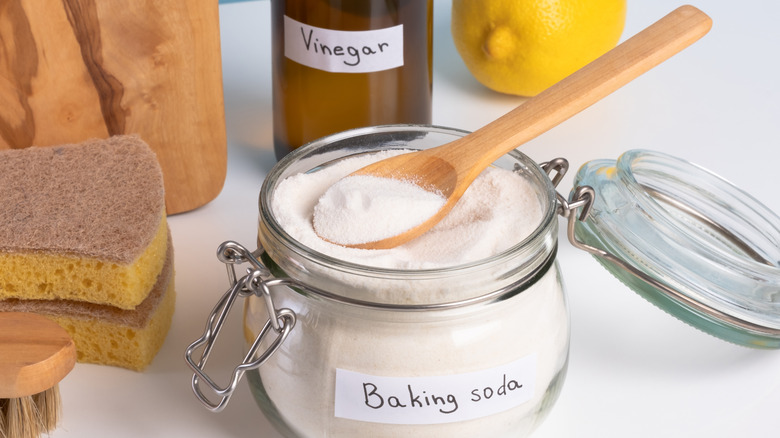
What makes this method so effective is what made it the default for generations. The basic pantry staples interact cleanly with metal, dissolve the kinds of deposits kitchens produce, and rinse fully without leaving residue. These are controlled, predictable reactions between common compounds and a common surface. And, if you like a polished finish, you can also add a single drop of neutral oil to a cloth and buff with the grain.
The interesting thing is how quickly this knowledge got buried under the avalanche of "specialty" cleaners. Before the middle of the 20th century, most households relied on combinations of vinegar, citrus, soap or borax, and ash. Then came postwar advertising that reframed homemade cleaners as outdated. Packaging was designed to look scientific, and slogans emphasized "the future," suggesting that DIY pantry-staple cleaners symbolized a lack of modernity. The idea that every surface requires its own spray bottle is actually just a brilliant marketing manipulation designed to train people to fork over their cash, and what came along with it is a bunch of single-use plastic packaging and synthetic fragrances that fill the cleaning aisle.
Nowadays, folks are returning to DIY cleaning solutions for a number of reasons. It's less expensive, for one, and it's also less toxic. Fewer endocrine-disrupting artificial scents mean fewer irritants. No stabilizers or dyes drifting through the air, no collection of half-used plastic bottles taking up space under the sink — which ends up looking the same or better when treated with basic acids and alkalis. You can also try it on bathroom tiles, shower doors, faucets, and even sticky refrigerator shelves. Once you understand how acids and alkalis behave, the whole house becomes easier to clean with these three simple items.