

10 Old-School Kitchen Cleaning Habits You Should Retire Immediately

We may receive a commission on purchases made from links.
We all have habits in our cleaning routines, some which may perplex those living with us, and many have been picked up from parents or older generations, and have stuck. If you used a particular technique as a child or young adult, chances are you are going to continue the same way once you have your own home.
However, modern kitchens are very different from those of just a few decades ago, and traditional cleaning methods may be unnecessary or even dangerous. Scientific knowledge has also advanced massively even since the turn of the century, and methods of removing bacteria and grease have advanced as a result.
From applying bleach to every surface, to cleaning glass with newspaper, some old-school cleaning methods have more effective options that are better suited to a modern kitchen. While most of us feel our current routines suit us well, finding better, more eco-friendly options could revolutionize the chores of kitchen cleaning. Let's take a look at old-school kitchen cleaning habits you should retire immediately.
Spray then wipe straight away
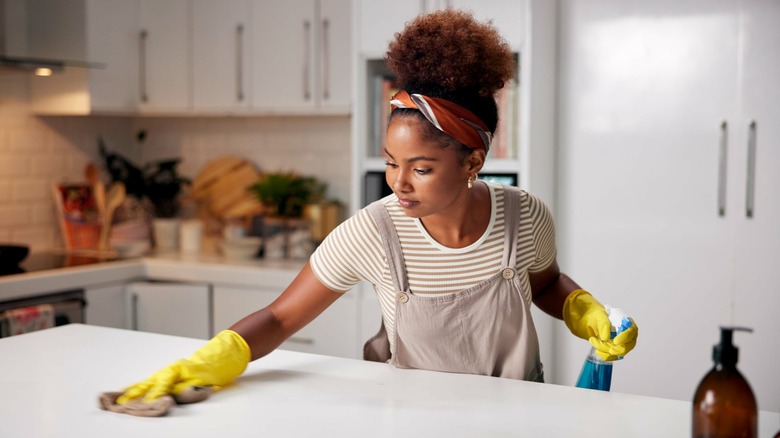
If wiping down your kitchen countertops usually consists of a quick spray of cleaning product followed by swiftly wiping it off, you may need to evaluate the effectiveness of your method. Contrary to what is often shown in cleaning commercials, wiping the product off straight away may still allow your worktops to look cleaner than they were, but it will do little for their hygiene.
Disinfectants and other cleaning sprays need contact time to be able to do their job, which in this case means killing bacteria and breaking down grease. The claim on the front of the bottle, whether it is to kill 99% of bacteria or remove more grease than the leading brand, cannot be achieved if it is wiped off after 10 seconds. Instead, the liquid should be allowed to sit on the surface, untouched, for the recommended time given in the instructions. The surfaces will look wet during this time, so it is important to resist the urge to dry them.
Contact time can range from 30 seconds to several minutes, and will vary depending on whether the product is antibacterial, a disinfectant, or a sanitizing spray. Wiping the counter surface after a few seconds will likely make the surface shiny, but it will also move the grease and microbes across the surface rather than removing them, which could even make the space even less clean than it was before. Next time, check the instructions and do another task while you let the cleaner do its job for a few extra minutes.
Using paper towels to clean your surfaces

Paper towels are incredibly convenient for cleaning up spills, and we can all remember helping our parents clean with them when we were younger, but the reality is that they are not a good option if you want to clean your kitchen effectively. In terms of the environment, they are obviously a poor choice, as is everything disposable, but they are also not even close to being the best option for a thorough clean.
Microfiber cloths are by far a better cleaning implement than a paper towel. They contain millions of tiny hairs that make them excellent at picking up dust, grease, and even bacteria, thanks to the large surface area of the fibers. And if you were worried they would leave pools of liquid behind as you clean, fear not. They can absorb up to seven times their own weight in water and other liquids, making them more than capable of replacing the trusty paper towels.
Microfiber cloths do a significantly better job at both cleaning the surface and making it look good, plus they are so much better for the environment. Paper towels are also quite abrasive, and could leave a scratch on your stovetop or best wine glasses as you clean them, making microfiber a better option for these tasks too. While paper towels have a use in the kitchen, regularly cleaning your surfaces and appliances is not it, and there are plenty of reasonably priced, sustainable options that can do a better job.
Cleaning glass with newspaper

If you grew up watching your parents or grandparents cleaning the windows and other glass surfaces with newspaper, it may be a habit you have continued in your own home. Newspaper was readily available and had enough abrasion to remove much of the grease from the glass, so in the absence of better options, it is easy to see why it was a popular choice.
It isn't without its disadvantages, however, and the most obvious one is ink transfer. If the newspaper is very wet, there is a chance that the ink could end up on window frames or sills, and if these are light-colored, this could cause more mess than the dirt on the windows in the first place. The newspaper can also leave residue behind, which means you will need to spend extra time cleaning afterward, which pretty much defeats the purpose.
Microfiber cloths offer a modern alternative to newspapers that come without the risk of smudged ink. You can buy cloths that are advertised specifically for glass, and can give you a streak-free finish on kitchen windows, glass stove tops, and refrigerator shelves without needing to rake through the recycle bin first.
Using vinegar to clean wood or marble
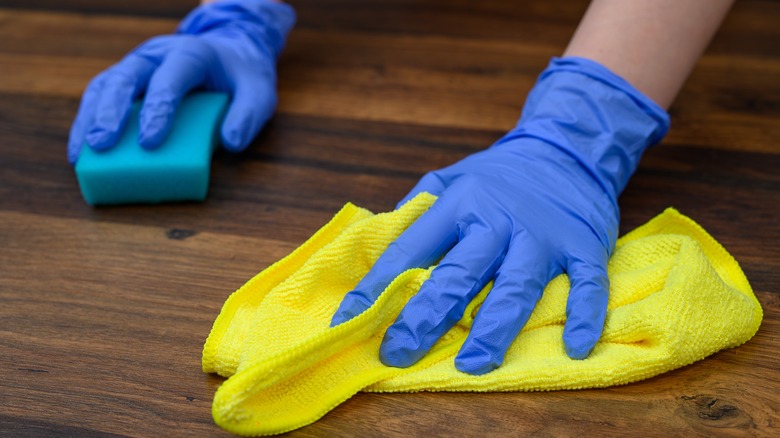
Vinegar is a brilliantly versatile cleaning product that has been used for decades to clean all sorts of things, particularly in the kitchen. However, while it may do a great job getting your stainless steel taps to sparkle, there are some places where it shouldn't be used.
The benefits of using vinegar over commercial cleaning products are that it is much less toxic, meaning you don't need to worry about children or pets coming into contact with it, it is more environmentally friendly, and it is generally much cheaper than branded cleaning agents. However, it is an acidic liquid, meaning that it can cause damage to certain surfaces if you are not careful.
Vinegar, or solutions containing it, can alter wooden or marble surfaces, especially if not used correctly. On wooden surfaces, for example, persistent use of vinegar can dull the finish, especially on wooden floors. Similarly, marble or granite worktops or other stone surfaces can lose their luster if vinegar is used to clean them, particularly if it is too concentrated. When cleaning with vinegar you should always dilute the solution and do a test patch in an unnoticeable area before applying the cleaning solution to the whole surface. When it comes to wood or stone, finding a product that is designed for those materials is probably a better option.
Choosing the same sponge for multiple tasks
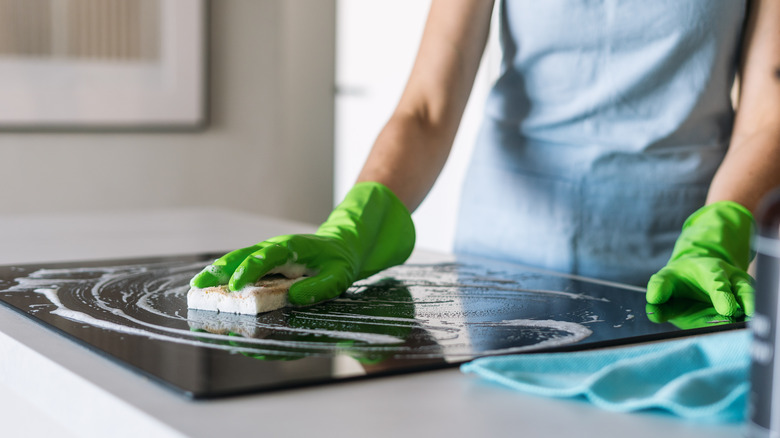
The trusty sponge is an essential item in most kitchens: washing dishes, mopping up spills, and helping to keep the kitchen cleaner in general. Or so we assume. But if good sponge hygiene practices aren't followed, you could simply be smearing dirt and bacteria from one surface to another, meaning your kitchen counter tops are nowhere near as clean as you may think.
While sponges may be great for soaking up water and spills, they are also incredibly good at holding on to something else: bacteria. A study found that kitchen sponges harbor more types of bacteria than the toilet, and five of the bacteria identified can be harmful or cause disease. Worryingly, even sponges that had been cleaned either by boiling or microwaving contained the same quantity of bacteria as the dirty ones.
This means that using one sponge to clean your entire kitchen could mean spreading dangerous bacteria to more places, including food preparation spaces. A better option may be to reserve one sponge for cleaning food surfaces, another for washing dishes, etcetera. Regular replacement of sponges is crucial, too, especially if they are starting to degrade or smell funky. Another, more eco-friendly option, is to switch to antibacterial microfiber cloths, which can be regularly washed at a high temperature and then reused.
Overloading the dishwasher and running fewer cycles
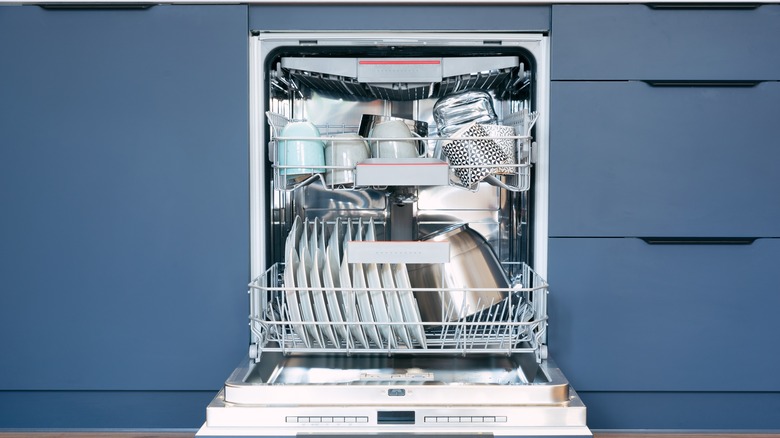
Dishwashers are close to a miracle invention for the kitchen, and for those of us who grew up washing every dish by hand, they are the ultimate convenience. Knowing how often to run the dishwasher can be tricky, and many people choose to hold off pressing the start button until every inch of space is filled, to save electricity, water, and detergent. However, this is not the optimum use for the appliance, and could end up costing more money in the long term.
The first issue you can run into with an overfilled dishwasher is less-than-sparkling dishes. Space is needed between items for the spray to reach every surface, and if plates, glasses, and pans are crammed together, the washing will be inefficient. The crockery and glassware also has a higher chance of being damaged if they are scraping against each other during the wash.
The dishwasher itself can also be damaged by being overloaded, causing leaks or blockages due to an overload of food waste from so many plates. These issues can cost more money overall than running shorter loads more often, especially if you are re-running cycles when the plates come out dirty. To keep your dishwasher at its best, be sure to scrape all food waste into the compost bin before loading the dishwasher, and keep appropriate space between the items, to get them as clean as possible.
Mixing household chemicals
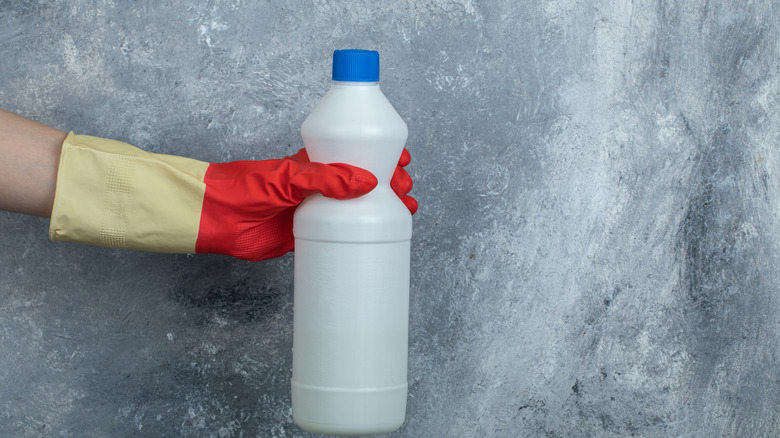
In the mission to keep the kitchen clean, it can be tempting to use a wide range of cleaning products, each with different purposes and claims on how they are going to make your life easier. While using specific products for different surfaces can be a good move to protect the different materials, it is imperative to check what each one contains, as mixing cleaning chemicals can have catastrophic results.
The most common issue comes when mixing bleach with other cleaners, as toxic chlorine gas can be produced. However, this does not only apply to neat bleach, since many commercial cleaning products also contain the substance. If a cleaning product contains any bleach, it must not be used at the same time as ammonia, which will produce chloramines, or acids, which will create chlorine gas. In a small space such as a kitchen, either of these gases can cause serious respiratory issues, and in extreme cases even death. If you have any respiratory symptoms while cleaning, or feel irritation in the eyes or nose, leave the house immediately and seek medical help.
Most cleaning products nowadays have very clear instructions on the label that say "contains bleach" or "do not mix with bleach." Be sure to always check product labels before cleaning the kitchen, or any other room in the house, to keep yourself and your family safe.
Bleaching absolutely everything

When it comes to killing mold, cleaning drains, or removing stains on white dishcloths, bleach is a kitchen superhero. Many people, however, turn to bleach for virtually every cleaning task, and for many jobs, there is simply no need to use this powerful agent.
Household bleach is usually a 5% solution of sodium hypochlorite, and when used sparingly, is unlikely to cause major health issues. Bleach obviously has a distinctive and overpowering smell, and constant exposure may cause respiratory issues such as wheezing, especially in those with asthma or young children. Ingestion of bleach can cause serious life-threatening medical issues, and although this is unlikely in adults, children and pets can be at risk if bleach is used regularly on floors and eating surfaces. A study found that children in homes (and schools) where bleach was regularly used for cleaning has a "statistically significant" increased rate of infection. This was thought to be down to both the irritants in the bleach, and the destruction of microbes, good and bad, from the home.
This doesn't mean that using bleach in the kitchen is not advised, simply that it should be saved for jobs where it really excels. Cleaning counter tops and floors, for example, can easily and safely be done using bleach-free cleaning products, though never at the same time as a bleach-based one. If you really struggle to shake the bleach habit, try diluting it first, to reduce the overall exposure and keep everyone in the household safe.
Scrubbing all pans with steel wool
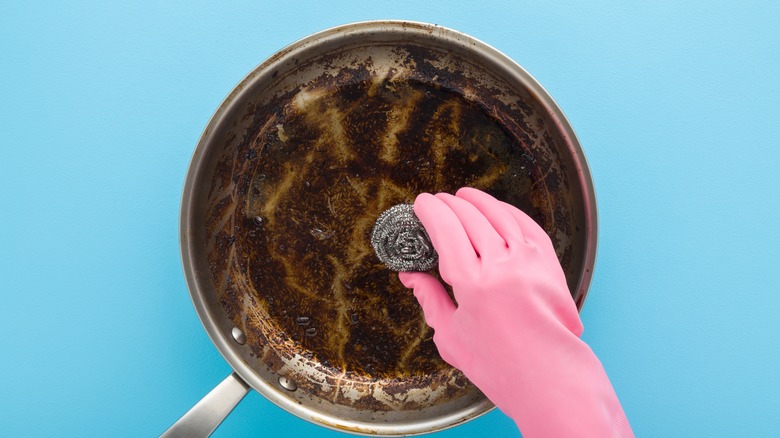
Steel wool can be a brilliant old-school cleaning tool, and it is great for scrubbing oven racks, and barbecue grills. However, when used on certain items in the kitchen, it can ruin the cookware or even be dangerous, so it shouldn't be used for all cleaning jobs.
The first thing to consider when using steel wool is its grade. Coarse steel wool is incredibly abrasive, and best kept away from the kitchen and saved for DIY. Extra fine or fine steel wool, however, can be handy to have in the kitchen cupboard, as long as you use it selectively. Cast iron and stainless steel are the best materials to use it on, though your iron pans may need re-seasoned afterward.
Keep the steel wool away from your non-stick cookware, however, as it is likely to scratch the top coating. Once the coating is damaged, dangerous particles can be released into the food, and therefore end up inside the bodies of you and your family. Pans from before 2014 are of particular concern, as the most dangerous of these chemicals, Per- and Polyfluoroalkyl Substances (PFAS) have since been removed. If you are using steel wool, choose a fine grade version, soak the item first if possible to make it easier to lift the grime, and work gently to avoid scratching or damaging your precious kitchen items.
Soaking wooden items in water
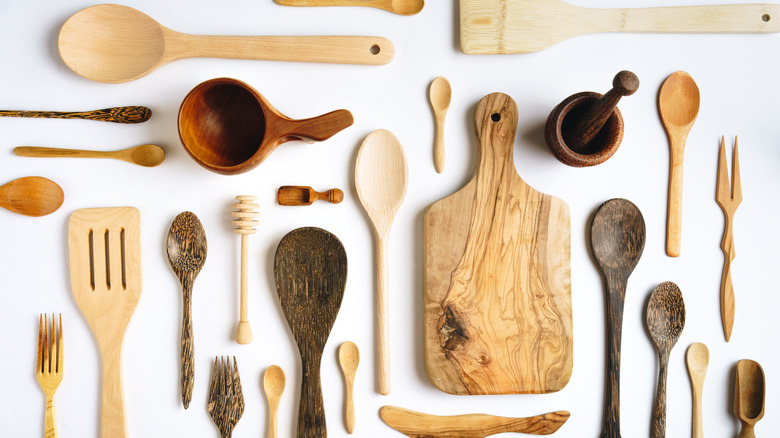
Whether we are using it as an excuse to put off doing the dishes for a while, or have a particularly stubborn stain to remove, soaking dishes in the sink is standard practice after cooking a large meal. For wooden items, however, it can seriously reduce their lifespan, and should be avoided where possible.
Because wood is a porous material, it absorbs water, meaning that soaking it for a long time can cause it to swell in size. As it dries, it may do so unevenly, meaning the wood can warp or crack, and your expensive cutting board may end up in the trash prematurely. This applies to bamboo, as well, which is technically a grass rather than wood, but behaves in a similar way.
Instead of leaving them soaking, wooden boards and utensils should be washed quickly with soapy water, and dried immediately. They can be treated with oil regularly to make them more moisture resistant and reduce the risk of warping. This can be done once a month, or whenever you have the time.