

10 Easy Kitchen Decor Swaps That Instantly Make Your Space Look More Expensive
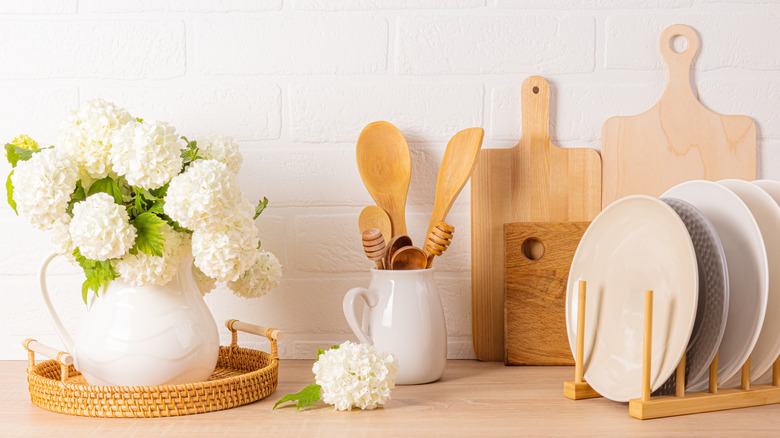
Refreshing the decor in your kitchen is one of the easiest ways to update the space without a full remodel. But unless you are careful, a designer canister here and a luxurious vase there can easily end up obliterating your savings.
So, how do you make your kitchen look expensive without the price tag that comes with it? Lauren Saab, founder and principal designer of Saab Studios, believes that there is a way out. After all, true elegance doesn't lie in excess — by getting more intentional with your choices, your kitchen can look curated. Take your choice of materials, for instance. Instead of opting for synthetic accessories, it helps to make the switch to natural materials. Those plastic cutting boards? Swap 'em for a statement marble piece and you'll never look back. Fake fruit bowls and florals can detract from the look of your kitchen, so it's helpful to make the switch to fresh produce and dried floral arrangements. We share even more expert tips below.
Swap harsh lighting for table lamps
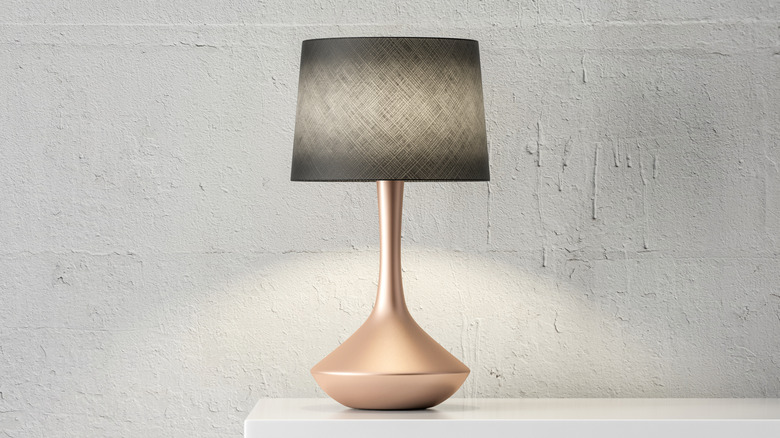
The unflattering glare of overhead fluorescent lights. Bright white LED panels that make the most lovingly prepared meal appear bleak rather than inviting. Solitary central fixtures that douse the space in unwanted shadows. If kitchen lighting isn't chosen with precision and care, it can make the space feel like an impassive laboratory rather than a creative, culinary haven. "Harsh overhead lighting can make a kitchen feel cold and clinical. These types of lights wash away the [warmth] of natural products such as wood, stone, and woven textiles," Lauren Saab agrees.
Instead, she wants you to fall in love with the romantic glow of a table lamp or two. Linen and lightly textured shades are winners in her book for dousing the space with a softer, diffused glow — almost like a cozy cafe. As a rule of thumb, the bottom of the lampshade should generally be at eye level so that you aren't blinded by the glare of the lightbulb.
Once you have chosen the right lampshade, you'll want to position it with care: The corners of countertops or side buffets by the kitchen window make for worthy candidates. These lamps can then serve as a crucial source of ambient lighting — an important cornerstone in the layered lighting formula that gives your kitchen an elegant look with minimal effort."When people walk into a kitchen with layered lighting, the space feels cared for and intentionally lived, not staged or sterile," she says.
Swap mismatched containers for uniform storage
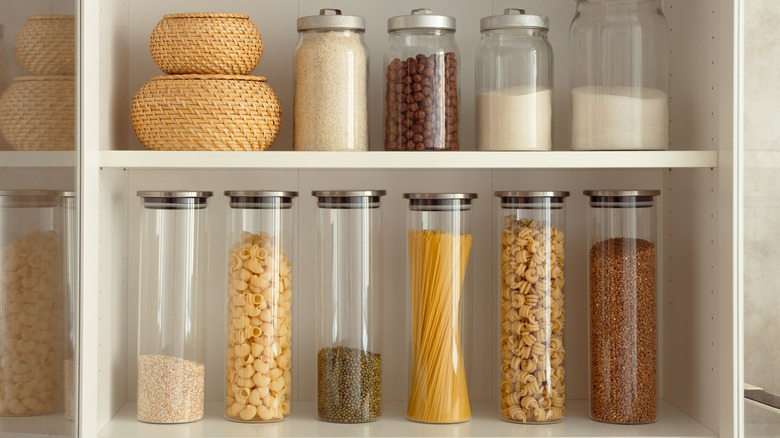
Open shelving might be cheaper than installing full kitchen cabinets, but the visual impact of this newfound real estate can be dampened if it is cluttered with mismatched containers — picture misshapen metal tins standing next to mason jars with faded labels and haphazardly stacked disposable plastic containers. "Mismatched containers create visual noise. Even if the pantry is well organized functionally, a jumble of colors, labels, brands, and sizes makes the space feel cluttered," Lauren Saab states.
A pocket-friendly way to bring some law and order to this anarchy is to use uniform containers. "Using a consistent type of container in various sizes will simplify the appearance of the storage area," she adds. From glass, ceramic, and plastic to stainless steel, there are several worthy materials to choose from. While each has its pros and cons, it helps to stick to one material family to create a cohesive look.
Clear containers are always favored because they allow you to see the contents at a glance, helping you save some crucial minutes when planning the week's grocery list. "The repetition builds rhythm and calm. A cohesive storage system makes the kitchen feel elevated immediately," Saab advises. And what can you do with all those mismatched containers? Larger containers can be used as storage bins inside the refrigerator, while the lids can be repurposed as a spoon rest or coaster on the countertop.
Swap cluttered countertops for curated displays
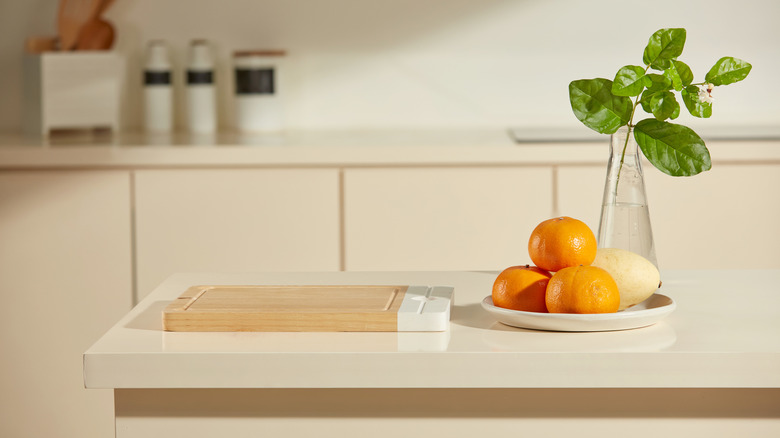
Countertops are often among the most expensive design elements in the kitchen, from your choice of material to the installation. But the most thoughtfully chosen finish can turn invisible in the kitchen if every spare inch is covered with a blanket of unopened mail, orphaned USB cords, and last week's groceries. Reclaiming the visual impact of your countertop isn't just about reducing clutter, but about becoming more intentional with the items you choose to display on this precious real estate.
Not sure where to get started? Lauren Saab wants you to first purge all the clutter from your countertop and then get introspective on the select few items that you'd like to see every day. "A decorative vase filled with wooden utensils, a sculptural bowl, a small plant, or a candle are all good options," she says.
If your counters feel cluttered but not messy, it also helps to consider this: Are there too many contrasting colors competing for attention? If the answer is yes, it helps to instead employ a uniform color scheme across your appliances and to choose coordinated containers in the same shape and size. If you are looking for a shortcut to creating an artful display, Saab has a few tricks hidden up her sleeve as well. "Think about arranging the items on the counter like you would arrange a display on a coffee table. The intention is to tell a story, not to create a storage area," she advises.
Swap synthetic accessories for natural materials
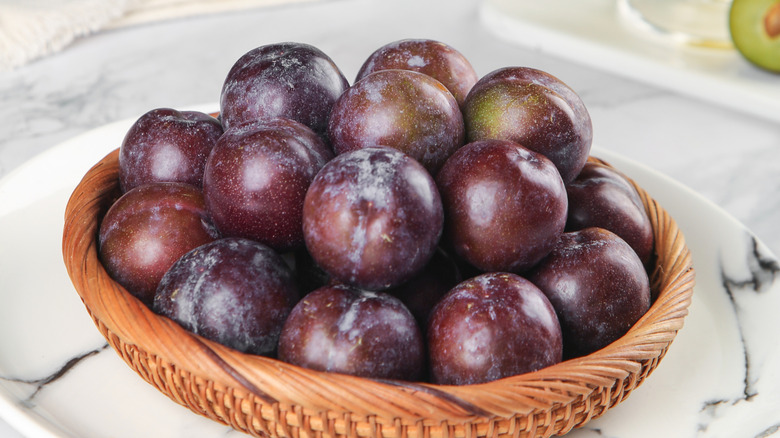
There are several synthetic accessories camped out in the average kitchen, from plastic bins and baskets to acrylic soap dispensers and caddies. While these are often chosen for utilitarian purposes, they might be silently detracting from the perceived value of your kitchen. Unlike natural materials that age gracefully, synthetic materials, such as plastic, are prone to chipping and discoloration. This can make a kitchen feel unconsidered and thrown together in a hurry.
Lauren Saab stands in agreement. "Synthetic accessories in the kitchen often give an unintentional bargain feel. Artificial fruit bowls, plastic drying mats, and resin boards generally lack texture, history, and depth," she observes. As an experiment, she wants you to try leaning a stoneware platter artfully against the backsplash — then stand back and admire the way it immediately dials up the charm and visual interest of the space.
So, which materials are topping her list of must-haves? Woven baskets, carved wood, handmade ceramics, stone, and clay will all earn you brownie points. Subtle blemishes and differences in texture and finish only add to the charm, suggesting that each piece has been made by hand, rather than being mindlessly mass-produced on a conveyor belt. "Natural materials develop a beautiful patina and provide a warm, lived-in atmosphere that artificial materials cannot replicate," she says.
Swap plastic cutting boards for wood or marble
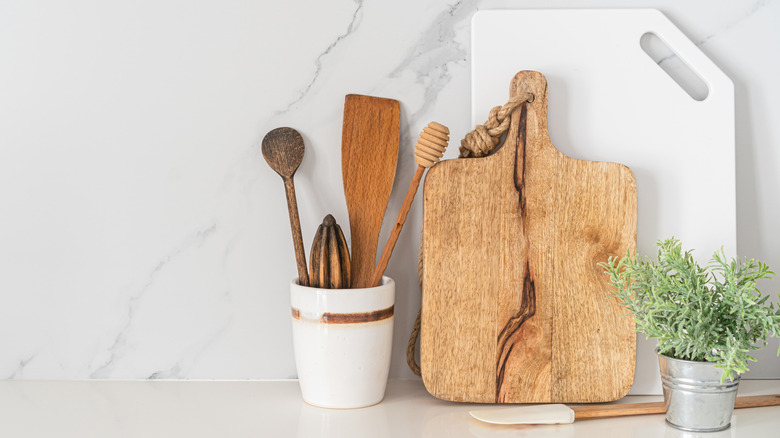
Luxurious kitchen decor is rooted in authenticity and intentionality — elegance doesn't stem from flashy finishes. Rather, each element is chosen for its individuality, lending a one-of-a-kind charm to the space. Plastic cutting boards stand as the antithesis of this ethos. While favored for their versatility and ease of maintenance, they can appear mass-produced rather than curated. "The color, sheen, and slight warping over time detract from the visual harmony of the space," Lauren Saab rues. Then, of course, there is also the fact that plastic cutting boards aren't as safe as you thought: With consistent usage, you face the risk of consuming up to 50 grams of microplastics annually.
Instead, you'll want to opt for more thoughtful staples that can also double as a decorative statement: Wood and marble cutting boards are more than happy to do the honors. "A wooden cutting board with a visible grain can be leaned against the backsplash and resemble a work of art. A marble cutting board can serve as a centerpiece for a vignette with candles, salt cellars, or a pepper mill," she muses.
For creating that stop-and-stare moment at your next dinner party, it helps to choose a striking emerald hue for your marble cutting boards — a dramatic color that can easily elevate the simplest slab of cheese. "Rotate the placement and wipe them clean periodically, so they remain part of the visual flow and not just a functional item," she adds.
Swap outdated stools for sculptural seating
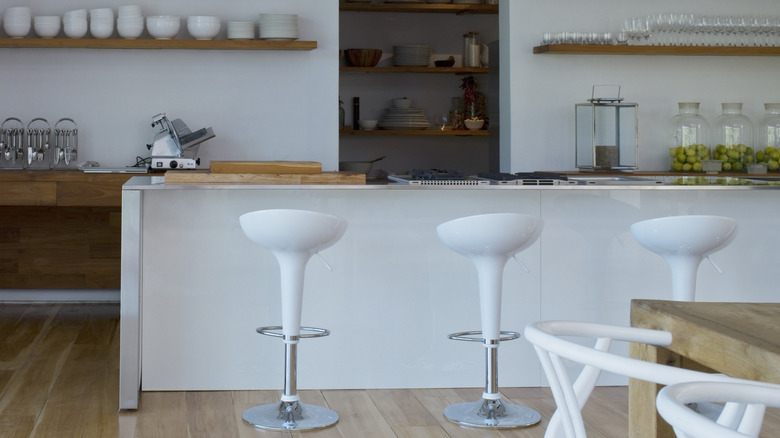
Kitchen islands offer more than just counterspace — you can fit yours with shelves, cabinets, and integrated appliances. However, the most well-designed kitchen island can fall flat if it is flanked by ho-hum seating options. Lauren Saab says, "Basic bar stools with metal frames and generic upholstery flatten the look of a kitchen. They feel purely functional."
When the seating is chosen with care, she believes that the kitchen island can become a place for the family to gather, rather than just a spot to dine and dash. "A stool should add form and presence," she affirms. In your quest for non-boring seating options, you'll want to keep an eye out for sculptural silhouettes — Saab believes that stools with curved wooden legs or exaggerated backs can feel more artisanal.
When choosing the right stools for your kitchen, it helps to keep certain measurements in mind. A minimum gap of about eight inches between the counter and the stool is a must for adequate sitting room. You will be spoiled for choice when it comes to materials, but it helps to echo some elements that are already present in your kitchen — warm wood tones, woven cane backs, and linen-covered seats all score highly with Saab for the warmth and tactility that they bring to the kitchen. In matters of design, swivel chairs lend themselves well to gatherings, as your guests have the option of turning around and being a part of every conversation.
Swap fake florals for dried arrangements
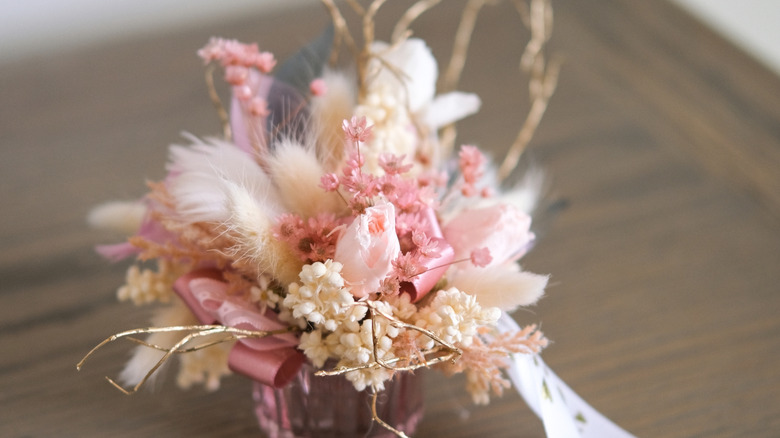
If you have a hard time keeping a cactus alive, the allure of fake florals is easy to understand. Low-maintenance additions that do not self-destruct within a few days, like real flowers — what's not to love? But you won't find Lauren Saab too impressed, "Fake florals usually fall flat because they do not have the texture or movement of natural materials. They tend to look static and overly perfect."
Tactile textures and a sense of dynamism are what make real flowers a worthwhile addition to any space. But if you are looking for a compromise, dried arrangements can deliver the visual impact of real flowers without requiring the same level of maintenance. While fake florals work hard to manipulate the look and feel of their real counterparts, dried florals retain the quality and colors of the actual thing for up to 10 years, making for an endless keepsake. "The beauty of dried arrangements is that they age gracefully, instead of trying to imitate perfection," she adds.
For making the most of these long-lasting florals in your kitchen, Saab wants you to choose your colors with care. "Consider warm, muted shades like olive green, wheat, lavender, or eucalyptus. Place them in a ceramic or glass vessel on the island or near a window," she says. If you are looking for styling ideas that go beyond the ordinary, you can even frame them in a shadow box or fashion them into a wreath.
Swap fake fruit bowls for statement centerpieces
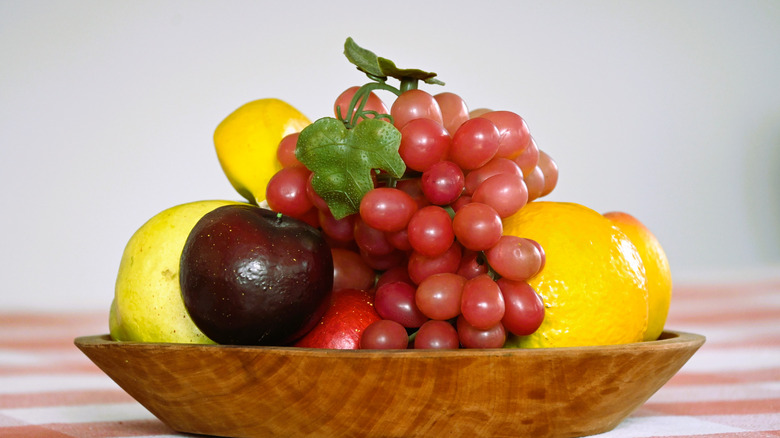
If you were to quiz any interior design expert on the outdated decor items that don't belong in your kitchen, they would beg you to toss out your artificial fruit bowls. "Fake fruit bowls rarely look convincing. Typically, they are too shiny and the colors are too vibrant," Lauren Saab explains. It is believed that fake, decorative fruits rose in popularity around the middle of the last century, from the 1940s to the 1970s, and it is perhaps easy to see why. After all, fake mangoes will never develop brown spots, and fake grapes will never grow mold.
But there is something about the plastic sheen of fake fruits that can never compete with the real thing. "To create a more interesting focal point, try placing something sculptural on top of the center of your kitchen island or table," Saab suggests. Unlike an impersonal bowl of fake fruit, a carefully chosen centerpiece can lend worthy insights into the personality of the one who selected it. Think handcrafted wooden bowls, statement stone troughs, and ceramic platters with irregular edges. You can always add another layer of elegance to your kitchen with pedestal fruit bowls. She advises using this piece as a canvas for displaying seasonal items. "Try using winter citrus, whole nuts in their shells, or simply leave it empty. A centerpiece should tell a story of how the home is lived and not feel overly staged," she says.
Swap wax candles for elegant diffusers
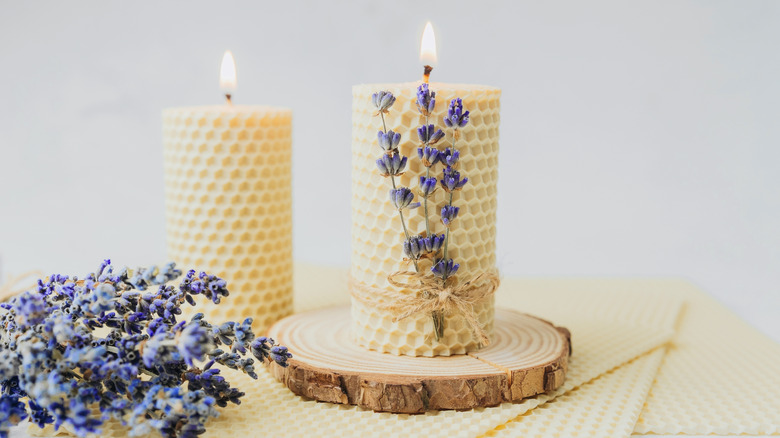
When they are sitting in coordinated clusters in stores, wax candles can seem like the ultimate kitchen decor must-have. But it is only once you bring them home that you realize the strings that come attached: wax drips, soot, and uneven melting. "Wax candles can collect dust, discolor, and often get forgotten once the wick burns down unevenly," Lauren Saab says. And then, there are the concerns of indoor pollution — candles made with paraffin wax are known to leach harmful chemicals into the air.
If you are looking to add some scent to your kitchen, a sleek reed diffuser will serve as a polished finishing touch when placed next to a stack of cookbooks on a shelf. "A diffuser provides a gentle, consistent scent without cluttering the visual field of the kitchen," she agrees. A reed diffuser is best suited for smaller spaces, but you can always opt for multiple diffusers to scent a larger kitchen. However, attention needs to be devoted to your choice of scent: Saab finds it best to opt for fragrances that complement, rather than compete, with the general aromas that emanate from your cooking. "Warm citrus or soft herbal notes like rosemary and basil are all good options. Position the diffuser near a window or in a corner of the countertop, allowing the fragrance to diffuse softly throughout the kitchen," she says. The ultimate goal? Ensuring that your kitchen smells warm, inviting, and lived-in, rather than overly perfumed.
Swap digital clocks for statement wall art
When you are looking to precisely time your cooking and baking endeavors, having a digital clock slung on a wall near your stove can be a boon. However, the industrial design of these clocks can make the kitchen feel like a sterile, commercial facility, rather than a space where recipes and memories spring to life. You won't find any argument from Lauren Saab. "Digital clocks can make a kitchen feel utilitarian and tired. They add nothing visually," she says.
The blank expanse of the walls in the kitchen can instead be leveraged as a canvas for showcasing your personality and your life story. "Select artwork that is meaningful to you. A charcoal sketch. Framed photographs of landscapes. Warm neutral prints. Your artwork needs to be present, but not overbearing," she advises. While botanical prints and food-themed artwork are always welcome in the kitchen, you can also turn a blank wall into an art gallery-style display of your favorite family memories. Instead of hiding your decorative plates in a dusty hutch, you can also choose to display them on a wall for a nostalgic touch.
According to Saab, the best spot to hang artwork or wall art in the kitchen is at the level where your eye naturally lands on the wall. "When you add meaningful pieces of artwork, the kitchen becomes a place to live, not just cook," she concludes.