

We Asked An Expert: Do Your Kitchen Appliances Need To Be The Same Brand?
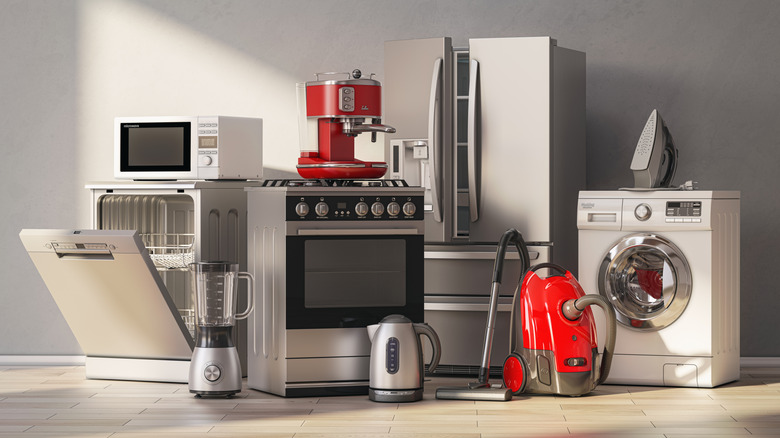
Whether you're renovating the room or just need a new stove or fridge, buying kitchen appliances from the same brand is an easy way to ensure a consistent look — yet this habit can also feel limiting and get expensive. We asked lifestyle expert, cookbook author, and award-winning fashion designer Peter Som to weigh the pros and cons of this shopping practice and help you decide what to purchase.
Som said that brand loyalty isn't necessary when purchasing kitchen appliances. "As long as the finishes and colors harmonize, mixing and matching can actually make a kitchen feel more personal and collected over time," he said. In contrast, a whole set of similar appliances can make your kitchen look a little too uniform and impersonal. Since everyone uses their kitchen differently, this choice can be cost-effective, too. For instance, if you bake a lot and have a pricey oven from a top-of-the-line brand, shelling out for matching appliances that you don't use as often is likely a waste of money. Going for a more affordable brand or even buying kitchen appliances secondhand would be a much better choice.
These reasons explain why mixing appliances is the common kitchen design faux pas that doesn't matter at all, but that doesn't mean you should go willy-nilly with colors, materials, and finishes. Som has some more tips to help you achieve a harmonious-looking kitchen, and also told us about the advantages of ordering appliances from one company.
More expert tips for choosing kitchen appliances
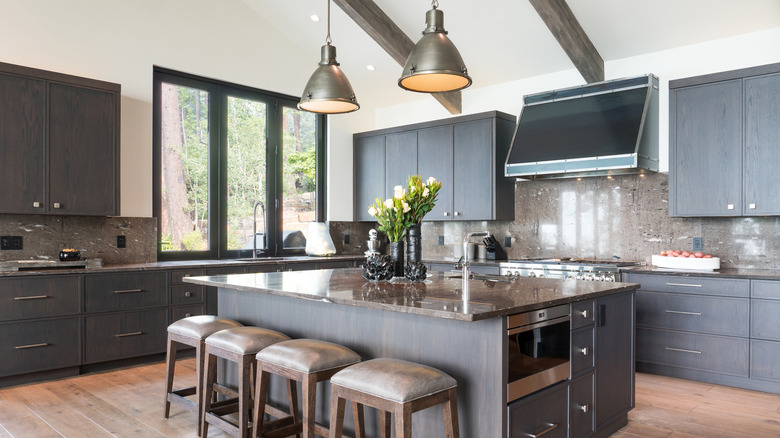
To successfully mix and match appliances, Peter Som says "the key is consistency in tone — if you're going with stainless, make sure the finishes are similar, and if you're mixing materials, keep the palette tight so it all feels intentional." Stainless steel finishes like matte, brushed, and mirrored can indeed look disjointed when put together in the same room. And if you can't decide between metal, marble, stone, and more, keep everything within a simple color family, like a handful of cool tones, earthy hues, or neutrals accented with colorful appliances for a bolder kitchen.
That said, prioritizing aesthetics over functionality is a big mistake to avoid when buying kitchen appliances. Som points out that ordering from one place has practical advantages, especially when it comes to high-end brands. "Their appliances are designed to work seamlessly together (think ventilation, sizing, panel integration), and having the same manufacturer can simplify delivery, installation, maintenance, and even repairs," he explained.
If you're a serious home cook who spends hours in the kitchen, appliances that work together like a well-oiled machine can be a headache-saver. Plus, fixtures that see more use will need repairs sooner. And when remodeling, it can be tedious to coordinate different appliances from different sources, then wait for all of them to be delivered. If you're willing to invest the time and energy into assembling a varied collection of appliances, go for it — but if you'd rather keep things simple, there's no problem with sticking to one brand.