

10 Types Of Kitchen Sinks, Explained
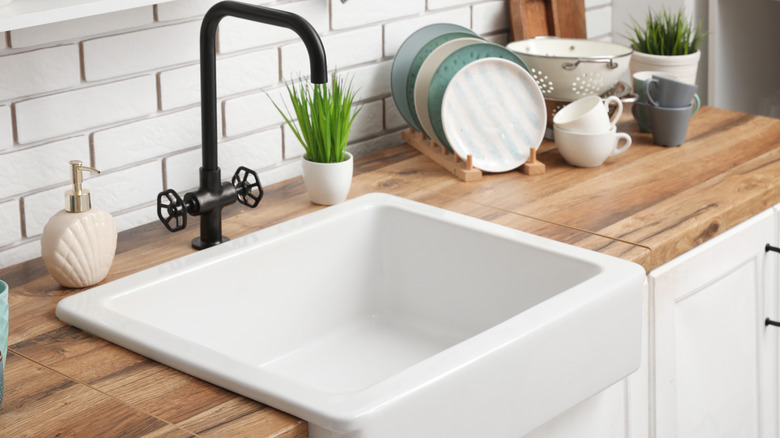
Walking into a store to buy a kitchen sink without doing your homework beforehand is like showing up for a driver's license test without having ever touched the steering wheel of a car. Do you need a single bowl or double basins for your cleaning needs? Would you prefer topmount, undermount, or flushmount for your installation? Do your design preferences lean towards rustic farmhouse sinks or modern integrated options? Walk in without a basic understanding of the different kinds of kitchen sinks, and you run the risk of getting lost in the sales talk and ending up with an option that doesn't really suit your needs.
So, what do you need to know beforehand? Start by detailing your budget for the installation — topmount sinks are more economical than custom-made flushmount options. The layout of your kitchen cabinets can lend further insight into your needs. For example, a corner sink can make the most of dead space. Meanwhile, serious cooks will appreciate the cleaning capacity of a single bowl or drainboard sink. A thorough understanding of the different kinds of kitchen sinks can help you choose the one that best suits your space and routine.
For making an informed choice, it also helps to go through the ultimate guide to choosing a kitchen sink. Once you have brushed up on the basics of what you'll require, from the materials to the placement of the drainage, you can dive into the various types of kitchen sinks.
Topmount sink
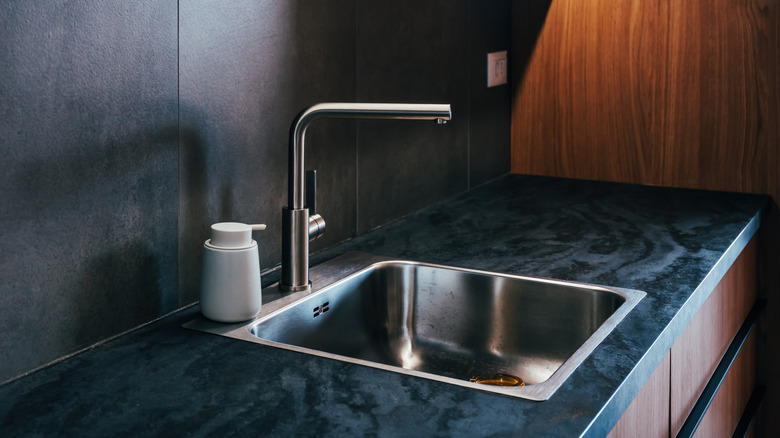
If easy installation is topping your list of priorities, then you won't want to look any further than a topmount sink. True to its name, this sink is installed by cutting a hole in the countertop and then dropping in the sink from above. The thin, raised rim of the sink rests on the edge of the countertop, while the basin sits within the hole.
Topmount sinks are ideal for those looking to change their existing kitchen sink without all the muss and fuss of drilling additional holes. As the rim sits on the edge, the joint is usually sealed with silicone for durability — this ensures that your countertop doesn't get chipped or scuffed with time. This sink design is a sporting team player that works well with a wide array of countertop materials, including laminate. The raised rim also prevents water from getting in between the sink and the countertop.
However, a topmount sink is not the ideal choice for every kind of kitchen. Since the raised rim takes up precious countertop space, it may not be the preferred choice for cramped spaces. Daily cleanup can also become more demanding as the raised rim prevents you from sweeping food particles and residue directly from the countertop into the sink.
Undermount sink
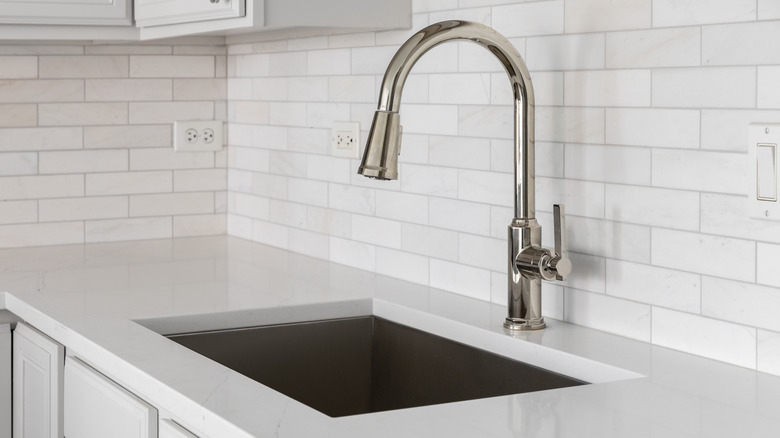
The topmount versus undermount sink has long troubled designers and DIY renovators. As the polar opposite of a topmount sink, undermounted option seeks to fulfill all the promises that its counterpart falls short on.
You may have already guessed that undermount is a type of sink that's installed from beneath and is fixed to the lower side of the countertop to create a smooth, seamless finish. The benefits of this sink design are easy to grasp. For starters, the absence of a raised rim means that this sink frees up more countertop space — a boon for small kitchens where every inch is precious. The seamless transition from the countertop to the sink also means that food spills and particles can be swept inside directly for more effective cleaning.
Undermount sinks also hold the upper hand over topmount sinks in terms of long-term maintenance. The raised rim of the latter can serve as a magnet for food debris, crumbs, and build-up — an issue that you won't face with undermount sinks. However, this sink design requires a vigilant eye. If the caulking between the sink and the countertop wears out with time and usage, it can cause potential water leaks. However, the good news is that you can reseal the edges yourself with a silicone kitchen sealant over the course of an hour.
Flushmount sink
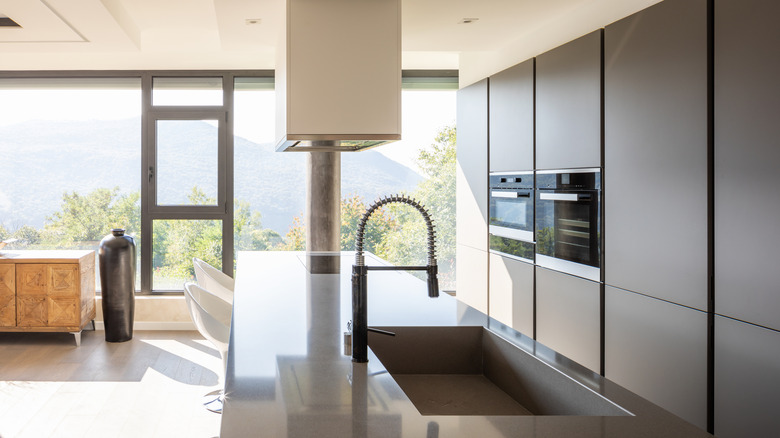
Looking for a kitchen sink design that can negate the drawbacks of topmount and undermount sinks? It is time for a new candidate to enter the arena: Flush mount sinks. This sink design gets its name from the fact that it sits flush against the countertop to create a seamless, cohesive look.
Topmount sinks often come with the concern of food debris getting trapped around the raised rim. But flushmount sinks handwave these worries as they are welded together to create a seamless transition from the countertop to the sink. Undermount sinks, on the other hand, face the issue of the exposed countertop — as the sink is installed from underneath, the rim of the countertop is prone to scratches and can get chipped by heavy pots and pans.
Flushmount sinks negate these concerns by not leaving any exposed rims that can be prone to breakage. Without any gaps between the countertop and the sink, you also don't need to worry about any bacteria, dirt, or mildew camping out around your sink. However, the intricate installation process of welding the sink and the countertop together can mean that you'll be shelling out more bucks than you would for a topmount variant. Future repairs will also need to be done by a professional since flushmount sinks are custom-made for your countertop material with tailored measurements.
Single bowl sink
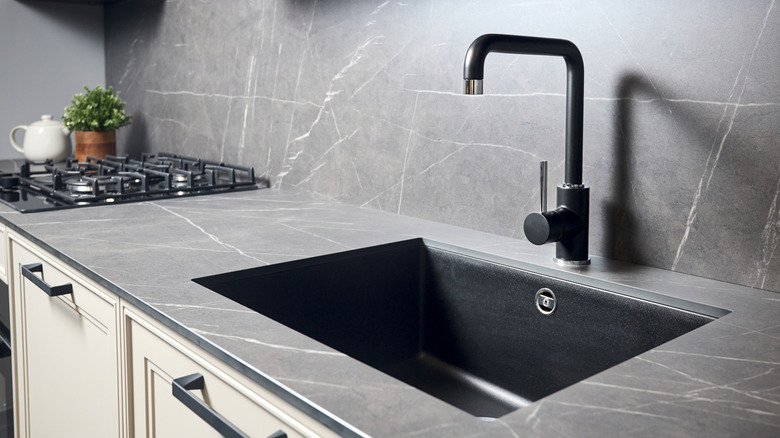
Once you have finalized the way you want your sink to be mounted, it is time to consider the design — and specifically, which options can help you maximize your workspace. The single bowl sink is a popular choice for those in the quest of an efficient workhorse.
Unsurprisingly, a single bowl sink features just that: A large, uninterrupted bowl without any dividers. You'll most commonly encounter this design in stainless steel, but granite composite and ceramic are also popular choices. As you may have pieced together by now, the single trough serves as an efficient resting spot for absorbing the aftermath of Sunday brunch — this includes bulky cookware, woks, and pots. This can, however, prove to be a double-edged sword as you'll have to work your way around the jumble of pots and pans each time you need to rinse anything.
The straightforward design also doesn't require much elbow grease on the cleanup front as there aren't any hidden crevices and corners for grime and debris to collect. If you are looking to keep yours spotless, it helps to read up on all the clever hacks to clean your kitchen sink.
Double bowl sink
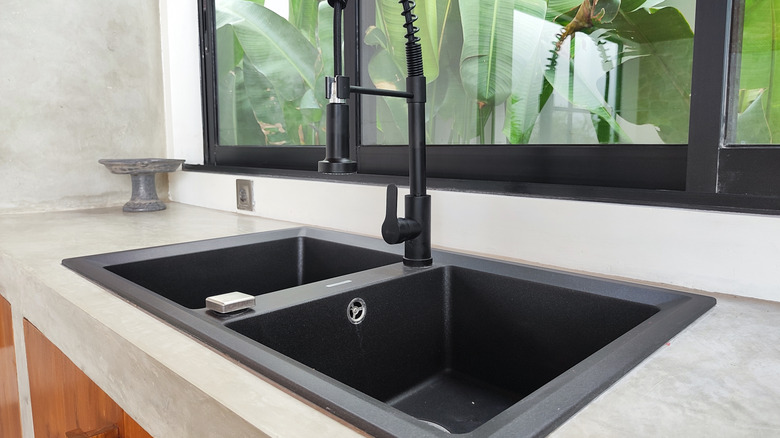
If you're not totally convinced on the classic single bowl, the next biggest question is whether you should go for double basin sink. Which is the more practical and convenient solution for busy kitchens? Let's examine the evidence.
A double bowl sink usually has two basins fitted within the same unit and typically separated by a divider. The underlying ideology is to use one basin for soaking dirty dishes and the other for rinsing. You can also choose to divide yours by purpose — use one bowl for washing the dishes and the other for rinsing.
However, these multitasking perks come at the cost of your countertop space as double bowl sinks require more space than the single bowl counterparts. You may also find yourself constrained in matters of space as larger pots and pans may not fit easily within either compartment. With two sinks to be set up, installation and plumber costs can also run high. The dual drains will also need double the maintenance effort, but it helps to bear in mind that pouring boiling water down the drain isn't always the best way to unclog it. Instead, you'll want to turn to classic DIY remedies, such as baking soda and vinegar.
Farmhouse sink
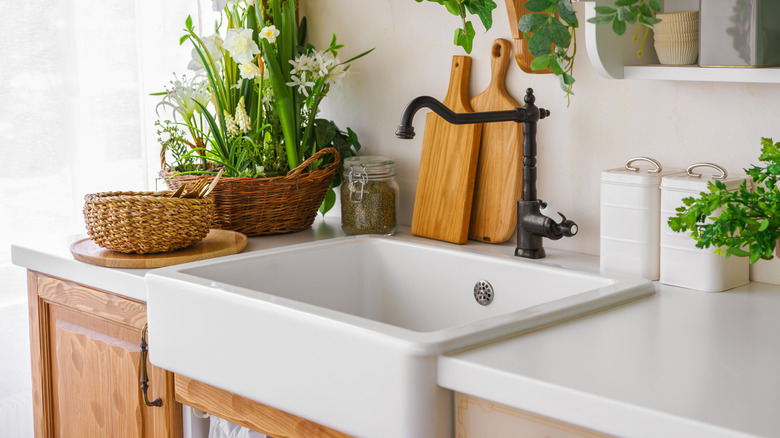
If you flip through the pages of history, you'll find farmhouse sinks popping up all the way back in the 1600s, even before houses were equipped with running water. The deep basin served as a strategic element for holding large quantities of water at a time. Today, it is characterized by a classic, exposed front-facing side. With a centuries-old history to its credit, are farmhouse sinks still trending? The short answer: Yes. White porcelain is often favored for farmhouse sinks, but you'll also find durable options in stainless steel and fireclay.
The first reason to add a farmhouse sink to your kitchen is its rustic appeal that adds a warm, lived-in charm to the space. You'll also appreciate the basin when you need to fit multiple, oddly sized pots and pans together.
However, this same sprawling size is the reason why farmhouse sinks are counted among the large features to never add to a small kitchen. Since its size is bigger than a standard sink, you might need custom cabinetry to accommodate yours. Besides taking valuable countertop space, the deep-set basin can also minimize your under-the-sink storage. Height can also be a deciding factor when choosing to add a farmhouse sink to your kitchen: Those who are very tall may find that they have to bend more to reach the dishes at the bottom of the sink, while children and other shorter family members will also struggle to reach within.
Corner sink
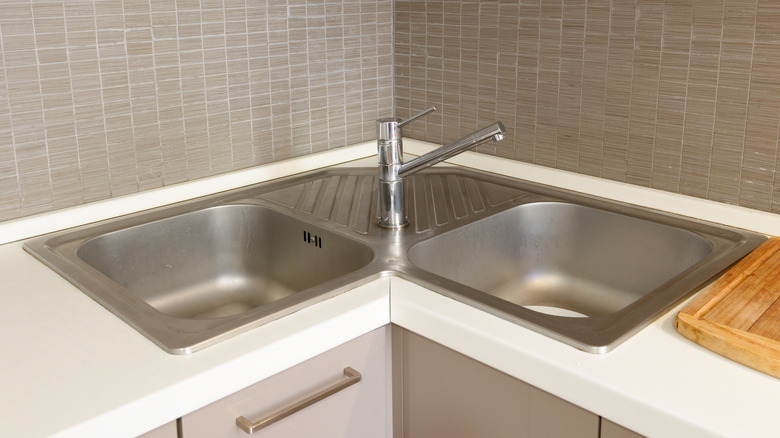
The point where kitchen cabinets meet at a 90-degree angle is never anyone's favorite spot in the kitchen — after all, what do you do with this awkward, L-shaped area? You may have discovered the virtues of a lazy Susan for maximizing storage in the corners of your pantry and now, it is time to bring that same strategic thinking to your countertops with a corner sink.
A corner sink does exactly what the name suggests: It consists of double bowls that sit in an L-shaped formation in the corner, unlike conventional double bowl sinks where the basins run parallel to each other. The benefits are easy to grasp as it maximizes the awkward corner joint between cabinets, and it reduces dead space in the kitchen to create a more efficient layout. If they differ in size, the larger bowl can be used for tackling everyday dishes, while the smaller sink serves as an ideal spot to rinse veggies.
However, this sink design isn't without its drawbacks. Precise placement of double bowls in the hard-to-reach corner under your cabinets can rack up your installation costs. The L-shaped formation can also mean that you are frequently bumping elbows when two people are using the sink at a time. Grime and build-up can easily collect in the corners of the sinks, so you'll also need to maintain a diligent cleaning schedule.
Prep sink
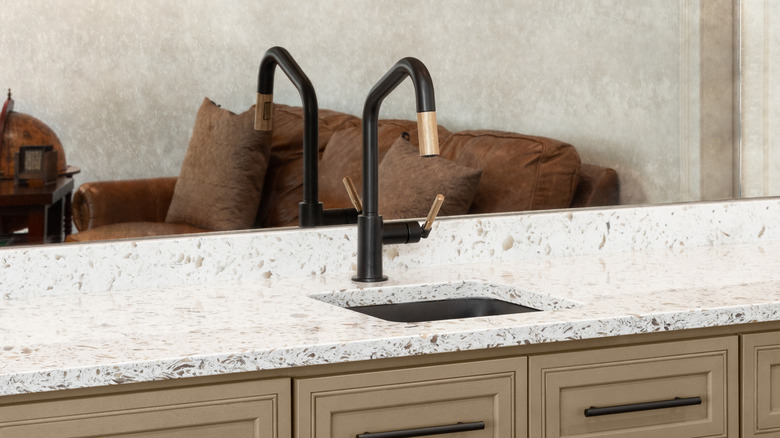
If your countertops are loaded with appliances but your pantry has some room to spare, it helps to consider adding a prep sink to this area. Generally measuring between 15 and 22 inches in length, a prep sink is designed to sit unobtrusively in your kitchen, but it can deliver all the benefits of a double bowl sink.
In line with its name, a prep sink is here to assist with every stage of your food preparation process. Use yours for rinsing veggies, watering succulents, or even thawing frozen foods and meats. To optimize the flow of traffic in the kitchen, it is often positioned away from the main sink — the kitchen island is a highly favored location for a prep sink. This allows multiple cooks to work simultaneously when putting together a dinner party. With the help of the right support crew — think soap dispensers, pull-out trash cans, and built-in cutting boards — you can streamline your daily cooking routine beyond imagination.
As you may have guessed by now, the addition of a secondary sink will come with additional plumbing costs. Besides ensuring uninterrupted water supply, you'll also have double drainage concerns and potential leaks to keep an eye on.
Integrated sink
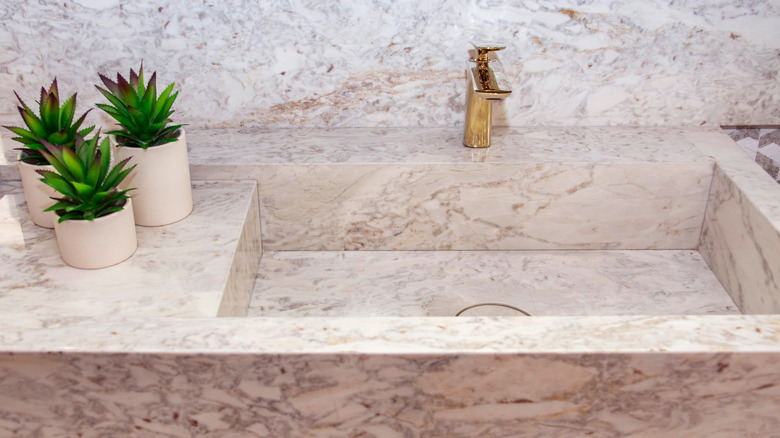
The modern kitchen is no longer just a hub for cooking and cleanup — it is designed to see and be seen. As our social lives increasingly pour over into the kitchen, every aspect of the kitchen needs to make a statement, and your choice of sink is no different. But beyond just splurging on a luxury faucet, it helps to consider the visual impact of an integrated sink.
Simply put, an integrated sink is crafted from the same material as your countertop and often, backsplash. Unlike a topmount sink where the raised rim interrupts the continuity of countertops, an integrated sink is characterized by the absence of any visible seams along the edge of the sink to promote a sense of visual harmony. Quartz and granite are popular candidates for an integrated sink, but you can also opt for marble if you are truly looking to make a statement.
Needless to say, integrated sinks will require a generous chunk of your remodeling budget since they are crafted from the same material as your countertop. The matching materials might look striking visually but will always pale in comparison against the durability of a conventional stainless steel sink.
Drainboard sink
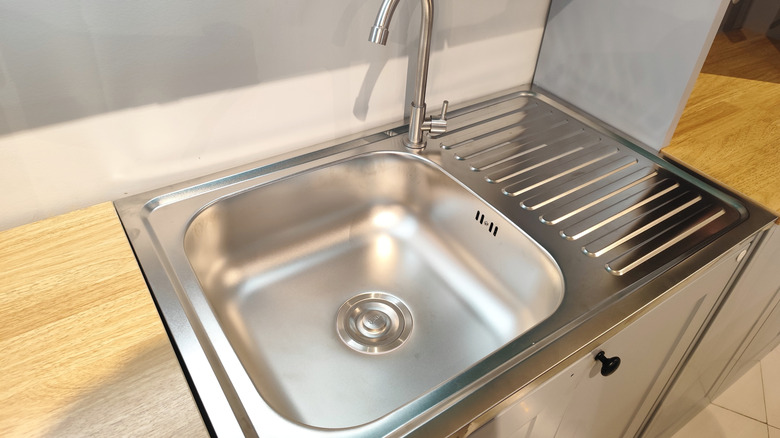
Modern kitchen sinks are evolving at the speed of light. And while there are several add-on perforated racks that can help dry dishes with ease, there is no competing with the convenience of a drainboard sink.
In case the name hasn't clued you in already, a drainboard sink consists of a traditional sink accompanied by a stainless steel drainboard to easily and effectively dry dishes. This flat surface is an ideal spot to rest all your hand-washed items that can't be sent to the dishwasher, such as delicate crystalware. The drainboard is often designed at a slightly sloping angle to direct excessive water back into the sink — no muss, no fuss.
For space-starved kitchens, a heat-resistant drainboard can also serve as an excellent spot to rest hot dishes. It's also a great area for any wet work, such as packing up leftovers. You'll find that any spills and splatters here can be cleaned more easily than high-maintenance countertop materials. The only drawback with this sink design is that it can take up a significant amount of space and keep you from flaunting your countertop material as much as you'd like. The ridges in the design of the drainboard that direct water back to the sink are also prone to gathering dirt and grime over time.