

10 Pantry Staples You Can Use To Clean In Your Kitchen
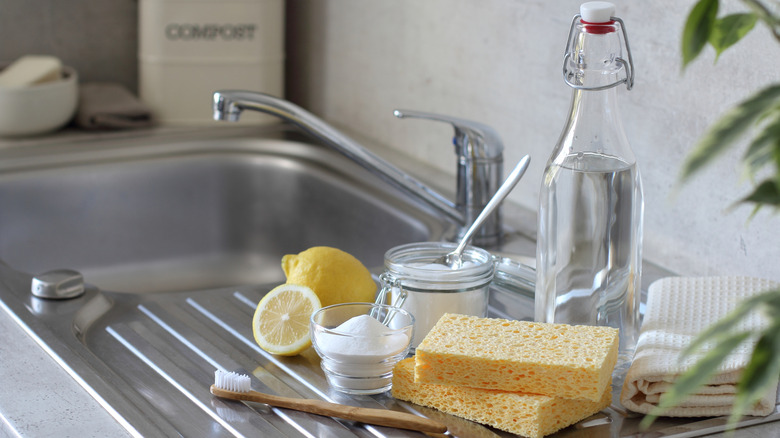
Cleaning the kitchen can seem like an endless task. There's always a dirty dish, a dusty appliance, or stuck-on grime that needs a lot of elbow grease to remove. If you're like us, you might have a plethora of cleaning products under the kitchen sink to help clean, polish, and deodorize the random devices and corners of your kitchen — some are more well-loved and useful, while others are more affordable than others. There's truly no shortage of cleaning products and brands that are supposed to make your life easier.
However, you might not have the room or budget to store everything that exists. Don't sweat it because you probably have several cleaning products already in your pantry that can be employed throughout your kitchen. Just remember that they aren't meant to replace certain items, especially as it relates to food safety and cleaning versus sanitizing. But these pantry picks can help you clean up a range of household kitchen items like countertops, pots, mugs, and utensils in a pinch or if you want to use something without as many dyes or fragrances. You may find new use for a few of those long-forgotten pantry items.
1. Baking soda
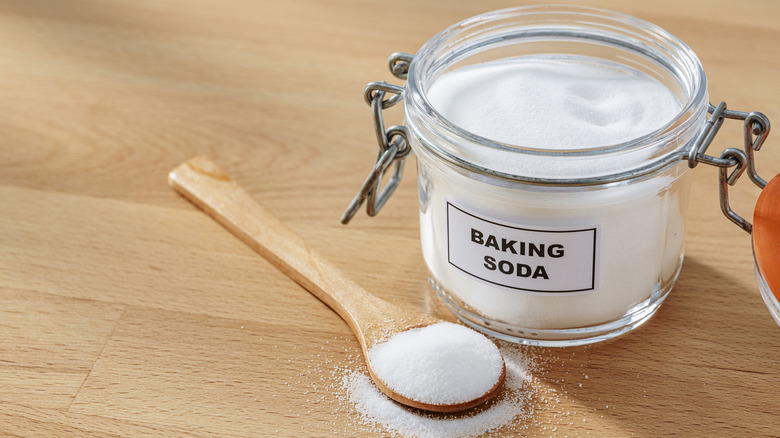
You probably have an open box of baking soda hanging around your cabinet waiting for the occasional use in a baked good. This humble ingredient is an excellent cleaning product and abrasive when you need to clean hard-to-remove build-up or residue. There are plenty of ways to employ baking soda to clean your kitchen, but one of our favorite and most practical uses is to scrub baking trays.
Use the powder and a bit of hydrogen peroxide to create a paste. It's important to start with a small amount of the hydrogen peroxide, as too much creates a runny mess — you may end up having to add way more baking soda than needed just to get it back to the correct consistency. Alternatively, you can quickly clean wooden cutting boards with a sponge and baking soda, or sprinkle some of the powder into the bottom of your garbage can to help absorb any odors. You could even use it to scrub a granite or stainless steel sink that needs a good dose of TLC. That said, avoid using baking powder on delicate materials like a glass stovetop or glass counter, as it can scratch the surface.
2. Salt
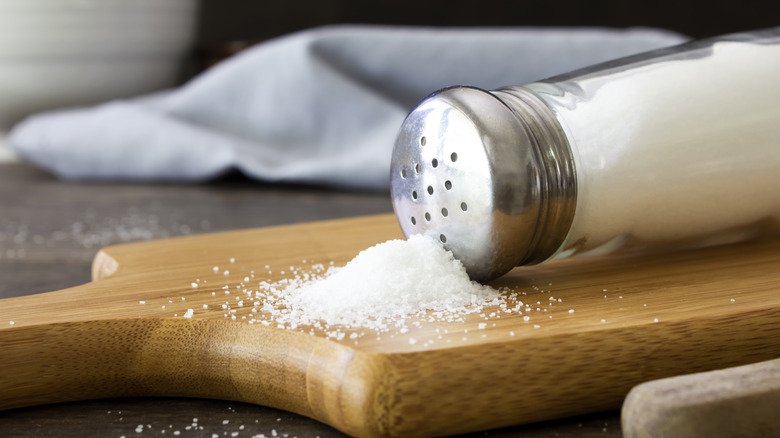
Salt works similarly to baking soda as far as being an abrasive to clean gunk that's difficult to get rid of. It's often paired with lemon for the ultimate refresher for your kitchen. It can be used to descale tiles or grill plates, and works effectively to remove mineral stains that may linger on pots or your sink. Add a liberal sprinkle of coarse salt over the dirty item in question, then juice your lemon over top. Let it sit for around 20 minutes or so before wiping and rinsing.
If you have stubborn coffee or tea stains inside your favorite mug, try using salt and crushed ice. Add both ingredients to your mug and cover with plastic wrap or something secure, then shake, shake, shake. Rinse out with warm water. If your kitchen sink needs a bit of a boost, pour a small amount of salt and hot water down the drain to help get rid of buildup; the hot water can help melt oils or fats that may linger while the salt acts as an abrasive. Alternatively, you can combine salt with baking soda and repeat the process. However, don't use this method as a cure-all, but instead as an in-between step of your drain cleaning. Avoid using it for clogs unless you talk to a professional first.
3. Distilled white vinegar
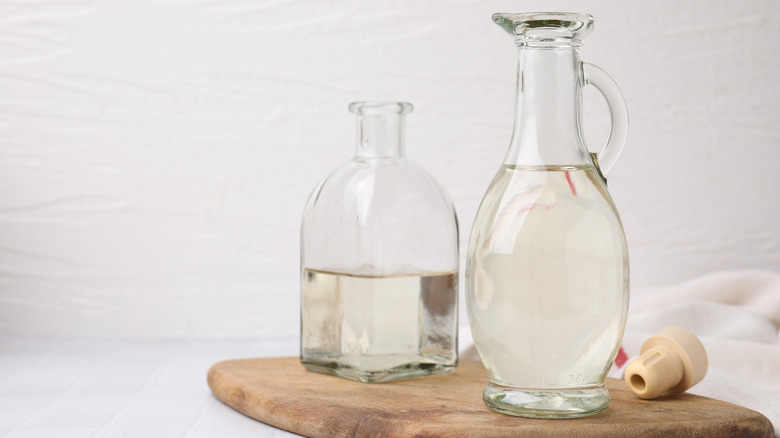
While white vinegar isn't strong enough to successfully get rid of bacteria or germs, it can get a lot of use in your kitchen, so be sure to stock up. Because of its acetic acid, vinegar is a fantastic descaler. Try pouring some distilled white vinegar and water in your coffee maker to descale it; just be sure to check your specific coffee maker's instructions, as it can offer guidance on how much vinegar to use.
Vinegar can also be used to remove limescale on things like your kettle or kitchen faucet. Pour a couple of tablespoons of vinegar into your kettle and then boil the water; it gets rid of that dubious-looking scale easily — no scrubbing required. For your faucet, add the vinegar to a Ziplock plastic bag and tie it to the limescale-ridden area with a rubber band. Let it sit overnight before wiping it away with a sponge. It should make the cleaning process much swifter.
If you have a mirror in the dining area, try pouring a vinegar and water mixture on a microfiber cloth to help wipe away any limescale or streaks. People also like to use vinegar and a microfiber or lint-free cloth to clean their windows, so this can be beneficial in the kitchen as well. There are so many more genius vinegar hacks to clean items in the kitchen to consider, too.
4. Lemons or bottled lemon juice
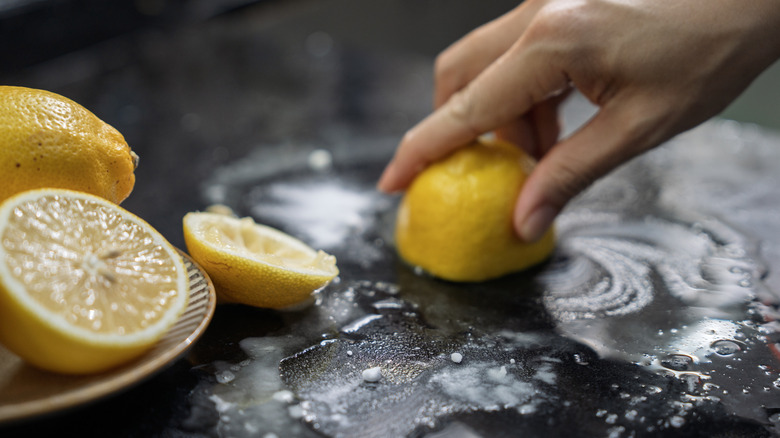
When life hands you lemons ... use them to clean. Luckily, there are plenty of simple and effective ways to use the yellow citrus fruit in your kitchen cleaning. If your garbage disposal is a bit stinky, use the lemon as a way to freshen it up; this works well with the juice of a lemon or even bottled lemon juice to give it an invigorating aroma without ruining the garbage disposal blades with the thick peel. For stinky food containers, squeeze lemon juice and a sprinkle of baking soda into the container and swirl it around so it can touch all the crevices. Let it sit for at least 10 minutes and then scrub a dub dub. This process should remove some, if not all, of those unpleasant smells.
Perhaps you recently looked down at your kitchen tiles or even the counter and noticed it looked a bit worse for wear. You might want to clean the grout up with a mixture of water, baking soda, lemon juice, and vinegar — go figure that all of these items (minus water) are on this kitchen cleaning list. Place the mixture in a spray bottle and then directly spray it on the grout. Let it sit for a few minutes before scrubbing; your "I always thought it was brown" grout will turn into a sparkly white (or whatever color it's actually supposed to be).
5. Uncooked rice
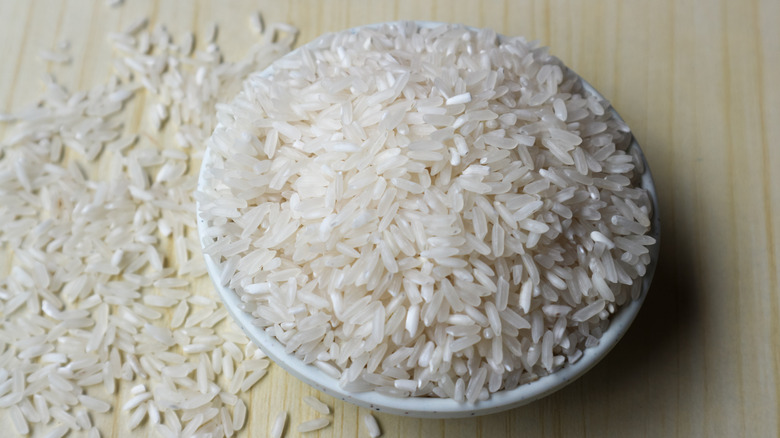
We already know rice is a pantry staple to feed the family, but it can also be used throughout in the kitchen. You may have a cool bottle or narrow glass on display in the eating area that's difficult to clean, or perhaps a water-filled steel water bottle that you left in the car too long. You might struggle to get any type of cleaning tool into the thin opening, or worse yet, those crannies right at the neck of the bottle. Well, rice is here to save the day. Pour uncooked rice into the bottle — a tablespoon or two will do, depending on how big the glass is — then add in a small amount of soapy water. This combination gets into those hard-to-reach areas much like a scrubbing tool would do (but without the leg work), allowing you to finally get that dusty bit or grime from the bottle. Make sure to fully rinse out the vessel; you don't want any wet rice lingering and creating more havoc.
Another great rice-cleaning method is to pour a bit of the uncooked, dry rice into a grinder — spice, coffee, etc. — as a way to wipe up those blades and remove any debris or leftover oils. This works to both clean and deodorize the machine since you don't necessarily want to submerge it in soapy water because it can rust or potentially clog your device.
6. Onion
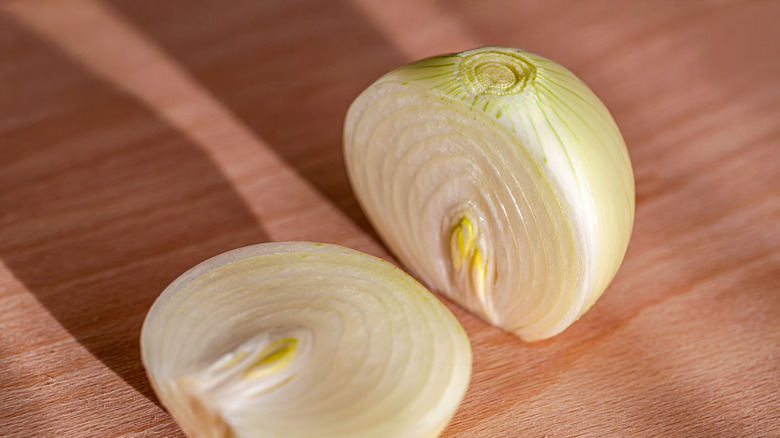
Onions are a household staple in anything from salsa to soups, but you can clean with them, too. You don't need to purchase a specific grill cleaner when an onion can clean your grill just as powerfully. In fact, you may want to skip using a grill brush altogether because the wire bristles can potentially come out during cleaning and get stuck in your food and subsequently your mouth and throat. This is a larger concern in pediatrics and young children, who can't necessarily articulate that something is wrong or lodged in their throat (beyond crying profusely).
Cut an onion in half and use the flat part to scrub your grill plates. This step works to remove built-up gunk without giving it a funky flavor that might happen if you use soap and water without thoroughly rinsing and drying it afterward. Once the onion is black from removing that stuck-on gunk, cut a thin layer off and then try again until you can no longer use the onion. Cleaning with onions works because of their acidity, which works to get rid of those grease bits.
7. Olive oil
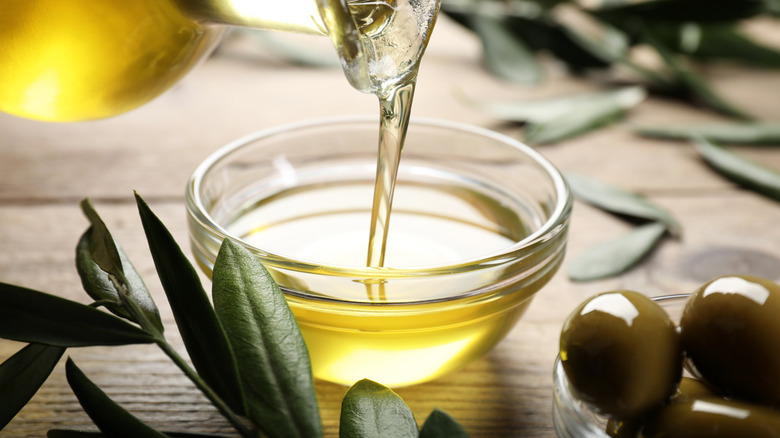
Before we dive into cleaning with olive oil, we want to preface that you shouldn't use your beloved, high-quality, extremely expensive olive oil to clean. Save that for your food or dressing, where you can enjoy the nuanced flavors. However, if you have a lower quality one, you can get a lot of added use out of it in your kitchen cleaning tasks.
Use the viscous liquid to clean your kitchen wooden furniture, like your china cabinet or kitchen stools. Simply add a small amount of olive oil to a cloth and wipe it onto the wooden surface. You don't want the cloth to be soaked with oil, as this will leave your wood oily to the touch. You could opt to add a drop of lemon or lavender essential oil to give it a more pleasant fragrance, but it's not necessary. The oil can give the wood an alluring sheen, remove dust and other debris, and just make your wood more visually pleasing. Avoid using olive oil on wooden things that actually come in contact with your food, such as a cutting board or utensils; stick to food-safe oils for those.
8. Sliced white bread
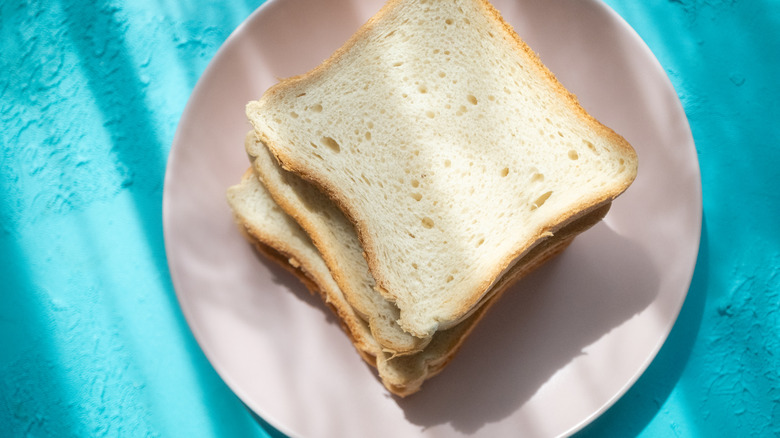
Sliced bread is more versatile in the kitchen than just making avocado toast and your favorite sandwiches. You can use it to clean up messes like stains and spills. Take a piece of white bread and roll it into a ball to act like a kitchen eraser, removing stains and dirt from various surfaces areas. You could even use the slice to absorb spills — juice, sauce, or other liquids — much like a sponge. It's particularly practical to mop up oils or fats from a frying pan, as you don't want to put these down the kitchen drain and create a clog.
Sliced bread can also be effective in picking up those hard-to-see shards of glass if you accidentally knocked over your wine glass or your favorite cup. This time, you don't want to ball the glutenous carb up; just leave the slice as is and place it on top of the glass shards and gently press. You can even do a press and wipe motion, which acts like a little sponge to get those pesky glass pieces. To be safe, make sure to do a final cleanup with a vacuum. As it turns out, there really isn't anything better than sliced bread.
9. Club soda
Although you might have a few bottles of club soda in the pantry to craft the perfect cocktail, there are other ways to use the bubbly beverage – especially if it's not your favorite brand or you don't really enjoy the taste, but you don't want to waste it. If your wooden cutting boards still smell like garlic or food after washing with soap and water, wipe them down with the club soda to help neutralize food odors.
Try using the liquid to remove those unsightly fingerprints from your stainless steel fridge, stove, or toaster. The carbonation helps make the steel shinier while also getting rid of annoying prints. Alternatively, it can be used to buff fine scratches from the surface because of its abrasiveness; simply pour some club soda on a microfiber cloth and wipe in the direction of the stainless steel's grain. Similarly, it works to get rid of buildup from your favorite pots and pans. Pour the liquid over a hot pan, let the water cool slightly so it's not boiling to the touch, and then scrub it with a sponge.
If you stain your kitchen towel while making your favorite meal, immediately pour a smidge of club soda on it. You may find that it gets rid of the stain without much scrubbing — people say it gets rid of wine stains, too.
10. Corn starch
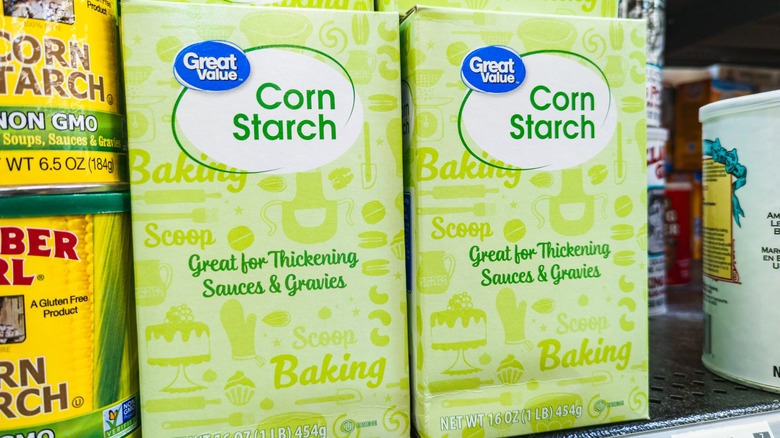
Like many home cooks, you might have cornstarch tucked away in your pantry to use as a thickener or make delectable, fluffy Southern biscuits. But the dry ingredient doesn't get a lot of frequent use like other items in your cabinet. Make the most out of this essential by using it to clean your kitchen and home. No need to go out and buy a specific carpet deodorizer. Instead, sprinkle a small amount of corn starch on a kitchen rug or carpet that needs a little bit of love. Let it sit for about 15 minutes and then vacuum as a way to remove unwanted stench.
It's also effective to absorb oils, grease, or moisture from things like kitchen towels, cloth placemats, or even clothes (hey, sometimes we forget to wear an apron and cooking is messier than anticipated). Sprinkle it directly on the grease-ridden cloth and let it absorb for at least 15 minutes, but you can go up to an hour for troublesome stains. Gently rub it in and then wash as normal.
You could combine cornstarch with a bit of water to create a mildly abrasive, thick paste that you can use to polish silver and remove tarnish. Use the same method to clean pots and pans. You may just finish up that container of corn starch much quicker than anticipated.