

The Temperature Mistake That's Ruining Your Hash Browns
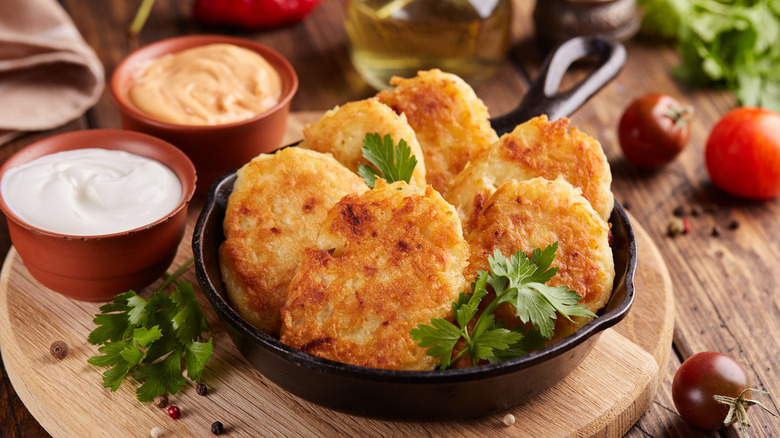
Don't let the "household breakfast scenes" from the movies mislead you. (Have you ever come downstairs to a table-full of towering, piping-hot pancake stacks and perfectly sunny-side-up eggs? Neither have we.) Even on leisurely weekend mornings, when people can take their time whipping up a more elaborate breakfast, a hungry belly or sheer tiredness can spur a bit of culinary impatience. However, there's a good chance that the main culprit behind your "meh" hash browns is not using the ideal cooking temperature — which, according to an expert, is "around 375 degrees Fahrenheit."
That pro tip comes from Chef Kieron Hales, Managing Partner and Head Chef at Zingerman's Cornman Farms. In an exchange with Tasting Table, Hales shared his go-to tips for nailing the ultimate breakfast potatoes. He explained that 375 degrees is "hot enough to crisp quickly without burning before the interior softens." There are also a few visual indicators that can help home cooks adjust their hash brown game. Take a close look at your spuds post-cook. If the temperature was too hot, said Hales, "They'll darken too fast, tasting bitter and greasy before the potatoes cook through." Alternatively, if the temperature wasn't hot enough, "They'll absorb oil and turn limp rather than crisp," according to the pro.
Set the stove to 375 degrees, and be patient
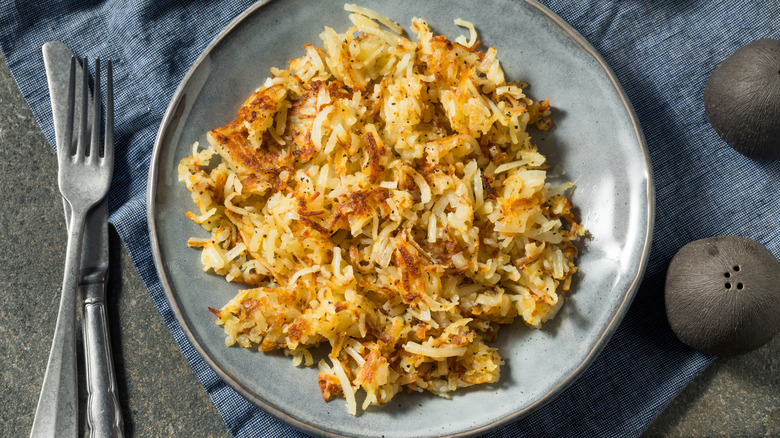
Temperature is just one factor in the hash brown game, and a crucial one to nail if you're going to impress your breakfast dining companions. Luckily, Kieron Hales clued us in on his other tried-and-true methods for achieving hash brown perfection: "Rinse and squeeze your shredded potatoes to remove excess starch and moisture; the drier, the crisper." For maximum crispiness, follow that squeeze with a light, all-over surface dusting of potato starch or cornstarch.
Hales also recommended cooking in a neutral oil with a high smoke point; sunflower oil (450-degree smoke point) and grapeseed oil (420-degree smoke point) perform well. But according to the chef, beef tallow (400-degree smoke point) is a better fit for the job. Indeed, this flavorful, savory cooking fat is having a moment in the modern culinary scene. Steak n Shake switched to beef tallow for cooking its fries earlier this year. If you've never worked with it before, we've rounded up 12 pro tips for cooking with beef tallow, which can help take your morning hash browns to the next level.
Ultimately, one of the most crucial ingredients for knockout hash browns is patience. As Hales put it, "Once golden on one side, flip just once; let patience do its work." Be sure not to overcrowd the pan while you're at it.