

15 Appalachian Dishes Everyone Should Try At Least Once
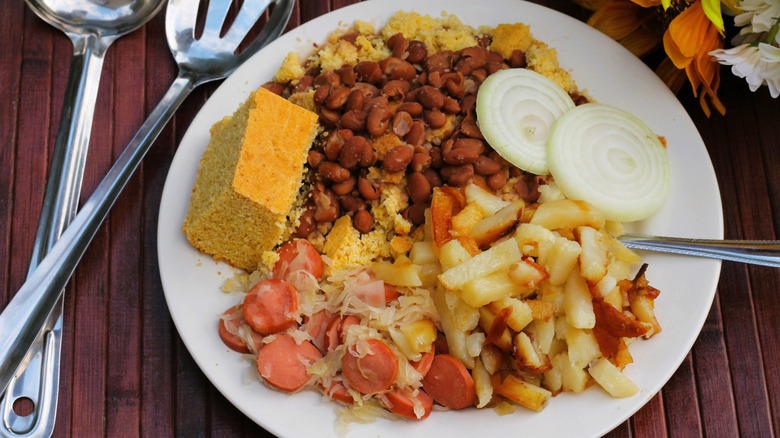
To find food packed with meaning, history, and comfort, look no further than Appalachian cuisine. The traditional dishes of the Appalachian mountains are infused with memories of community gatherings, church potlucks, and dishes made on the fly with whatever ingredients were available in the garden each day. From sweet grunt made with foraged blueberries to soft cornbread with a drizzle of hot honey, Appalachian food is connected to the seasons and to the land in a visceral way that words can't quite describe.
Appalachian cuisine is often mistakenly identified as being synonymous with Southern food. While the two certainly overlap, we should not forget about Northern Appalachia, where different fruits and vegetables grow. Not to mention, various cultural influences have long shaped the local cuisines in both Northern and Southern Appalachia. This means that while Eastern European pierogis may be a staple dish in Pennsylvania, folks in North Carolina may never have heard about them.
In this list, we suggest dishes celebrated as far north as New York and as far south as Alabama. There are options for vegetarians and suggestions for meat-lovers. There are time-intensive entrees as well as quick-to-prepare appetizers. And while we have provided recipes for many of the dishes featured, let's be clear: The best way to appreciate any Appalachian dish is to pack up the car and head to the mountains.
Killed lettuce
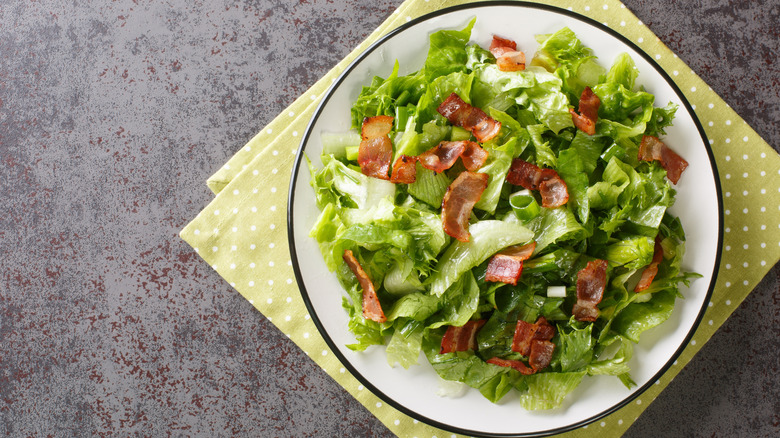
Killed lettuce, which is frequently spelled and pronounced as "kilt lettuce," is an Appalachian side dish that complements the flavors and textures of heavier dishes beautifully. It is most often served with beans and cornbread, though you can also serve it with the likes of pork chops and roasted potatoes. Unlike Caesar salad, killed lettuce is hardly ever eaten as a main course.
This dish is not as violent as its name implies. Essentially, killed lettuce is lettuce that has been wilted in bacon grease or oil, and it is often topped with crumbled bacon and spring onions. Because wilting lettuce makes it shrink so much, you will be surprised at how much you can boost your vegetable intake in just a single meal. Even if you don't have lettuce on hand, you can try killing a salad with mustard greens, dandelion greens, or another leafy vegetable of your choice.
Apple stack cake
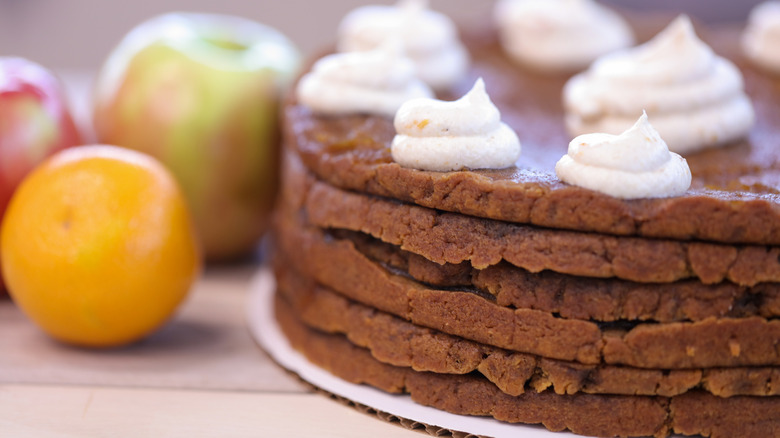
Take one bite of apple stack cake and you'll realize why we believe it to be one of those vintage cakes that deserve a comeback. This Appalachian dessert is made with heaps of dried apples, plus sorghum molasses and spices like cinnamon and nutmeg. It's not too sweet, nor is it very fluffy, giving it an old-fashioned air. Like many Appalachian dishes, it can be baked in a cast-iron pan. If you don't own one, though, no worries: The layers of an apple stack cake can also be prepared in cake pans or shaped by hand.
There is plenty of lore surrounding apple stack cakes, with one popular rumor suggesting that wedding guests used to bring one layer each to the festivities in order to make a wedding cake. This rumor may be just that: a rumor. Even so, you'll find many handwritten recipes for apple stack cakes in Appalachian kitchens, proving their popularity.
Collard greens
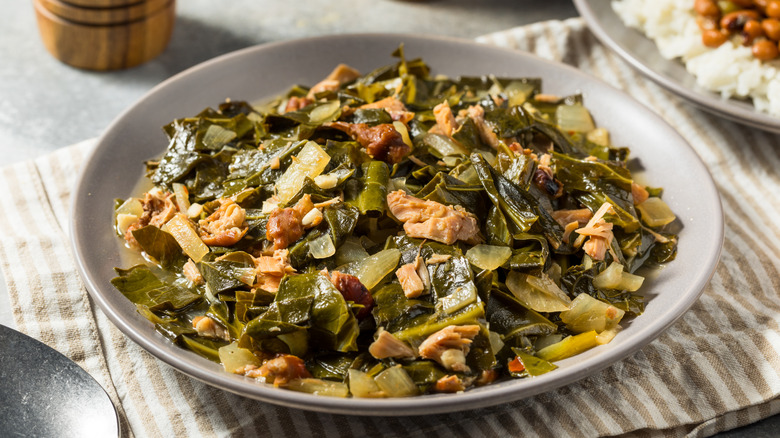
It's hard to imagine barbecue or cornbread without a helping of collard greens on the side. Hailing from the cabbage family, collards are vegetables unto themselves, and they tend to be a tad bitter. They can balance out the sweetness of baked beans or be wilted into soups for additional texture. However, for many people in Appalachia, collards are practically synonymous with one dish and one dish alone: collard greens. To make this dish, collards are simmered in broth with seasonings like garlic powder and onion powder until very tender. Vinegar, salt, and onions are mainstays in this dish, too.
When it comes to meat, ham hocks, turkey neck, and bacon may all find their way into a plate of collard greens. Indeed, finding a vegetarian version of this dish at a restaurant is rare, but it can easily be made at home. If you do eat meat, however, give our Southern collard greens recipe a try. It features hickory-smoked ham hocks, and you can mop up the potlikker (the well-seasoned liquid leftover from cooking) afterward with a hunk of cornbread.
Biscuits and gravy
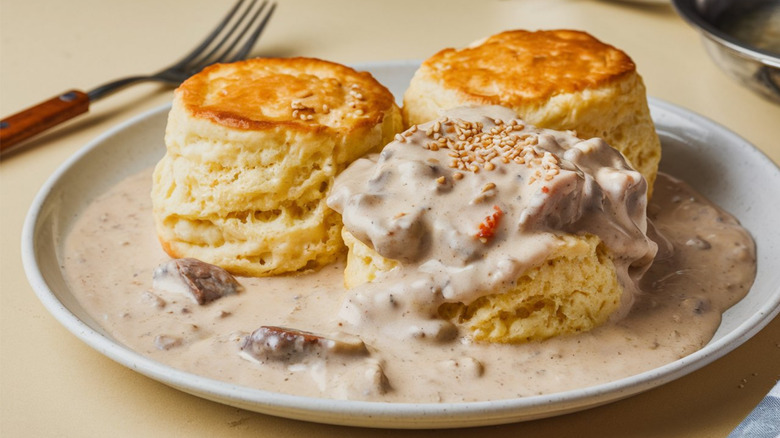
These days, fast food chains across the country serve biscuits and gravy, though the comfort food is certainly more common in the South and in Southern Appalachia. Indeed, you'll be hard-pressed to find a better plate of biscuits and gravy anywhere else. While it's true that the origin of biscuits and gravy is widely debated, many believe that the combination was born in Appalachia.
As is often the case, popularity has bred a great deal of variety in this Appalachian staple. You might find several different types of gravy on the menu, including sausage gravy and chocolate gravy. Even mushroom gravy is available in some places for vegetarians. Biscuits are typically made with refined white flour and often buttermilk. Some recipes manifest in fluffy biscuits with an open crumb structure, while others are designed to be dense. Biscuits can be baked in the oven, perhaps in a cast-iron pan if you have one.
Fried catfish
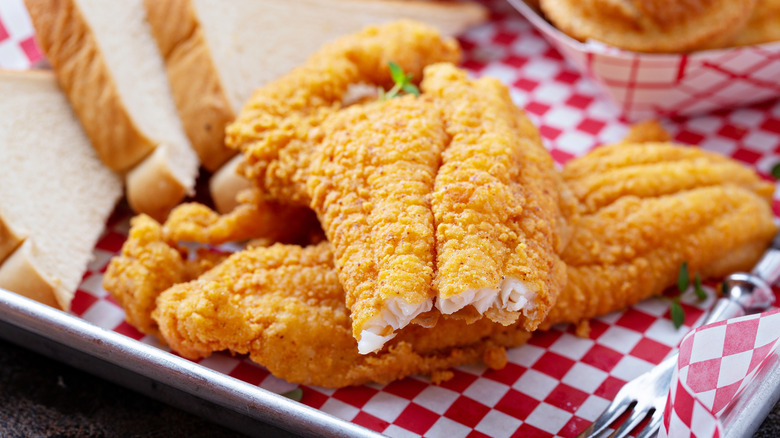
Fish fries are common in much of Appalachia whenever communities gather in one place. Whether it's for a fundraiser or for a church function, fried catfish may very well be on the menu. Before trying to make it at home, beware of the mistakes everyone tends to make when cooking catfish so that you can get it right on the first (or at least the second) try.
Wrapped up in a cornmeal-based batter that is complemented by the richness of buttermilk, freshly-caught catfish shines. Not all recipes call for cornmeal, though, which is just one example of how adaptable this dish is. Additionally, you'll find plenty of variation in frying techniques: Catfish can be pan-fried, deep-fried, or even air-fried. Plus, you can use any number of oils, though lard is a recurring favorite. Finally, you can chow down on fried catfish with myriad side dishes, especially coleslaw and hush puppies.
Cornbread
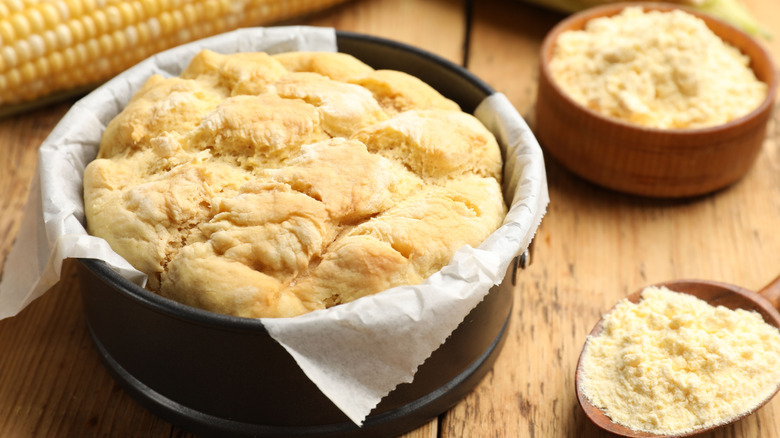
Cornbread, which is similar (some might say synonymous) to cornpone, is a classic side dish to chili, beans, soup, pulled pork, fried chicken, and more. Though cornbread is traditionally cooked in a cast-iron skillet, these days, many folks pour the batter into muffin tins instead. Doing so helps prevent dinner from disintegrating into a crumbly mess.
Cornbread can be sweetened with sugar or honey — perhaps as it is in this honey sage skillet cornbread recipe — or it might be savory, if you're cooking in the style of Dolly Parton. You can even find cracklin' bread, which contains pork. The exact variety you'll find in an Appalachian household is largely a matter of personal preference, since they both are versatile and complement sweet and savory dishes alike. For instance, sweet cornbread can be served with butter or milk, but it can also complement the rich flavors of chili or roasted vegetables.
Grits
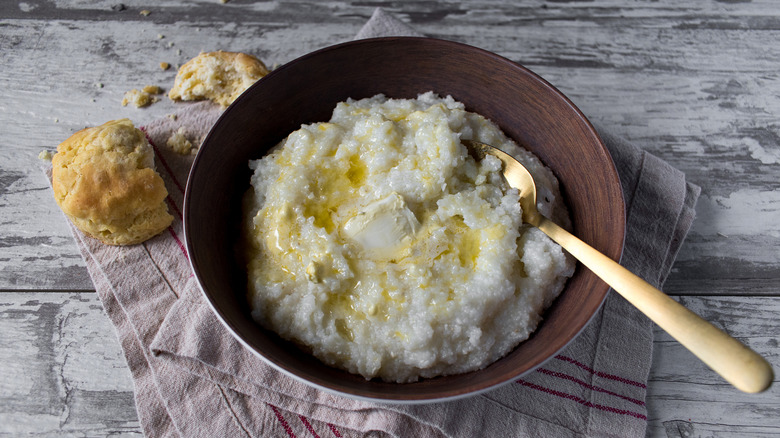
Grits may not sound — or even look — like much, but a big bowl of ground corn can warm your belly and keep you full for hours. This is especially true if it is topped with a generous slab of butter or served alongside a protein like ham, eggs, or gravy. Or you can add a sharp cheese like cheddar to your grits for what is known as "cheesy grits."
Grits come in several variations. Instant grits are often available in single-serving packages and can be prepared only with hot water. Quick grits, on the other hand, can be made in five to 10 minutes and are thus a pantry staple in many Appalachian homes. Hominy grits are significantly richer in texture, but stone-ground grits are the most toothsome and demand the longest time on the stove.
Some people opt to pour milk into their grits while they are cooking to amplify the creaminess factor. Our secret? Incorporate a generous spoonful of cream cheese into a classic grits recipe.
Fried dandelions
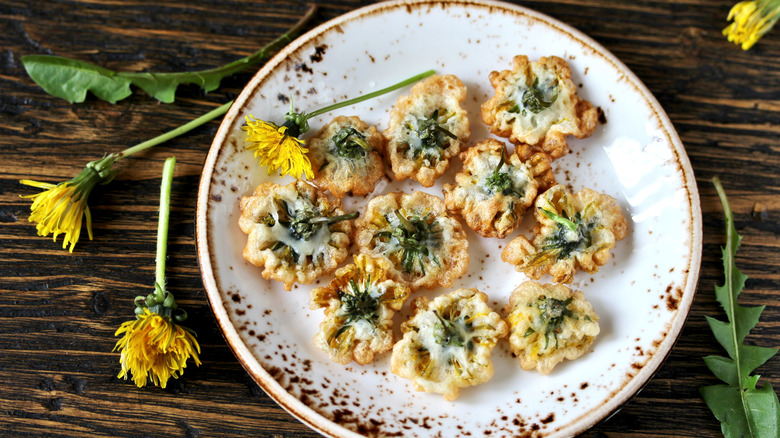
Dandelions grow like weeds in Appalachia, which isn't too surprising because they are, well, weeds. In Appalachia, where folks often go to great lengths to ensure that no food is wasted, dandelion flowers are frequently made into jellies, while their greens are regularly sautéed. But one of the best ways to eat dandelions is to fry them.
This is no state fair gimmick. Fried dandelions, unlike fried Oreos or fried Snickers, are often made at home, where they are incorporated into sandwiches or eaten plain. The flowers are battered in a seasoned concoction of eggs and flour before being fried for a few minutes on the stovetop. Dandelions grow most abundantly in the springtime, so enjoy this delicacy while it is in season. They can be found during the summer, too, just typically in lower quantities. Just avoid picking dandelions from the side of the road, where they are at risk for contamination from pollutants.
Chow chow
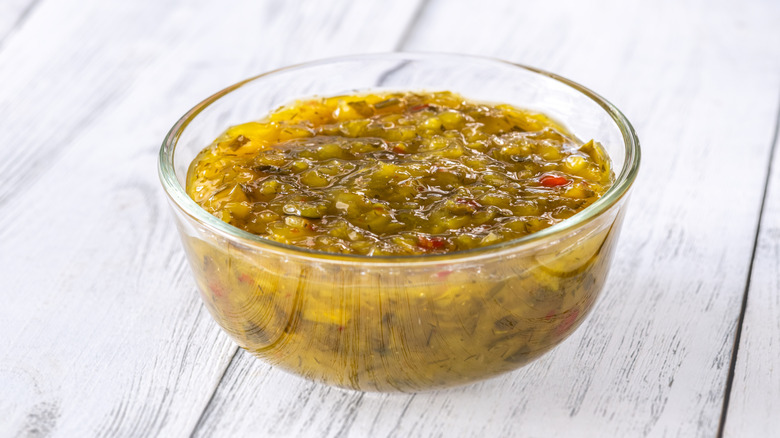
Cultures around the world have found plenty of reasons to eat pickles and relish. Oftentimes in Appalachia, chow chow is the relish of choice, and it is used to complement dishes like pulled pork, soup beans, cornbread, and potatoes. The process of making chow chow is quite simple: After you have dried out your vegetables of choice with salt, you then boil and pack them with vinegar, brown sugar, and perhaps a few spices.
Each jar of chow chow contains a rainbow of colors and textures, with exact variations depending on the vegetables available. Peppers — both sweet and hot — as well as onions are hallmarks of chow chow, though you can also find the likes of cucumbers, cabbage, squash, and carrots in this relish. Indeed, chow chow is the South's beloved bumper crop relish that helps prevent all your hard work in the garden from going to waste.
Hush puppies
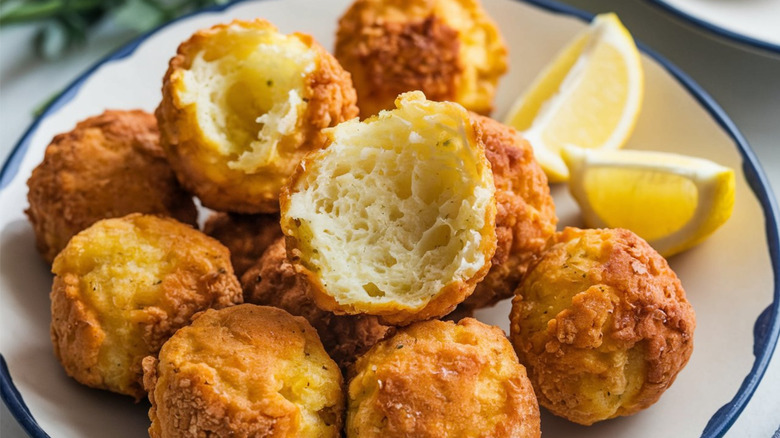
This dish is as fun to say as it is to eat. Little balls of deep-fried cornmeal are excellent companions to fried fish, remoulade, barbecued meat, hot honey, and more. You'll find hush puppies at any good BBQ joint, where they may be one of the only vegetarian options. This comfort food is served as a side dish or appetizer, but we wouldn't blame you for filling up on it before your main course arrives.
Hush puppies typically contain a bit of flour, baking soda, and baking powder in addition to cornmeal. Eggs and buttermilk also make an appearance. Sugar can add a touch of sweetness, while jalapeño peppers can add a twinge of spice. The fact that hush puppy recipes are so abundant demonstrates that, while their origins may be debated, they have since become iconic in Southern Appalachia and aren't going anywhere anytime soon.
Pierogis
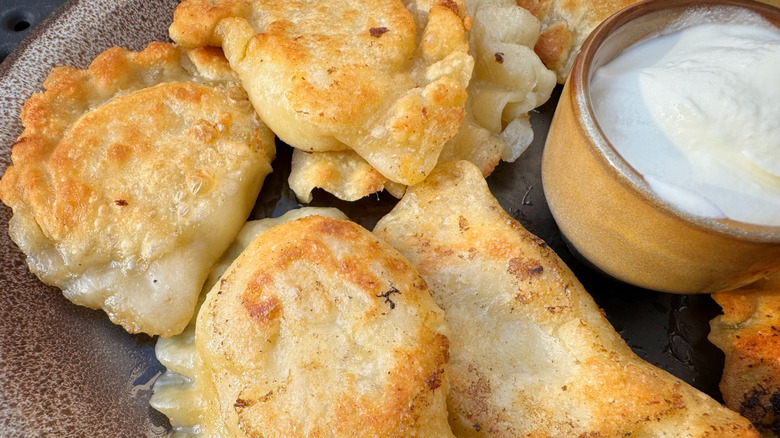
In the Mid-Atlantic region of Appalachia, particularly in Pennsylvania, pierogis start popping up everywhere. Indeed, according to one Facebook user, it "doesn't get more Appalachian than Polish kielbasa and potato pierogies in butter and red onion." It's true: While these dumplings have Eastern European origins, they have melded seamlessly into Appalachian cuisine. And in case you are wondering, kielbasa is a type of sausage that (at least in America) tends to be smoked and packaged in the shape of a U.
Pierogis are usually filled with mashed potatoes and sometimes cheese. They are traditionally boiled in water before quickly being tossed around in a pan for a crispier edge, though some folks prefer to air fry them for a crunchier texture. Pierogis can be served alongside sour cream, sautéed peppers and onions, fried cabbage, sausage, and more. Curious to try your hand at making pierogis at home? Our homemade pierogi recipe features ingredients that you might already have in your pantry, and they can be frozen for up to four months.
Fried mushrooms
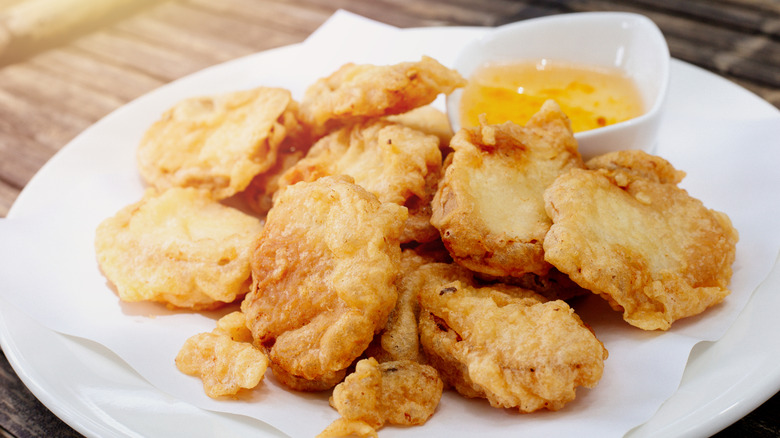
If you ever get the chance to forage for mushrooms in Appalachia (under the guidance of an expert), take it. You will be captivated by the extraordinary variety of edible foods that can be found in the forest. Even truffles can be found in Appalachia; for example, you might be able to find Blue Ridge truffles at a farmers market, or, if you are very lucky, Appalachian truffles. However, you should avoid frying truffles because their flavors tend to dwindle under heat. Look instead for mushroom varieties like morels and lion's mane.
Once you have your hands on some suitable mushrooms, it's time to fry them. Seasoned with garlic, they become an excellent appetizer to any meal. Of course, you can find fried mushrooms in restaurants, too, where they are often served in sandwiches and tacos. They are a great replacement for chicken if you are vegetarian or vegan.
Fiddlehead ferns
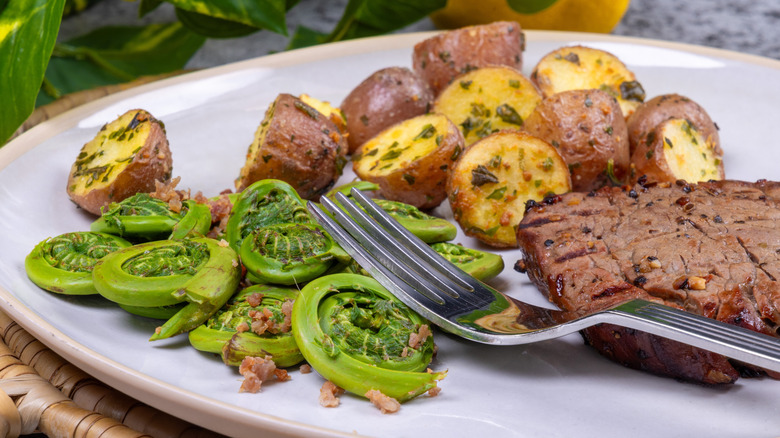
Fiddlehead ferns may look like they came out of a Dr. Seuss book, but they are real plants that are seasonal superstars in the northern half of the Appalachian mountains. You might find them growing wild if you are lucky, but farmers markets are also a good bet. Just make sure you're looking for them at the right time of the year: May is peak harvest season. Earthy, yet sweet, and understandably fun to eat, you might even be able to convince kids to eat fiddlehead ferns.
To avoid falling ill, you should never eat fiddlehead ferns raw. After a proper bath in your kitchen sink, this vegetable can be blanched, steamed, grilled, or fried. Salt, pepper, and lemon juice can go a long way in adding flavor to fiddlehead ferns, but they don't need much more than that to shine. Check out our sautéed fiddlehead ferns recipe for inspiration; it's garnished with capers and Parmesan cheese, and you'll be surprised to discover how many flavors it offers after only 15 minutes in the kitchen.
Blueberry grunt
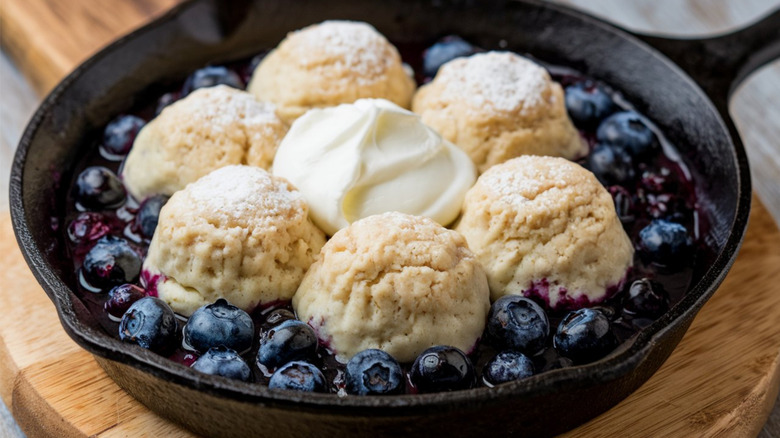
Once it gets to be that time of the year when wild blueberries can be foraged alongside mountain trails, Appalachian folks rejoice. That's when kitchens are suddenly filled with jars of jam, blueberry pies, blueberry muffins, and blueberry salads. And in New England, it's prime time to make a batch of blueberry grunt.
You can liken grunt to fruit cobbler's New England cousin. Instead of being baked in the oven, grunt is cooked on the stovetop in a covered cast-iron skillet or Dutch oven. This technique steams the biscuit dough instead of baking it, resulting in a dough with a slightly different texture. To be precise, grunt is usually not quite as crisp as cobbler. Grunt is common in Northern Appalachia, but not so prevalent in Southern Appalachia. Regardless, both cobbler and grunt are beloved desserts in Appalachian households, so try your hand at making both. And by the way — a scoop of vanilla ice cream on top never hurt anyone.
Rabbit or squirrel stew
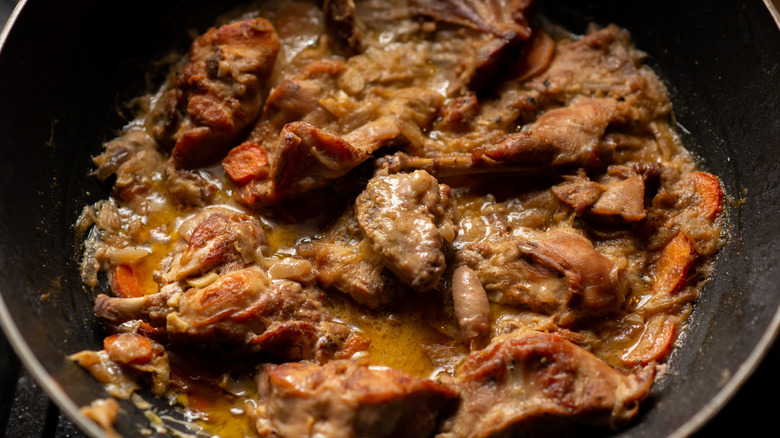
Squirrels and rabbits run wild all across Appalachia, so it makes sense that they are often hunted and incorporated into stews. For many people, this is an economical way to add protein to their diets, and just because squirrel and rabbit meat are relatively rare in the U.S. doesn't mean that they aren't worthy of your attention. You won't find this stew listed often on restaurant menus, but you may very well find it simmering on the stovetop in an Appalachian household.
Folks often enjoy squirrels and rabbits alongside mushrooms, potatoes, carrots, and other root vegetables. Simmered together in one large pot, a stew like this can be an excellent excuse to pull out the slow cooker. Brunswick stew, which has both northern and southern variations, often features squirrel or rabbit meat. Beans, corn, and tomatoes add plenty of nutrients to the stew while herbs like rosemary and thyme give it earthy undertones.