

5 Big Changes The New Starbucks CEO Has Made In 2025
"As I step into my first week as CEO, I do so not only as a leader, but as a long-time customer." So began Brian Niccol's first official message as the head of Starbucks, in September 2024. He made his vision for the future of the coffee chain clear from the get-go: Getting back to the core of what Starbucks used to be — a community coffee shop. He dubbed this mission "Back to Starbucks."
The main problems that Niccol planned to address immediately had to do with the fast-paced nature of modern Starbucks. "It can feel transactional, menus can feel overwhelming, product is inconsistent, the wait too long or the handoff too hectic," he wrote. In place of that, he wanted the chain's locations to start showing the telltale signs of a quality coffee shop once again. But that would require fundamental changes in the way Starbucks is operated.
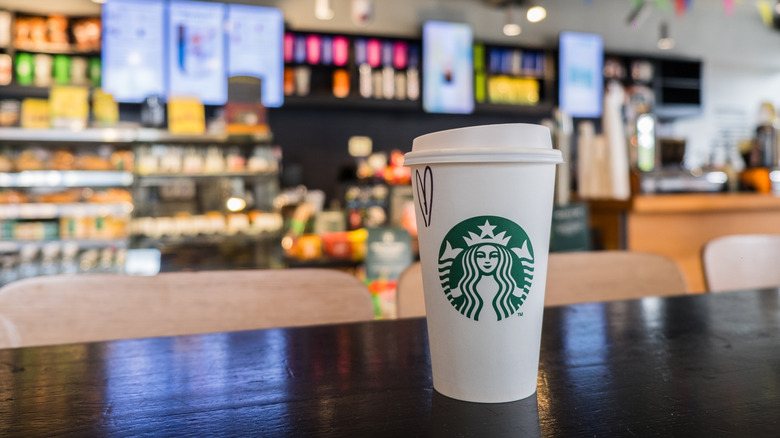
Handwritten notes on the cups were in, complex menu items were out. Baristas were told to prioritize hospitality, and new technology was implemented to aid with the massive number of orders. After a full year of Niccol's tenure, response to the changes remains divided. Some say that Starbucks' big revamp backfired, while others believe the chain is moving in the right direction. This article takes a closer look at five major changes Niccol implemented in 2025 and how they're shaping the future of Starbucks.
Green Apron Service
Green Apron Service is at the core of Starbucks' new vision. Launched in August 2025 and named after the iconic green apron worn by the baristas, Green Apron Service goes all-in on hospitality. The goal is to prioritize connection between baristas and customers, making every person who comes in for coffee feel special, seen, and appreciated. On the surface, this sounds like baristas being extra friendly, but in practice there's a deeper strategy being implemented — although, it still differs from store to store.
The main idea is to have roles dedicated to hospitably engaging with the customers. For example, greeting people at the door or having someone welcome customers at the drive-thru. Per the new policy, not only should people be greeted when they enter, but they should also be personally handed the drink with eye-contact and a smile. Oh, and with a personalized message handwritten on the cup.
The reception of this unrestrained friendliness hasn't been all positive, namely among the employees. Some have complained that the person in the greeter role could instead be helping other staff members with the orders. One Redditor opined that, "having someone to walk the coffees from the handoff plane to the few cafe customers we get is a waste of everyone's labor hours." Others, however, think the hospitality element is a positive shift. "This is its own position and they are there for the customers that are waiting so they don't feel ignored," wrote another employee.
New uniforms
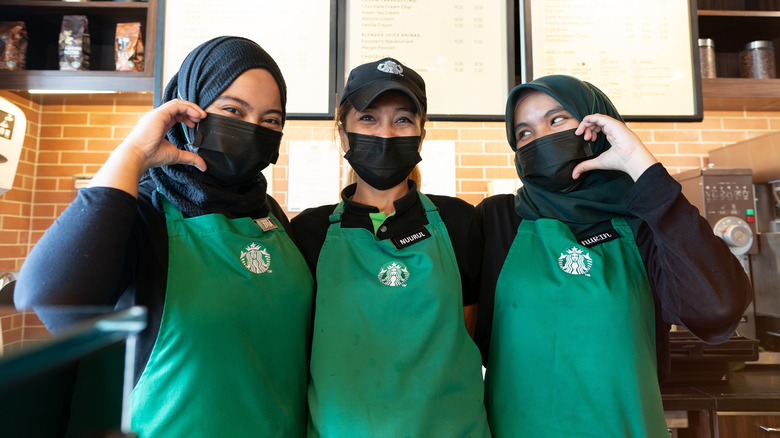
A renewed, personalized approach to the customers was not the only change that directly affected the Starbucks baristas. In April 2025, the company announced a new dress code, aiming to create a consistent look across all Starbucks locations in the United States. Previously, all colors were allowed as part of the uniform, but the new rules require the employees to wear a black top exclusively, with either short or long sleeves. For the bottoms, acceptable colors are only khaki, black, or blue denim. This stricter color scheme is supposed to be a backdrop for the signature green apron, which is meant to stand out.
Many employees weren't happy with the dress code change because it meant their old work attires were now redundant, and they'd have to spend money on a new wardrobe. One person complained on Reddit, "I don't make enough to buy a whole new wardrobe. [...] I have to have a second job on top of Starbucks to afford bills as a full time college student." Starbucks only provides two T-shirts that fit the dress code to the employees free of charge. This change eventually led to a strike of about 1,000 unionized employees, making the list of the biggest controversies in Starbucks history.
Slimmer menu
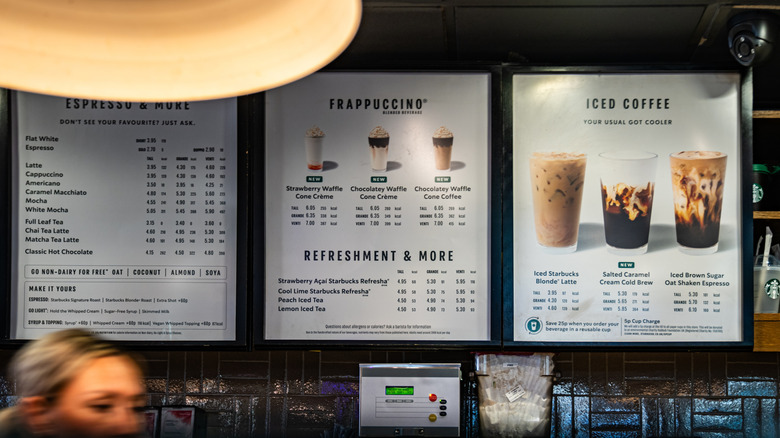
Starbucks fundamentally changed its menu in 2025 by cutting out drinks that were too complex, not popular, or simply too similar to something else on the menu. At least 13 drinks were cut from the permanent menu in March, including the beloved Java Chip Frappuccino and Iced Matcha Lemonade. Overall, the chain plans to cut down 30% of the menu but will preserve its seasonal offerings and continue to introduce new creations. "We have to clear the noise out both in food and beverage menus," Niccol told Fortune in January 2025, emphasizing that this change will open up the space for innovation "and give our baristas the opportunity to demonstrate their craft and the time to connect with our customers."
While customers were sad to see some of the drinks go, the menu changes did come with immediate perks, too. One of Niccol's first moves as CEO was eliminating the non-dairy milk charge way back in November 2024. This change had a huge impact on regular customers, as swapping out milk for a non-dairy option is the second most requested modification. Niccol also doubled down on his promise of promoting coffee shop culture; in-store customers now get served in ceramic mugs and get free refills of coffee or tea.
Smart Queue
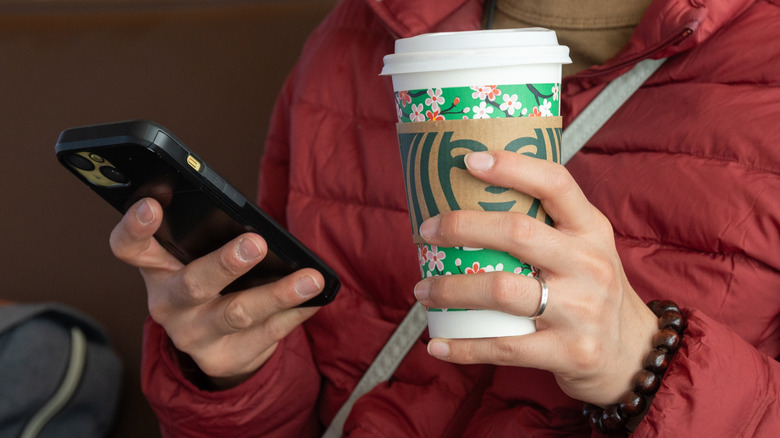
While "Back to Starbucks" may be all about returning to the chain's coffee shop roots, the road to that goal is paved with new technology. With an ambitious desire to roll out each order in four minutes or less, Niccol implemented a new way of organizing incoming orders, with a feature called Smart Queue. It's programmed to automatically prioritize certain tickets over others (mainly putting in-store ones first) and let the customers know the exact status of their order.
The performance of this feature has not been without its hiccups. Baristas reported that automatic order prioritization often led to longer wait times for drive-thru and mobile order customers, with the latter having the lowest priority of all. In February, Niccol made an appearance on the "Rapid Response" podcast, where he said that mobile ordering "really took a lot of the soul out of what this business is all about." He acknowledged that the chain is overwhelmed with mobile orders, referring to it as a "mobile ordering conundrum," but admitted that it's not an easy problem to resolve, so online customers will have to accept certain trade-offs. For example, limiting mobile orders to a maximum of 12 menu items.
Laying off corporate employees
Although Niccol's strategy for reviving Starbucks' glory days primarily focuses on the customer experience, it's fair to say that the changes have impacted the employees the most — especially those who have lost their jobs. Since Niccol took over, the company has seen big employee cuts. The first cycle came in February, when over a thousand corporate employees lost their jobs as a result of "simplifying our structure, removing layers and duplication and creating smaller, more nimble teams," as explained by Niccol at the time.
Another blow came in September, when Starbucks announced the closure of multiple stores and another layoff cycle as part of a $1 billion restructuring plan. Nine-hundred non-retail employees were laid off and several open positions were closed, as the company aims to invest in retail roles and upgraded store design. Several existing Starbucks locations that didn't match the vision also closed, with Niccol promising in his statement that the employees will either get transferred to a different location or receive severance packages.
"I know these decisions impact our partners and their families, and we did not make them lightly," he said. But ultimately, he believes the changes "are necessary to build a better, stronger, and more resilient Starbucks that deepens its impact on the world." Only time will tell.