

What You Might Actually Be Getting As 'Chips' When You Order Fish And Chips
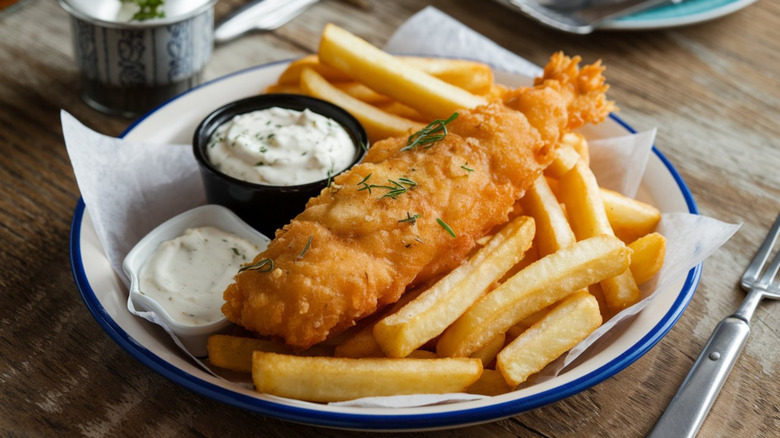
An iconic British street food, fish and chips has become popular stateside. You can find fish and chips on the menu at countless restaurants in the U.S. However, you probably aren't getting bona fide British "chips" when you order fish and chips in America. In an exclusive interview with Tasting Table, Roberta Muir of Be Inspired Food-Wine-Travel shared tips on how to make the best fish and chips, as well as lesser-known facts about how we've adapted them for American consumption.
"Most of the best restaurants use commercially prepared fries for a consistent result. It's surprisingly hard to make good chips from fresh potatoes," noted Muir. French fries aren't the same as British chips. Not only do the Brits use different types of potatoes, but the British call them chips because their preparation involves chipping a potato into fat stubs. British Chips are thicker and shorter than the typical U.S. French fry and require a different texture — much higher starch and lower moisture – than fresh-cut thin fries. Instead of throwing freshly cut potatoes directly into hot oil, British chip recipes often call for steps such as soaking the potatoes in vinegar water, rinsing, and freezing them to reduce moisture and maximize starch release.
American restaurants tend to stick to the classic longer, thinner, and crispier French fry. Of course, there are countless types of fries, and many U.S. places approximate the shape of the British chip by serving steak fries alongside their fried fish. Some restaurants even pair beer-battered fish with battered fries.
Making fish and chips at home
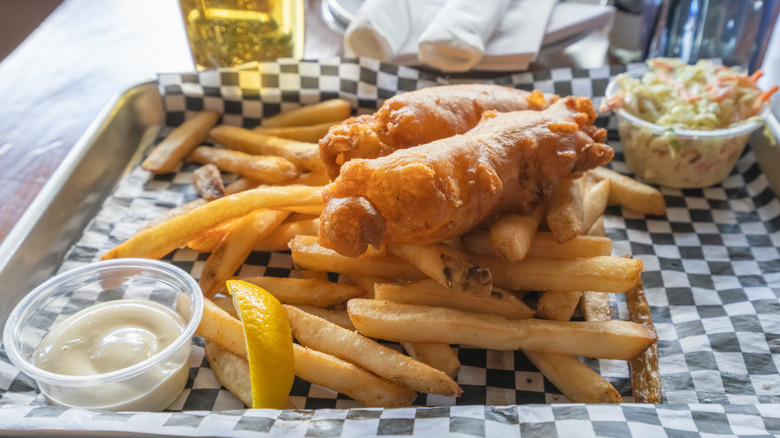
If you're a home cook trying your hand at fish and chips, our recipe has you make chips the traditional way by double-frying them at two different temperatures to achieve a pillowy, fluffy interior and a nicely browned exterior. Chef Roberta Muir offers an even easier version of homemade chips that skips the deep fryer altogether. "If you prefer to do it from scratch," she says, "consider dicing the potato, toss it with a little olive oil — do not add salt — and roast in the oven at 400 degrees Fahrenheit for 45 to 60 minutes, stirring occasionally until crisp and golden." Whichever way you make homemade chips, be sure to salt them after they're cooked.
You can also follow your local restaurant's lead by making French fries instead — and we've got plenty of tips for perfect homemade French fries. Perhaps the most important potato tip is to use the starchy Russet variety, as waxy potatoes lack the starch necessary for a crispy exterior. Deep-frying requires precise temperatures and batch-cooking so that every fry cooks evenly and crisps to perfection. To keep fries crisp, let them drain excess oil on a cooling rack set in an oven rather than on a paper towel-covered plate. Of course, you can always skip the hassle of prepping and frying from scratch and use a bag of your favorite frozen French fry brand instead.