

Don't Cry Over Split Tamales – If You Prep The Husks Like This, You Won't Have To
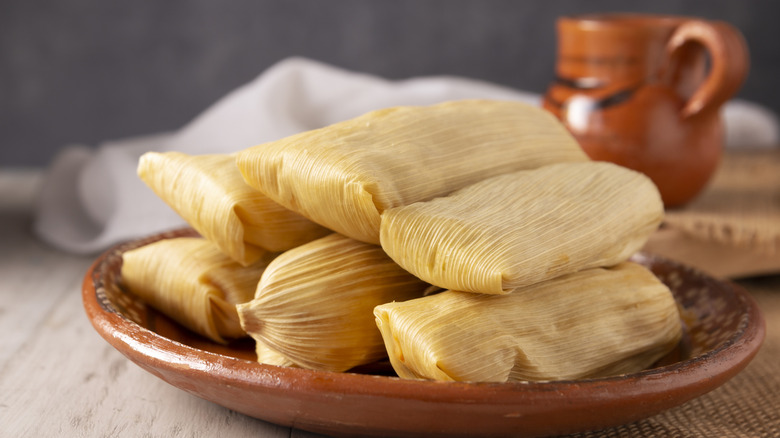
Tamales are icons of Mexican food dating back thousands of years, and while in Mexico they are available on a daily basis from street vendors and dedicated brick and mortar shops, making them at home is usually left for special occasions. In the U.S. they have become a holiday staple. There are many important tips for making tamales at home, and a key step that will prevent endless frustration is to soak the corn husks long enough to make them pliable and less likely to split when wrapping.
To soak the husks, first fill your kitchen sink with warm water and submerge them, swishing them around to clean and remove any silk or debris. After this, let them soak for at least 45 minutes to two hours, but there is no harm in soaking them longer, even overnight. The idea is to rehydrate the husks sufficeintly so they fold easily without tearing, keeping the masa from escaping and making a mess out of your steamer. If you don't wish to occupy your sink for so long you can use a stock pot, but it must be large enough to fit all the corn husks loosely so they have space to expand as they rehydrate in the warm water.
Other important tips for making tamales at home
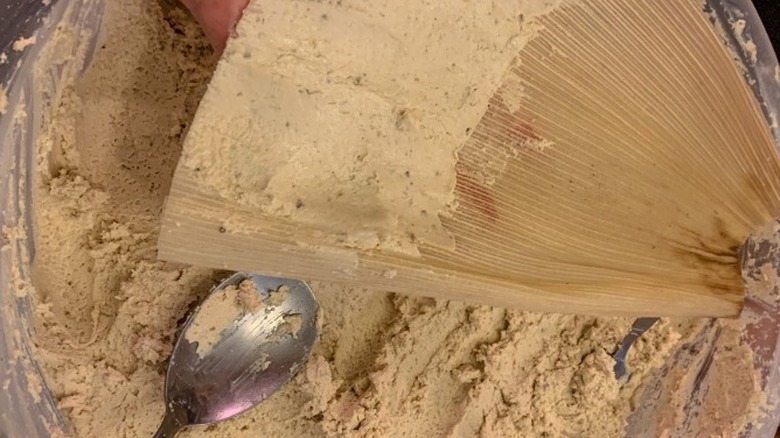
Dry corn husks are the preferred wrapping for tamales in Central and northern Mexico, and the Southern United States, where Mexican families prepare them for Christmas with a tamalada — a gathering that is as much a food assembly line as it is a lively gossiping party. These husks are usually available in grocery stores and Latin American markets, but you can always try drying your own fresh corn husks at home as an alternative.
You can also opt for other wrapping material such as banana leaves, which are the norm in Mexico's southern states — as is the case with the famous tamales de mole of Oaxaca and Chiapas — and Central America. These yield a smoother finished product with a shiny masa, while the ones wrapped in corn husks tend to be fluffier and spongier.
It's also important to make the masa — the nixtamalized corn dough from which tamales and tortillas are made — the right way. Although some expert tips for making masa at home are universal for all tamales, certain recipes are more specific to each kind of tamal (yes, tamal is the correct singular of the word in Spanish). So do follow your recipe when it comes to the amount of salt or baking powder, for instance. Sweet tamales flavored with fruit or chocolate are not meant for banana leaf wrapping. For traditional savory ones such as tamales de rajas, you can go either way.
With tamales, practice makes perfect, so don't be discouraged. Invite friends over, follow the recipe and tips, and soon you'll be enjoying tasty tamales, a food item that's as comforting as it is historic.