

How Often Should You Be Cleaning Your Kitchen Cabinets To Fight Grease?
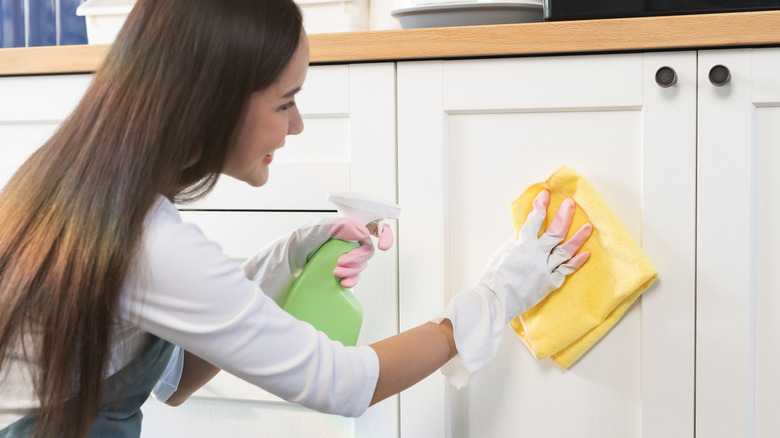
Cabinets may not come to mind when you think about the dirtiest surfaces in your kitchen, as they're usually filled with little more than clean dishes and utensils. As it turns out, stubborn grease can build up on these fixtures over time, especially those positioned above your stove or counters. Whenever you cook on your stovetop, oil, grease, and other food particles can rise up into the air and get stuck on surfaces in the vicinity. You might also open and close your cabinets with dirty hands when you're in a rush, which further contributes to grimy build-up. To prevent it from feeling sticky and looking dull, you should thoroughly de-grease all your cabinetry at least once a month.
One popular solution for shiny cabinets is the classic combo of baking soda and vinegar. These two pantry ingredients will degrease your kitchen cabinets by lifting off grime via a chemical reaction. Simply mix the two into a paste and rub it all over your cabinet doors, letting it sit if the surfaces are particularly greasy. Thoroughly wipe away the residue, and you should have spotless cabinets. Regardless of the tools you use, you should always clean your upper cabinets before moving down to the counters, then any lower cabinets, then the floor. This top-to-bottom order ensures that dirt from higher surfaces doesn't get onto lower surfaces you just cleaned. However, if the grease winds up being more stubborn than you expected, there are other ways to pull off this essential kitchen task.
There are both gentle and strong methods for degreasing kitchen cabinets

If your cabinets are painted or finished, be extra careful when removing grease. The key to degreasing kitchen cabinets while avoiding finish damage is to use gentle solutions like dish soap, and not rubbing them in with any rough tools such as scouring pads. Try mixing dish soap with warm water, then dip a soft cloth into the mixture and wipe it all over your cabinets. Remove any soapy residue with another damp cloth, and the job is done. Both this method and the baking soda and vinegar trick are gentle enough for wooden cabinets, which can be particularly delicate.
Sturdier materials may be able to handle chemical cleaners, but in this case, there's a step you shouldn't skip before degreasing kitchen cabinets – and that's ventilating the space. To protect yourself from inhaling strong fumes, ventilate the room by opening the windows and/or turning on a hood or fan. One unexpected household cleaner that can degrease your entire kitchen is Windex, which fights stubborn messes using ammonia — hence the importance of ventilation. It's very easy to use, as all you have to do is spray and wipe.
While a once-a-month cleaning is a good routine to follow, it's also helpful to minimize grease on your cabinets in the first place. Use a range hood when cooking if you have one, and try using splatter guards when frying foods to prevent oil from getting on surrounding surfaces. Cooking at lower temperatures also minimizes the chance of grease spattering all over your kitchen.