

8 Mistakes Everyone Makes With Marble Countertops
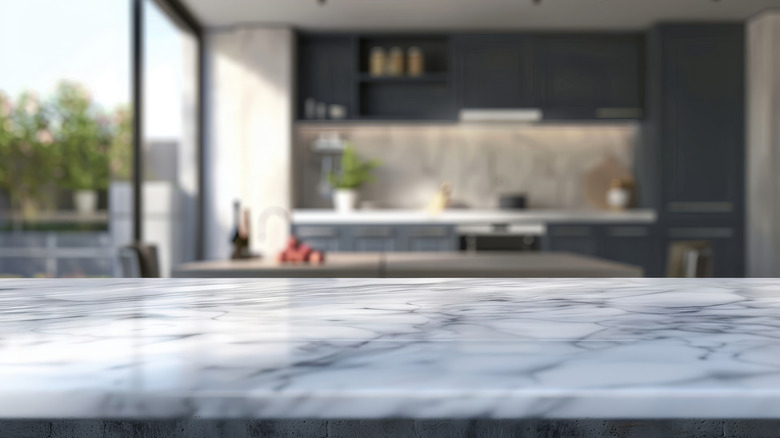
Marble countertops can be absolutely stunning, and they're a great way to take your kitchen from average to over-the-top beautiful. However, they can be trickier to work with than other types of surfaces, and you need to have a good sense of how to take care of them to keep them in good shape. Unfortunately, a lot of people who have marble countertops end up making mistakes with them. Some of these mistakes are minor, while others may cost you hundreds (or even thousands) of dollars in repair down the road.
Whether you're renovating your kitchen and looking into marble countertops or have recently purchased a home with them, you're in the right place. We've spoken to some marble countertop experts, including Teri Simone, head of design and marketing at Nieu Cabinet Doors; Craig Gritzen, owner and principal interior designer at Curated Style Collective; and Robert D'Amato, co-founder of Nord Restoration, to get the scoop on the mistakes you should definitely avoid with your marble countertops to keep them looking stunning for years to come.
Treating marble like any other surface

If you've never had marble countertops before, you may not know exactly what you're getting into when you install them in your kitchen. Sure, marble countertops may not seem like they require much more care than, say, granite or laminate, but according to Teri Simone, head of design and marketing at Nieu Cabinet Doors, a major mistake that a lot of homeowners make with marble countertops is "treating them like any other surface." It's important to remember that marble countertops require care that you may not have to give other types of countertops, so you should ask plenty of questions before you decide to install them.
"Marble is a softer, more porous stone, so acidic foods, wine, or even fruit juice can cause etching or staining if they're not wiped up right away," says Simone. "It's beautiful and timeless, but it does require some care and resealing every six to 12 months." The need to reseal the surface is one of the biggest drawbacks of marble countertops. If you can't commit to that kind of care, then marble countertops may not be for you.
Using acidic or abrasive cleaning solutions
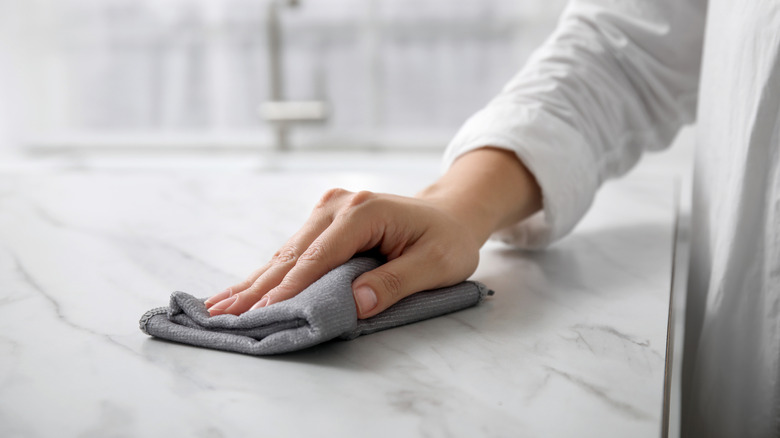
Are you new to having marble countertops, or are you considering them for the first time? If so, you may not realize that you can't use just any old cleaner on them. Robert D'Amato, co-founder of Nord Restoration says that it's a common mistake for people to use acidic cleaners on marble countertops. "Even mild acids like vinegar or lemon-based sprays will eat into the marble's surface, leaving permanent etch marks," he says. Therefore, you should look very carefully at the different cleaning products you're buying to make sure that they're not acidic or too harsh for the sensitive marble surface. You'll definitely want to stay away from any product that says that it's "degreasing."
So, what kind of cleaner should you use instead? D'Amato recommends a pH-neutral soft stone cleaner. He also says it's a good idea to use a soft microfiber cloth instead of anything that could potentially scratch the surface of the marble.
Assuming it will look the same in your kitchen as it does in the showroom

When you go into a showroom, everything looks just right. The lighting is perfect, the space is clean, and there's nothing to distract you from just how beautiful the marble countertop you're considering appears. But it's a mistake to assume that just because it looks good in the showroom, it's also going to look exactly the same in your home. After all, you probably have different lighting at home than in the showroom, which will change the way the marble looks. If possible, look at the marble countertops you're considering in natural light, where they tend to look their best. If your kitchen has a lot of natural light, it may be a good contender for marble since it highlights its natural details.
Plus, after some wear and tear, the marble won't look brand new anymore. Since marble is so porous, it's easily stained and etched, meaning that its appearance changes over time. If you like the look of an ever-evolving surface, then marble might be right for you. However, if you're looking for stone countertops that look the same in your kitchen as they do in the showroom, marble is likely to be a big disappointment within a few months or years.
Forgetting to reseal regularly
For those who are looking for a low-maintenance kitchen upgrade, marble countertops may be a bad idea because they require regular resealing. Robert D'Amato says that many people don't know marble countertops require this level of care, which can come to the detriment of the surface. "We've seen beautifully veined slabs ruined because that barrier wore off unnoticed," he says.
Generally, it's recommended that you reseal your marble countertops every six to 12 months. To get a better sense of whether it's time to reseal, you can pour some water onto your marble countertops. If, after 30 minutes, you notice that the water leaves a mark on the countertops, it's time to reseal. Luckily, you can do this yourself at home with a resealer.
Taking the time to reseal your marble countertops may not be worth it for you. However, if you don't mind learning how to reseal your countertops yourself, then marble can be a great option. Just make sure you take note of the last time you sealed the countertops so you'll know when you're due for another reseal. That way, your kitchen countertops will stay looking fresh — and protected — for years to come.
Thinking that marble is a budget-friendly option

Because marble requires so much maintenance, some may assume that it's a relatively budget-friendly option. After all, why would a more upkeep-intensive surface cost more than an easier-to-maintain one?
Despite the work required to maintain them, marble countertops are seen as a luxury upgrade, which means you're going to be paying a higher price than you would for some other types of countertops.
You should also think about more than the base price when you're considering marble's affordability as well. Since it does require some extra upkeep, you're likely to spend some extra cash on specialized cleaners, resealing, and even repairs from unexpected damage. If you can afford to drop some extra money on your kitchen countertops and you love the way marble looks, go for it. For those looking for the most budget-friendly option, though, there may be other materials worth exploring, like granite and quartz.
Putting pans directly on your marble countertops
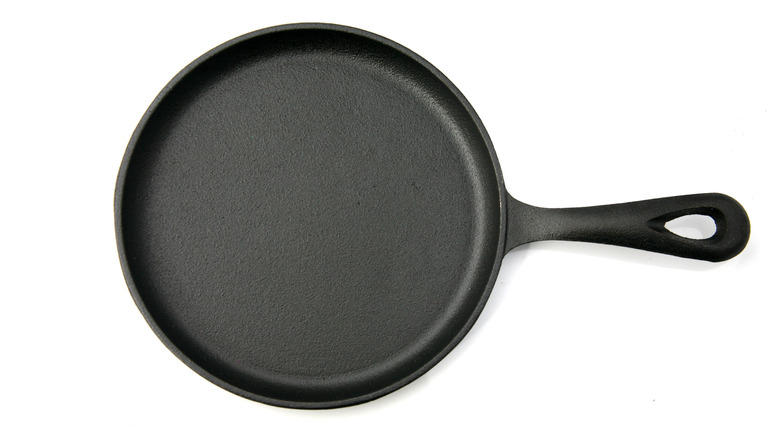
Some people don't spend much time cooking in their kitchens. But if you're the kind of person who chefs it up regularly, it's important to think about how everyday kitchen tools could impact your marble countertops. Pans, for instance, can cause a lot of damage to marble countertops if you don't know how to handle them properly, says Craig Gritzen, principal interior designer at Curated Style Collective. He says that pans — especially those made of cast iron — should stay off of marble countertops.
"Due to the weight of the pans, the bottom sometimes drags on the surface when lifting to place on the cooktop, which can damage the stone," he says. He also notes that the pan's ability to retain heat doesn't make it a good option to put on a marble countertop, either. Even if you're not using a cast iron skillet, you'll want to avoid placing hot pans directly on the marble to prevent unnecessary damage. That doesn't mean you can't place pans on your marble countertops at all, though. Just make sure to invest in some good-quality trivets, which prevent the pan from coming into direct contact with the countertop. Gritzen encourages his clients to select trivets that match their decor. That way, not only will they protect their countertops, but they'll also give their space a more stylish flair.
Letting spills sit on the marble surface
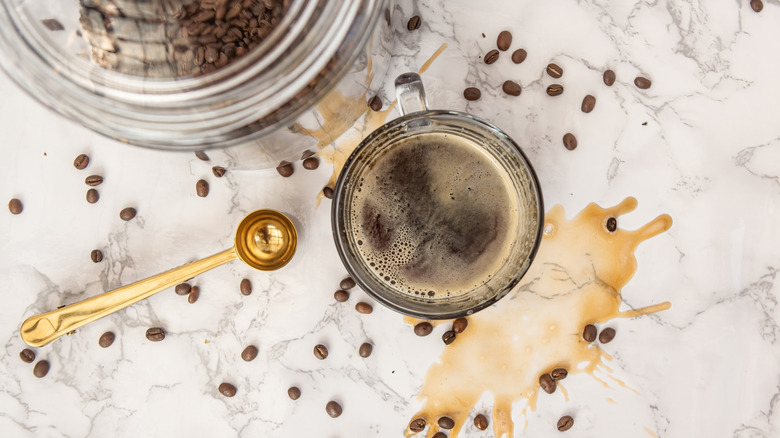
It should come as no surprise that marble is quite finicky compared to other types of countertop materials, which means that you generally need to be pretty careful when taking care of them. That's certainly true when it comes to spills, which can do a lot of damage to them.
"Marble is porous, so dark liquids and fruit juices quickly soak in and stain," says Robert D'Amato. Coffee, wine, and tomato sauce spills are potential offenders, so you'll want to take care to avoid them if possible.
But what if you do happen to spill something? After all, spills are going to happen in most kitchens. D'Amato recommends blotting the stain, rather than wiping it. Why? "Wiping just spreads the acid and speeds up etching," he says.
Not using cutting boards
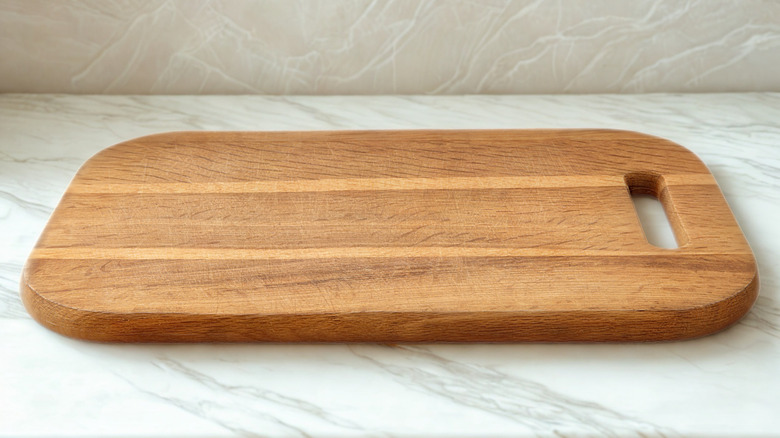
We get it: Sometimes, it just makes sense to cut corners in the kitchen, especially when you're rushing to prepare dinner or you're trying to make yourself a snack before heading out the door. But even if your marble countertops are absolutely squeaky clean, you're going to want to avoid using them like a butcher block, explains Robert D'Amato. Cutting on a marble surface isn't a good idea, and it can ultimately damage that expensive stone.
"Knives and heavy cookware not only scratch the polish but can chip the edges over time," he says. "Always use cutting boards and trivets, even for quick prep work." Sure, that means that you're always going to need to have a few cutting boards on hand, but using them will also expedite cleanup.