

The Major Downside Of Marble Countertops No One Mentions
We may receive a commission on purchases made from links.
Marble is viewed as the creme de la creme of popular kitchen countertop materials. With its gorgeous, upscale appearance and high price point, that reputation is deserved. No material is perfect, though, and a marble counter requires a lot of work beyond installation and regular cleaning. If you don't routinely seal its surface, it will take on nasty stains and cost you hundreds of dollars more than you've already spent.
Marble counters can last for decades without the need for a replacement, and the stone's excellent resistance to heat and scratching make it great for food prep. But what contractors and home decor guides may not tell you is that marble is also very porous, meaning liquid can seep into it and leave a stain unless it has a protective barrier. This comes in the form of a sealant, a liquid solution made to soak into marble and other natural stones and make them less absorbent and more stain-resistant.
Thorough and consistent sealing is mandatory to make sure marble counters stay spotless and last as long as they should. Without it, substances like wine, coffee, sauces, oil, and even hard water can create unsightly blemishes that are tough to scrub away. If you can't remove the stains on your own, you might need to repair or replace your counter. Every homeowner should consider the upkeep before committing to marble countertops, especially because sealing it on your own isn't the simplest job.
How to tell if your marble countertops need sealing, and what products to use
The first coat of sealant should be applied to your marble countertop during installation. If a contractor installs your counter, you can ask them to perform the initial sealing, but after that, you have to do it yourself or pay a professional each time. The latter habit can get quite expensive, so reconsider marble if you're not willing invest that money or effort.
Marble generally needs a new coat of sealant every six months, but a better way to judge this is a simple water test. Carefully spray or pour some water on your counter in a few different spots and let it sit for at least 15 minutes. If the liquid soaks into the stone and leaves a dark spot, your counter needs to be resealed (but let the water spots dry and fade first). There's a wide range of a water- or solvent-based sealants on the market, but for the kitchen, the product you use also must be food safe.
Solvent-based sealants like the Miracle Sealants 511 Impregnator soak into marble more deeply, so they're most effective at preventing stains and keeping the stone sealed for longer. However, they give off harsh fumes, making them somewhat unpleasant to use indoors. Gentler water-based solvents, like Aqua Mix Sealers Choice Gold, are much easier to use and often odor-free, but you'll need to reapply them more frequently to keep your counter in top shape.
A brief guide to resealing marble kitchen counters
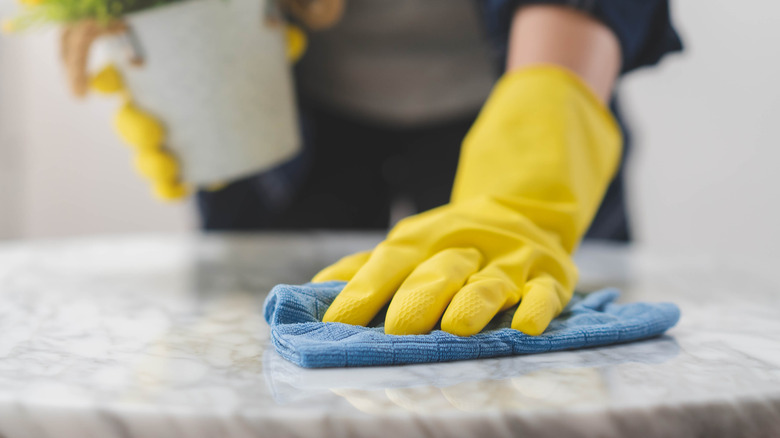
If you're up for the challenge resealing your marble counter yourself, start by putting on gloves, goggles, and a respirator mask and opening any windows in the kitchen. Clean the counter with a damp cloth and water or a marble-safe spray cleaner. Once it's completely clean and dry, pour a small amount of sealant onto the surface or onto your applicator. You can use a paint brush, foam brush, applicator pad, or another clean, soft cloth.
Use careful strokes to rub the sealant over the counter. Try working in small sections to avoid going over areas you've already sealed, and don't neglect any nooks and crannies. Once you have a nice, even coat, let it sit for as long as the product's instructions say. Wipe off any excess sealant with a lint-free cloth. Finally, let the counter dry for 24 to 48 hours before using it.
While sealing does a lot to help marble resist staining, it does not make it damage-proof. You have to wipe grease, grime, and puddles of liquid off marble countertops ASAP, or they might still stain. Plus, sealing does not protect marble from etching, or damage caused when acidic foods and substances eat away at the stone. Many of the same things that cause staining also cause etching, including coffee, tea, vinegar, citrus juice, and tomato sauce. If you're not prepared to be so meticulous about your countertop, granite might be better for your kitchen than marble.