

Can A Dutch Oven Go In The Oven?
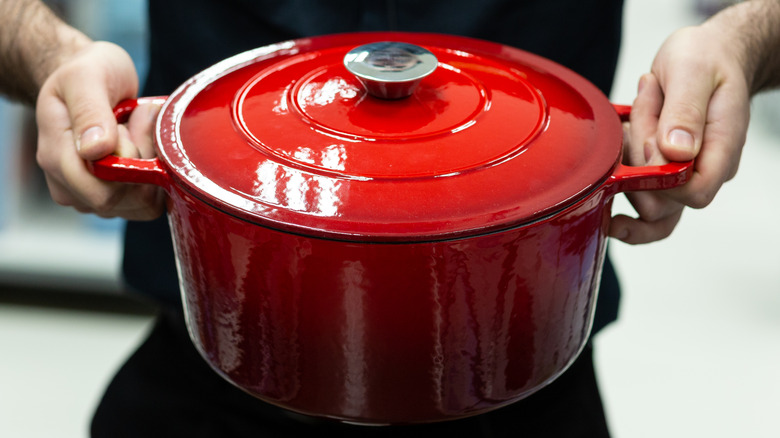
A traditional Dutch oven is one of the most versatile cooking tools you can own. It can be used to bake, braise, roast, sear, fry, and stew meats, vegetables, and other ingredients. You can even use a Dutch oven to bake sourdough bread and other bread varieties. The enameled cast iron walls retain heat quite well, which makes it easy to both slow cook food and keep it warm until you serve it. But one of the most useful benefits of cooking with a Dutch oven is that it can go, well, in the oven.
This durable, heavyweight cookware is designed to be used both on the stovetop and in the oven without cracking or breaking. You can make oven-braised or roasted dishes with ease, but one of the best ways to use your Dutch oven is to start dishes on the stovetop before moving them into the oven to either finish cooking or to keep them warm. However, there are a few important tips you should keep in mind when using yours in the oven, such as what temperatures they're typically safe at as well as the dangers of shifting temperatures too quickly.
Safely using your Dutch oven in the oven
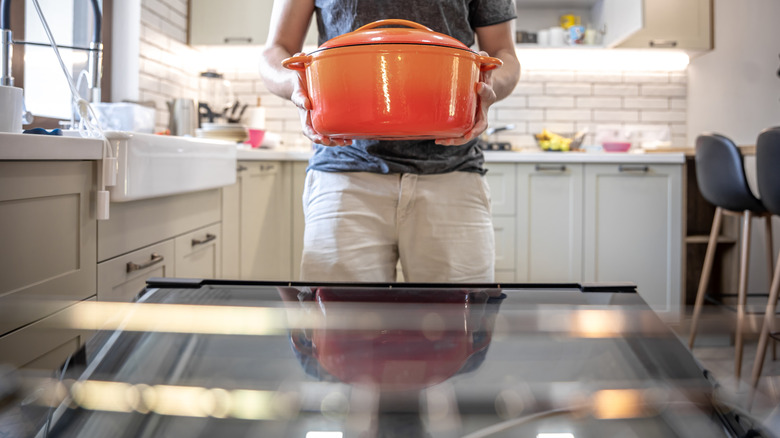
While the body of your Dutch oven is designed to withstand extremely hot temperatures, you should still read the instructions or manual that came with your cookware to confirm at what temperature it remains oven-safe. Before putting it in the oven, find out how much heat it can take without getting damaged. Most are oven-safe up to 500 to 550 degrees Fahrenheit, but some less expensive models may only be safe up to 400 degrees. Despite that, your Dutch oven lid might not be as oven-safe as you think. Some brands use plastic knobs on the lids, which should not go in the oven. Others may use a material that isn't oven-safe at the same temperature as the bottom dish. Even Le Creuset Dutch oven knobs aren't all made from the same material.
Additionally, it's important to note that you should never place a cold Dutch oven in a hot oven. It's better to place the pot in the cold oven and let it gradually heat up as the oven preheats. However, some manufacturers caution against preheating an empty Dutch oven, so be sure to check the manual or instructions before placing it in the oven while empty. Also, when cooking with a Dutch oven, never skip this first step: coating the bottom dish in oil, butter, or cooking spray rather than heating it while dry. Finally, keep the lid on the cookware if you are braising, stewing, or steaming meats or vegetables, or if you are baking bread or desserts. Leave the lid off if you are searing, browning, or crisping meat, veggies, or bread.