

What Exactly Are Normandy Blend Vegetables?
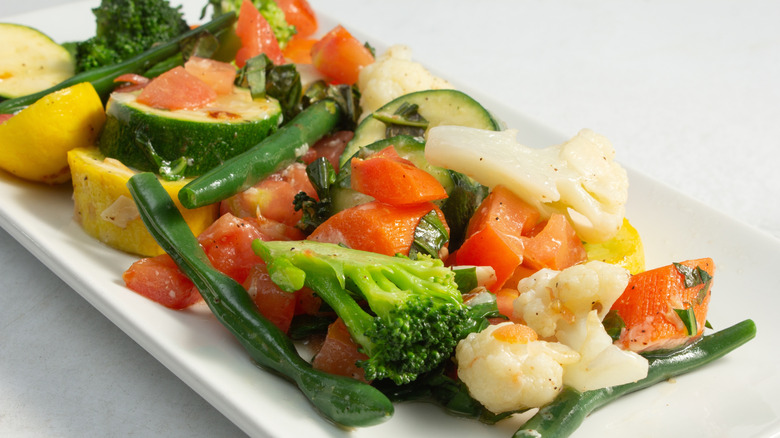
Look no further than frozen vegetables for a reliable answer to a quick and tasty meal — especially the Normandy blend. This familiar crowd-pleaser usually mixes broccoli florets with carrots, cauliflower florets, yellow squash, and zucchini, and has absolutely nothing to do with Normandy, France. This flash-frozen shortcut just has a fancy name — one that has more to do with marketing than a specific region. The name emerged around the mid-1990s and got picked up by Birds Eye in the early 2000s, with other brands following suit.
Marketing the vegetables using the word Normandy was a way to push people to buy these assorted mixes. American cooks weren't always fond of tossing frozen vegetables into a homemade (wink) chicken pot pie recipe. When supermarkets became a thing around 1930, frozen foods were born, thanks in part to a man named Clarence Birdseye. But frozen veggies weren't an easy sell at first.
Once Birdseye figured out how to freeze fish to sell, he patented his Quick Freeze Machine and developed a full line of frozen foods, including peas and spinach. For the first time, customers could see bags of frozen vegetables stacked neatly in a cold display case. But it took time for them to come around, partly because many families grew vegetables in the 1940s. Also, only about half of Americans could afford a luxury like a freezer during World War II. Once the '50s hit and home gadgets like refrigerators with freezer compartments were sold more frequently, supermarkets started introducing their own products, and in-house frozen vegetable brands were in high demand. Mixed frozen vegetables became a big thing — a popular TV dinner side dish served with Salisbury steak or blended into a casserole.
All-season options for Normandy blend veggies
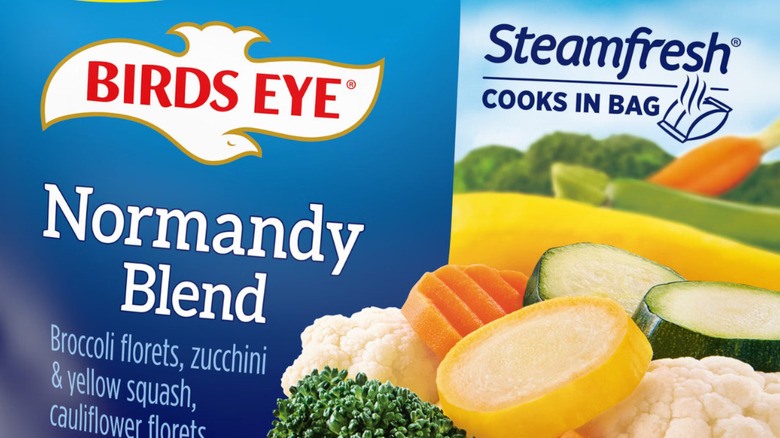
Giving vegetable blends creative names injects a little flair into simple ingredients. Think of the Normandy blend as a touch of summer in the dead of winter — the yellow squash and zucchini echoing the garden flavors of July, alongside broccoli, cauliflower, and carrots — three cool-season favorites. Stir this mix into vegetable korma for a flawless Indian dinner or combine it with broth and herbs for an instant vegetable soup. It's best to avoid boiling frozen veggies for too long — things can get mushy. Instead, toss them in the pot during the last minutes of cooking soups and braised dishes like coconut lime chicken thighs.
Along with the Normandy blend, there are more hidden gems of the frozen aisle in the mixed vegetable section. California blend (broccoli, cauliflower, carrots) is a close cousin to Normandy, while an Italian blend usually includes Italian green beans and red peppers along with zucchini, carrots, and cauliflower. Toss them in olive oil and roast them at 400 degrees Fahrenheit for about half an hour — or take our tip for the crispiest frozen vegetables and add the olive oil only for the last 10 minutes. Asian stir-fry mixes often feature snap peas, mushrooms, and water chestnuts — perfect to tuck inside an egg roll.
The key to making any frozen mix shine is simple: High heat, minimal moisture, and a bit of seasoning to wake up the flavors. Easy and reliable, these blends deliver when roasted, steamed, or tossed — and definitely deserve a spot in your freezer, especially since frozen vegetables are equally nutritious (and sometimes more so) to fresh ones.