

Tips For Freezing Fresh Salmon

Keeping a stash of frozen salmon fillets on hand is great for an impromptu deluxe dinner. However, if you don't know the correct method for freezing fresh salmon, you might find yourself a little disappointed with how your meal turns out. While there are some general tips for freezing fish, keep in mind that salmon is more oily than a lot of white fish. This oiliness makes it more prone to oxidation, the breakdown of fatty acids that changes the color of the salmon and gives it an unpleasant, fishy odor.
The best way to maintain the taste and texture of fresh salmon headed for the freezer is by ice glazing. This method involves dipping the fish in a bath of ascorbic acid (the chemical name for Vitamin C) and water before freezing. This protects it from both oxygen and freezer burn. If ice glazing is a little more work than you had in mind, then prepare the salmon as chefs do. After rinsing and patting dry, tightly wrap the fillets in plastic wrap, followed by another layer of plastic or aluminum foil, then store them in an airtight freezer bag.
The quicker you can freeze the fish, the longer it will retain freshness. So, if you're working with more than one salmon fillet, don't throw them in the same freezer bag and call it a day. Instead, lay each one out on a baking sheet (in its plastic wrap) to ensure they freeze quickly, then combine them for storage.
Storing and defrosting frozen salmon
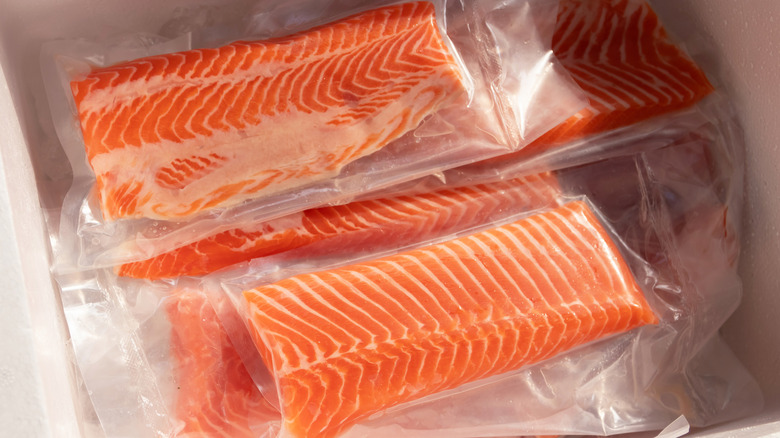
Your tightly wrapped salmon will maintain its quality for up to three months in the freezer. It will be safe to eat beyond this, but the taste and texture may have degraded.
When it comes time to use the frozen salmon, you need to think ahead. The best way to defrost your salmon is to place it on a baking sheet or shallow dish and let it thaw overnight in the refrigerator. This ensures even defrosting without affecting the texture. If you don't have that kind of time, the next best option is thawing salmon in cold water. Submerge the fish, still in its airtight packaging, in a bath of cold water, switching out the water every 30 minutes until the fillets are defrosted.
Microwaving frozen salmon should only be done as a last resort, especially if you've put time and effort into freezing it correctly. Be sure to use the microwave's defrost setting or a low-power setting. Thaw it by microwaving in short bursts so that you can keep checking on it. On the other hand, if you're planning to poach or slow-roast your fresh salmon, cooking it directly from the freezer can be the best way to do it.