

16 Tips You Need For Making A Perfect Meatball Sandwich
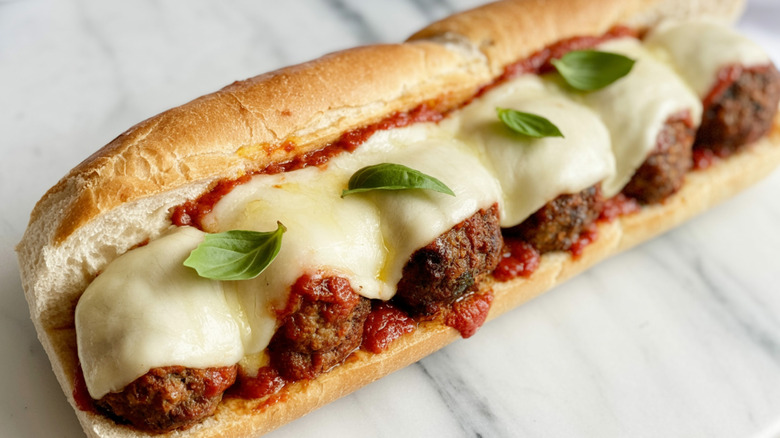
The best meatball sandwiches are a comfort food that's like a warm hug, and knowing a few tips on making them can help you enjoy them to their fullest. This classic sandwich also has a negative side, with its saucy nature leaving you with a soggy mess if you don't construct it correctly. The perfect sandwich should be a tantalizing contrast of tender meat, tangy sauce, sturdy bread, and melty cheese.
Whether you're a loyal meatball sandwich fan who's been making meatball subs for a long time or you're a newbie to the craft, we have some ideas for you that we think are going to up your meatball sandwich game. Sure, you might still need a few extra napkins, but you'll reduce the chance of chasing meatballs across the floor when you are more mindful about construction methods. Plus, you're likely to rethink some of your ingredients in favor of ones that can elevate the experience. If you're ready to make the perfect meatball sandwich, these 16 tips should get you well on your way.
Start with great bread
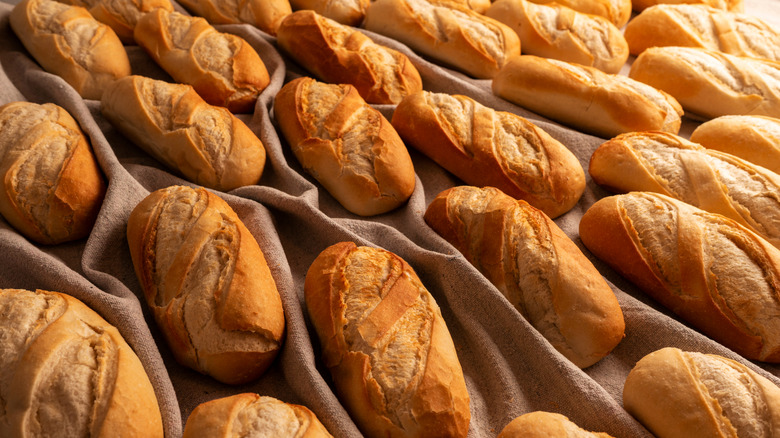
If you are trying to make the perfect meatball sandwich and buy just any bread, you've already gotten off on the wrong foot. The bread type matters. There are actually a lot of great breads for meatball subs, with the texture being of paramount importance. Essentially, you're looking for a long bread roll with a firmer crust and soft interior. You want a soft texture inside for a pleasant sandwich-eating experience, but you need a crust on the outside that can prevent the sauce from soaking through and making the sandwich fall apart.
Sub rolls are a fairly common option. However, you'll also want to consider hoagie rolls since they start out harder on the outside than a sub roll. Ciabatta rolls, Italian-style rolls, or French bread also work fine. Keep in mind that you don't want an exterior that's too tough and chewy to prevent fighting with your sandwich. So, keep it fresh.
Make a meatball nest out of your bread
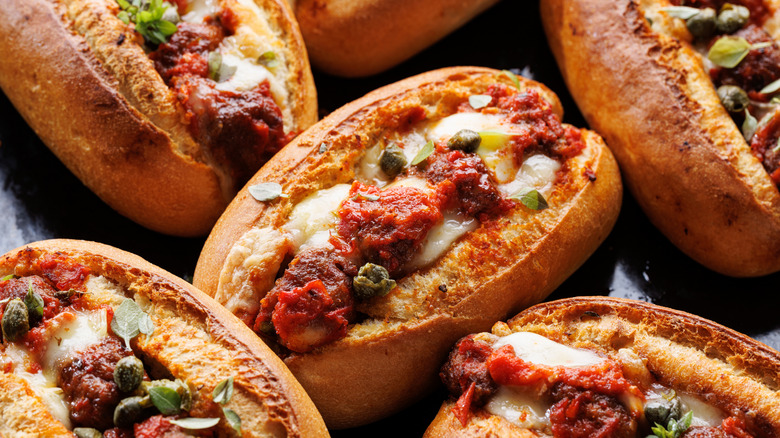
If you've ever lost your meatballs while eating a meatball sub, you'll understand the importance of turning your bread into a meatball nest. There's no reason for your meatballs to shoot out of your sandwich and go rogue if you start with a plan to keep them inside the bread.
Rather than split the bread into two hinged halves, you want to make a nest out of your bread. There are a few options here. One is to start cutting at the top of the bread and make a slit that goes down nearly to the bottom without opening up the sides for toppings to fall out, like the way you cut open a baked potato before adding toppings. Another option is to do a v-cut at the top, like Subway sandwiches used to be cut in the early days.
If you really mean business and the bread is just a vehicle to get the meatballs into your mouth, you can remove some of the bread from the middle of the roll to make a meatball nest or hollow it out completely. In Italy, it's not uncommon to find street meatball sandwiches where one end of the roll is lopped off, the interior is hollowed out, and the meatballs and sauce are dropped vertically into the bread.
Turn your bread into garlic bread
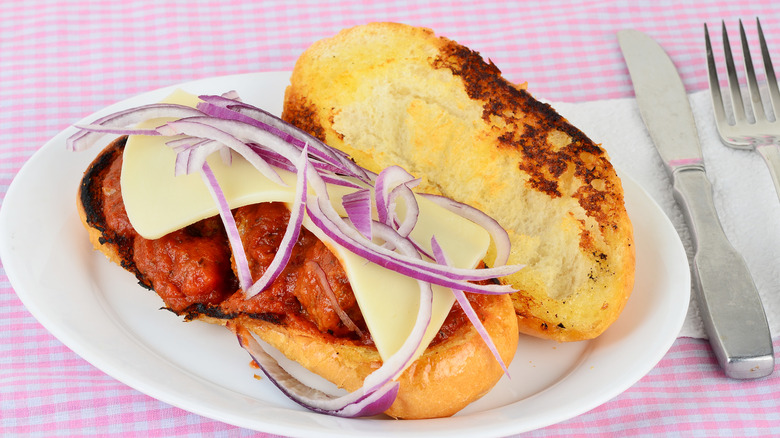
One way to improve your meatball sub is to turn your bread into garlic bread. Not only will the bread taste better, but if you also toast it, it will prevent the bread from becoming too soggy before you can finish your sandwich. To turn your bread into garlic bread, you're going to cover the soft, exposed interior of the bread with softened or melted compound butter or good-quality olive oil.
If using compound butter, opt for one made with freshly grated garlic and fresh chopped herbs like basil, oregano, and parsley. If you're using olive oil, rub a raw garlic clove over the olive oil or infuse the oil with grated garlic and chopped fresh herbs. Garlic powder and dried herbs can work when you don't have fresh garlic and herbs. You'll want to toast the bread lightly so that the interior maintains softness. Although some people may want to simply warm the bread without toasting, so that they can maximize bread softness.
Use good meatballs
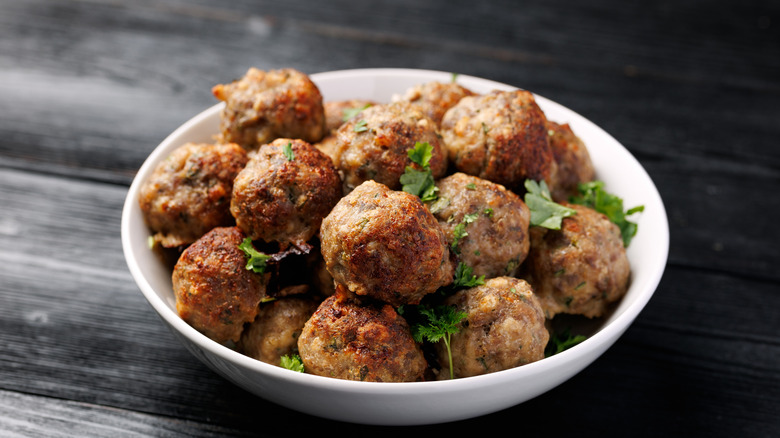
Meatballs are the star of this sandwich, so it's imperative to use good ones. Making homemade meatballs allows control of the flavor profile and ingredients. However, there are also some excellent frozen meatballs out there to make your sandwich-making job a little easier.
There's no reason to think meatballs have to just be made from ground beef. Restaurants with some of the best meatball sandwiches in the U.S. use a variety of meats for their meatballs. For example, Florabella in Missoula, Montana, uses lamb, while Catelli's in Geyserville, California, uses a mixture of beef and spicy pork sausage. Some people even use ground chicken or a mixture of venison and pork.
There's a lot that can give your meatballs flavor. Chopped, grated, or even caramelized onions and garlic are essential. Also, consider additions like Worcestershire sauce, shredded parmesan cheese, crushed red pepper flakes, and herbs. Assuming you're not married to the idea of an Italian-style meatball sub, you can switch your seasonings for something different, like Moroccan seasonings.
Mind the meatball size and shape
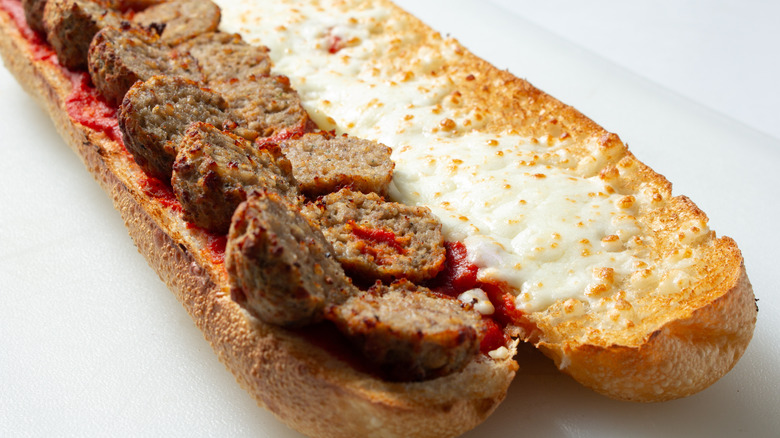
One of the most annoying things about meatball subs can be having meatballs that are too big for your bread and, thus, too big for your mouth. Opinions vary about how big they should be, but simply realizing that size matters can give you food for thought next time you're choosing which meatball brand to buy or making your own meatballs from scratch.
A good rule of thumb is to ensure you're not making or buying them any bigger than a silver dollar. The smaller you go, the more meatballs you can add to your sandwich, giving you more surface area for tasty sauce. However, smaller ones still can roll out of your sandwich. For many, the solution is to use large meatballs, but cut them in half. The advantage of cutting meatballs in half is threefold: providing more surface area for the sauce, preventing them from rolling, and making them easier to bite into.
Use a good, thick sauce
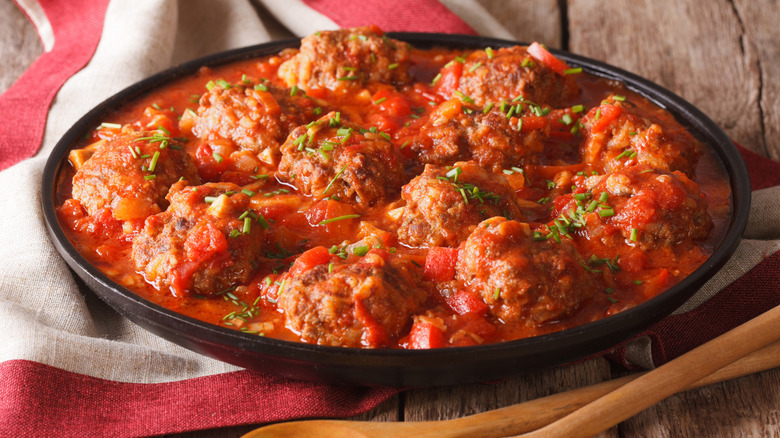
Not only is the flavor of the sauce important, but so is the thickness. One of the easiest ways to ruin a good sub sandwich is to use a thin sauce that soaks through and runs out of the bread. Homemade sauce is best, as you can flavor it and make it as thick as you want. Traditionally, you'll want to make a tomato-based one with Italian herbs like oregano and basil and plenty of garlic. Rather than pureeing the sauce completely, leave it the thickness of chunky salsa.
The longer you simmer it, the more it will thicken and condense, which is what you want for a sauce that won't run straight out of your sandwich. While you could simmer it for a shorter time, three or four hours of gentle simmering will give you the best results in texture and flavor. Even if you start with a great store-bought pasta sauce, you'll want to consider a chunky one and simmer it until it condenses and thickens.
Don't get stuck on marinara as the only sauce option
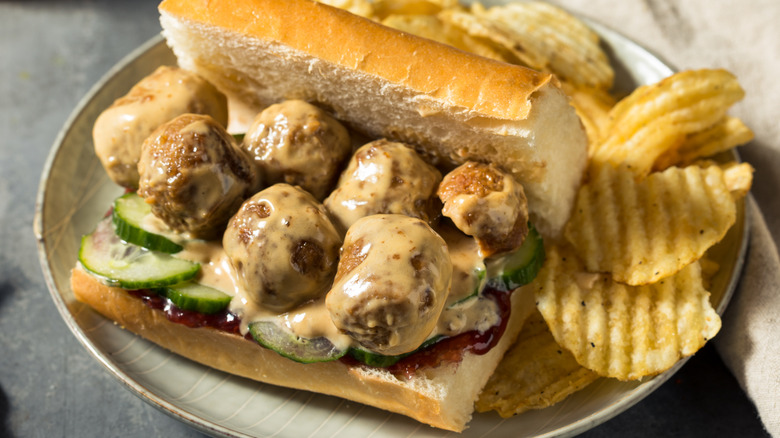
While we've hinted at this concept already, an Italian-flavored meatball sub is not the only flavor direction you can go. If you want to change up your sandwich, the first place to make changes is to the type of sauce you use. Rather than using marinara to make an Italian version, flavor your meatball sandwich with a different type of sauce.
There are lots of great sauces for meatballs. To decide which ones might go well, just think about the types of sauce you already like with other types of meat or meatballs. Some ideas include using Indian curry sauce, Thai curry, barbecue, and Swedish meatball sauce.
Keep in mind that if you change the sauce, you'll likely want to make homemade meatballs and change up the spices in those as well. For example, when using an Indian curry sauce, you'll probably want to add Indian spices to your meatball.
Let your meatballs simmer in the sauce
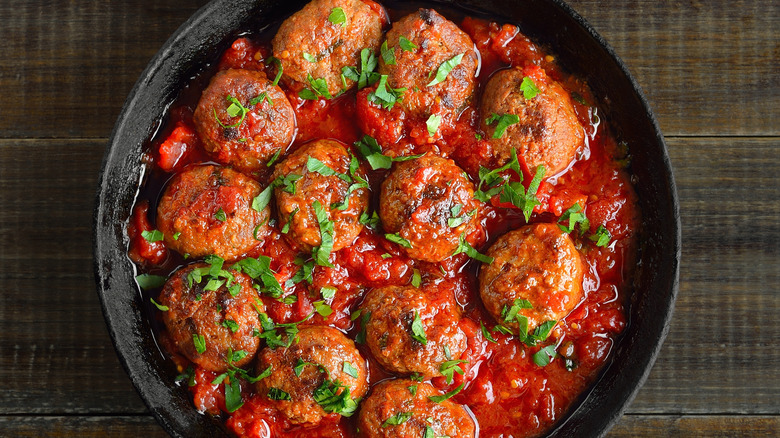
Since we've established that you want your sauce to be thick, you'll want to note that many meatball sandwich recipes have you infuse all that flavor into the meat by simmering the meatballs in the sauce while it's condensing. Simmering meatballs in the sauce also keeps them warm, as nothing is more disappointing than a warm sandwich with cold meatballs.
Simmering them in the sauce means that the sauce will adhere to the outside of every side of the meatball rather than just being a sauce for the bread. That way, you're maximizing your flavor profile. If you cook your meatballs separately, you'll still want to leave them in the sauce at least long enough to coat them, infuse the meat with some of the flavor, and warm the meatballs through if they've already cooled.
Upgrade your cheese options
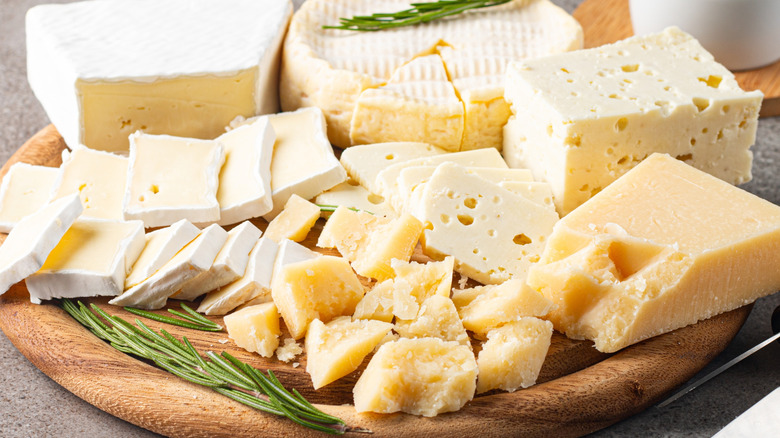
When you think of the cheese to add to meatball subs, you might think of mozzarella. While it's an excellent choice, don't limit yourself, as there's a world of cheeses out there waiting to level up your sandwich.
We've seen people add quite a few types of cheeses to their meatball sandwiches. Some good options include buttery and creamy fontina, tangy provolone, or sweet and mild Swiss. Many times, they're mixing more than one type. For example, with mozzarella and parmesan, you're getting a mild, melty cheese with a sharp cheese.
You'll also want to consider the flavor of your meat and other ingredients when choosing your cheese. Locanda Verde in New York has a lamb meatball slider that comes with creamy, tart caprino made from goat milk. Meanwhile, a venison and pork meatball sub works well with the sharpness of asiago cheese alongside a milder cheese like mozzarella.
Don't forget add-ons
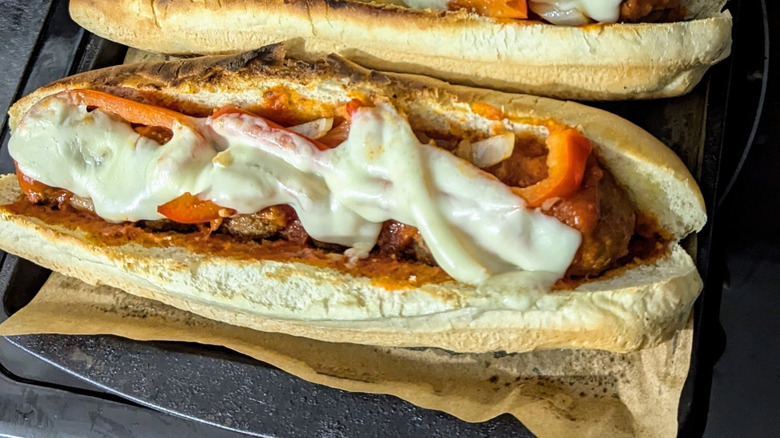
While some people are meatball sub purists, wanting nothing more than meatballs, sauce, and sometimes cheese on their sandwiches, there are plenty of extras that can take the experience to the next level. You're only limited by your own imagination and how much space is left.
You can go a lot of different directions with your add-ons. Grilled veggies like mushrooms, bell peppers, and onions are good options, especially if you caramelize the onions. You could even add heat with jalapeños. Tangy and sweet pineapples also taste good on a meatball sandwich, as do olives and pickles. You could even go with fresh veggies like spinach. You can also take inspiration from Firehouse Subs by adding pepperoni. Florabella also adds pepperoni, but goes a step further by adding salumi (other dried Italian meats) as well. Final garnishes might include fresh herbs like basil and a sprinkling of red pepper flakes.
Balance textures
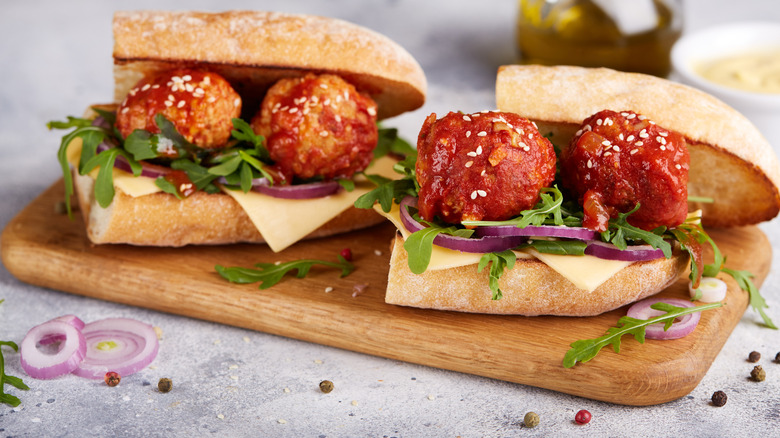
When it comes to deciding which add-ons you want, you need to decide on the textural profile for the sandwich. While there's nothing that says that you can't go for a variety of texture profiles at once, you can also choose just one to carry the sandwich.
If you want a sandwich that's all comfort food, include soft add-ons, like grilled veggies and caramelized onions with melty cheese on top. Meanwhile, if you're craving crunch, pickles, pickled peppers, or fresh raw veggies like onions or peppers can do the job. And if you want to add freshness to an otherwise slow-cooked sandwich profile, that's when fresh herbs or leafy greens can come to the rescue.
Incorporate multiple textures by simmering whole cherry tomatoes, onion slices, and large pieces of peppers in the sauce. Then top with hot pickled peppers, small balls of fresh mozzarella, and fresh herbs.
Layer with intention
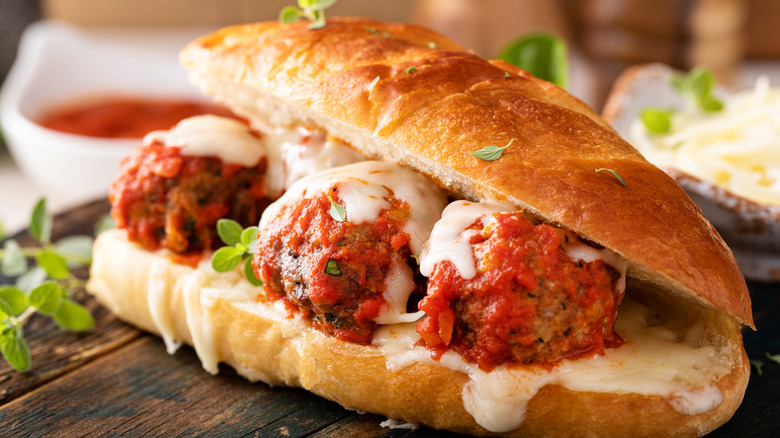
The way you make your sandwich also matters. It matters in terms of how well the ingredients stay in the sandwich and also in how to maximize flavor and prevent the sauce from soaking through the bread. Start with a layer of cheese on the bread and then toast them together. Starting with garlic cheese toast, rather than just toasted garlic bread, gives you a barrier that prevents the cheese from seeping into the bread and making it soggy.
After the cheese barrier comes your meatballs. If you're adding sauce, put it on top of the meatballs. Then, place your add-ons on the meatballs. Finally, you'll want a layer of cheese for melting. Garnishes like fresh herbs and red pepper flakes go last. If you'd prefer not to have a layer of cheese as a barrier, some people use greens like lettuce or spinach instead. Just put the fresh greens next to the bread and add your other layers as you'd like.
Don't overload your sandwich with ingredients or sauce
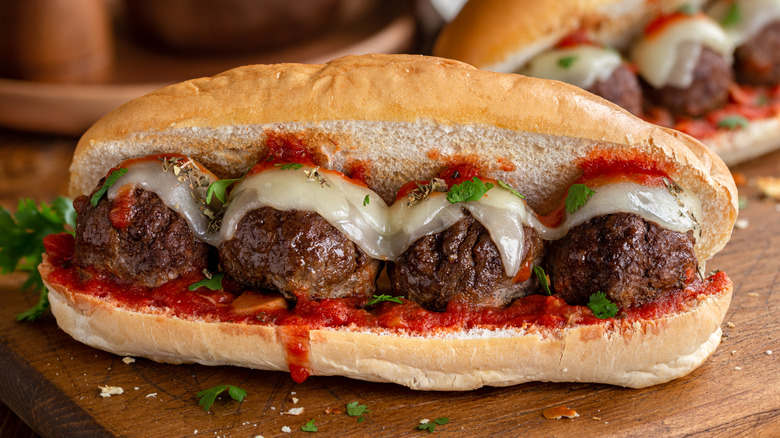
With meatballs already taking up a big chunk of space in your sandwich, you'll want to be mindful of just how many extra ingredients you plan to add. Add too many, and they'll overflow the sandwich. The same goes for sauce. Even if you're a sauce lover, there's definitely such a thing as too much sauce here.
We hear you; you love sauce. And the sauce is part of what makes a meatball sub so great, but you're going to enjoy the experience a whole lot more if it doesn't end up all over your clothes. Use it like you would condiments on a hot dog rather than something that drenches your sandwich. One idea to avoid a soggy sandwich is to serve the majority of your sauce on the side and dip your sandwich as you go.
Too many extra ingredients can also take away from the overall experience. For example, if you try to add as many veggies as you would on a regular sub, it's not going to be nearly as good as if you left it in a simpler state. It's a comfort sandwich, not a salad.
Make your cheese melty and plentiful
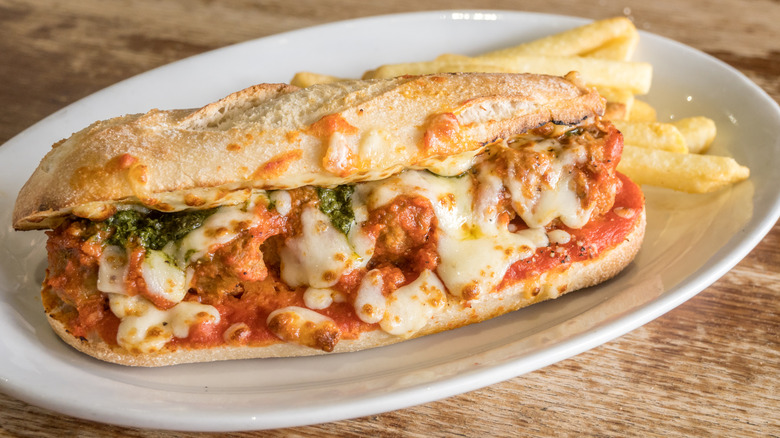
When adding cheese to your sandwich, add a lot of it and make it melty. In our opinion, melted cheese is just as important to the flavor and texture profile as the sauce, meatballs, and bread. So, don't skimp.
When making your sandwich, add cheese with your heart. Start with a minimum of ¼ to ⅓ cup of cheese per sandwich. Just know that the more you add, the more bubbly, gooey, and yummy it will be. Even if you've already added a cheese barrier on the surface of the bread, there's no reason you can't add more cheese on top and melt it, too.
This is a hot sandwich. So, melt your cheese. You could either put the sandwich in the oven for five or so minutes at 375 degrees Fahrenheit or even under the broiler to melt the cheese in the final moments before serving. Just keep a watch on it to make sure it doesn't burn. Another option is to melt the cheese directly on top of the meatballs as they simmer in their sauce.
Time it to be eaten immediately after assembly
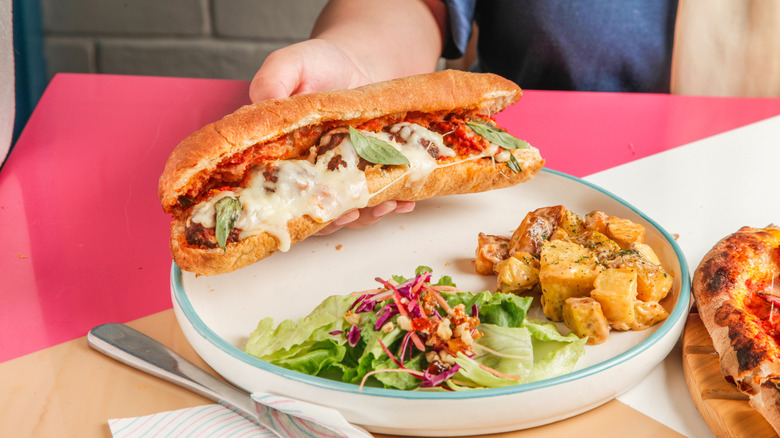
While this might be intuitive for some, it's good to remember that you want to serve your meatball sandwiches immediately after making them. For one thing, they're best hot. Plus, the longer they sit around waiting to be eaten, the more the sauce will seep into the bread and make it soggy.
There's a lot you can do before it's time to eat, like simmering the sauce, making the meatballs, preparing the toppings, and preparing the bread. However, if you're trying to time the meal just right, there are things you'll need to wait until the last minute to do. If you're in a holding pattern, you'll want to warm up the meatballs in the sauce for at least five minutes before you start making the sandwich.
Then, add the meatballs, sauce, and all the toppings to the sandwich, which shouldn't take more than a few minutes if your toppings are ready to go. Finally, in the last five minutes or so, add cheese and put it in the oven to melt. So, plan to need an estimated 10 to 15 minutes for the final prep time to get everything ready before a set eating time so that the meal is as hot and freshly-made as possible.
Wrap it
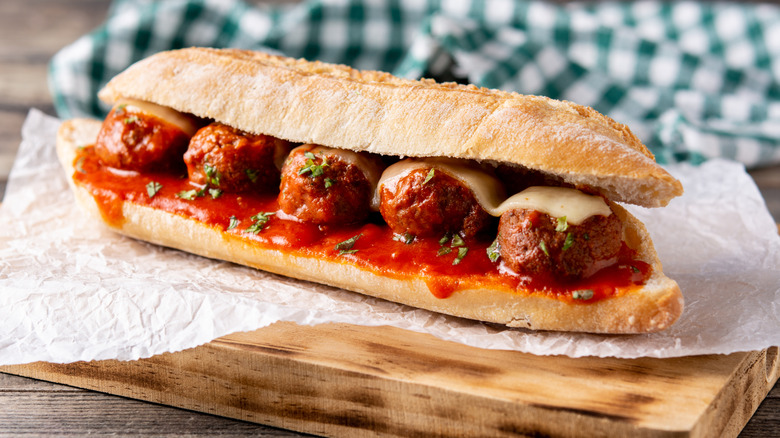
If you get a meatball sandwich from a restaurant, it will often come wrapped, which isn't a bad idea when you're making one at home, too. It keeps the sandwich warm and keeps all the ingredients from sliding out of the sandwich and into someone's lap.
Without access at home to the two-sided foil wrapping paper restaurants use, we like the idea of using a two-layer wrap. The layer nearest the sandwich should be parchment paper or waxed paper, while the outer layer will be foil. The foil keeps the sandwich warm, while the parchment paper keeps the foil out of the sandwich.
To wrap, place a piece of foil down on the countertop, and place a piece of parchment paper on top of the foil. Then, place the sandwich on top of the parchment paper. Roll the sides of the foil and parchment paper together toward the middle of the sandwich. Then, fold in the sides.