

9 Cozy Fall Drinks For When You're Sick Of Pumpkin Spice
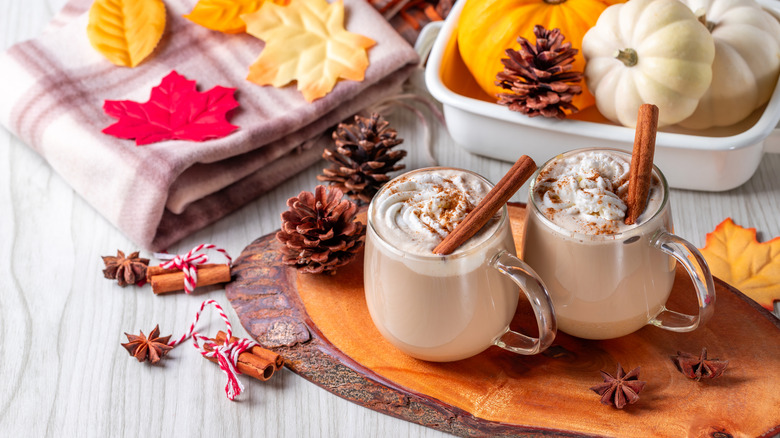
The pumpkin spice latte, introduced as a test drink by Starbucks in 2003, is nothing short of an icon. Not many beverages share such a status. But when everyone has an opinion on a seasonal flavor offering, it becomes pretty clear that it has moved from menu item to cultural phenomenon.
Since its early-aughts beginnings, the pumpkin spice latte — often called PSL— had a dedicated group of fans who waited for its fall arrival with bated breath. But over the years, that number has continued to grow. Now, despite being a seasonal drink, it is one of Starbucks' most popular menu items. Countless coffee shops, both large and small, now offer the pumpkin spice flavor to satisfy consumer needs.
If you plan on sipping away on pumpkin spice all autumn long, you can rest easy; It's not going anywhere anytime soon. But as the seasons change, you may crave a different beverage — something comforting that matches the growing chill in the air. The truth is, while pumpkin spice has skyrocketed to fame, it's only one of many perfect drinks you can cozy up with this year.
Chai latte
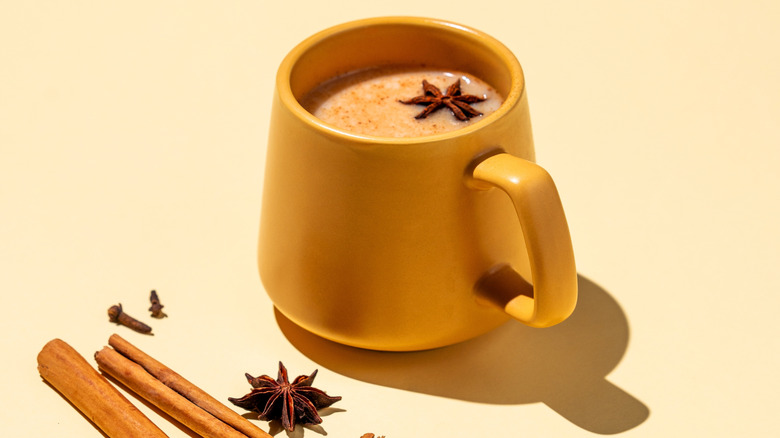
The delicious chai latte is now ubiquitous, but no cool-weather drink list could be complete without it. Even those familiar with the beverage may not know what it is composed of, so here is a quick breakdown. Indian black tea is steeped with ginger, pepper, cloves, cardamom, star anise, and cinnamon to create masala chai. That concentrated brew is then combined with steamed milk and sugar. Its flavor is complex and universally appealing, and it pairs perfectly with the changing leaves and light jackets.
Masala chai tends to have a spicier kick than pumpkin spice, but it is still mild enough to be sweeter and creamier than spicy. If tea is not enough to satisfy your caffeine needs, a chai latte with a shot of espresso — also known as a dirty chai — is maybe even better than the original. It's not difficult to make one at home, but you can also stop by Starbucks and Dunkin' to see which one makes a better chai latte.
London fog
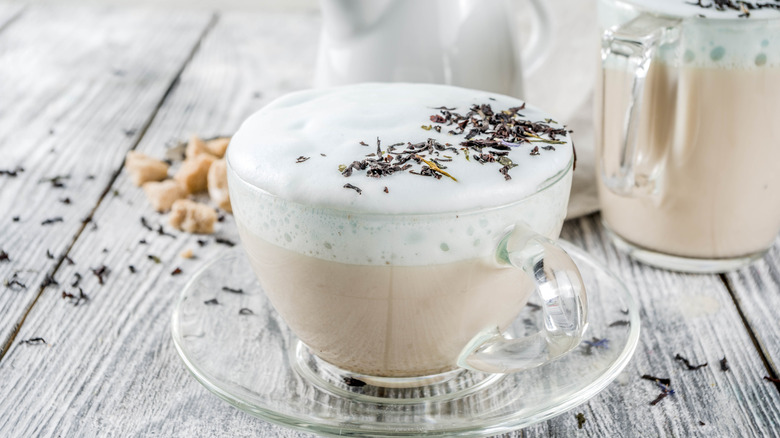
A London Fog, also known as an Earl Grey tea latte, has existed since the 1990s. Earl Grey is black tea combined with bergamot oil, which gives it its signature taste. Bergamot is a citrus, and while the latter is typically associated with bright, punchy flavors, Earl Grey has a distinctly mellow and smooth taste, often creamy and vanilla-esque. It's a comforting drink that feels tailor-made for the cooling temperatures of fall.
There is more than one way to make a London Fog, and recipes will vary, but the basic idea is strong Earl Grey tea with vanilla syrup and steamed milk. Despite its name, it originated in Canada, where it remains very popular, as well as in the Pacific Northwest. But anyone can order a London Fog these days, especially since Starbucks introduced its own London Fog in 2009.
Maple latte
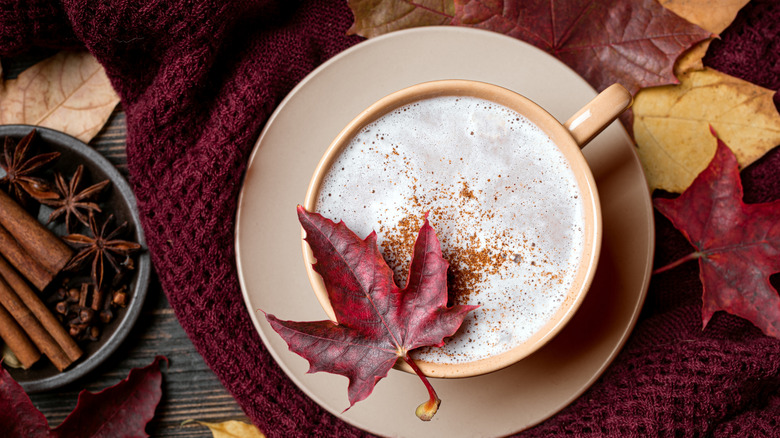
When most people think about maple syrup, the first thing that probably comes to mind is pancakes and waffles. But the distinct, rich flavor of maple has many applications beyond the typical breakfast drizzle. It's got an autumnal, woodsy kind of sweetness, and lots of coffee shops now offer variations on a maple latte; Tim Hortons sells one, and Starbucks occasionally offers it. Many variations of a maple latte involve spices like cinnamon and nutmeg, which bring a similar coziness to a pumpkin spice latte but with the richness of maple.
You can easily conjure a maple coffee drink at home, since maple syrup is widely available — do yourself a favor and spring for the real stuff, not a pancake syrup. You want 100% maple, not any corn syrup or additional ingredients that will dilute the flavor. Consider steeping the syrup in aromatic spices to increase its warmth.
Horchata latte
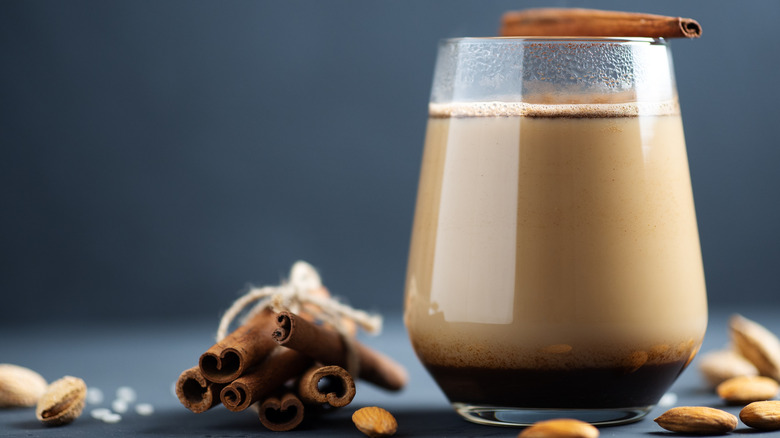
Horchata is a spiced and sweetened drink common throughout the Spanish-speaking world. Because it is a staple in various cultures and countries, the ingredients vary. At its core, it is a sweet, milky drink flavored with cinnamon. It can be made with many kinds of dairy or alternative milks; Mexican horchata (see recipe) is created with rice milk, whereas Spanish horchata is prepared with tiger nut milk. Some recipes even call for condensed milk to add creamier elements to the drink.
No matter the variation of horchata you find, it is a perfect match for espresso — it's the flavor, sweetener, and milk elements all in one. Just add espresso for a spiced and sweet latte that has the warmth of a pumpkin spice latte while being something all its own. Horchata is typically served cold, so an iced horchata latte is the obvious choice. But the flavors will work just as well when warmed.
Hojicha latte
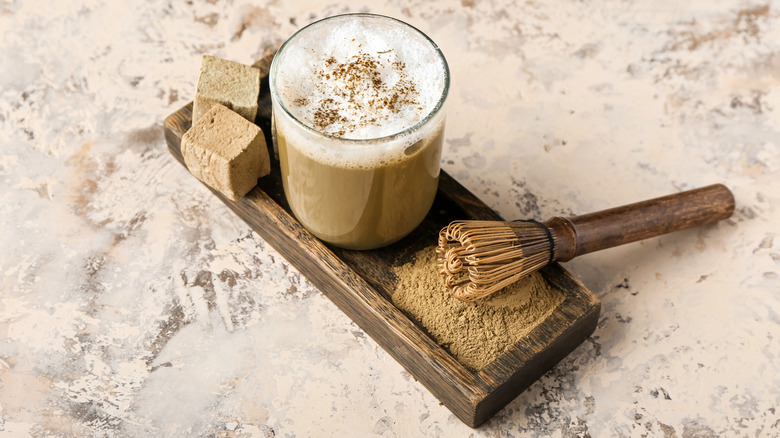
Hojicha is a roasted green tea that has a mild and nutty flavor. Unlike matcha, which has a bright and grassy taste, hojicha is toasty and mellow with notes of hay. It's a great transitional drink from summer to fall and works wonderfully in latte form with steamed milk and sweetener. It's also a good option for a cold-weather drink that doesn't rely on added spices, aromatics, or flavorings to heighten its coziness. It's natural notes of toasty caramel can work that magic on its own.
Hojicha green tea is not as well-known in the West as its fellow Japanese tea, matcha, so it's not as easy to find in cafés. However, many Japanese-style coffee shops will offer a hojicha latte, and you can find the tea itself in most specialty tea shops. Once you have the tea leaves, it's simply a matter of adding steamed milk and a bit of sweetener to make the latte at home.
Chile mocha
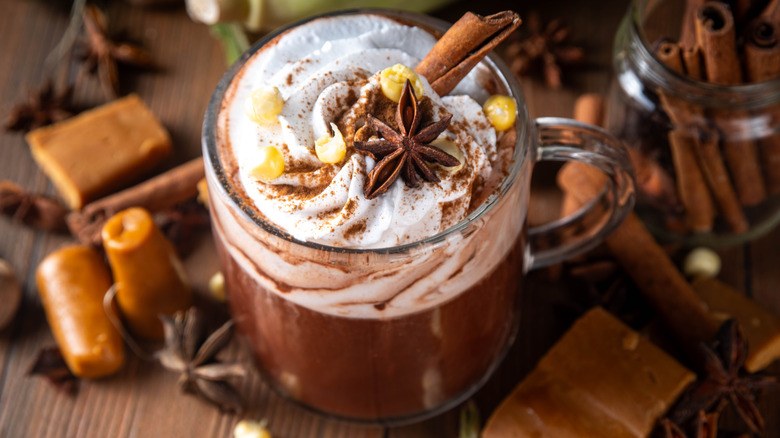
A mocha latte is an OG café order. It comprises espresso, chocolate syrup, and steamed milk — essentially a more adult version of a hot chocolate. A mocha is a classic for a reason; who doesn't love hot chocolate? However, if you are looking for a little more intrigue, try the less-sweet Mexican version with spices and a bit of heat.
A Chile Mocha, also known as a Mexican or Aztec Mocha, combines the principles of a mocha with chiles and warming spices like cinnamon and paprika. Starbucks even released a Chile Mocha flavor in 2016 as a new take on the holiday spice trend, but it was quickly discontinued, so you won't find it on its fall menu. Some shops still offer a similar drink, but you can also make your own version of the Starbucks Chile Mocha at home with a few simple spices.
Rosemary latte
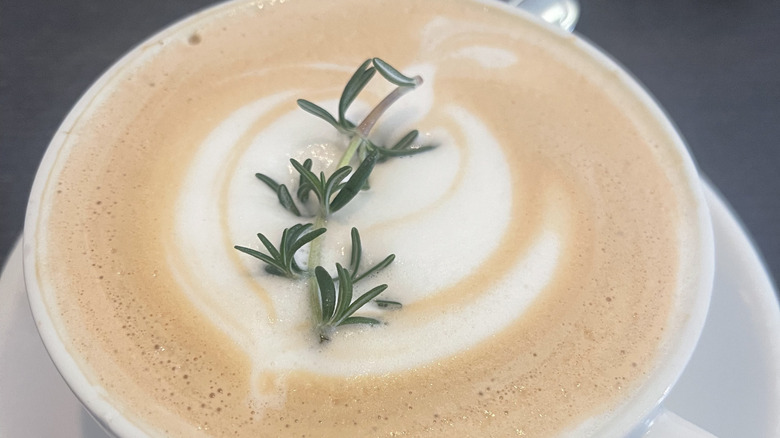
Rosemary is a quintessential cold-weather ingredient — its branches look like little pine trees, and its aromatic, woodsy flavor pairs wonderfully with an abundance of winter produce. While it is more common to add a sprig of rosemary to savory recipes, it can shine in sweet dishes, too. Rosemary does well when infused in a simple syrup and added to coffee or espresso and steamed milk to make a rosemary latte.
The intense flavor of espresso can stand up to the bold rosemary, and the coffee's chocolatey notes make a unique and successful pairing with rosemary's earthiness. Steamed milk mellows the herb while bringing out the sweeter aspects of its flavor profile. It's like the flavor of a cold winter forest warmed in a cup, no additional spices required. Some coffee shops offer rosemary lattes seasonally, but it's also pretty easy to make at home. It only takes a sprig of rosemary to make enough simple syrup for plenty of lattes.
Spiced pear latte
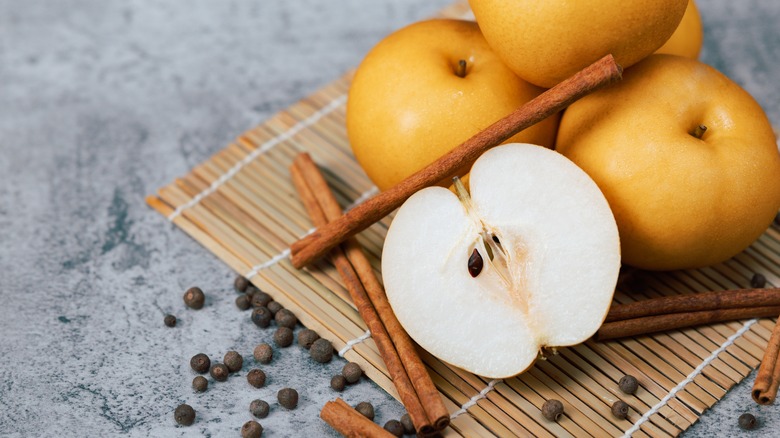
Pumpkin spice is not associated with the colder months for no reason. It is a classic, seasonal dessert, so its flavors have become synonymous with that time of year. But it's not the only dessert that pops up around the holidays. Spiced pears are a seasonal classic, much like pumpkin pie. To prepare the dessert, pears are poached or baked with maple syrup and orange juice, along with spices like nutmeg, cinnamon, and cloves — the same ones present in the ubiquitous pumpkin spice.
Starbucks occasionally introduces a seasonal variation of the pear latte, but it's not a consistent offering. Many smaller coffee shops create their own unique renditions. You can easily make your own spiced pear simple syrup at home using brown sugar, pears, and cinnamon. Or, to make things even simpler, you can swirl pear butter into your coffee for the same effect without ever touching the stove.
Golden milk
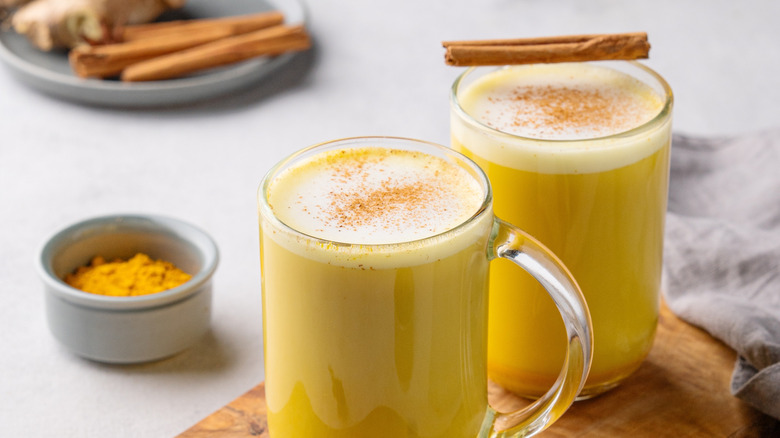
Golden milk, also known as a turmeric latte, is a very popular warm drink that originated in India. Its key ingredient, turmeric, gives the milky beverage a pleasant, bright yellow hue, hence its name. Recipes for the drink vary, but its typical ingredients are dairy or alternative milk steeped with turmeric, black pepper, cinnamon, ginger, and a sweetener of some kind. Its original purpose was medicinal; golden milk is chock-full of vitamins and is anti-inflammatory and anti-bacterial. Not to mention, it's super soothing and warming — important qualities to have in a drink when feeling under the weather.
But golden milk is becoming more popular in the West, and it's not just because it's good for you; it also tastes exceptionally delicious. It's a sweet and spicy drink with a totally different flavor profile than pumpkin spice, so it's a great option if you have had enough of nutmeg. Since it's caffeine-free, don't expect it to wake you up in the morning. However, you can make golden milk to combat the cold season.