

6 Common Store-Bought Foods Frugal Shoppers Always Avoid

With grocery prices increasing dramatically in the last few years, many more of us are keeping an eye on the shopping bill in an effort to reduce unnecessary spending. While certain meals (such as steak dinners or takeaway food) are an obvious splurge, some foods and ingredients sneak cause the bill to skyrocket by the time you hit the register.
Convenience foods may save us time, but more often than not, they don't save us money. Whenever an ingredient is pre-chopped, ready-to-eat, or only takes a few seconds to cook, chances are you will pay a premium for the privilege. From bottled smoothies to pouches of microwaveable rice, some seemingly innocent items could be sabotaging your best efforts to save money. Once you know what they are, you'll probably start preparing these items at home to reduce your weekly spend. Let's take a look at six common store-bought foods frugal shoppers always avoid.
Ready-to-pour stock
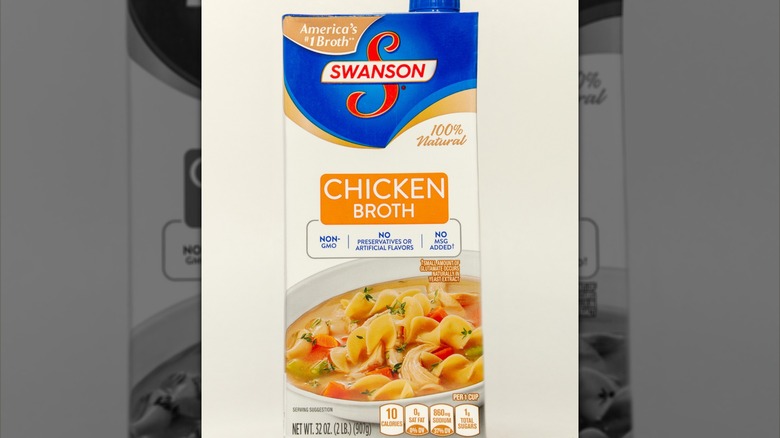
Whether making a soup, stew, or casserole, every keen home cook knows that a quality stock is key. Stock cubes and bouillon have their place and offer an easy alternative, but they will never compare to a fresh stock.
For times when you are in a hurry, ready-to-pour stock can be purchased to replace the need to create stock at home, but this is a product that frugal shoppers will avoid buying. When you make your own stock from the carcass of an animal you have already eaten, homemade stock is as close to free as you are going to get — you only need to pay for a few cheap vegetables and the cost of heating it. As for the downside, while making stock from scratch is a time-consuming task, most of that time is hands-off. Just let the pot simmer to extract the beautiful, deep flavor from the bones, and it will transform into the golden elixir your soups and stews are craving.
Compared to this economical option, the price difference between homemade and ready-to-pour stock is significant. Even basic liquid stock costs a couple of dollars per quart, and premium slow-cooked bone broth can be twice that price. If you're already buying a large joint of meat or a whole bird to roast, the choice should be an easy one. It may take a few hours out of your day, but the resulting rich stock and notable savings will be well worth the time.
Bottled smoothies
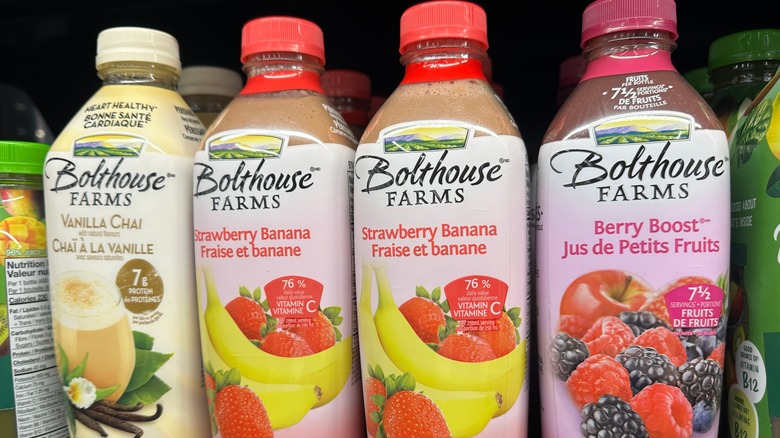
Bottled smoothies are such a convenient option when you need to grab something other than a sandwich to give you a boost. However, compared to making smoothies at home, they are very much a false economy, and less healthy at the same time.
Many of us pay a lot more for a smoothie than we would for an equal amount of juice because we want to eat the whole fruit, including the fiber. In the U.K., where the percentage of the main juice is shown on the ingredients label, the Naked Gold Machine super smoothie contains 60% apple juice as its main ingredient, as well as an unspecified amount of orange juice. With the majority of the "smoothie" made up of fruit juice, known to spike blood sugar very quickly, these commercial smoothies are barely healthier than a simple carton of juice, and seem undeserving of the premium price tag. The declared fiber content of the particular drink we looked at is zero grams.
In contrast, making a high-quality smoothie at home costs much less and allows you to control exactly what it contains. By using whole fruits, the fiber content will be much higher, and instead of juice, water or coconut milk can be used to thin the consistency. The result is a drink customized to your own preferences, that contains the whole fruits that many of us assume make up a store-bought one. Your palate and your wallet will both be glad when you make the switch.
Oatmeal cups
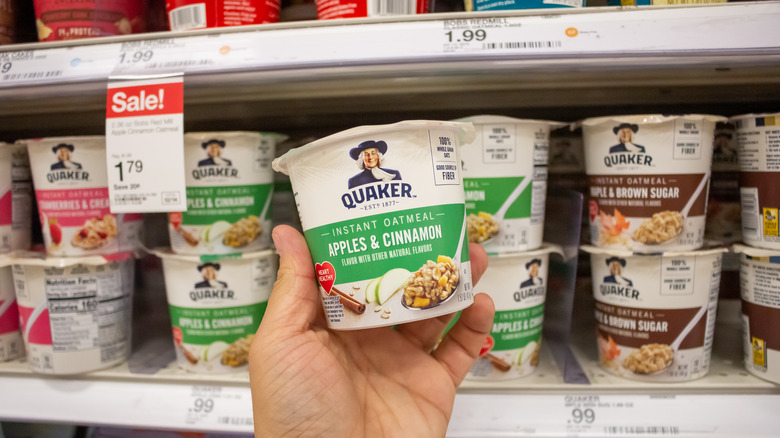
Oatmeal is one of the most frugal breakfast dishes you can make, with a 16-ounce canister of oats often coming in at just a couple of bucks. Instant oatmeal cups may be a convenient alternative for those who want a grab-and-go first meal of the day, but they aren't a good option at all for those keeping a close eye on their pennies.
The average cost of one Quaker Instant Oatmeal Cup is around 65 cents per ounce, while the brand's canister of quick-cooking oats is less than 13 cents per ounce. The five-fold markup on the convenience version makes it a product that stays on the shelf when frugal shoppers go to the store. Instead, making overnight oats the evening before and bringing them with you in an airtight container will allow you to enjoy the protein hit from the oats on the go, without the exorbitant price difference. Making your own oat breakfast means you can customize it too, adding fruits or honey if you prefer to avoid the added sugar found in the majority of instant oatmeal cups.
Coffee pods
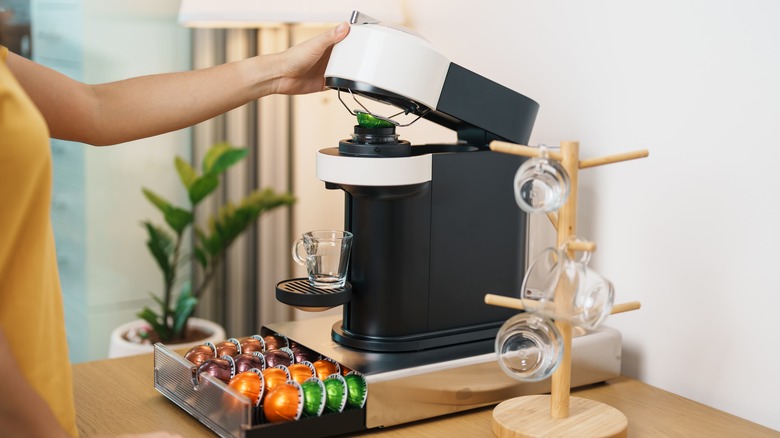
Coffee capsules have had a massive effect on the way we get our caffeine hit since they became super popular in the early 2000s, but when you want to shop frugally, they're not a good choice. They may look stylish sitting in their own little capsule holder in your kitchen, but using them regularly means you're basically throwing money away.
On average, using coffee pods to make your cup of joe will cost around double compared to using a bean-to-cup coffee machine. In addition, for real coffee aficionados, the capsules tend to give a less satisfying experience, and certainly a more standard one. You can't customize the pods, and the pre-packaged option is likely to taste less fresh than beans that have been ground to order.
Even if a dedicated bean-to-cup coffee machine is not a viable option, investing in a good French Press or cafetière will allow you to take advantage of freshly-ground beans, without a huge coffee machine taking up space in your kitchen.
Salad dressings
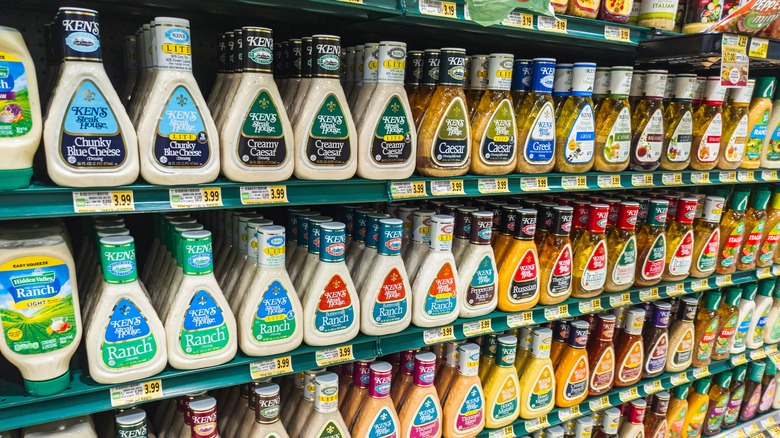
Anyone who has tried to increase their veggie intake by adding salads to their meals knows that salad dressing is a key component. It transforms dry leaves into a cohesive dish, and when you see the variety of salad dressings on the supermarket shelves, it can be tempting to reach for a bottle instead of making one from scratch. However, if saving money is on your list of priorities, it wouldn't be a good move.
Even with the cost of olive oil increasing regularly, whipping up a simple salad dressing using store cupboard ingredients only costs a few cents per serving. Compare this to bottled dressing, which costs a few dollars for a small bottle (much more if you go for a premium brand), and the costs of your healthy salads will soon add up.
Creating your own salad dressings from scratch also means that you can customize them to whatever ingredients you are eating. Balsamic vinegar complements tomatoes, a little lime juice will lift avocados, and don't overlook a touch of honey if you are using root vegetables. Plus, you won't have to worry about hidden sugar or salt that is often present in ready-made dressings. Next time you consider reaching for a bottle of dressing, think of the money that could be saved by mixing up your own salad dressings in just a few minutes, and the improved flavor you will get as a result.
Microwaveable rice
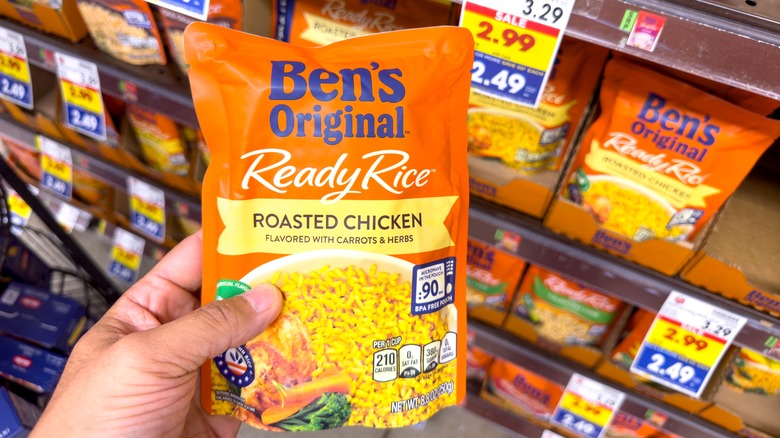
Rice is a staple that most of us have in the pantry, and it offers a low-cost way to add a filling element to so many dishes. Cooking rice perfectly can sometimes seem like a difficult task at the end of a long day, and the temptation to reach for a convenient option can be strong. The cost of microwaveable rice pouches, however, should make you think twice.
Ben's Original Ready Rice costs nearly 26 cents per ounce, compared to less than 6 cents per ounce for a bag of uncooked long rice. This represents very poor value for a product that adds more plastic waste to your trash can, and doesn't really save you that much time. Long-grain rice can be made in around 15 minutes on the stove, often while the rest of your meal is cooking. Whether you eat rice multiple times a week or just on occasion, making it from scratch will see significant savings per portion.