

7 Vintage Breakfast Dishes That Are All But Forgotten
Since the late 19th century, many people have viewed breakfast as the most important meal of the day. That's actually the product of a very effective marketing campaign by Kellogg's, but we digress. We're not here to talk about the act of eating breakfast, but the type of breakfast dishes society has enjoyed over the years.
In 2025, most people start their days with, say, oatmeal, eggs, or an açaí bowl, but this hasn't always been the case. There was a time when offal was actually thought of as a normal breakfast ingredient. Yes, It's virtually unheard of in the U.S. now, but eating kidneys, brains, or tripe first thing in the morning didn't used to be seen as all that strange.
And that's not all. Having Spam with your pancakes? Also normal. Coffee in a soup bowl? Normal. You get the picture. Learn more about some of the forgotten breakfast dishes of the past below.
Deviled kidneys
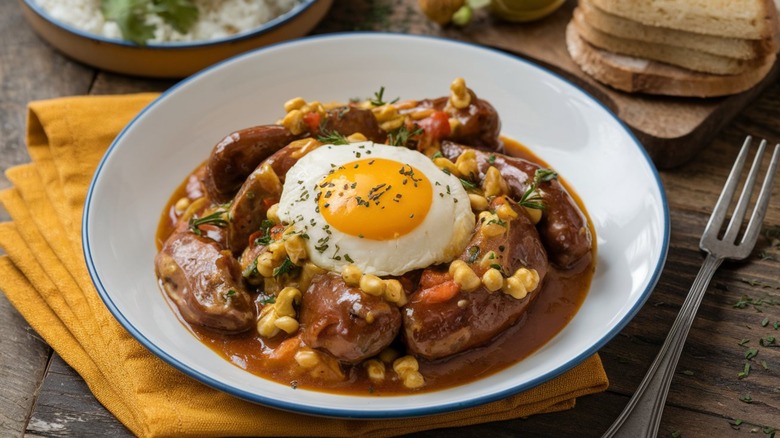
When most of us think of a "deviled" breakfast food, we think of eggs. But back in Victorian and Edwardian England, deviled kidneys were also a morning staple. In a nutshell, the term "deviled" means to add a lot of strong seasonings to a dish. With eggs, this refers to ingredients like mustard and paprika, and it's a similar situation with kidneys. The organs, usually from lamb, were often flash-fried with ingredients like sherry and cider vinegar, before being seasoned with Worcestershire sauce, mustard, and cayenne pepper.
One of the earliest recipes for deviled kidneys appears in the 1861 cookbook "Mrs. Beeton's Book of Household Management," alongside several other deviled dishes, like butter, crab, oysters, mutton, and turkey. In the recipe, the cookbook advises serving the kidneys on toast with a little chutney on the side.
Although they do appear on the occasional upper class English hotel or gentleman's club breakfast menu, it's rare that you'll see deviled kidneys served today. In general, organ meats have fallen massively out of favor since World War II, in part due to cultural shifts, changing attitudes around food, and the rise of more processed options.
Spam and pancakes
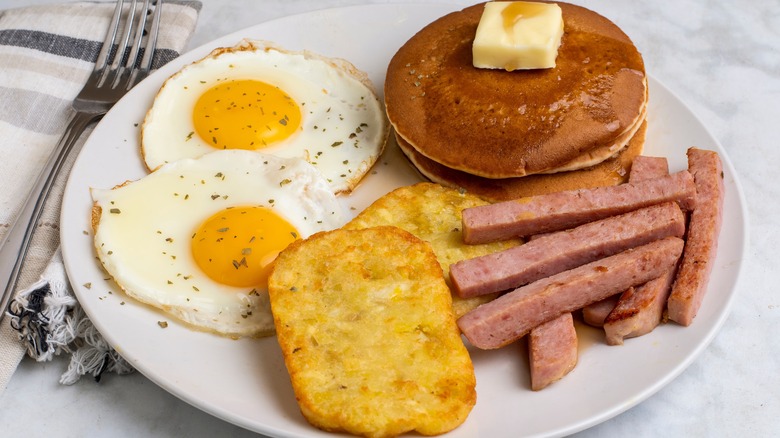
Pancakes have been an American staple for decades, and there's no doubt they are just as loved today as they were back in the 1700s when they were first introduced by Dutch settlers. While some like to serve them with fruit, Nutella, or peanut butter, most people say maple syrup is their go-to accompaniment for the morning sweet treat. Unsurprisingly, Spam isn't usually even mentioned.
However, back in the 1940s and 1950s, that might have been different. One advertisement from Hormel Foods, printed back in 1942, lists several ways to enjoy Spam, including Spamwiches, Spam and eggs, and, you guessed it, Spam and pancakes. In fact, it even promised that the combination of pancakes and its signature processed canned pork was "practically guaranteed to get your family up on coldest mornings."
Some went one step further, by adding the Spam meat into the pancake mixture. For example, one recipe from "Betty Crocker's Bisquick Party Book," published in 1957, advises home cooks to brown Spam slices in a pan, before pouring Bisquick Pancake batter over the top.
Broiled honeycomb tripe
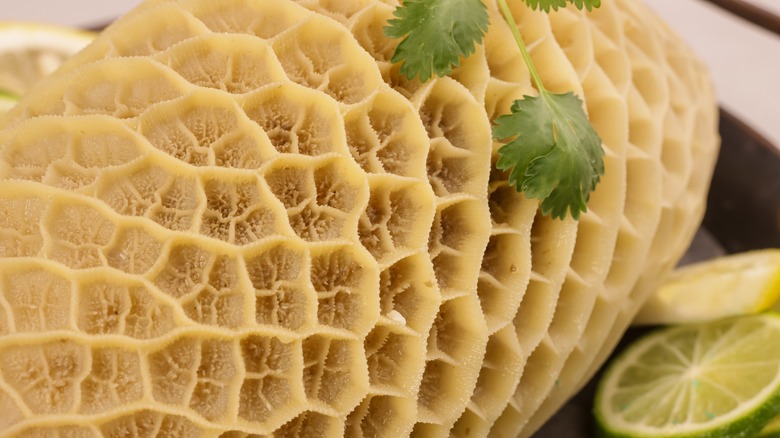
If we had to think of three words that initially sound like they shouldn't be in the same sentence, there's a good chance we'd come up with something like "broiled honeycomb tripe." Honeycomb makes us think of sweet treats, like chocolate and toffee, while tripe is, well, an animal's stomach. But actually, in this dish, "honeycomb" doesn't actually have anything to do with honey bees or candy. Instead, it refers to the texture of the meat, which, when it comes from the second chamber of a cow's stomach, has a honeycomb-like pattern on top.
Like kidney and other types of offal, tripe isn't that popular today. But back in the 1920s, before World War II helped to put many Americans off organ meats completely, broiled honeycomb tripe was actually served for breakfast in some places. One 1921 menu, for example, offers dried peaches alongside broiled honeycomb tripe, escalloped potatoes, and bread rolls.
Eating tripe for breakfast is undoubtedly unusual in the U.S. now, but in some countries, it's still seen as a hearty way to start the day. Menudo, for example, is a Mexican breakfast stew made with tripe and pig trotters, often consumed on special occasions. Tripe soup is also a popular breakfast choice in Bulgaria.
Eggs, quail and salad
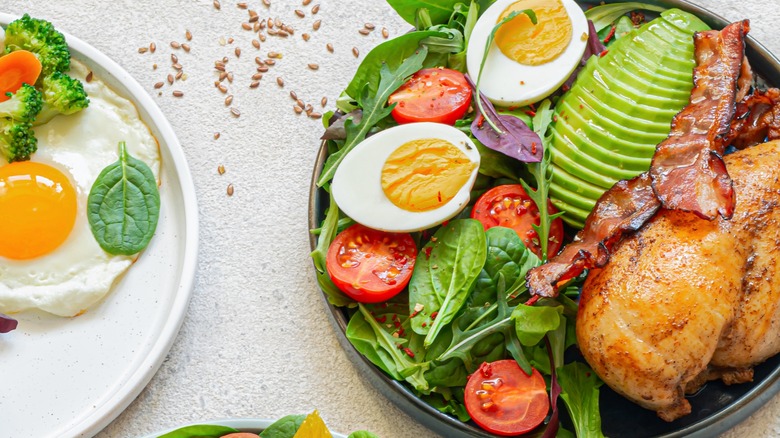
How do you like your eggs in the morning? We'll take a guess: Boiled or fried, and you'll be satisfied. Or maybe you like them scrambled, poached, or cooked into an omelette. Perhaps you don't like chicken eggs at all, and prefer vegan eggs, instead. We'll take another wild guess: You probably don't eat your eggs, in whatever format they come, with quail meat and salad.
If we're wrong, we apologize. Perhaps you're a time-traveler from Edwardian England, when eggs, quail, and salad was actually quite a normal breakfast dish. This mix would usually be offered in an informal setting, after simple options like cereal or fruit. In fact, the Edwardians were fans of quail, and would eat it in various different dishes, like savory pudding, for example.
Now, most people in the U.K. and the U.S. opt for birds like turkey or chicken, although these aren't always eaten for breakfast. And if they are, they're not typically served with salad, but in sausage or bacon format (although eggs will usually feature on the plate, of course).
Coffee soup
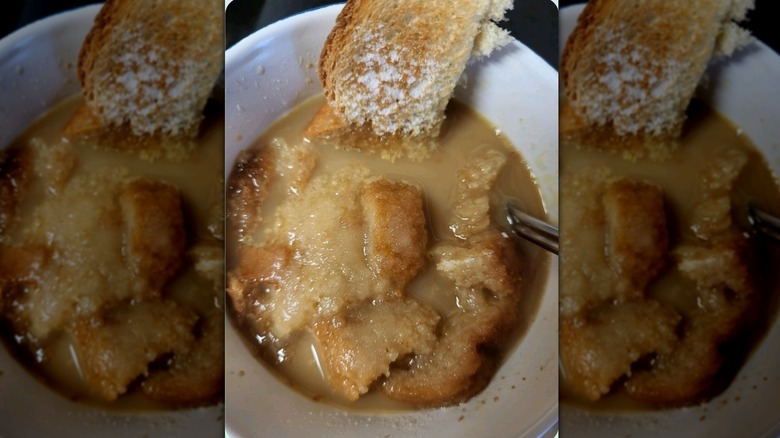
During the Great Depression, food (and the money to afford enough of it) was scarce, so in order to sustain themselves, people had to get creative with simple ingredients. There was Hoover stew, for example, made with just pasta, tomatoes, hot dogs, beans, and corn. People also dined on water pie, made with pie crust, water, sugar, flour, and butter, for dinner, and fueled up on coffee soup for breakfast.
Coffee soup is basically exactly what it sounds like. It's coffee, mixed with milk and sugar, poured into a bowl, usually with bread. It was a particularly common breakfast dish in rural and Amish communities, many of whom suffered greatly during the Great Depression due to overproduction and loss of farming land.
The dish isn't eaten as much today, but it didn't die out after the Great Depression. Some remember being fed coffee soup by their grandmothers and moms when they were sick, for example, while others in the Amish community still sometimes prepare it for themselves and serve it with scrambled eggs, meat, and cottage cheese.
Milk toast
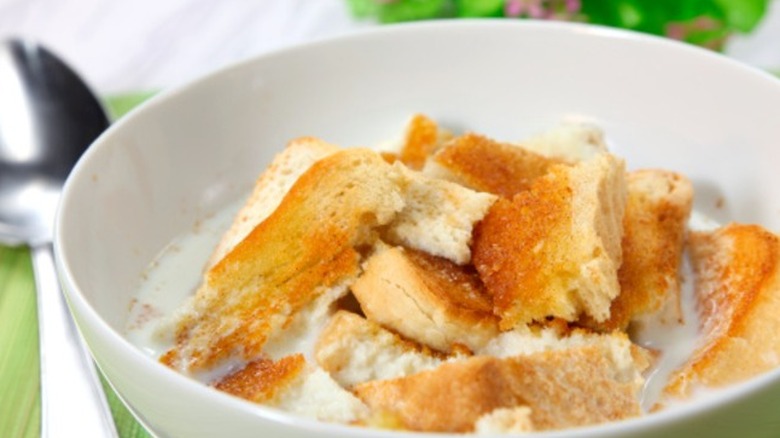
Milk toast is very similar to coffee soup. It's basically toasted bread, which is torn apart and sprinkled into warm milk with sugar, salt, and pepper. That's the dish in its simplest form, but spices and flavorings were usually added, too. One way to make it from 1945, for example, explains how to make milk toast with just bread, butter, whole milk, a little salt, and some nutmeg.
The breakfast dish, a staple throughout the 20th century, isn't eaten that much anymore, and is now considered to be pretty old-fashioned. But like coffee soup, many remember being offered a dish of milk toast by their parents when they weren't feeling well. It was even sometimes served in hospitals to patients who needed to follow a bland diet.
Families tended to have their own individual twists on milk toast. Some remember enjoying it with fried eggs, for example, while others say their parents or grandparents added vanilla, generous amounts of black pepper, honey, or Italian chunky bread to the mix.
Brains and eggs
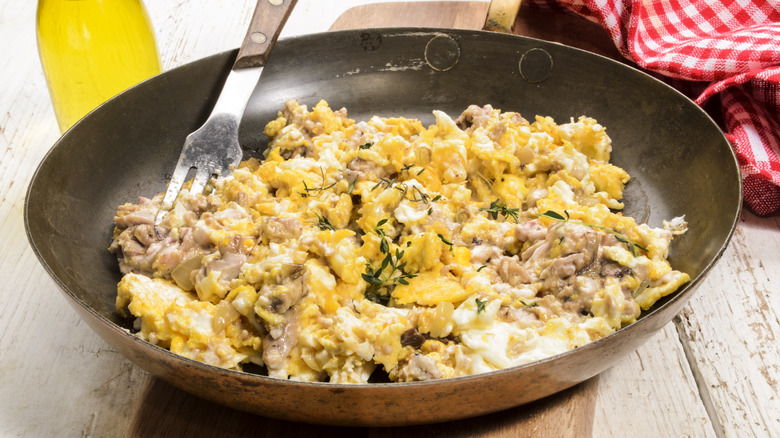
Earlier, we established that most people probably wouldn't ask for their eggs with quail and salad after they roll out of bed in the morning. But another combination that is virtually unheard of in this day and age? Brain and eggs. Yes, you read that correctly. In an era of avocado toast, açaí bowls, and overnight oats, brain and eggs sounds almost alien. But before the mid-20th century, it was actually a Southern staple.
The brains in question could be purchased fresh, but they would often come from a can and have a mushy cat food-like appearance and texture. Therefore scrambling them with eggs, or frying them with flour, salt, and pepper, would improve the taste and texture considerably. One recipe from the 1918 edition of "The Boston Cooking School Cookbook" by Fannie Farmer, originally published in 1896, for example, advises home cooks to boil calf brains in salted water, before combining them with plenty of milk, butter, and eggs.
While rare, there are still some people who like to indulge in brains and eggs. In fact, there is one remaining canned brain brand, called Rose, which sells cans of pork brains with milk gravy.