

15 Mistakes To Avoid When Hosting A Cocktail Party
We may receive a commission on purchases made from links.
Finding time to socialize and meet new people as an adult can be difficult and more than a little stressful. However, cocktail parties are a great way to mingle, network, and build successful — or at least pleasant — new connections. Cocktail parties as we know and love them began to take shape in the early 20th century, and here's a fun fact: These drink- and snack-filled gatherings have roots in the feminism movement – a reminder that yes, women enjoy the occasional drink, too.
Hosting a cocktail party can be challenging, though. It's up to the host to make sure that everyone's comfortable and having a good time, and it's easy to get wrapped up in the idea that things need to be perfect. They don't. We reached out to a number of entertainment and beverage experts for tips on how to make hosting a cocktail party easier, and they all emphasized keeping things simple and focusing on the guests rather than aiming for perfection.
It turns out that there are a number of common mistakes that can derail your efforts at hosting a successful cocktail party — but we have some good news, too. The pros not only shared their top hosting missteps but also reassured us that avoiding problems was super easy.
Making everything about your own tastes
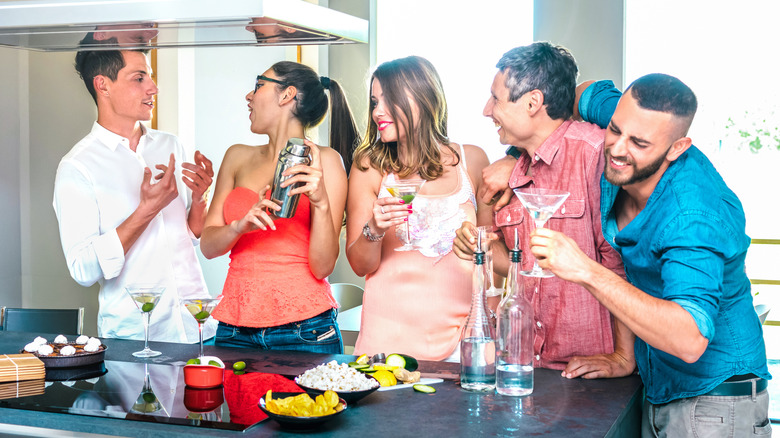
Putting together a menu for your cocktail party is essential — it's the backbone of the event, after all. Derek Brown, founder of the hospitality and event planning business Drink Company and author of "Mindful Mixology: A Comprehensive Guide to No- and Low-Alcohol Cocktails," shared a key insight when we asked him about the most common mistakes hosts make. When you're creating a menu, it shouldn't revolve solely around your own preferences.
"[That's] not to say you shouldn't include cocktails you love; of course you should, but what I learned as a bartender and bar owner is that you can pour yourself a drink at the end of the night," Brown explains. "In the meantime, the drinks are for everyone else. Not everyone shares your tastes." While the menu of your cocktail party should be kept to a manageable size — more on that later — it should also be varied enough to ensure there's something for everyone. Leaning too heavily on your favorites can make things feel repetitive, so use the opportunity as an excuse to mix things up a bit.
Not considering dietary restrictions
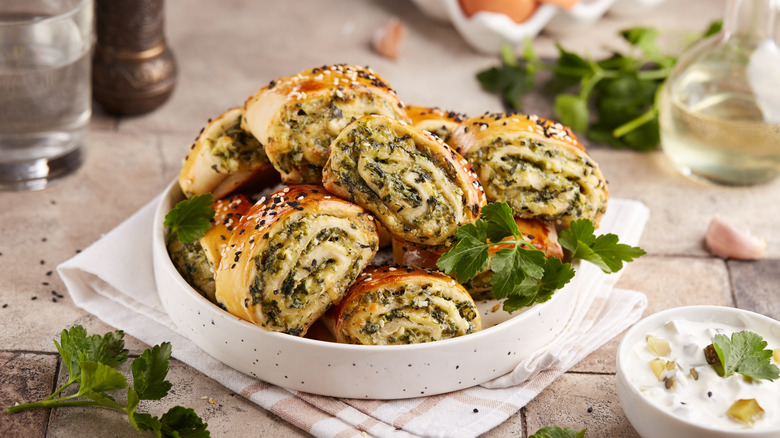
When you're planning your cocktail party, never forget that the ultimate goal is to make sure every guest has a good time. We spoke with Annemarie Schumacher, the award-winning entertaining guru behind the event and party planning firm Make Every Day an Event, who emphasized that one of the biggest — and most avoidable — mistakes hosts make when organizing an event is forgetting to account for dietary restrictions.
While deciding on nibbles, you should consider providing at least one vegan, vegetarian, gluten-free, and dairy-free option. There are so many deliciously easy recipes out there; there's no reason you can't whip up vegetarian finger foods that non-vegetarians can also enjoy. Why not try making spinach and sun-dried tomato puffs or vegan-friendly beet and black bean meatballs?
Schumacher also notes that hosts should be mindful of common allergens. "Stay away from shellfish and peanuts if possible," she advises. "In addition, grapefruit is another ingredient that can cause issues. Simply keep these in mind when planning your food menu, as well as your drink menu."
Choosing the wrong date

When you need to pick a date for your cocktail party, which day do you have in mind? Are you tempted to schedule something for the end of the week, when people might be more likely to have time off work? According to Nick Gray, entrepreneur, marketing guru, and author of "The 2-Hour Cocktail Party," that's a common mistake.
Gray told us there are three days you should avoid: Thursday, Friday, and Saturday. Those are the days when people are most likely to have other plans. If you're wondering how to fit a party into a weekday, that's where his next piece of invaluable advice comes in. Gray believes that a cocktail party should never last more than two hours and that there should be a designated finish time that's strictly adhered to. Keeping the party short and sweet means that energy stays high and it prevents conversation from getting tired and awkward. Plus, setting clear start and end times lets people know that it's not an all-evening commitment, and you'll get more enthusiasm from guests that'll make the night a success.
Not putting enough thought into invitations

We get it. The fear that no one's going to show up to your event is real. Fortunately, Nick Gray has some very helpful advice. "Send your first personal invite two to three weeks before the party," he suggests. "Send it to your core group of people first and get five people to say 'yes' before confirming your party and sending out additional invitations." Brilliant, right?
Those invitations are crucial and must contain all the information your guests need. Gray stresses you must specify the start and end times and clarify that nibbles will be available and that it's not a sit-down dinner. You should also note that you'll provide name tags and make introductions, as this will make the social aspect feel less daunting.
Annemarie Schumacher adds that you should clearly describe the type of party and any dress code. Is it a formal event where guests are expected to wear their finest, or will it be a casual, jeans-appropriate event in the backyard? "Today, the language has often become too vague with respect to dress," laments Schumacher. "Words like 'creative chic' or 'festive attire' can be confusing." Being specific helps avoid misunderstandings and prevents guests from feeling uncomfortable.
Skipping introductions and icebreakers
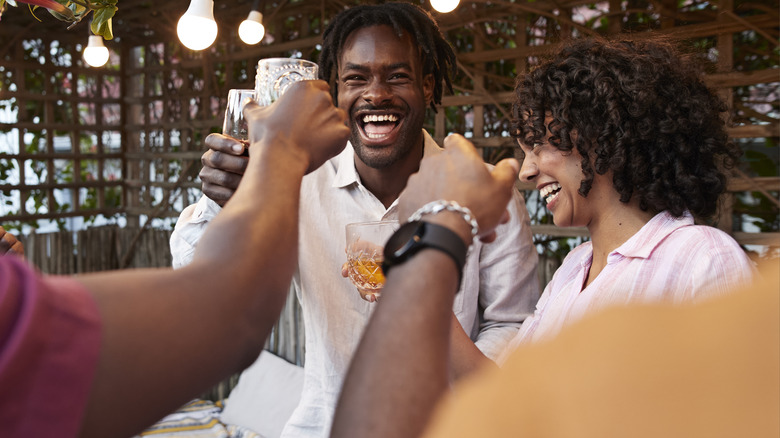
As the host, it's likely that you'll know everyone who's been invited to the cocktail party, and it's easy to forget that some guests may be meeting for the first time. Entering a room full of strangers alone can be overwhelming, especially if everyone else seems to know each other. Neglecting to make introductions can quickly make your party feel unwelcoming for newcomers.
Fortunately, Nick Gray offers some simple yet highly effective ways to help your guests socialize. He believes handing out name tags is a must, and skipping this step is one of the biggest social mistakes you can make as a host. Likewise, you shouldn't avoid icebreakers just because you think they're corny. You can gather your guests for a group icebreaker or simply patrol the room and ask intriguing questions — just be sure to keep things light, fun, and casual.
A layout that kills the flow and blocks conversation

Nick Gray believes one of the biggest mistakes that can ruin a cocktail party is allowing guests to sit down. It seems natural to encourage people to sit, but once they're down, they're not going to be mingling. "Sitting is kryptonite to a successful cocktail party," says Gray. "It traps people in conversations and kills the energy. Standing allows for dynamic interactions and easier movement between groups." Your guests' ability to mingle is impacted by the party setup, and Gray recommends getting rid of extra chairs and setting up multiple small tables with snacks and appetizers to encourage movement and discourage cramped, awkward gatherings.
Annemarie Schumacher also gave us a handy suggestion, advising that your bar should never be near the entrance. "When people see a bar, they stop in their tracks. By placing your bar in the back of your room or event space, your event will feel less cramped," she notes.
Overlooking the importance of no-and low-alcohol options
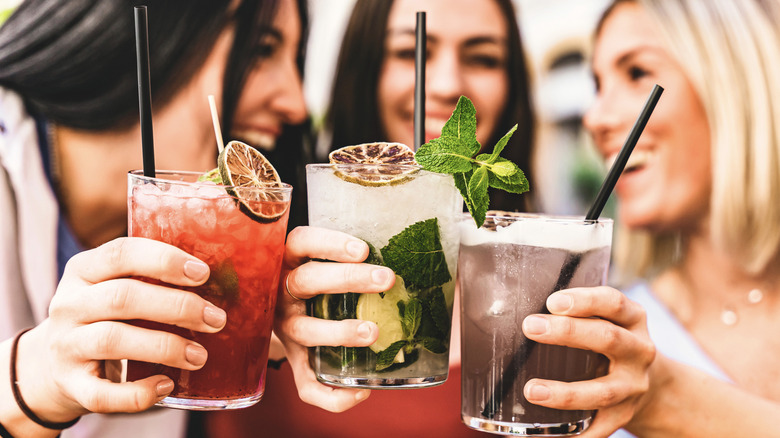
It seems pretty logical to serve a variety of alcoholic beverages at your cocktail party, but you should put just as much thought and effort into providing no- and low-alcohol options, too. "People are drinking less, with the recent Gallup Poll stating that only 54% of Americans drink alcohol, a 30-year low," Derek Brown explains.
Plus, booze-free alternatives aren't just for people who are completely abstaining from alcohol. Brown continues, "Some data suggests over 90% of people who drink non-alcoholic products also drink alcohol." He also points out the trend of 'zebra-striping,' a practice that involves alternating between alcoholic and non-alcoholic drinks to avoid intoxication — a good host will provide a variety of both. Besides, there are plenty of delicious non-alcoholic cocktails out there, from virgin piña coladas to creative, no-ABV amaretto sours.
Not considering a hired bartender
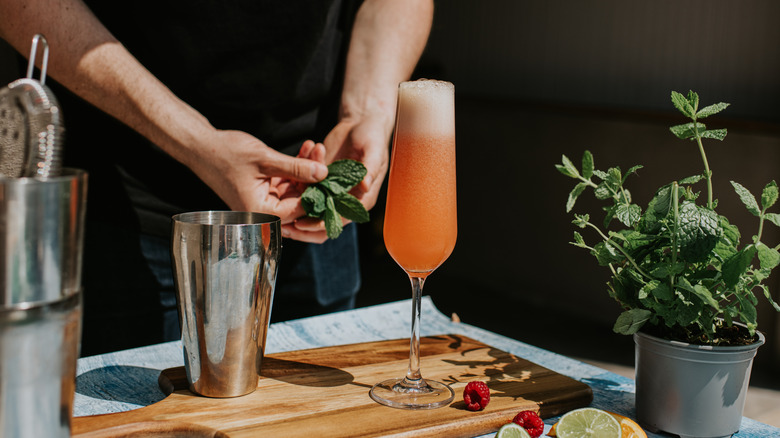
If you've never considered hiring someone to tend bar for the duration of your cocktail party, it's definitely worth thinking about. We spoke to Ann Soh Woods, founder of Kikori Rice Whiskey and the mastermind behind the kind of New Year's Eve parties that receive national media coverage, and asked her thoughts on employing a bartender. "What a luxury! Having a bartender not only frees up time as the host, but it also elevates the evening," she explains. "Drinks arrive faster, and guests get them made just the way they like." She points out that ultimately, great hosting is about thoughtful hospitality, which often means giving people the exact drink they want.
There are other benefits to hiring a bartender, too. According to Nick Gray, if your guests aren't big drinkers, you can ask the bartender to help you keep things clean and tidy throughout the evening. If a hired hand isn't an option, Gray recommends setting up self-service drink stations. He also suggests asking a few guests from your core group to arrive early to help you make drinks. Not only will this make your life easier, but it's also a great way to get people talking.
Not putting enough thought into glassware

You've probably heard it said that the shape of a cocktail glass matters, which is why there are so many variations to choose from. However, attempting to juggle too many glass types at your cocktail party is often more hassle than it's worth. Fortunately, the experts we spoke to gave us some tips on how to better manage your glassware. Nick Gray suggests opting for clear, 10-ounce plastic cups, admitting, "Single-use plastics aren't ideal environmentally, but they make cleanup manageable. When you're not drowning in dishes, you're more likely to host again."
Meanwhile, Ann Soh Woods claims you only need one type of cocktail glass — the Nick & Nora. Deeper than a classic coupe, she believes it's suitable for pretty much any cocktail you might serve while keeping things simple yet chic. We also spoke with Christa Cotton, CEO of El Guapo, who specializes in handcrafted bitters, syrups, and mixers. She recommends using Collins glasses for on-the-rocks drinks and lowballs for spirit-forward cocktails. Adding coupe and wine glasses provides versatility, ensuring all your bases are covered in a manageable way.
Underestimating the role of ice
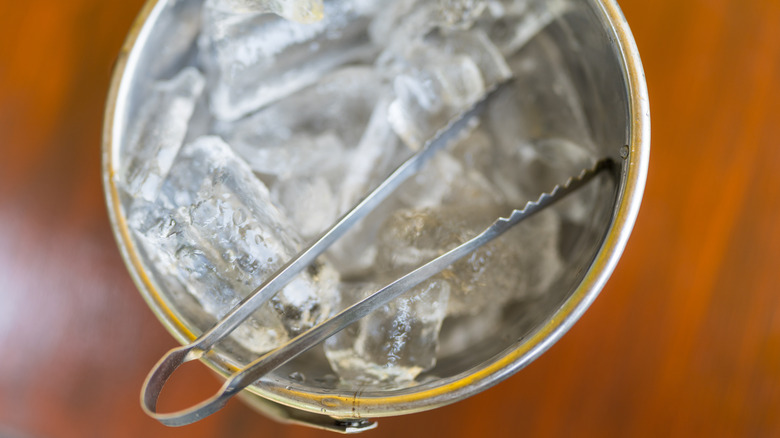
Ice can make or break your cocktail party, and it's one of the easiest details to overlook — yet also one of the simplest to get right. Running out of ice mid-party can quickly derail your event, but Annemarie Schumacher has a simple fix. "Borrowing or renting a large, fishing-type cooler that keeps items cold for up to a week is perfect for overflow ice," she notes. Schumacher admits these can be a little unsightly, so you'll want to keep it in the garage or on your back porch, but at least you won't have to send anyone to the store on an ice run.
Christa Cotton agrees that having enough ice to last the evening is crucial, but she also points out that different types of cocktails call for different types of ice. For example, if you're serving old fashioneds, you'll want large, slow-melting ice spheres. Conversely, you might need crushed ice for authentic mojitos. She also recommends purchasing a reliable set of ice tools. Don't worry, these don't have to be a major expense — serving tongs, a selection of molds, and a Lewis bag for crushing ice should have you covered — and they'll come in handy long after your party is over.
Neglecting to offer a variety of drinks
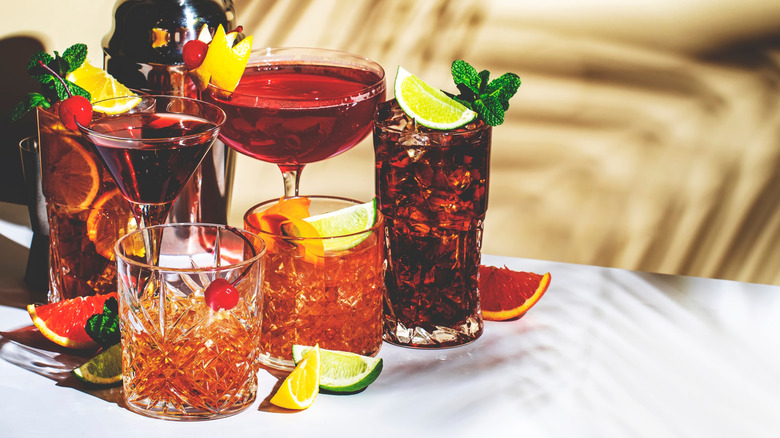
We can understand the temptation of choosing a single drink theme for your cocktail party. But while the idea of offering a menu made up solely of twists on the classic martini might sound fun, Derek Brown believes it's a mistake. "Not everyone drinks alcohol or wants something stiff," he explains. "Vary the types of drinks you have, ranging from the bubbly, bittersweet Aperol spritzes to rich, strong old fashioneds. That ensures you have something for everyone."
Also, don't forget that it's not always about the cocktails. Annemarie Schumacher thinks it's always a good idea to have a range of beverages available and says it's worth having three bottles each of quality white and red wine on hand. Two fifths each of bourbon, vodka, gin, and scotch — with mixers — should be more than enough for a mid-sized cocktail party, but you can adjust accordingly.
Failing to prepare the right amount of food
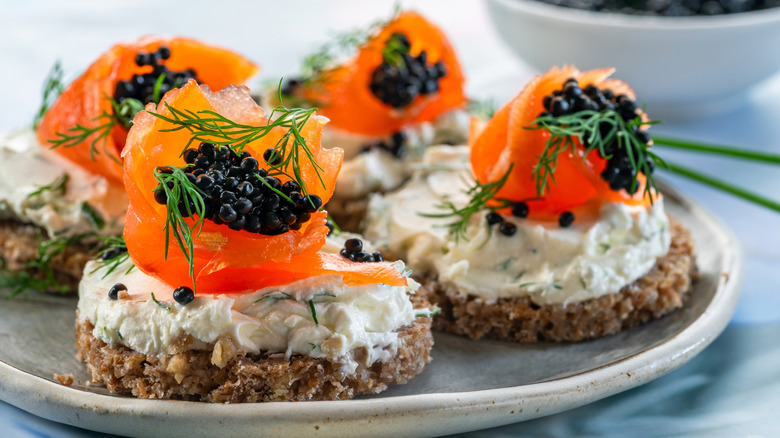
One of the hardest aspects of planning a cocktail party is ensuring you have enough food and drink for everyone without overdoing it and creating waste. If you're struggling with this, Annemarie Schumacher has some simple guidelines that she swears make her party planning far easier. "A general rule is to count on each guest having three drinks," she explains. "With respect to appetizers, I like to use the rule of five per person."
Schumacher says that her rule of five doesn't just apply to how many pieces of food each guest will eat but also to the number of different appetizers she'll serve. For example, during colder months, you might want a menu with three hot appetizers and two cold, and you can reverse that ratio in the summer. She also uses the rule to decide how to balance light finger foods with rich, hearty appetizers. Three light dishes paired with two heavier ones are ideal for hot-weather parties. In winter, balance three heavy appetizers with two lighter choices.
Overcomplicating your food menu
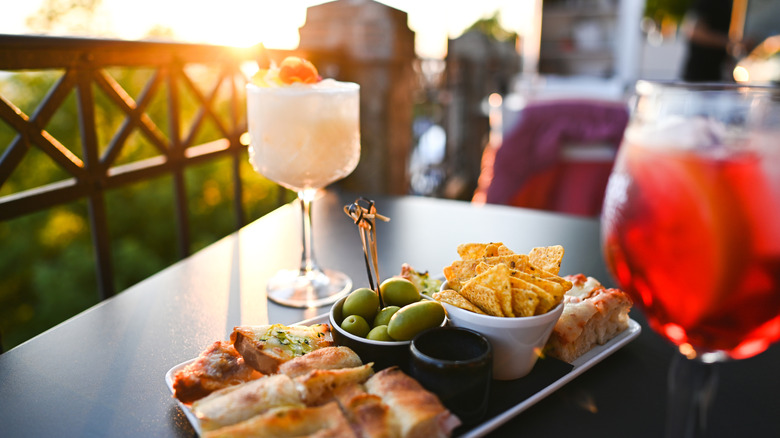
Hosting a cocktail party shouldn't mean spending all night in the kitchen. Sure, you want to be a gracious host, and that definitely means providing snacks and appetizers for your guests. But planning a menu that's too complicated or time-consuming can quickly become overwhelming. If that's one of the reasons you dread hosting duties, Nick Gray has some advice for you: don't overthink it. His favorite things to serve at a cocktail party are also some of the simplest — think chips and dips, cheese boards, and veggie platters. He's also a huge fan of grapes, a guaranteed crowd-pleaser.
Gray recommends steering clear of certain foods altogether. "Avoid anything that requires multiple steps to eat, sitting down, and use of silverware," he warns. "Skip hot appetizers like chicken wings, which are messy and need constant monitoring. No foods that are drippy or anything that absolutely must be served hot." He believes you should stick with foods that are safe at room temperature and easy for guests to hold in one hand so they can drink with the other. Remember, people are there for the social aspect, not the food.
Not cleaning as you go
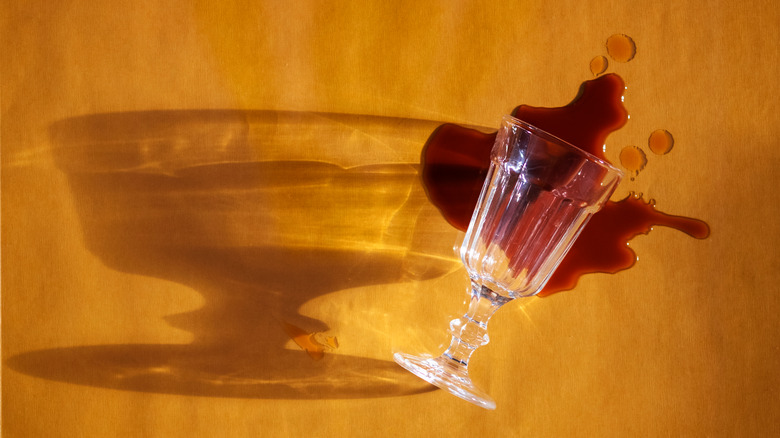
For many, cleaning up after a cocktail party is more stressful than putting the whole thing together in the first place. If that sounds familiar, you might be overlooking a few simple tricks that will make your life easier at the end of the night. Nick Gray says there are several things you can do before and during the party to minimize the hassle, starting by making sure there are enough accessible trash cans lined with fresh bags. Throughout the evening, stay on top of emptying them as they fill and wipe up any spills as soon as possible. As mentioned earlier, Gray also recommends using disposable glassware and cutlery to make cleanup faster and easier.
Gray also has a smart tip for protecting your valuables: use storage bins. If you're worried that heirloom vase from your great-aunt might get knocked over or that someone will spill wine on your brand-new sofa cushions, tuck them safely into bins and remove them from the area completely. It's a simple way to prevent accidents before they can happen.
Not planning for the unexpected

When you're arranging a cocktail party, it's always worth remembering that nothing is foolproof, but that doesn't mean you can't still give your guests a great time. Nick Gray believes, "The backup plan is simple: accept imperfections and keep the focus on people connecting." So, what should you do if you end up with far fewer guests than expected? Gray suggests having a board game on standby — a simple solution for a more intimate evening.
There's also the possibility of food running low, and those extra chips in the pantry might not cut it. Gray recommends keeping the number of a local pizzeria on standby. Everyone loves pizza, and in his experience, it's a reliable fallback that always sparks interesting conversation. If you're worried your event might overrun, keep a local venue in mind where the party can continue if your guests aren't ready to go home. It could be a bar or pub, or you could even take your remaining guests out for dessert. Finally, we'll leave you with this sentiment from Ann Soh Woods: "In my experience, the best moments — whether in a glass or on a plate — are the ones that bring a little surprise."