

Vintage Dishes With The Wackiest And Weirdest Names Of All Time
Most of our favorite dishes have an interesting story behind the name. Take the simple American fast food go-to, the hamburger, as an example. The word comes from the German town of Hamburg, where people used to eat very similar-looking steaks made with ground beef. When Germans landed in the U.S., they brought the dish with them, not knowing that it would eventually morph into a fast food icon and one of the most beloved cornerstones of American cuisine. Hamburg to hamburger is a normal progression, there's not much weird or wacky about it. But the foods on this list? They are the opposite.
These old-school dishes have some seriously unique and strange-sounding names, but often, that means there is a compelling backstory, too. From Garbage Plates and frog eye salads to angels and devils on horseback and Cullen skink, find out more about the vintage dishes with the wackiest and weirdest names of all time below.
Toad in the hole
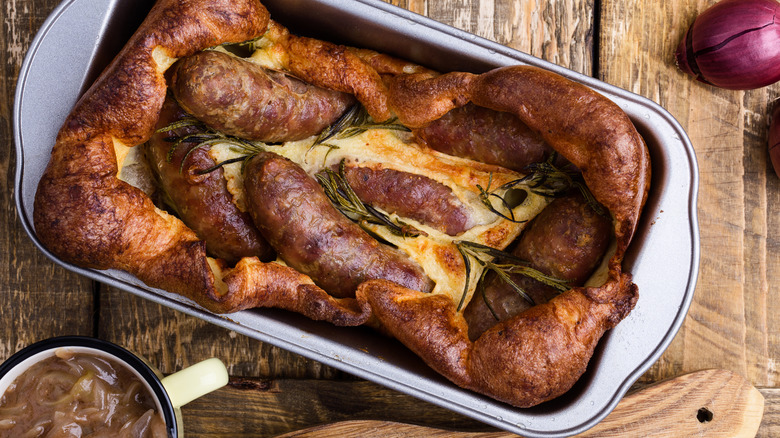
Believe it or not, there are actually two dishes with this wacky name. The American version usually refers to a piece of bread with a hole cut in the middle — an egg is then cracked into the hole and then the entire thing is fried in a skillet. The dish is also known by other slightly quirky names like bull's-eye eggs or eggs in a nest. And then there is the British version of toad in the hole, which isn't made with eggs or fried bread. Nope, it's actually an entirely different meal.
British toad in the hole, which dates back to the 18th century, is equally as simple as the American version. It's just sausages cooked in a Yorkshire pudding-style batter. The sausages look like little toads peeking out of holes, hence the name. The dish was originally created as a way for poorer families to make meat, which was expensive, stretch further and feed more people. Today though, it's still a staple across the U.K. You'll usually see it served like many British comfort foods, with lashings of rich gravy and lots of vegetables.
Garbage Plate
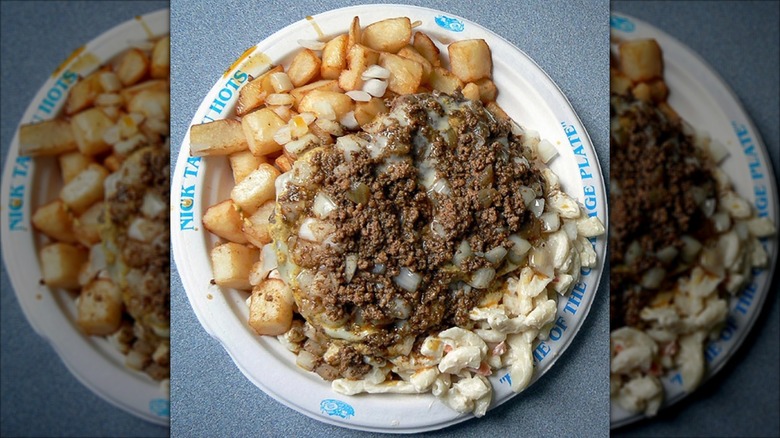
I think we can all agree: A steaming hot plate of garbage doesn't sound in the least bit appetizing. But never fear, as the Garbage Plate isn't actually made of trash. A local legend in Rochester, New York, the dish is actually a big sloppy mess of processed meat (like hamburgers, Italian sausage, or hot dogs) served over french fries (or home fries), baked beans, and macaroni salad. The Garbage Plate was first created at the Rochester eatery Nick Tahou Hots in 1918. It became a staple throughout the Great Depression, as more people needed cheap, filling food. It didn't get its iconic name, though, until the 1980s. The story goes that people started asking for "the plate with all the garbage on it," and an icon was born.
Nick Tahou Hots has since trademarked the name, and it's still the only place where you can get the original recipe. There, the OG Garbage Plate is always served with the restaurant's own signature meaty hot sauce. That said, there are many, many other copycats served across Rochester, usually listed under names like trash plate or Rochester plate.
Ants on a log
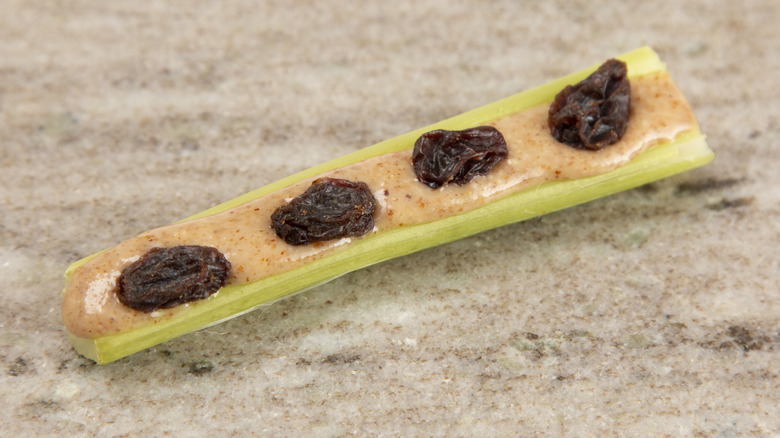
You might remember this one from childhood. And depending on how you felt about insects, you probably thought it sounded cute or gross. Of course, despite the odd name, the actual snack is very simple and wholesome. It's just a celery stick, smothered with peanut butter and a few raisins. That's it. Easy and nutritious. Stuffed celery is nothing new; it's been around since at least the late 1800s. But when it comes to ants on a log specifically, no one is quite sure where the weird-sounding name actually came from. Some experts believe it was likely named in the mid-20th century. This makes sense, as the first documented mention of ants on a log dates back to 1959, when a Star Tribune piece shared ideas on how to get children to enjoy helping out with tasks around the kitchen.
Regardless of the origin, ants on a log remains a quirky, fun snack that's great for little ones. It's easily customizable, too. Don't like raisins? You can make your ants from seeds, blueberries, nuts, or basically anything small enough to fit on a stick of celery (or carrot, or cucumber, or whatever else you have lying around).
Grasshopper pie
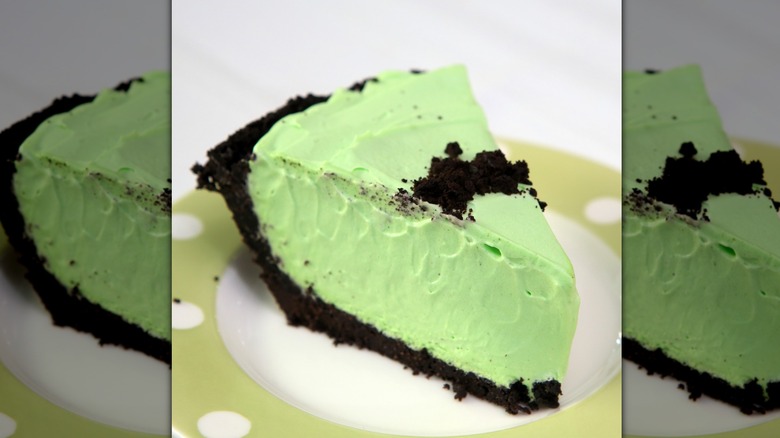
Continuing on with the insect theme, we have grasshopper pie. And this one is a heck of a lot tastier than it sounds. The dessert pie is based on the grasshopper cocktail, and it's made with ingredients like white crème de cacao, crème de menthe, marshmallows, whipped cream, and chocolate (for the crust). Again, the origins of the dessert are a little uncertain, but it came along at some point after the grasshopper cocktail (which was invented in New York City in the early 20th century). The dish was particularly popular in the 1960s, when it would grace dinner party tables across the U.S. (but apparently only after housewives received adequate assurance from magazines at the time that it did not actually contain any insects).
Grasshopper pie still has plenty of fans. Today, some like to make the chocolate crust with Oreo cookies for extra indulgence. And others like to make the dish a little truer to its quirky name by making it with cricket flour. Yes, that's a protein-rich flour made from crickets. It's a real thing.
Spotted dick
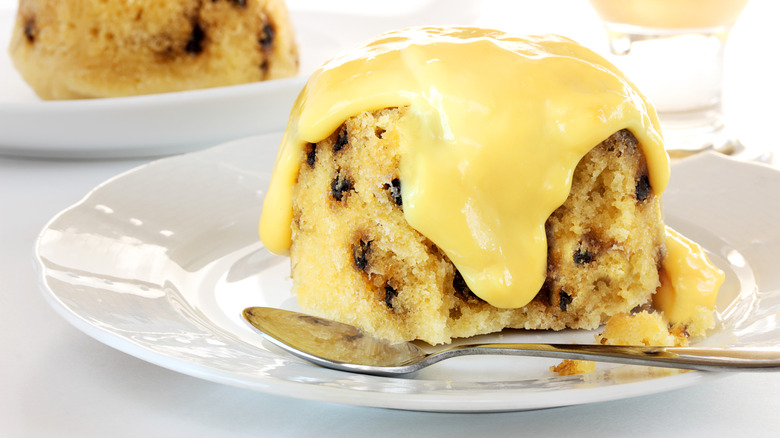
If you don't know what spotted dick is, it's not an easy one to guess. The weird name sparks a laugh, but it doesn't really give much away about what to expect. If you're feeling clueless, we'll put you out of your misery: This British dish is actually a steamed pudding. Dating back to the 1800s, the dessert is basically a sponge pudding (made with suet, not butter), which is flavored with lemon, sweetened with brown sugar, and "spotted" with currants. The "dick" part probably evolved from Old English. One theory is that dāg used to mean dough, so it was spotted dāg, which sounded like spotted dog, and at some point, it morphed into spotted dick. Another theory is that the "dick" comes from puddick, which was Old English for pudding.
Spotted dick isn't that popular anymore, but it still has a few fans. The best way to serve it is with plenty of custard, otherwise it can be a little on the dry side.
Frog eye salad
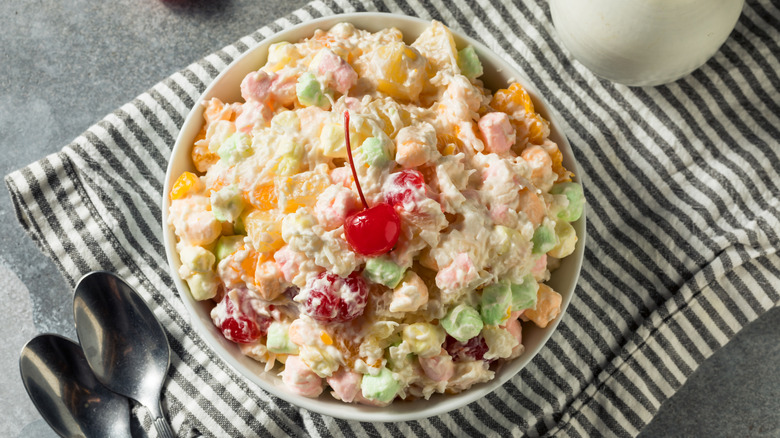
You probably already guessed it, but there are no actual frog eyes in frog eye salad. But, well, there's not really any salad, either, at least not in the leafy green sense. In fact, the dish is actually quite an unexpected mix of ingredients. It's made with acini di pepe (small balls of pasta, which are the "frog eyes"), canned mandarin oranges, pineapple, Cool Whip, and mini marshmallows. We told you it was unexpected.
Frog eye salad is a staple in Mormon communities, and is often brought as an offering to potlucks, parties, and Thanksgiving dinners. It's been around for a while, and many remember it being served back in the 1960s and 1970s at various religious events. If you want to sample frog eye salad, you may be able to find a version of it in some Utah and Idaho delis, or, of course, you can make it from scratch. But be warned: Frog eye salad is a pretty divisive dish. Some love the combination of pasta, cream, canned fruit, and marshmallows, while others find it too overwhelmingly sweet.
Angels and devils on horseback
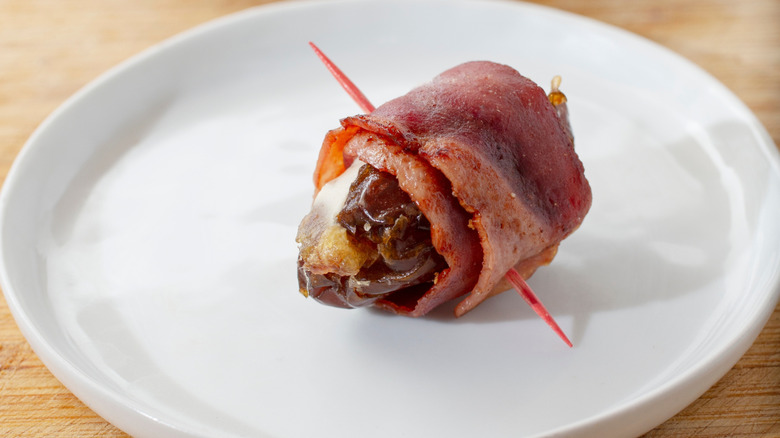
If we had to take a guess at what devils on horseback is, we probably wouldn't have said bacon-wrapped prunes on a stick, but more fool us, because that's exactly what it is. The strangely named hors d'oeuvres dates back to the Victorian era, but nobody is really quite sure about how it got its name. It might be because of the colors (black and red), or it might have been named in response to another canape: angels on horseback. Angels on horseback are very similar to devils on horseback, but instead of prunes, they're made with oysters. The first recipe for angels on horseback, titled les anges à cheval, was printed in a 19th-century French cookbook. It became popular in England soon after, when it was usually served at dinner parties as a palate cleanser.
Some still choose to serve angels and devils on horseback at parties today, and there are many ways to customize the classic canape. Some add melted cheese, for example, while others make the devils vegetarian by swapping the bacon for parsnip.
Slumgullion
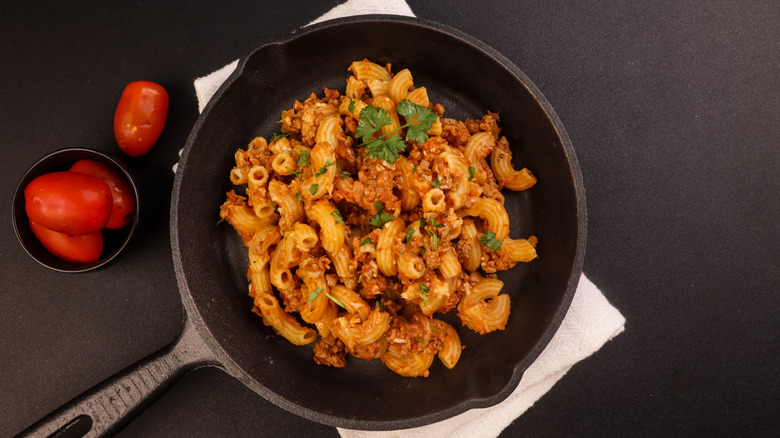
Slumgullion doesn't sound all that appetizing. Bad news: It doesn't get any more appetizing when you learn where the word comes from either. The "slum" part derives from slime, while "gullion" is Old English or Irish dialect for cesspool. Delicious. But don't worry, the reality of the dish is much nicer.
First consumed in the 1800s, probably by sailors, slumgullion likely started off as a beverage, and then at some point, it morphed into a stew. It has no real set ingredients, but generally, it's made with beef, macaroni, and tomatoes. A different (and arguably nicer) word for slumgullion is American goulash. Many still favor it as a cozy dish today, adding in ingredients like paprika, Italian seasoning, and Worcestershire sauce for more flavor. Other names for similar dishes include American chop suey and beefaroni, but generally, whatever it's called, it's the same combination of beef, macaroni, and tomato sauce.
Bubble and squeak
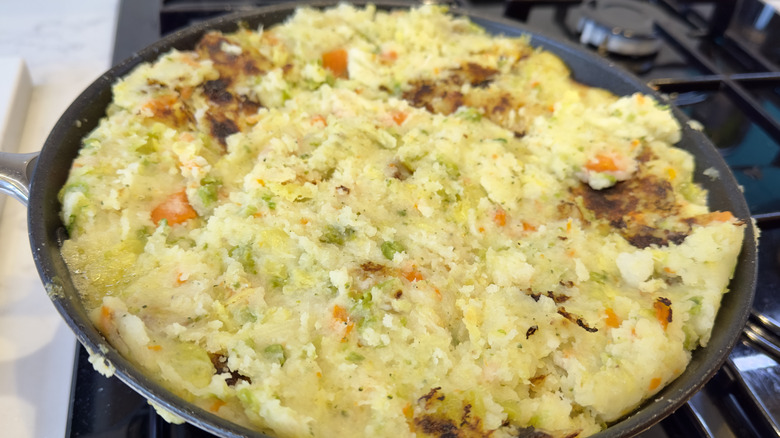
No, bubble and squeak is not a pair of cute bunny rabbits or cartoon mice. The wacky-sounding British dish is made with leftover cabbage and potatoes, which are fried together in a pan with whatever else is on hand and needs to be used up (like carrots or broccoli). The name for bubble and squeak likely comes from the sounds the ingredients make in the pan while they're being fried.
Bubble and squeak was first eaten in the 1700s, only back then, it was usually made with boiled beef, rather than potatoes. The key ingredient probably switched to potatoes after World War II, as — like other meats — beef was rationed and quite hard to come by, while potatoes were in abundance. Bubble and squeak isn't quite as common today, but it is still eaten in some households across England on Boxing Day to use up the remains of Christmas dinner.
Pigs in blankets
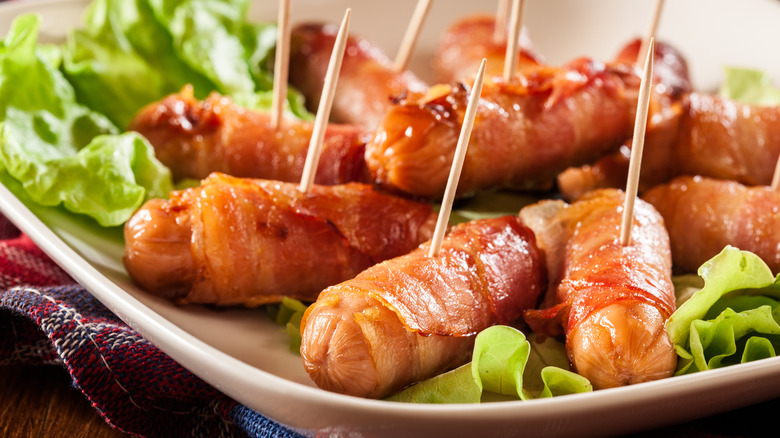
Pigs in blankets is an odd but very sweet-sounding snack, conjuring up images of pigs looking all cute and cozy, wrapped in blankets and sleeping soundly. There are two dishes that go by this name, and which one you're familiar with probably depends on what side of the Atlantic Ocean you grew up on. Most Americans think of pigs in blankets as mini cocktail sausages wrapped in crescent dough or puff pastry, and then served with a generous sprinkle of salt. The U.K. version is pretty similar, only the "blanket" around the "pig" (pork sausage) is bacon, not pastry. Both can be served as a canape or appetizer, but Brits usually serve theirs with Christmas dinner roast, too.
Some twist on pigs in blankets has likely been around for a very long time, well over a century even, but the first published recipe for the American version appeared in a 1957 Betty Crocker cookbook. Meanwhile, chef Delia Smith is credited for popularizing the British version a few decades later. If you want the pigs to stay cozy in their blankets, you can also opt for meatless versions of both popular snacks. Just swap the sausages (and bacon, in the British recipe) for vegan or vegetarian alternatives.
Welsh rarebit
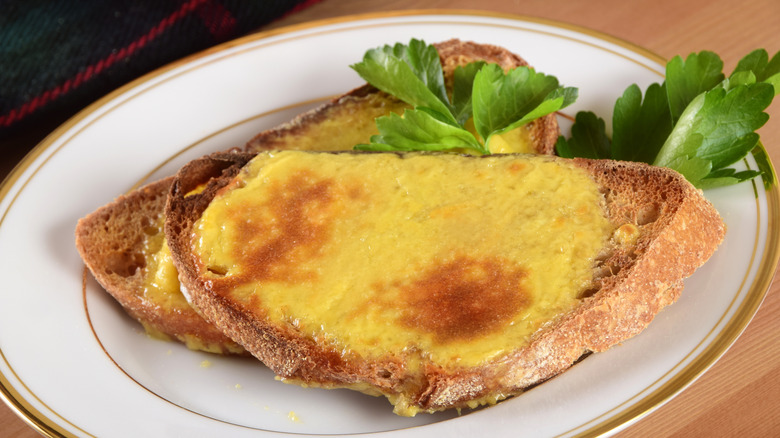
Welsh rarebit is basically cheese on toast, but taken to the next level. There are the classic components of melted cheese and bread, of course, but the additions of beer, Worcestershire sauce, and mustard really turn up the umami. As you've probably guessed, the dish comes from Wales, and the odd-sounding "rarebit" part probably derives from rabbit. In fact, sometimes, Welsh rarebit is actually called Welsh rabbit. One commonly accepted theory is that the dish, which probably originated way back in the 1500s, was made by Welsh peasants who couldn't afford to eat rabbit, so they made do with cheese instead.
Some experts believe the name for the dish started as some type of derogatory joke by the wealthy or the English, as a way of poking fun at people who couldn't afford to eat meat. At some point over the years, rabbit turned into rarebit, and it's still a popular dish across Wales (and beyond) today.
Fluffernutter sandwiches
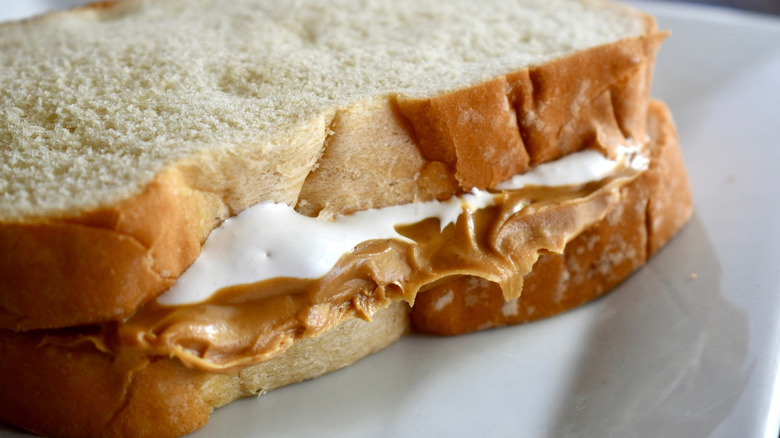
A cousin of the PB&J, Fluffernutter sandwiches are incredibly basic. They are, of course, just white bread, peanut butter, and marshmallow spread. Many Americans grew up eating them at kids' parties and after school, especially in New England. The endearingly named sandwich, which is soft, sweet, a little salty, and a little gooey, dates back to the first half of the 20th century, when confectioner Emma Curtis first put marshmallow creme and nut butter between two pieces of bread. During the First World War, it became known as the Liberty Sandwich, and it was a way of getting in your protein without consuming too much meat (which the government wanted to save for soldiers).
In the 1960s, the Liberty Sandwich experienced a revival, this time, with a slightly odd-sounding but much more fun name to reflect the ingredients: Fluffernutter. The sandwich is still a staple, and the recipe is infinitely customizable. Some like to swap the bread out for cookies for an even sweeter Fluffernutter, for example, while others add some extra texture with potato chips.
Bangers and mash
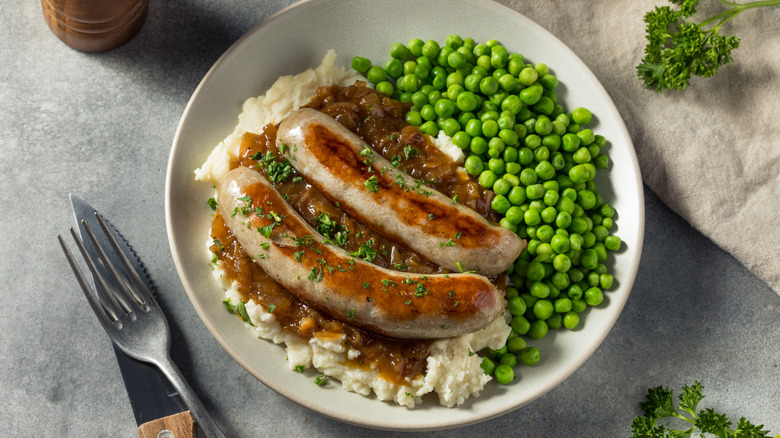
In the U.K., sausages have a rather strange nickname: bangers. Why? Well, once again, it all started with World War I. Because of the shortage of meat, sausages were made with more water to fill them out. When cooked with high heat, the water would cause the sausages to expand and explode, or "bang." Usually, most Brits will still use the term sausages today unless they're referencing one particular dish: bangers and mash. For some reason, this dish has kept the old wartime nickname. The mash refers to mashed potato (of course), and together with the sausages, bangers and mashed is usually served with lots of onion gravy and vegetables, like peas or carrots.
It's easy to adapt bangers and mash to suit your own dietary preferences. Don't eat meat? Just swap the pork-based bangers for vegan ones. Want to add more flavor? Add some garlic into the mash, or maybe even some cranberry.
Frogmore stew
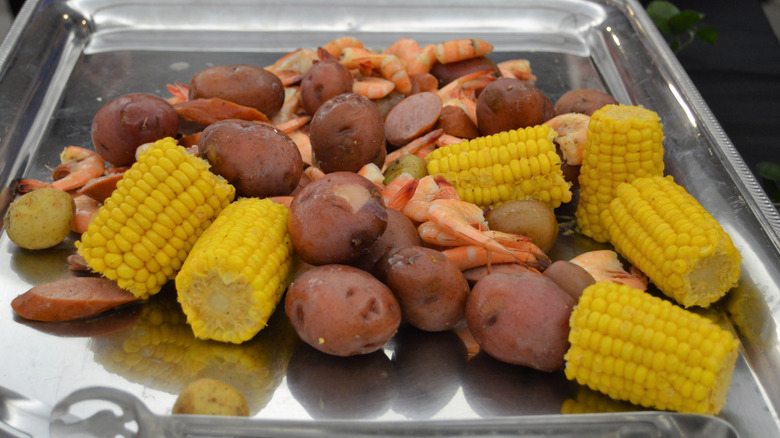
The strange-sounding name of this dish might have you assume that it has some relation to frogs, but actually, that's not the case. Frogmore stew is likely named after the place it was first eaten, in Frogmore on St. Helena Island in South Carolina. Back in the 1960s, a shrimper came up with the original recipe for Frogmore stew, and it's been popular in the region ever since, but it's worth noting that he likely based it on local dishes made by the Gullah-Geechee people.
Frogmore stew, also known as Lowcountry boil, is a warming, comforting dish, usually made in one-pot with ingredients like Old Bay seasoning, potatoes, corn, sausages, and shrimp. Usually, everything is boiled together and then served in one dish. Of course, there are several variations on the recipe, though. Some choose to make it with crab claws, for example, while others add in scallops. Some opt out of the fish altogether and instead make it with vegetables and vegan sausages.
Cullen skink
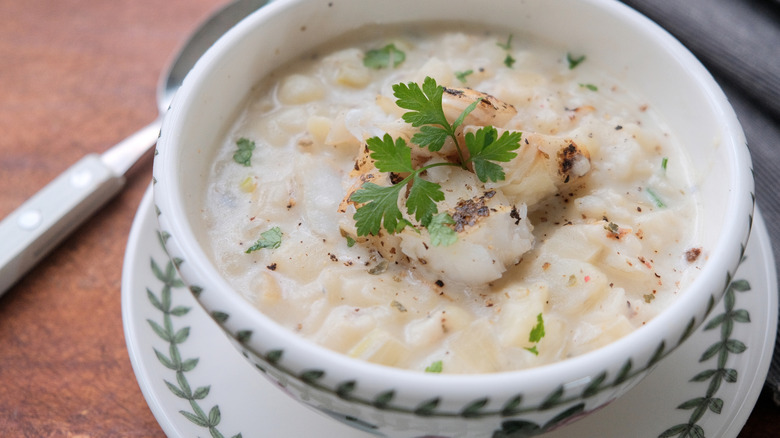
Cullen skink sounds like it could be related to the Loch Ness Monster, but it's actually a thick, creamy Scottish soup made with smoked haddock, potatoes, onions, and milk. The name sounds strange, but it has a very logical explanation: The "Cullen" part comes from the place where it was first made, in the coastal village of Cullen, while the "skink" is Gaelic for essence. Cullen skink has been made in Scotland for a very long time. In fact, before it was made with fish, it was made with beef. But in the 19th century, people opted to use locally sourced haddock because it was a far cheaper option.
These days, Cullen skink is still a staple in Scotland. In fact, every year, Cullen plays host to the Cullen Skink World Championships, which sees many passionate home cooks and chefs battle it out to create the best-tasting bowl of the local delicacy.