

Oatmeal Vs Yogurt: Which Breakfast Wins The Protein War?

A dose of protein in the morning can set foodies up for a measurably better day. Protein is the most filling macronutrient, delivering not just sustained satiety (i.e. feeling fuller, longer) but a lasting energy and mood boost, while setting the tone for appetite regulation all day long. The FDA recommends a daily intake of at least 50 grams of protein for adults — and luckily for plant-based eaters looking to incorporate more protein into their diets, there are plenty of simple ways to add protein to your favorite breakfast sweets, sans-meat. Two of the highest-protein morning meal offerings are oatmeal and yogurt. But, when it comes to protein specifically, yogurt beats out oatmeal...when it's Greek, that is. A one-cup serving of classic oatmeal has more protein than regular whole-milk yogurt, but Greek yogurt has more protein than oatmeal.
To break it down, let's take a look at the victor, Greek yogurt. A one-cup serving of plain, whole milk yogurt contains 8.5 grams of protein. That protein content is 80% casein, a specific type of protein that helps the body's absorption of bioavailable minerals like calcium. The other 20% comes from whey protein. On the other hand, Greek yogurt (which is made by straining out the liquid whey) is thicker and more concentrated with protein. According to the Cleveland Clinic, the same one-cup-sized serving of plain, fat-free Greek yogurt packs an impressive 22 grams of protein — more than double the protein content of regular whole milk yogurt.
Greek yogurt is the protein champion
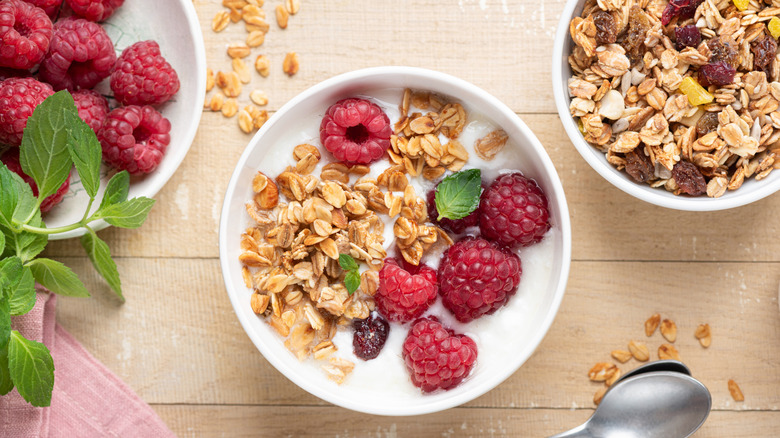
Oatmeal is still a high-protein breakfast option, but slightly less so than Greek yogurt. One cup of raw oats packs an impressive 10.7 grams of protein, representing 11-17% of their total dry weight. Also, rolled oats are whole grains, which offer a uniquely high fiber content (roughly 11% fiber by weight) and can aid in digestion and lower cholesterol levels. Cooking those oats in milk instead of water also adds more protein to the mix, as well as a luscious, creamier texture. For rolled oats, a ½ cup requires one cup of hydrating liquid to cook, and an eight-ounce serving of cow's milk or soy milk packs eight grams of protein — bringing the oatmeal's total protein content to about 19 grams per serving. This sum can be bulked up even more with protein-packed toppings like tahini, peanut butter, pumpkin seeds, or fresh guava. For a savory oatmeal, foodies could top their steaming bowlful with a protein-packed poached egg and a dollop of chili oil crisp.
Want to boost your Greek yogurt's protein content even higher? Top it with a handful of chopped walnuts (roughly 4 grams of protein) and two tablespoons of chia seeds (4.7 grams of protein). Those chia seeds will also help deliver on the fiber front, while the walnuts pack healthy omega-3 fats and more antioxidants than other types of nuts. Here at Tasting Table, Chobani Zero Sugar is our all-time favorite high-protein yogurt brand, for the record.