

How To Clean Your Stovetop The Right Way And Finally Banish Burnt On Grime

We may receive a commission on purchases made from links.
While most people know that the best time to clean a stovetop is right after you use it, very few people actually follow this rule. After some time without cleaning, the burners and surface of your stovetop blacken. If you leave them for long enough, they'll look more and more like they're made from charcoal then than any sort of polished metal. If this is the case for you and your stove, there's good news: it's totally salvageable, and all you need are a couple ingredients.
In most cases, all you need is a homemade all-purpose cleaner made from white vinegar and baking soda. Simply spritz white vinegar onto the cool stovetop, then follow it with a generous sprinkle of baking soda. While that's sitting, soak a towel with hot water, wring it out, and then lay the damp towel on top. Leave everything exactly as it is for anywhere from 15 to 30 minutes. During this time, the vinegar's acidity will do all of the work of loosening up the stubborn grime.
Once time's up, remove the damp towel and use a non-abrasive cleaning sponge or microfiber cloth to wipe everything away. This is where the genius-ness of cleaning with baking soda shines — its coarseness helps dislodge and lift the softened debris with ease. All it takes is a bit of elbow grease, and you'll eventually reach the beautiful stovetop finish that's been hiding under the grime this entire time.
Use dish soap and a razor blade scraper for more stubborn stains
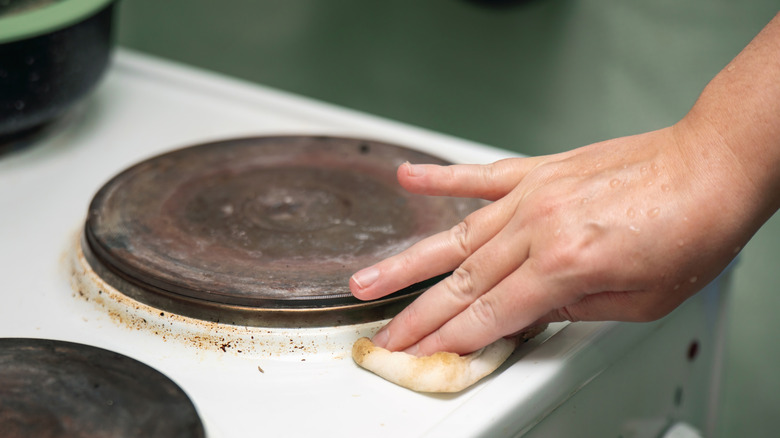
If the white vinegar-baking soda combo doesn't seem to work for you, you're going to have to up the ante a little bit. Skip the white vinegar and grab some dish soap instead — something ammonia and chlorine-free, like Dawn Dishwashing Liquid. The way to use it is very similar to vinegar: add a squirt to a bucket of hot water and stir to create a sudsy solution after dusting your stovetop with baking soda. Then, lay a wrung out, soapy towel on the top. After a short wait for the soap to penetrate and break down the stubborn residue, work the area with a sponge or use a microfiber cloth to lift away the loosened grime.
If that still isn't working, it's time to bring out the big guns: something like these Plastic Razor Blade Scrapers. You'll want to go with plastic scraper blades over the ceramic or metal utility ones — they're way safer to handle and won't scratch up your stovetop. Hold the scraper at a 45-degree angle and gently work the edge underneath the gunk, scraping carefully back and forth until it all comes loose. Once you've cleared everything away using the scraper, give the stovetop a quick wipe with the soapy water solution, and boom — your stovetop will look brand-new again.
Things you shouldn't ever use to clean your stovetop
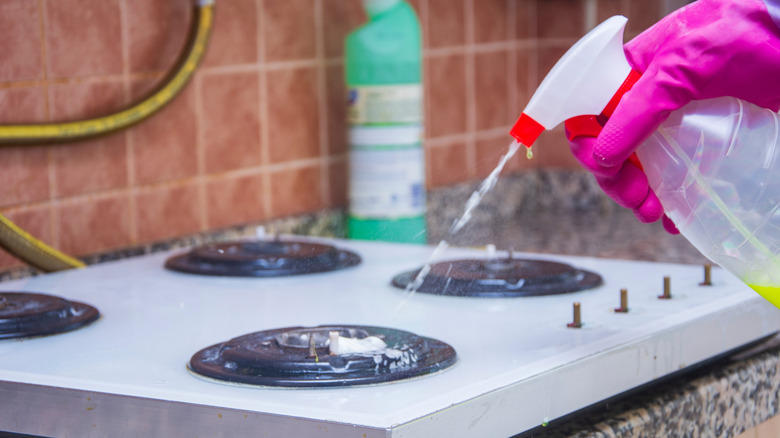
Remember this rule whenever you want to clean your stovetop: rough abrasives and caustics are big no-nos. Abrasive materials like steel wool may be able to take off the grime in a few scrubs, but they're going to scratch the surface terribly, and you'd just be trading one kind of unsightly look for another. That's why we use baking soda and microfiber cloths instead — they're abrasive, but far more gentle and won't damage your stovetop's surface. But, you'll also need to consider the cleaning agents you use with them too.
White vinegar and dish soap are your safest bet when it comes to cleaning agents. They're much milder than bleach, glass, or oven cleaners — all of which can cause some serious problems. Now, you might think glass cleaner would be perfect for a glass-topped stove, right? Wrong. Most glass cleaners contain ammonia which can permanently etch or stain the surface, not to mention the toxic kitchen cleaning mistake of accidentally mixing it with other chemicals. Once that damage is done, you're pretty much stuck with it unless you replace the entire stove.
Considering all of that, it's best to just stick with the simple stuff — white vinegar, dish soap, baking soda, and maybe a plastic razor scraper — and even the most burnt-up stovetops can make a comeback! Just be careful to avoid the vinegar storage mishap that could ruin your day — and possibly your health.