

When Baking With Fresh Herbs, An Expert Suggests Applying Them According To This Characteristic
We may receive a commission on purchases made from links.
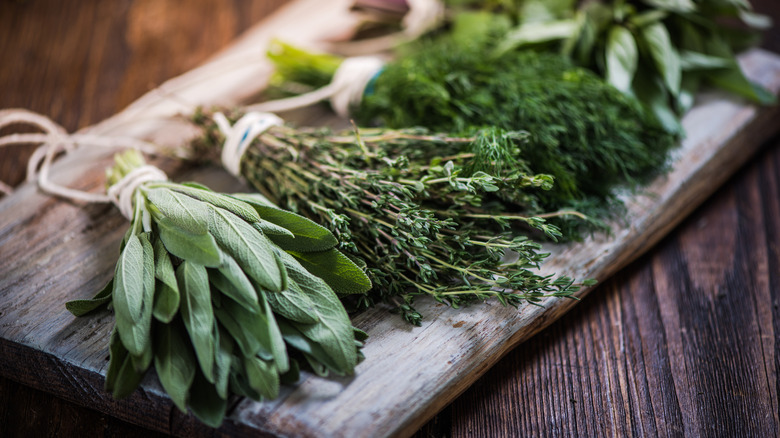
The truth is, some herbs are more versatile than others, and not just when it comes to cooking, either. If you haven't been baking with fresh herbs, it's time for you to start. From rustic Italian Pugliese bread with fresh rosemary to Persian Love Cake-inspired cupcakes with rosewater and saffron, herbs can take desserts to new heights — if executed properly, that is. We spoke with Jerrelle Guy, author of "Black Girl Baking" and the founder of Chocolate for Basil, who shares her go-to tips for baking with fresh herbs, noting that the best way to incorporate fresh herbs into batter or dough depends on which type of herb you're using. Although, happily, the baking time doesn't change from one herb to the next.
When working with structurally woody herbs like rosemary and thyme, the pro baker explains that these sturdy herbs can be incorporated directly into the batter and baked. "Technically, you could just chop the herbs and fold them right into the batter, just know that they won't keep their bright pretty color once they're baked," Guy tells Tasting Table. "Herbs like rosemary and thyme are sturdier and can handle more heat without losing much of their character." However, when it comes to tender, leafier herbs, she notes that these delicate varieties will require extra attention for successful baking.
Woody herbs can be baked into batter, while leafy herbs should be transformed into oils or frostings
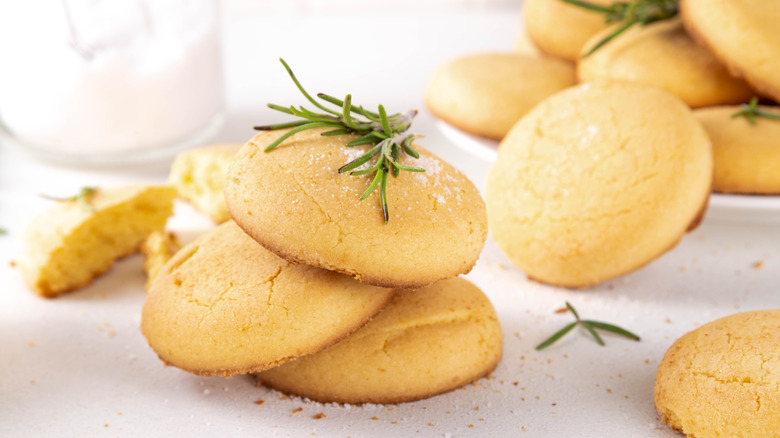
According to Guy, delicate leafy herbs fare best when protected by a "buffer" to avoid discoloration or scorching in the oven. What exactly that buffer is might look different depending on what you're baking. "With tender herbs like basil, I would consider either infusing them into an oil or butter and using that to replace the oil or butter in the batter," she suggests. "Or adding it instead into a buttercream, cream cheese, or marshmallow filling or a jam to pipe into the center of the cookies after they've already baked."
For example, a lavender-infused butter in the frosting of this frosted lemonade cookie recipe would preserve the herb and complement the tangy cookies. Likewise, our classic mint jelly would add a bright, high-moisture kick when piped into vanilla sugar cookies or even smeared across a slice of dense vanilla pound cake, while keeping those mint leaves protected.
For savory baked goods, we also have a few tips for mixing up flavorful herb oil. It's as simple as allowing one cup of fresh herbs to simmer in four cups of olive oil before straining out and bottling the results for a flavorful, multipurpose ingredient. A drizzle of sage-infused olive oil, for instance, would instantly upgrade a loaf of homemade ciabatta bread. Alternatively, foodies could bake that same ciabatta loaf using a sage compound butter instead of regular butter for a baked-in, herbaceous kick, sans-scorching of any delicate leaves.