

10 Items You Should Never Store Above The Stove
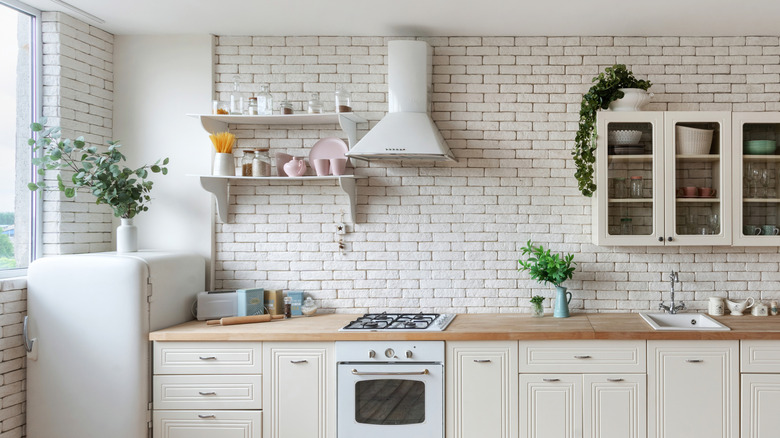
In the modern kitchen, every unused nook and cranny is rife with storage potential. The sides of the refrigerator standing idle? Add a magnetic spice rack. Not sure what to do in between the odd jumble of pipes beneath the sink? Why not turn it into your cleaning supply station? If you have space for a shelf or an empty alcove above the stove, it can seem all too easy to turn this into a storage zone for cooking and cleaning essentials. However, not all items can face the heat — pun unintended.
Certain perishables can be sensitive to the excessive amount of heat produced in this zone — the aromatic oils in spices and coffee beans won't hesitate to say hasta la vista if subjected to prolonged heat. The steam and moisture rising upwards can also warp recipe book pages, turn your paper towels clumpy, and impact the surface of your wooden cutting boards. All of these potential hazards are underscored by the very real risk of burns and spills when reaching over an open flame to grab something from above the stove.
As convenient as it might be to have your go-to essentials stored within hand's reach, the cons outweigh the pros for some items. Whether you are looking to minimize kitchen accidents or retain the potency of your favorite ingredients, these are the items you'll never be caught storing above the stove.
Cooking oils
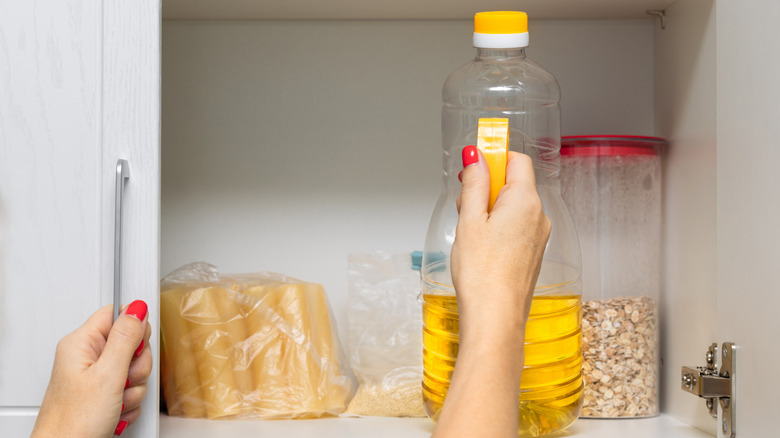
If you are limiting your cooking to one oil instead of mixing them up, you'll want to change that — once you have experienced the extra kick of flavor that comes from sauteing veggies with olive oil mixed with canola, there is no going back. And if you are storing your oils directly above the stove, you'll want to change that, as well.
As heat wafts upwards from the stove towards your stash of cooking oils, it triggers a chemical process called oxidation. This can, in turn, produce toxic and harmful byproducts that you'll want nowhere near your food. Certain oils are more vulnerable to oxidation, such as vegetable and seed oils. Sunflower, grapeseed, and flaxseed oils are common culprits that require extra care for storage. On the other hand, certain oils can better resist this process of oxidation and are considered relatively stable for storage — these include coconut, olive, and avocado oils.
While some oils can stand up better to oxidation than others, it helps to understand one key principle when choosing where to store your precious cooking elixirs: Look for a dry, cool place away from the stove or any other sources of heat. As a rule of thumb, it helps to transfer oil from bulk containers into smaller dispensers — although common consensus is not to buy large quantities that can't be feasibly finished within two months.
Spices
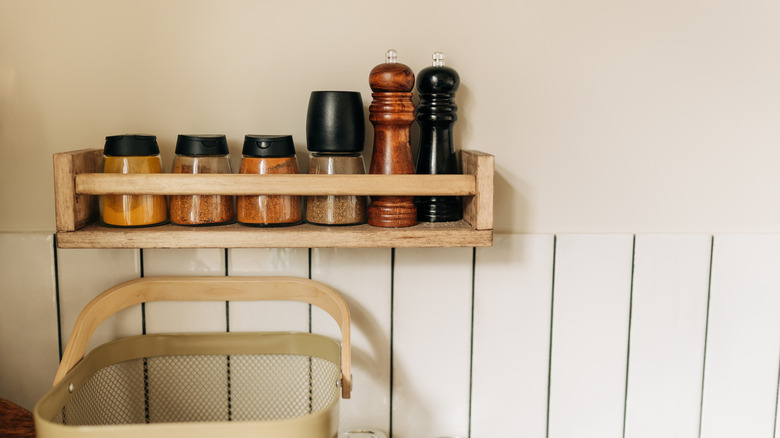
While your spices might have dropped an aromatic bomb on your senses when you first purchased them, choosing to store them within arm's reach near the stove comes at a hefty price. The sudden fluctuations in temperature that are common in this area can play spoilsport, degrading the natural, flavor-enhancing oils in the spices. Interestingly, salt can hold its own against unpredictable spikes in heat, but the other spices on your shelf will not. In addition to the flavor degradation by heat, the humidity and moisture from the air can also find a home in your spice bottles if they have not been sealed tightly after every use. The result? Spices that look alright but have inexplicably lost their magical potency and flavor.
So, how do you save your spices from the clutches of heat and humidity? The standard principle of scouting for cool, dry places holds true here, and you'll want to ensure that your spices are subjected to a consistent temperature of 70 degrees Fahrenheit. Your new spices should ideally be transferred to airtight jars after coming home, and it also helps to label each canister with its expiry date to ensure that your paprika hasn't pushed past its prime.
Canned goods
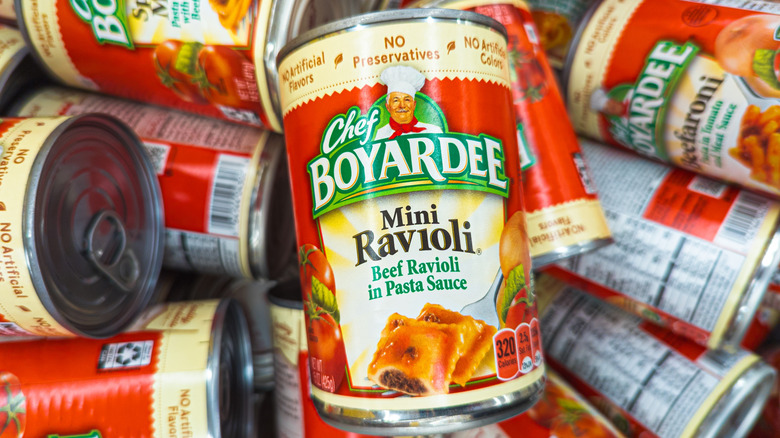
There are several reasons why you shouldn't be storing food above the stove, and the temperature sensitivity of canned goods leads the charge. If left to their own devices, canned items can survive happily until their expiry date without issue — but only if they're stored without temperature fluctuations. This includes both ends of the spectrum: Per the U.S. Department of Agriculture, you won't want to subject your canned goods to temperatures below freezing, as well as anything above 90 degrees Fahrenheit. When faced with high temperatures emanating from the stove, the foods within can break down rapidly — leading to alterations in the flavor, appearance, and nutrient profile.
The onslaught of steam and humidity may also cause rusting, but depending on the extent of the damage, you might be able to salvage the situation. Light rusting that can be wiped off with a cloth may not impact the food inside. You won't want to play Russian roulette with whether or not heavy rust has damaged the contents inside. Instead, you'll want to treat your canned purchases to a cool, dark home — more tips on properly storing canned goods await here.
Paper towels
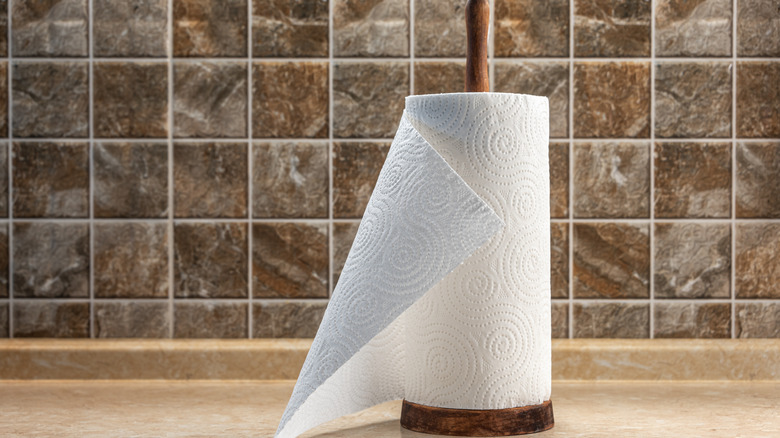
Sopping up spills and splatters, patting dry meat and fish, wiping down countertops — there is little that paper towels cannot do within the kitchen. In fact, this genius paper towel hack can also upgrade the look of any frosted cake. However, if you are hoping that your roll continues to operate at maximum efficiency, you'll want to pause before carelessly stashing it above the stove.
For starters, paper towels are considered a common fire hazard when stored near the open flames of the gas stove — one slip of the hand, and the entire roll can burn into a crisp before your eyes. But beyond storing paper towels away from heat sources, you'll also want to remember that the omnipresent humidity in this area can do a number on their absorbency. The high concentration of steam and moisture in this region of the kitchen is kryptonite for paper towels, making them less effective for soaking up actual spills when you need them to.
Since paper towels are usually purchased in family-sized packs, you clearly won't have your entire stash displayed on your kitchen island. Bulk buys can be grouped together neatly in a wicker basket in your pantry, while individual rolls needed for everyday use can last indefinitely in any cool, dry environment in your kitchen.
Wooden cutting boards
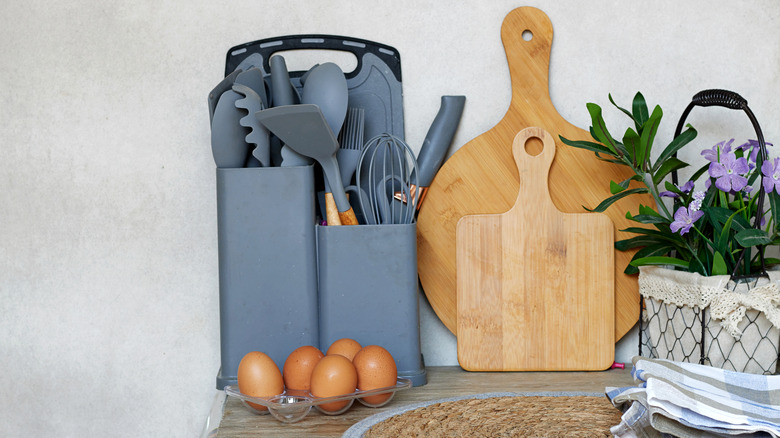
If you have been reading up on all the tips and tricks for using a cutting board, it has likely become your most indispensable ally in the kitchen. But beyond understanding how to best use wooden cutting boards, it also helps to pay attention to where you are storing yours: anywhere above the stove is an unwelcome location.
First things first, you already know that wooden cutting boards can be a fire hazard. While they may be stored securely away from an open flame on a shelf above the gas stove, accidents can be unpredictable. A loose hook, a faulty shelf, or a sudden jerk could throw your wooden cutting boards directly into the line of the fire — in the most literal sense of the phrase.
Next, you'll also want to consider what the high concentration of humidity is doing to their surfaces. Hardwood is generally favored for cutting boards because of its higher scratch resistance, but it is a porous material. When perched above the stove, it readily drinks up all the moisture emitted by your everyday cooking. Over time, the steam can make wooden cutting boards expand and warp, thereby ruining the smooth, flat surface that you always count on for your chopping needs. It is instead preferable to store your wooden boards in an area where the air circulates freely, that way you can ensure it is completely dry after each use.
Cleaning detergents
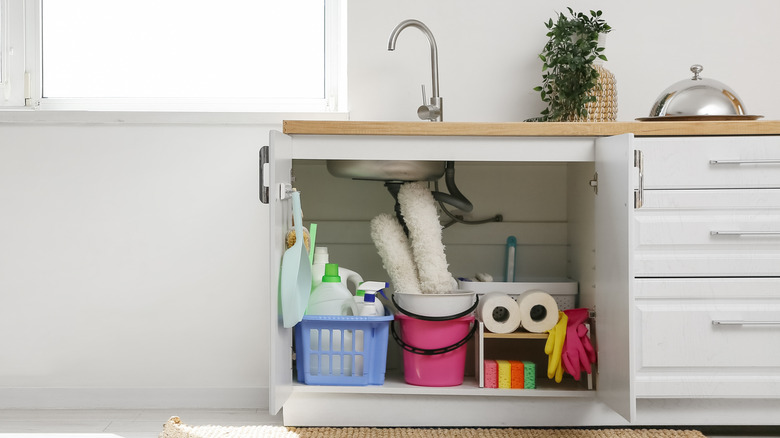
As much as we all love the sight of squeaky-clean countertops and cabinets, some kitchen cleaning mistakes can get toxic. Opting not to wear gloves is one, not following the diluting instructions is another. You will also want to bear in mind that storing your supplies close to heated surfaces can impact the efficacy of your clean-up crew.
From disinfectant sprays to dish detergents, most household cleaning supplies are highly flammable — you won't want to leave even a remote chance for these to come in contact with an open flame when stored above the gas stove. Beyond the fire hazard, you also need to know cleaning detergents and heat are not a match made in heaven. Any shelf or alcove near the stove faces high temperatures for prolonged periods of time — this consistent exposure to heat can degrade or destabilize the chemicals within household cleaning supplies.
If you'd rather not have a fire hazard lurking by your side while you whip up your next feast, it helps to consider alternative locations for your cleaning supplies. Under the sink is a highly favored location for stashing oddly sized aerosol sprays and cans. But if you prefer to go to town on tough stains right away, you can also group yours together in a utility cart that can be easily rolled wherever it is needed around the kitchen.
Kitchen appliances
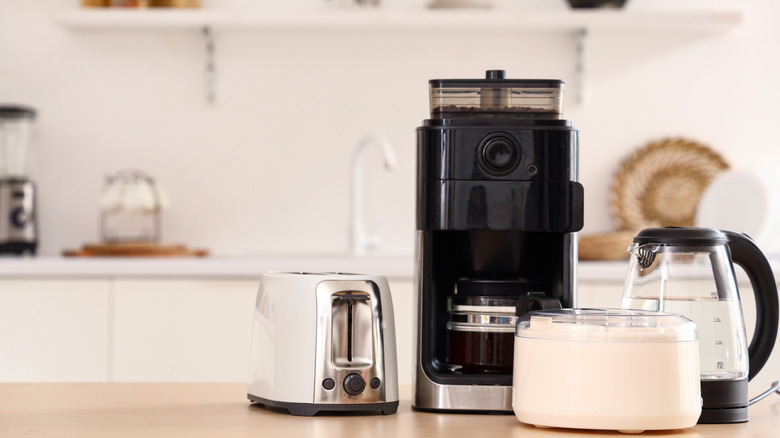
As tempting as it can seem to have a hand blender literally placed at hand's reach above the stove, you'll want to observe caution: appliances and heated surfaces are not known to play nice with each other. Corded appliances, specifically, do not take kindly to heated surfaces — you don't want to run the risk of an errant piece of wiring accidentally kissing the open flame of the gas stove as you quickly shuffle appliances in and out during meal prep. Even if you aren't actively cooking, long after it has been switched off, the stovetop can remain hot. If a lengthy cord happens to touch this surface, the plastic insulation can melt and serve as a fire hazard. The amount of heat that is generated from the stove during your everyday cooking can also cause appliances to overheat and malfunction.
Stay one step ahead by storing your appliances away from all heat sources in the kitchen in a safe, dry cabinet. The cord should be unplugged after every use, and once it has cooled down, it can be sent back to its resting spot in the kitchen. The hierarchy rules of appliance storage dictate that frequently used gadgets are afforded a prime spot on the lower shelves of upper cabinets, while rarely used options are relegated to the uppermost shelves.
Coffee
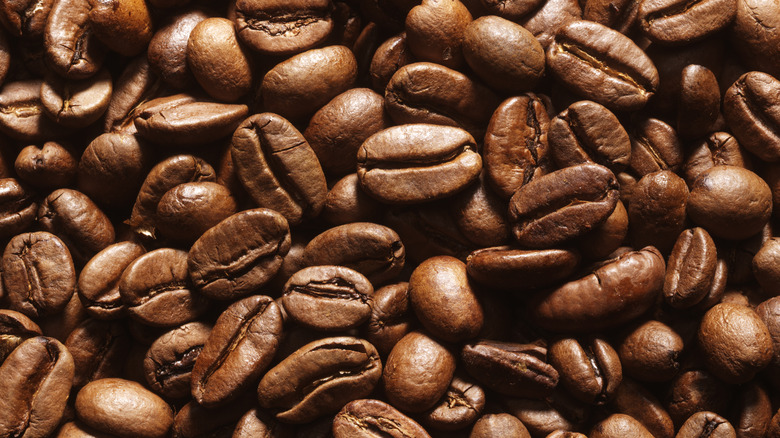
Much like spices, coffee beans are nocturnal creatures, as well — give them a cool, dark spot to curl up in, and they will stay fresher for longer. The opposite holds true when they are placed in the furnace of heat and steam above the stove. While coffee beans are initially roasted at a high temperature to enhance the depth of the flavor profile, they shy away from heat once done. Frequent exposure to high temperatures can cause their flavorful, aromatic oils to evaporate. Those nutty, caramel notes that you savored every morning? Long gone. Instead, you are left sipping on a mug that can feel either bland or extremely bitter.
Shield your favorite brew from the heat and light by storing it in a cool, dry cabinet. Bonus points for using opaque or dark containers, as exposure to light can also cause the flavorful compounds of coffee to deteriorate. Since roasted coffee beans only stay flavorful for up to three weeks, it helps to buy as much as you can realistically consume within this period. If you absolutely cannot resist a good bulk deal you spotted on your favorite coffee, the beans can be stored in an airtight container in the freezer for four months at a time.
Cookbooks
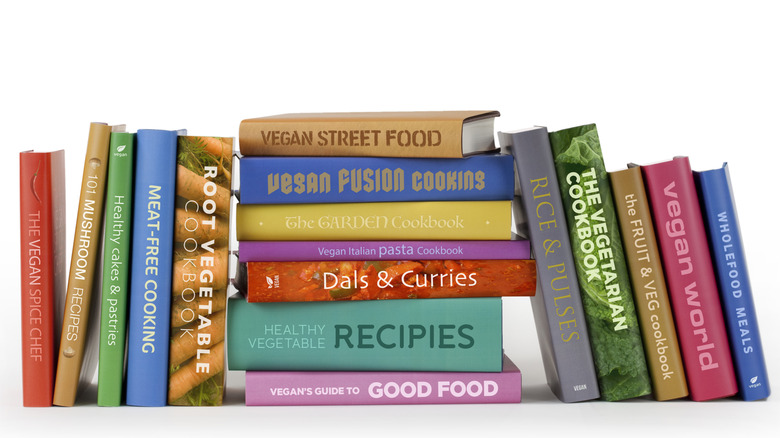
A well-worn, family-loved tome, a vintage find, a must-have new release: a cookbook collection rarely ever comes together on its own — it is usually amassed with love and care as you grow and evolve in your culinary journey. Which is why you'll want to keep your precious finds away from the heat and humidity above the stove. In fact, there is a rising consensus that cookbook collections should be kept out of the kitchen altogether.
And it is easy to see why. Not only are they flammable, but when stored above the stove, cookbooks can also easily accumulate grease buildup and oil splatters. While your range hood is undoubtedly doing its best for removing pollutants and grease, the airborne residue of cooking oils can settle down for the long haul on the pages of a handwritten family recipe. The unrelenting exposure to heat and moisture can prompt a mold infestation and make the spines of your cookbooks turn brittle.
Once you have rescued your favorite cookbooks from the clutches of heat and humidity above the stove, it helps to scout for worthier candidates around the house. A dedicated shelf running along any spare walkways leading up to the kitchen works, as does storing them alphabetized in a dry kitchen drawer.
Plants
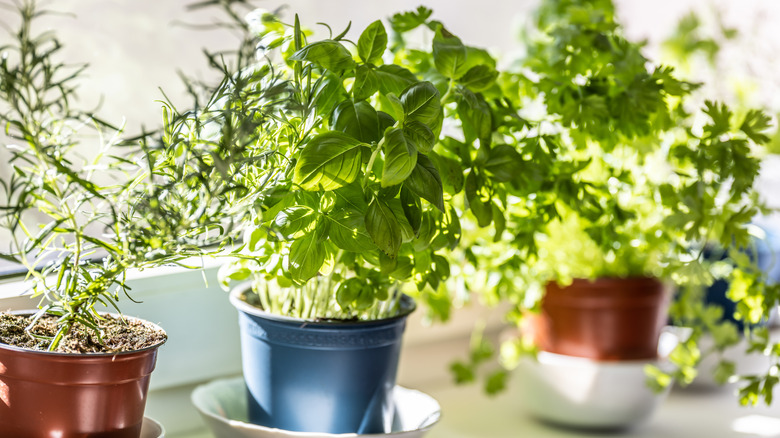
The zone above the stove is known to draw swathes of heat and humidity — but you know that already. What might come as startling news, however, is the fact that placing plants in this location can place unnecessary duress on their leaves and hamper the photosynthesis process.
Certain plants, such as ferns and begonias, are particularly vulnerable and can dry out when faced with excessive heat. And it doesn't end there. The residual remnants of cooking oil floating through the air can also block the pores on plants, thereby depriving them of the ability to absorb sunlight. Over time, the accumulation of grease can degrade the nutrients in the soil.
If you are not looking to add serial plant killer to the list of skills on your portfolio, you'll want to add touches of greenery in kinder locations around the kitchen — the windowsill serves as the ideal spot for your miniature herb garden to thrive. If the tops of your cabinets are looking sparse, you can opt for low-light plants here, such as ivy or snake plant. In case the space above the stove still appeals, remember to wipe away any residual grease from the leaves once every week with a damp cloth, and you'll be golden.