

America's Most Loved Candy In Every Decade Since 1920
Food trends come and go, but if one thing is for sure, it's that Americans' love for candy has never wavered. Grocery stores bait us with conspicuous candy bars at the register, there's a whole holiday dedicated to candy consumption, and lollipops are even used to lure children into the dentist's chair. It's safe to say that candy is ingrained in American culture.
There are plenty of once-adored candy bars that have gone overlooked, but these sweets are far too historic. With each decade, a new candy emerged or resurfaced to become the country's favorite. Whether it was a newfound obsession with sour sweets or a Reese's resurgence, America went ga-ga for each of these candies. These logos are cemented in American history, proving that advertising can be just as impactful as the candies behind the label. These beloved candies remain timeless and should be easy to find at one of America's many iconic candy stores.
1920s: Baby Ruth

1921 was the year of Ruth, both the player and the candy bar. Baseball is just about as American as it gets, and in the '20s, marketing geniuses used that power to sell candy bars. It was easy to assume that Baby Ruth, the candy bar, was associated with one of the biggest names in baseball at the time, but the Curtis Candy Company insists that it's named after another Ruth – President Grover Cleveland's oldest daughter.
It didn't seem like a coincidence that the factory was just a stone's throw away from Wrigley Field, and the notable name surely didn't hurt sales. Babe Ruth wasn't willing to let his legacy slip away from him, so he introduced his own candy, Ruth's Home Run candy bar. He even took the brand to court just to compete for his own name, but didn't have as much luck as he'd hoped for. All of these theatrics over a candy bar go to show just how popular Baby Ruth bars were in the '20s. The candy bar's success was overwhelming. By 1926, sales had skyrocketed to $1 million monthly.
1930s: 3 Musketeers
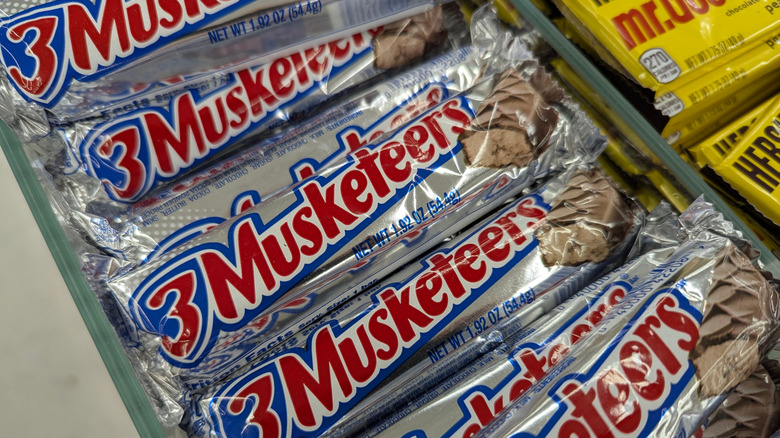
By the 1930s, the Great Depression was in full swing, and Americans were struggling to get by, especially those with a lot of mouths to feed. Between high costs and government rationing, small treats were a rarity in the '30s, so the introduction of the 3 Mukseteers bar in 1932 was a welcome one. The airy nougat bar, covered in chocolate, was originally a three-for-one deal. Back when 3 Mukseteers first debuted, it was sold as three separate pieces of chocolate-covered nougat, each a different flavor. One strawberry, one vanilla, and the last chocolate. The marketing angle was that the candy bar was big enough to share, and during the Great Depression, sharing was most definitely caring.
Chewy nougat-filled candy was common around this time, like Charleston Chew and Milky Way, but 3 Musketeers stood out for being both delicious and affordable. In the following decade, the brand eliminated two flavors, sticking with solely chocolate. The candy bar remained popular, but its heyday was during the '30s when it still featured a trio of flavors.
1940s: M&Ms
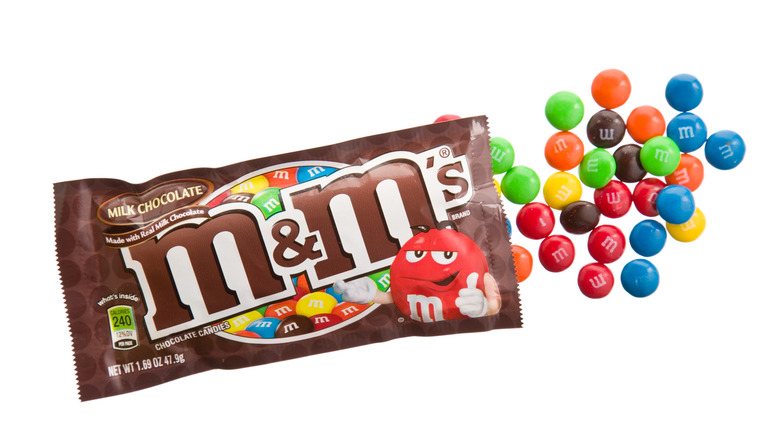
M&Ms, which stands for Mars & Murrie's, were tailor-made for the 1940s. Launched commercially in 1941 after Forrest Mars developed the idea of a sugar-shelled chocolate that resisted melting, the candies quickly proved indispensable during World War II. As the tagline pointed out, the chocolate coating would "melt-in-your-mouth, not in your hand," making them durable for transport and ideal for inclusion in soldiers' rations. Mars even partnered with wartime supply chains to get the candies to American G.I.s overseas, and that exposure built loyalty that followed veterans home after the war.
Mid-decade, the M&M's brand officially became available to the public. Since releasing in 1946, its gone on to become a $1 billion company and have great success beyond the U.S. as well. A fun fact is that these little candies weren't stamped with the iconic 'M' until 1950, but that didn't stop Americans from falling for M&M's.
1950s: Hot Tamales
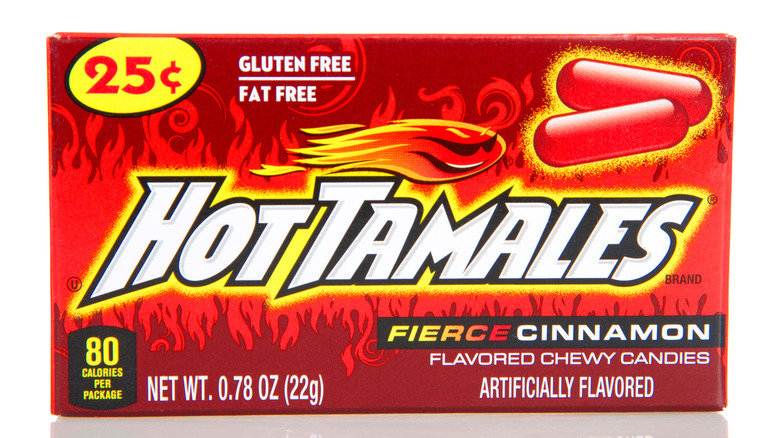
Hot Tamales come from the same mastermind behind chocolate sprinkles, Peeps, and the magically efficient lollipop-sticking machine. The spicy cinnamon chews are produced by one of the lesser-known names in candy, Just Born, which happens to be one of the last few family-run candy businesses around. People seem to either despise these peppery, cinnamon-flavored candies or be fully obsessed with them. For the spicy fanatics, Hot Tamales are a favorite.
America was sick of chocolate bars, and Just Born had been trying to tap into that for quite a while. Before Hot Tamales, the company was primarily focused on Mike and Ike's, the colorful fruit chews. In 1950, the fiery cinnamon candies hit the shelves and became the brand's newest calling card. To this day, Hot Tamales remain the top chewy cinnamon candy in America. Over time, Hot Tamale became shorthand for cinnamon candy, akin to the Kleenex of tissues. Hot Tamales hang onto the '50s Americana energy, evoking drive-in and jukebox nostalgia.
1960s: SweeTarts
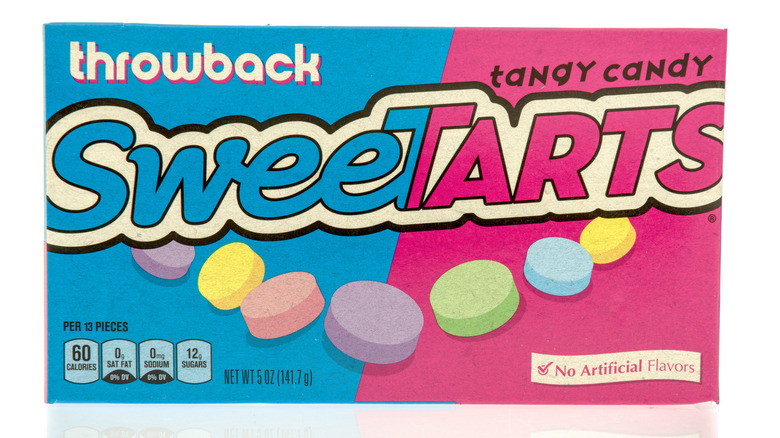
Before the Willy Wonka candy line, Sunmark Corporation (then known as Sunline Inc.) announced the iconic sweet meets tart chewy candy, SweetTarts, in 1963. The flavor was familiar, inspired by the brand's other popular sugary candy, Pixy Stix, but sold in tablet form and ultimately a lot easier to eat. The little candies were a much brighter offering than the boring ol' chocolate sweets out there, dressed in pastel pinks and baby blues.
SweeTarts fit the '60s aesthetic to a tee, with its mod, colorful branding and space-age influence. People were still intrigued by non-chocolate candies, and SweeTarts earned its own category in the confectionery world.
Lip puckering tartness and balanced sweetness were somehow captured in that one little sugary morsel, and America ate it up. In 1964, over $8 million worth of the little tangy candies had been sold in that year alone. Before the little pill-shaped candies were packaged in a vivid blue and pink box, SweeTarts were sold in foil packs of 12. They're still adored today, but are the emblematic tangy candy of the '60s.
1970s: Reese's Peanut Butter Cups
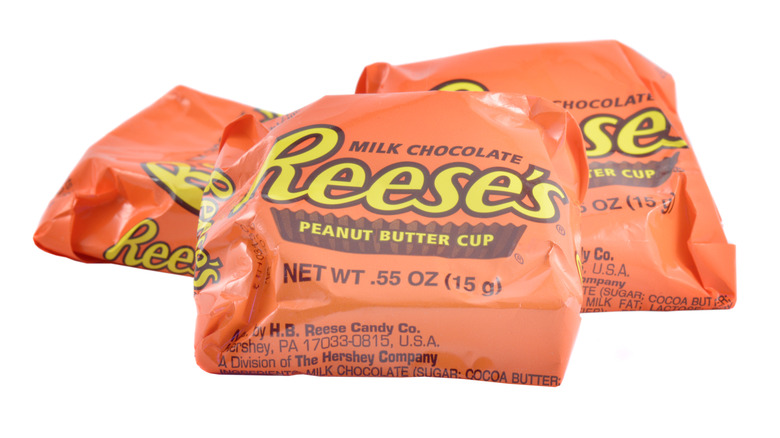
America went back to chocolate in the '70s, but with the addition of peanut butter. Reese's Peanut Butter Cups were first released in 1928, but saw a huge wave of popularity in 1970s America. After Hershey purchased the brand from H.B. Reese Candy Company in 1963, Reese's went on to become the company's top seller by 1969, leading the way for disco era candy trends.
Hershey provided Reese with its creamy chocolate from the beginning, so the buyout felt like a natural step for its proud pioneer. The new ownership had an impact on the uptick in sales, especially with its 1970s campaign, "Two great tastes that taste great together."
TV commercials showed humorous (alleged) accidents — one person's chocolate colliding with another's peanut butter — to highlight the unexpected yet utopian pairing. This clever messaging earned Reese's a permanent spot in the pantry and one of the best-selling candies in America. There are a lot of Reese's Peanut Butter Cup knockoffs, but no one does it like the real one.
1980s: Skittles
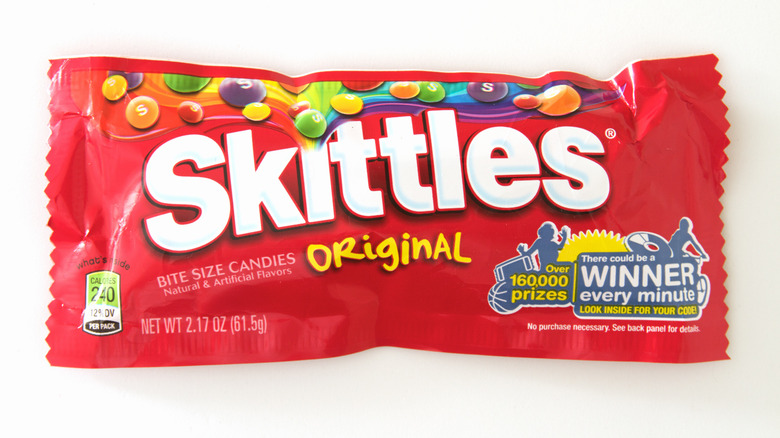
Skittles were originally produced in the U.K., but the chewy candies made their American debut in 1974. It wasn't until 1981 that they started manufacturing in the U.S., but the candy became forever unified with the country, especially 1980s America. The fruity morsels were all the bright colors of the rainbows, which fit the '80s loud style. It didn't take long for Skittles to become a country favorite, often holding the number one spot for non-chocolate candies.
There's really nothing like Skittles. The crunchy exterior takes a bit of jaw work, but the ultra-chewy center is worth any potential cavities. The tasty candies were a novelty then and now, but the slogan may be as famous as the candies themselves. Skittles introduced us to the iconic slogan, "Taste the Rainbow" in the '80s, which helped catapult the candy into mainstream media. Commercials started featuring the iconic line as early as 1986, and only expanded in the following decade when NYC-based agency D'Arcy Masius Benton & Bowles overhauled the campaign in 1994. The clever catchphrase went on to be one of the strongest and longest-running ad campaigns in candy history.
1990s: Warheads
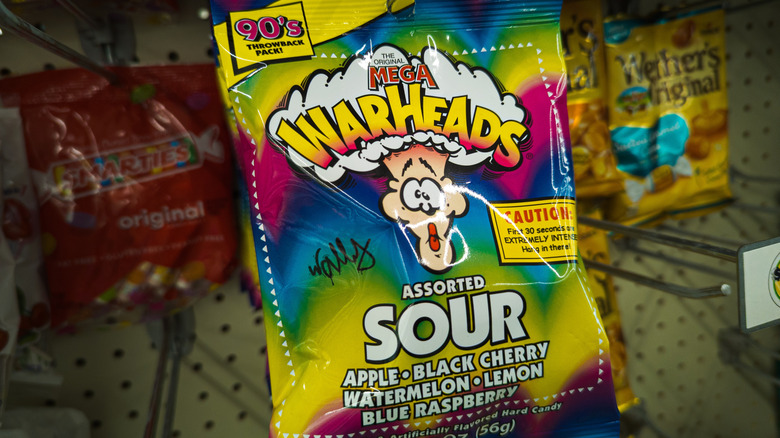
In the '90s, all of the coolest people were going extreme, so to speak. Everywhere you looked, the word extreme seemed to be plastered on the label. We're talking sports, fashion, hobbies, comedy, and, you guessed it, food. With that trend came the sour candy frenzy and just bizarre candy concepts in general. Cry Babies and Sour Patch Kids were other tongue-numbingly sour '90s sensations, but Warheads held a special place in America's heart.
The candies were popular in Taiwan since 1985, but the lethal candies didn't make it to the U.S. until 1993. Warheads are just one of the world's many sour candies, but the branding made the little candies look like poison, and kids loved the daring aspect.
2000s: Bertie Bott's Every Flavor Beans Jelly Beans
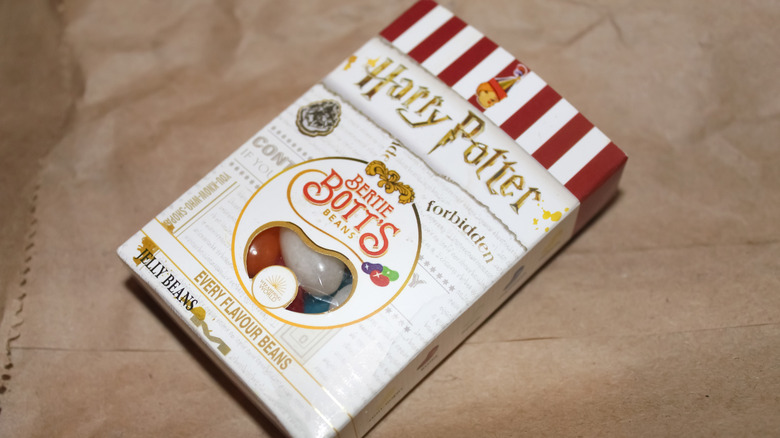
The 1980s had "E.T." alien-themed everything, the '90s fell into "Jurassic Park" and "The Lion King," but the "Harry Potter" fandom of the 2000s seemed to surpass all previous obsessions. Inspired by the book series, Jelly Belly debuted Bertie Bott's Every Flavor Beans in 2000, a revolting medley of jelly bean flavors.
Their success was inseparable from the Hogwarts phenomenon. Marketing tied directly to the films and books, with ads and packaging highlighting bizarre flavors like literal earwax and grass. They became more of a collector's item than just a candy, as many never thought to open up the seal, let alone eat them. Jelly Belly really zeroed in on replicating everyday flavors, and even if they were undeniably nasty, curiosity seemed to get the better of America during the 2000s. Jelly Belly still doesn't hesitate to release unexpected flavors, like one of this decade's interesting additions, taco-flavored jelly beans.
2010s: Snickers
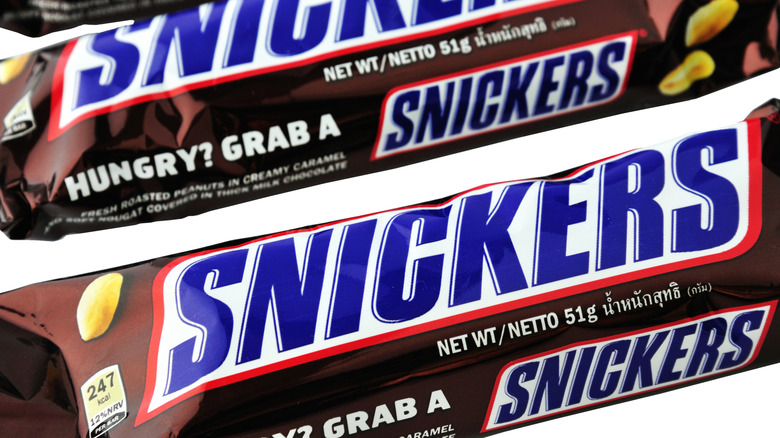
Snickers have been around since 1930, and they're still one of the most readily found candy bars across America. Regardless of where you're making a pit stop or what gas station you're pulling into, there's bound to be some Snickers bars for sale at the counter. This decade saw a lot of changes in processed foods and sweets, but the classic Snickers candy bar managed to climb its way back up the candy-loving charts.
At the start of the decade, gum seemed to be everyone's favorite purse companion, but sales dropped pretty early into the 2010s, leaving a vacancy for America's most loved candy. Once Snickers' iconic "You're Not You When You're Hungry" campaign debuted in 2010, it sealed the deal. Starring celebrities like Betty White and Willem Dafoe, the ads humorously portrayed cranky characters transformed after eating a Snickers bar. The campaign spanned TV, social media, and Super Bowl ads, bumping Snickers sales up 15.9%.