

9 Common Apple Varieties And The Best Ways To Use Them
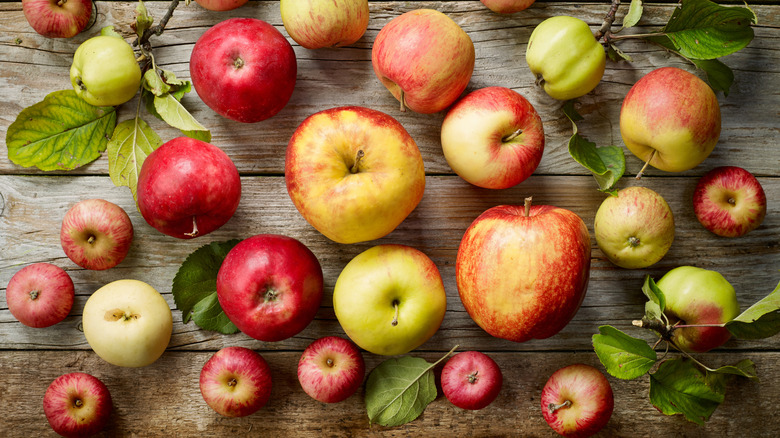
Few fruits carry as much history and symbolism — or can boast as many varieties — as the humble apple. Though it's easy to think of apples as either the green or red variety, with supermarket staples like Granny Smith or Red Delicious representing the whole category, the truth is that apples are one of the most diverse fruits in the produce world. More than 7,500 varieties are grown worldwide, each with its own sweetness, tartness, fragrance, and texture.
Apples were critical for keeping early colonists' larders stocked in America, and by the 19th century, apples were everywhere in American cooking: baked into pies and dumplings, pressed into cider, dried into leathery rings for storage, cooked down into apple butter, and made into the potent colonial spirit, Applejack. Henry David Thoreau described wild apples as the "noblest of fruits," in his "Wild Apples" essay, extolling their rugged determination — qualities that were essential for early Americans if they were to stake their place in the New World.
Today, modern agriculture has narrowed what was once an abundance of choice down to a handful of supermarket staples, but each variety still has its own strengths and best application for specific recipes and uses. And knowing which apple to use for what technique can transform your cooking. It all comes down to flavor, texture, sweetness, and acidity. Here are nine common varieties worth knowing and the very best ways to use them.
Red Delicious
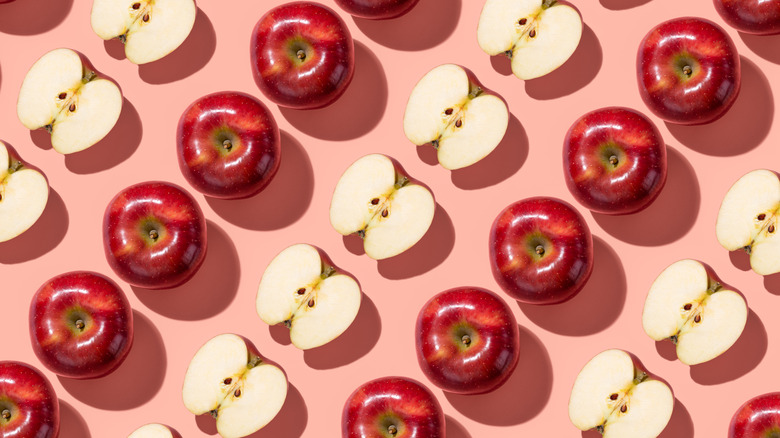
The iconic Red Delicious may not win any popularity contests in the kitchen these days, but it's impossible to deny its legacy. For decades, this gleaming, ruby-skinned apple was the poster child of the American produce aisle.
By the mid-20th century, Red Delicious had become the most widely grown apple in the country, favored less for its taste and more for its storybook looks, uniform shape, and long shelf life. After years of selective breeding for mass production, the apple's natural tartness and complexity faded, leaving behind the mild sweetness and soft texture we know today. It became the archetypal supermarket apple — beautiful and uniform but often underwhelming on the palate and texturally flabby.
Still, dismissing Red Delicious altogether would be unfair. When eaten fresh and at peak ripeness, it has a juicy crunch with just enough sweetness and a mild flavor. Its texture is too soft to withstand the heat of an oven, meaning its tender flesh will turn mushy when baked, but it does have its place: Try tossing it into a salad for color, layering it into a turkey sandwich, or pairing with nut butter, chocolate, or cheddar cheese for an easy snack. Red Delicious may not have a monopoly on the apple market any longer, but it is a familiar standby, and we can count on airports, conference rooms, and gas stations to stock this reliable variety for a quick and fresh bite.
Honeycrisp
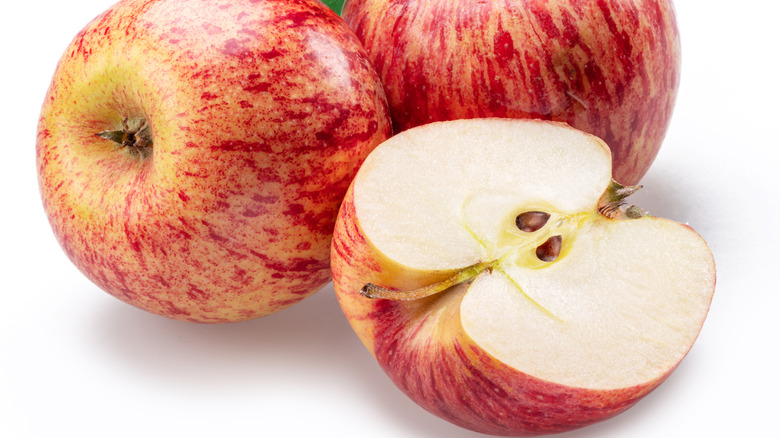
Honeycrisps may be a relative newcomer to the international apple stage compared to heirlooms, but they've made an impressive impact since their debut in 1991, developed by the University of Minnesota's apple breeding program. Honeycrisps quickly gained a devoted consumer base due to their texture — they have an almost shattering crunch that comes from unusually large, juicier cells in the flesh. The goal was to create an apple that could withstand Minnesota winters but was also exceptional when eaten fresh. Honeycrisps have been so influential and popular that they were recognized in the 2006 Better World Report as one of the top 25 innovations of the decade.
In salads, Honeycrisp slices hold their structure better than many softer apples and have a big enough personality that they can be paired with stronger flavors without being overwhelmed. They provide a supremely refreshing snap alongside bitter greens, toasted nuts, and salty cheeses like blue or aged cheddar. Because of their crunchy texture, they're a great pairing for foods that are texturally opposite, like soft bread or oatmeal. They're also fantastic on a snack or charcuterie board as they provide a textural contrast to soft cheeses and meats, while complementing other crunchy textures like crackers and nuts. Their sweetness balances sharper, acidic and bitter flavors, meaning they're perfect for dicing and tossing into a grain salad with farro, herbs, and a lemon vinaigrette, or layering thinly on a turkey and brie sandwich. Honeycrisps are a workhorse in the kitchen and one of the most versatile apples you can keep on hand for all types of cooking applications — they're sweet enough to be eaten fresh, have a distinctively satisfying crunch, and also hold their shape in the oven if you're baking with them.
Granny Smith
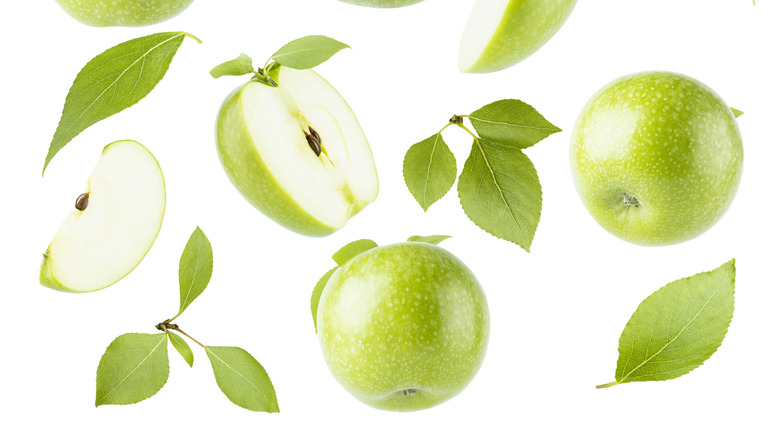
We tuck them into our backpacks on hikes, keep them in our refrigerator for months at a time, and see their luminous neon skin stacked in mounded pyramids each time we go to the grocery store. Granny Smith's sour-candy tartness has awarded them an ardent fanbase since their inception in 1868 in Australia. In a world that didn't yet have the luxury of refrigeration, Granny Smiths became prized not only for their flavor, but also for their storage qualities: they keep for months without losing their firmness, making them a reliable export apple.
In the kitchen, Granny Smiths have earned a starring role in baking — American apple pie in particular. Their high acidity balances sugar and butter, and their firm flesh doesn't turn into shapeless mush in the oven, meaning slices stay distinct and intact inside a flaky crust. Their tartness makes them excel in a pie with a sweeter crust, like a sugar cookie crust. Beyond pies, they're excellent in crisps, cobblers, and savory applications like stuffing for pork or poultry, with their bright acidity balancing the rich umami of the meat. Eaten raw, they bring brightness to salads or slaws, especially when paired with roasted nuts and strong, aged cheeses. Though they're prized for their ability to retain their shape during cooking, they're also delicious cooked down into a rich apple butter. Due to their high acidity, they're also fantastic blitzed into a salad dressing with dijon, olive oil, garlic, and lemon juice.
Fuji
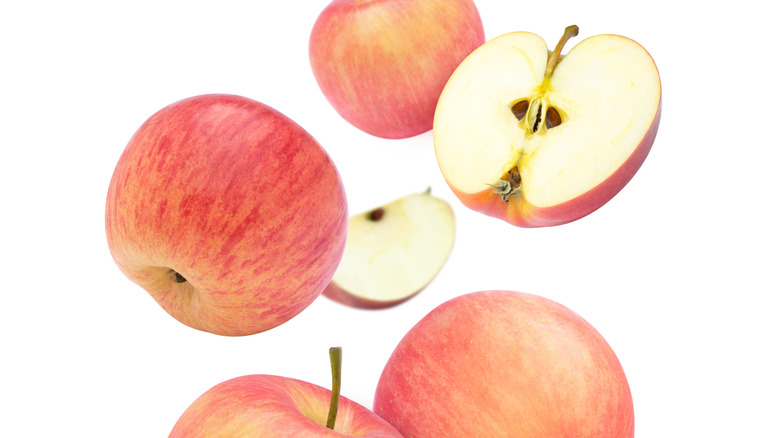
Fuji apples are a medium to large variety, and are recognizable by their skin that ranges from pale yellow to pink-red, with distinctive striping or mottling. Named after Mt. Fuji, they're a cross between Red Delicious and Ralls Janet and were developed in Japan in the 1930s. In Japan, they're commonly eaten as candied apples by placing them on a stick and rolling them in a thick coating of caramel. This cross breed aimed to incorporate the sweetness of Red Delicious with the firmness of a Ralls Janet. (Ralls Janet is a large greenish-yellow heirloom variety with firm flesh, making it the perfect partner for the sweet and sometimes mealy flesh of Red Delicious.)
Fuji apples lean sweet, so they excel in dishes where their natural sweetness is used to complement or contrast a dish. They caramelize wonderfully when roasted or sautéed on high heat, making them an excellent pairing with pork or poultry. Because of their sugar content, they work well in applications where you're not going to add much extra sugar. Try roasting them drizzled with olive oil alongside hearty herbs like thyme or rosemary and layer over grilled pork chops. Or, grate them into oatmeal or on top of yogurt for a natural sweetener. Their sweetness can overwhelm delicate green salads, but they add a perfect counterpoint to spicier greens (arugula or dandelion) or more acidic ingredients in slaws or grain bowls. Fujis are one of the most versatile varieties you can find and are almost always delicious when their sweetness is put to work balancing other elements like fat, acidity, or bitterness.
McIntosh
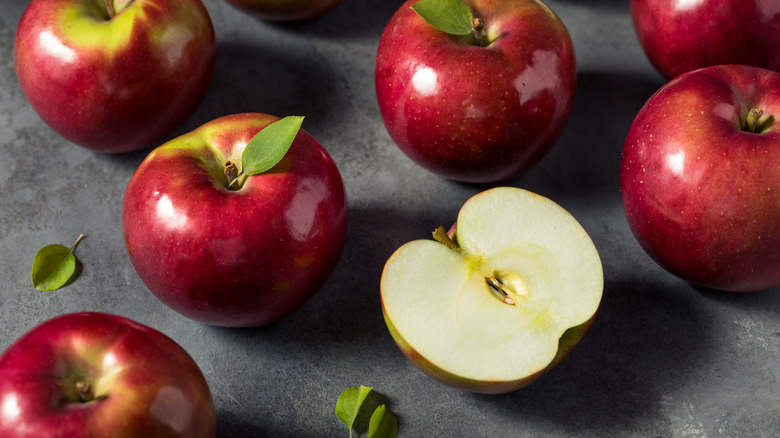
McIntosh apples are recognizable by their petite size and their rich-hued skin — a deep burgundy contrasted against bright lime green. Their flesh is moderately tart, and a bit softer than other varieties like Granny Smith, making them a fantastic apple for cooking down into apple sauce, apple butter, or compote. McIntosh can become too mushy for pies or tarts that do better with firmer varieties that hold their shape, so try to use firmer varieties like Granny Smith, Honeycrisp, or Braeburn for baking. However, if McIntosh is all you have on hand and you're craving an apple pie, USApple recommends cutting them into thicker slices so they don't break down and lose their shape as quickly in the oven, or adding a thickener like cornstarch. Or, instead of a regular pie, try making hand pies, where the texture of the apples isn't as important for the pie's overall structural integrity.
Served raw, McIntosh apples have a crisp quality that's enjoyable in salads, particularly when paired with contrasting elements like cheese or nuts, but their juiciness can make them slightly prone to browning. If preparing a dish with raw McIntosh, make sure to consume it right away. But this variety can't be beat for cooking down with nutmeg, cinnamon, and allspice into a rich, autumnal apple sauce. Try tossing them into your slow cooker and spreading the butter onto cinnamon oatmeal pancakes, top your morning yogurt with it, or layer it on sourdough bread with butter for a luxurious taste of autumn.
Pink Lady
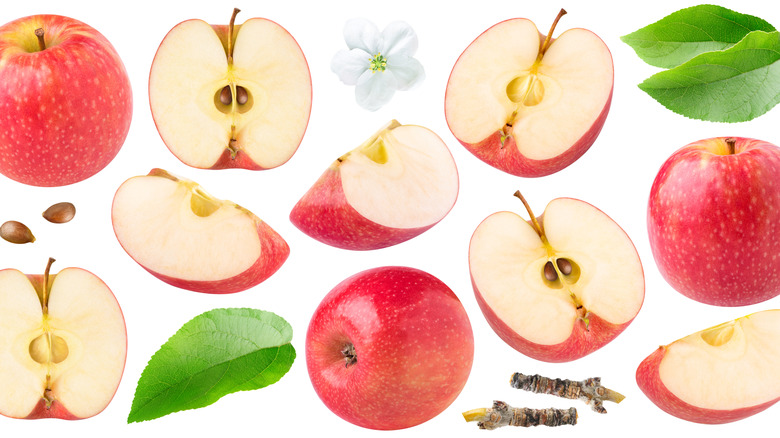
Pink Ladies are exceptionally versatile and balanced, and a great variety for baking. Pink Ladies are a cross between Lady Williams and Golden Delicious and have firm, pale yellow to green flesh and a blush of rosy pink on the skin and were named after a cocktail in Nicholas Monsarrat's novel The Cruel Sea. They're a modern variety that was developed in Western Australia in the 1970s by John Cripps ("Cripps Pink" is its cultivar name). On the palate, Pink Ladies have a balanced sweetness that's offset by a touch of acidity and are described as being juicy and "fizzy."
For cooking, if you prefer an apple with more inherent sweetness than a Granny Smith, Pink Lady is your best option. They have a structural firmness which means they'll retain their shape when used in applications where presentation is key — like a tarte tatin that requries delicate layering, or a savory apple tart. They're more mild and well-rounded than other tart baking apples, meaning they're hard to dislike and a workhorse in a variety of applications. They're also fantastic when combined with other tart varieties, like Granny Smith, Braeburn, and Jonathan, as they complement and round out the former's acidity with a touch of sweetness.
Gala
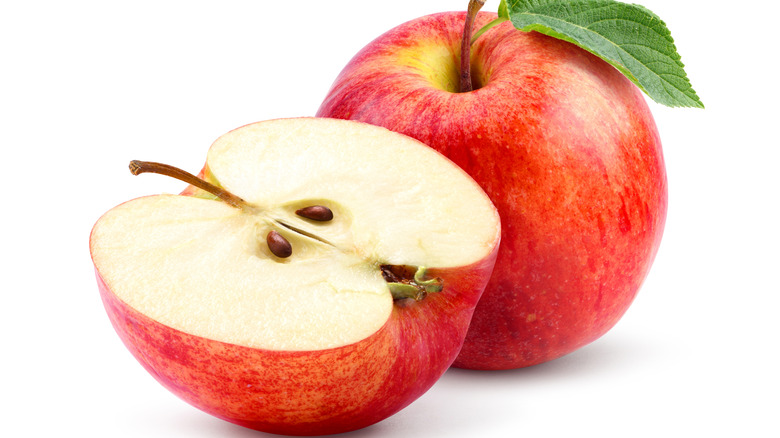
Gala apples are small to medium in size, with striped skin that ranges from yellow-orange to deep red, and tender, fragrant flesh. Naturally sweet and mild in flavor with low acidity, they're one of the most approachable apples for all palates. The variety was developed in New Zealand in the 1930s by crossing Kidd's Orange Red and Golden Delicious, and it quickly became an international favorite due to its sweetness and texture. Today, Gala is one of the most widely grown apples worldwide, supplanting Red Delicious which held that role for decades.
Besides eating them fresh, to make the best use of Galas, try juicing or blending them. Their high sugar content and soft, juicy flesh allows them to blend seamlessly into smoothies, adding natural sweetness without overpowering other fruits or vegetables. They also press easily for fresh apple juice. Try them as a base for cocktails, mocktails, or a boozy apple cider. If you don't have a juicer, simply place in a blender with a bit of water, and strain out the excess pulp with a fine mesh strainer. Gala's texture can soften quickly under heat, so they are less suited for baking.
Braeburn
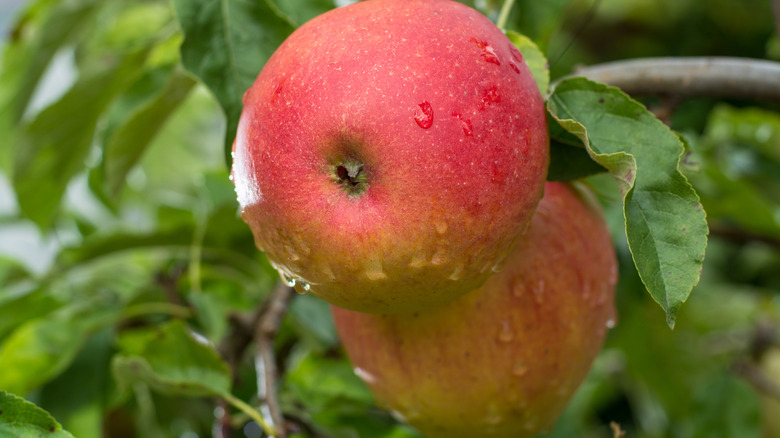
Braebuns are a medium to large variety with a bright neon green undertone and coral red mottling. Their flesh is firm and crisp, with a sweet-tart balance that makes them versatile for both eating fresh and cooking. The variety is a newer one, discovered in 1960 in New Zealand, and it gained popularity internationally for its complex flavor and excellent storage qualities. What sets Braeburn apart is its flavor. It was among the first modern apples produced on a large scale that matched the depth and complexity of classic heirloom varieties.
In the kitchen, Braeburn apples are ideal for baking, particularly in crisps, cobblers, and crumbles. Their firmness allows them to hold shape under heat while still softening enough to marry beautifully with sugar, spices, and buttery toppings, like a biscuit or a crumble topping. Braeburn has a concentrated apple flavor and complements cinnamon, nutmeg, and other warm baking spices without becoming cloying, and its juiciness makes for a decadent, super flavorful filling. Try them in an apple crisp to highlight all of their best qualities. They're sweeter, softer, and more complex than other tart varieties like Granny Smith, making them a great kid-friendly option for desserts with a little more natural sweetness and less mouth-puckering tartness.
Jonathan
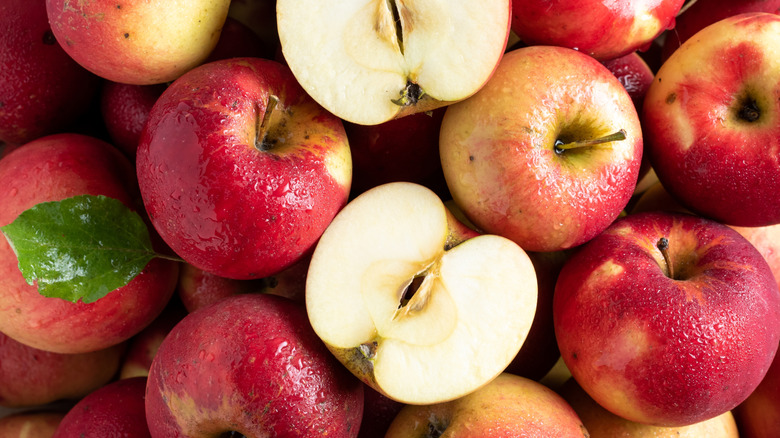
Jonathan apples are medium-sized with bright red skin often streaked with yellow or green, and they offer a classic sweet-yet-tart flavor with a hint of spice. The variety is an old one and considered an heirloom, dating back to the 1820s in New York. Being a senior variety, it was one of the main apples used to make early America's favorite spirit, Applejack. Its balanced flavor profile made it a favorite for both eating fresh and fermenting, and it went on to parent several notable hybrids. Among them is the popular Jonagold apple, developed in 1953 at the New York State Agricultural Experiment Station, a cross between Jonathan and Golden Delicious. Jonagold combines Jonathan's tangy acidity with the honeyed sweetness of Golden Delicious, producing a larger, juicier fruit. The production of Jonathans was eclipsed by other industrialized hybrids, like Red Delicious, and today they're grown on a small scale as a specialty crop.
In the kitchen, Jonathan apples are prized for their cider-making qualities. Their energetic acidity and complex aromatics give fresh-pressed cider a bright, balanced backbone, and they work well in hard cider blends as well. Try turning them into a cider for homemade apple cider doughnuts, as a smoked pork marinade, or a cider-based beef stew. If you're baking with Jonathans, Specialty Produce recommends pairing them with firmer varieties like Granny Smith as they tend to lose their firmness when introduced to heat. Make sure to save their peels, which can be dried and used in tea blends — a fun project for kids to teach them about food waste. Being an older varietal, Jonathans tend to lose their firmness and crunch over time (newer hybrids have the benefit of being bred specifically for longevity), so make sure to use them quickly after purchasing.