

The Type Of Countertop Julia Child Had (And The Controversial Way She Cleaned Them)
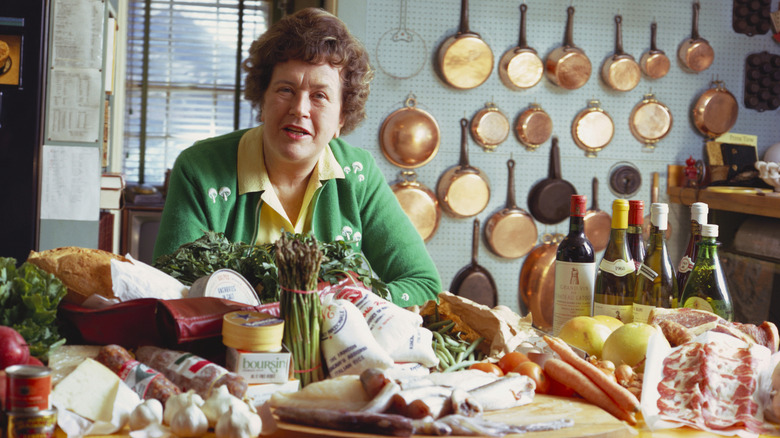
Much has been written about the timeless beauty and efficiency of Julia Child's kitchen. Her streamlined, no-nonsense approach to kitchen organization has been frequently emulated and has inspired chefs from Jacques Pépin to Lidia Bastianich. One of the most prominent features of her kitchen was her 38-inch-high butcher block countertops.
Butcher block countertops are a kitchen design trend that is on its way back, and for good reason. One of the biggest benefits of butcher block countertops is that they can withstand heavy use, from pounding chicken breasts to cutting up food with the sharpest knives in your drawers. Despite the benefits, something people often overlook when investing in butcher block countertops is that they require a lot of care and maintenance. Wood counters need regular cleaning, disinfecting, and even seasoning. Yet Julia Child used a somewhat surprising and controversial method for cleaning her butcher block countertops.
According to the book "In Julia's Kitchen: Practical and Convivial Kitchen Design Inspired by Julia Child" by Pamela Heyne and Jim Scherer, Julia Child cleaned her countertops with an abrasive cleaner and then seasoned them with olive oil. She also sometimes used lemon to remove odors from the wood, which is a trick that can also be used to clean wooden cutting boards. While abrasive cleaners aren't recommended for cleaning wooden countertops or cutting boards, the method seemed to work for her. And it's certainly another example of her no-fuss approach to home cooking.
The best way to care for your butcher block countertops
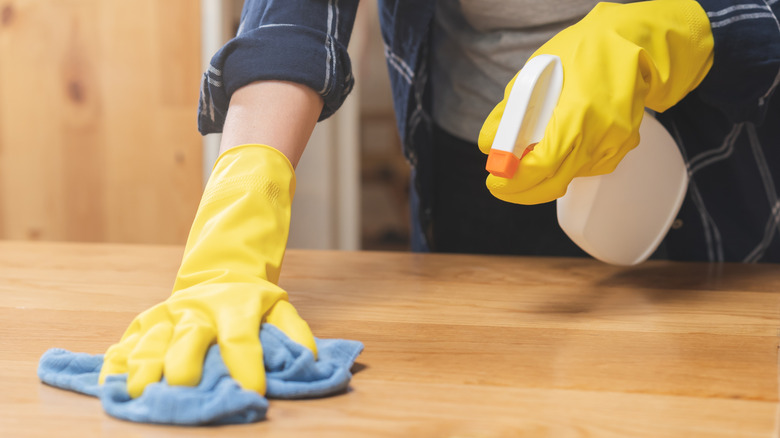
We don't recommend using any type of abrasive cleaner or harsh chemicals on your butcher block countertops. Bleach and ammonia can destroy the wood's finish and eventually reduce the lifespan of your counters. The best way to clean wooden countertops or cutting boards is to wipe up spills and messes right away with a clean, damp cloth and clean them with mild dish soap, a soft sponge, and warm water each day.
To sanitize your wood counters, mix one part white vinegar and four parts water in a spray bottle. Spray the counters liberally and let the solution sit for 10 minutes, then wipe it away with a dry, clean cloth. If they develop an odor or become stained, you can clean your counters with fresh lemon and baking soda or salt. Sprinkle salt or baking soda liberally over stained or smelly areas, then rub the wood with a cut lemon wedge and wipe it clean with a damp cloth.
You also need to regularly season wooden cutting boards and countertops. Rub a thin layer of food-grade oil like mineral oil over the surface and let it soak in for an hour, then wipe away the excess with a clean cloth. Unlike Julia Child, you should not use olive oil on your counters, as it can become rancid over time and cause an unpleasant smell.