

5 Dining Etiquette Rules You Can Ignore At An Indian Restaurant — And 5 You Must Never Break
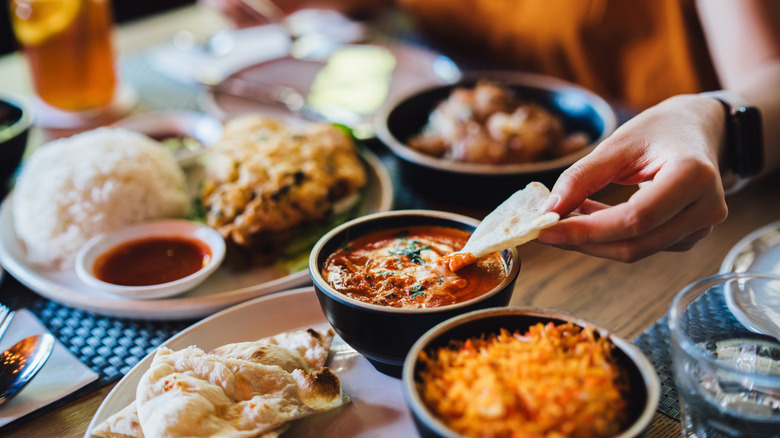
You may know your paratha from your roti. You may have even mastered how to pronounce the trickier dishes on the menu, such as paneer lababdar. The modern gourmand knows that they have to steer clear of the major mistakes that people commonly make at Indian restaurants. But beyond the finer nuances of the menu, there is a world of unspoken rules of dining etiquette that govern every Indian meal.
Using a fork and spoon to navigate your way through pani puri? Forget it. Not using your bread as a spoon to scoop curry? Amateur hour. Dreaming that you can steal the bill from under the host's nose and pay it yourself? Good luck with that. Eating food is an inherently intimate and sensorial experience in India, and it is best enjoyed by blurring the boundaries of conventional rules. While some of these might be considered as a faux pas in the Western context, these small gestures make Indian dining more informal and joyful. On the other hand, there is certain dining etiquette that Indians never break because it is hard-wired into our codes of hospitality and respect.
Need a helping hand in understanding the difference between the two? Chef Stanley Coelho, sous chef at Moxy Bengaluru Airport Prestige Tech Cloud, and Sana Grover, content creator and author of bestselling etiquette book "The Glow Up Guide," share their best advice ahead on the dining etiquette rules you should honor and the ones that you are encouraged to break free from.
Ignore: Only eating with cutlery
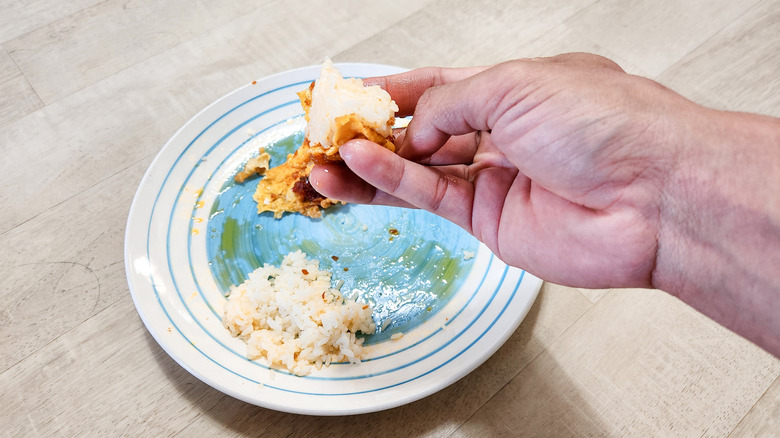
There are some common homemade biryani mistakes to avoid, from using the wrong type of rice to the incorrect spices. For my money, there is one more addition that deserves a spot on the list. If you aren't nursing singed fingers because you dove into the steaming hot plate with your hands, you are missing out on a crucial sensorial aspect of the biryani experience.
Around the world, there are several foods that are best enjoyed when eaten with your hands, from sandwiches and pizzas to nachos and pretzels. Within the Indian context, this same courtesy is extended to all kinds of food. "Eating with your hands heightens the experience — it engages more than just taste, allowing texture, temperature, and aroma to play their part," chef Stanley Coelho declares. As you savor the gratifying crackle of ripping apart a piece of crisp dosa or you swirl your roti in a velvety smooth curry, you become one with the food.
So, how can you eat with your hands at an Indian restaurant without making a mess? "Tear small pieces, fold them neatly, and you'll enjoy both the flavor and the ritual without the mess. It's dining with authenticity," he adds. For dishes that involve rice, it helps to use the four fingers of your right hand to scoop together a small portion, with your thumb holding it in place as you carefully take a bite.
Never break: Don't start eating before the elders
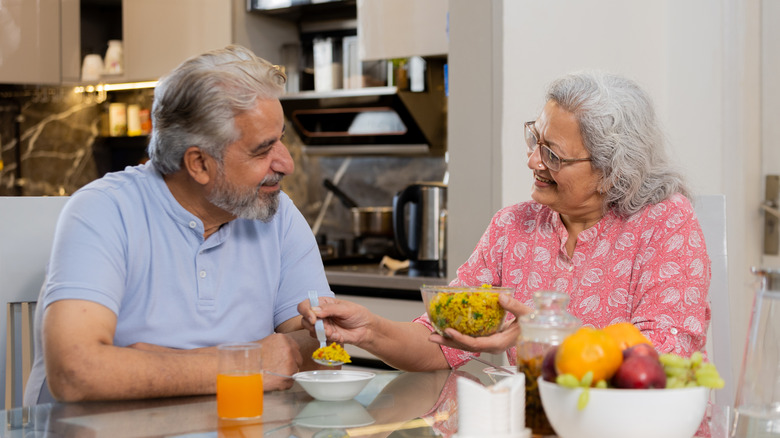
There are some international dining etiquette rules that we all should be following, such as the Argentinian practice of not sitting until your host has shown you your seat. While you can beeline for the seat of your choice at an Indian restaurant, it would be considered impolite to dig into your plate before the elders at the table have started eating.
While it may seem like an antiquated notion of familial hierarchy, chef Stanley Coelho believes that this simple gesture of respect sets the tone for the meal and shows deference for elders. "Waiting for elders to begin is about honoring their role in the family and the culture. This ritual anchors meals in patience and gratitude," he elaborates.
And Indians aren't alone in this endeavor, either. Sana Grover has found echoes of this same tradition in global fine dining, as well. "If the Queen hadn't picked up her cutlery, no one else at the table would start, and when she ended, the meal ended for everyone," she points out. However, there are exceptions to the rule. "Of course, among friends or casual settings, this rule may soften. But in traditional dining, letting elders lead is like letting the first toast rise — it sets rhythm and respect for everything that follows," Coelho says.
Ignore: Not using the same hand for serving and eating
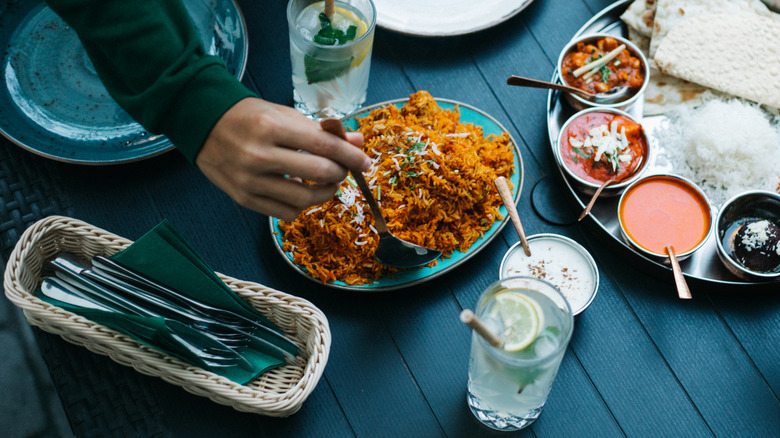
Not knowing which piece of cutlery to use for which purpose can be a dead giveaway that you are a fine-dining first timer. And not blurring these rigid rules of utensil etiquette can be a telltale sign that it is your first time at an Indian restaurant. "Dining in India is an act of sharing, not separation. Meals are served family-style, and the same right hand often serves and eats. It's about trust and togetherness," chef Stanley Coelho shares.
Eating with hands is the preferred way for Indians to connect more deeply with the food we are eating. Pausing to clean your hands on your napkin every time you want to go in for seconds of the butter chicken — which will happen more often than you think — can create a staccato dining experience that disrupts the harmonious flow and rhythm of the meal for everyone. With a meticulous focus on washing hands before and after every meal, hygiene is maintained while also fostering a sense of intimacy among the diners at a table.
While this practice is favored among cozy meals shared with loved ones, it needn't apply to every situation. "In more formal setups, serving spoons are preferred for hygiene and presentation. But in casual meals, it's the ease and warmth of passing food, not rigid etiquette, that sets the tone," Coelho explains. "Clean hands, respectful gestures, and mindfulness are what make it feel natural."
Never break: Don't place used cutlery on the table

If you are visiting an authentic Indian restaurant, you might be tempted to try a thali or a sharing-style platter. But in between all the side dishes, chutneys, and pickles, where can you rest your used cutlery? According to chef Stanley Coelho, the answer lies anywhere but directly on the table. "Presentation and cleanliness are sacred parts of dining. Used cutlery should never rest on the table — it disrupts the flow, stains surfaces, and feels careless," he cautions.
So, how can you ensure that your used cutlery doesn't stain the tablecloth? "The polite practice is to rest cutlery neatly on the edge of your plate or in your bowl if you are pausing between bites," Sana Grover advises. While knife rests might be provided in certain formal dining situations, the general rule is to use your thali or platter to rest your spoon. She also believes that this principle should be followed when eating by hand — curry-laden fingers and spare scraps of bread should never be laid bare on the table, Grover notes. "It keeps the dining area clean and shows respect for the host's effort in laying the table beautifully," she adds.
By following this small act of discipline, Coelho believes that you can enhance the experience for the other diners sharing your table. "Just as dishes are plated with precision, diners keep order at the table," he tells us. "It's respect for the craft and for the meal itself."
Ignore: Not accepting food if your plate is full
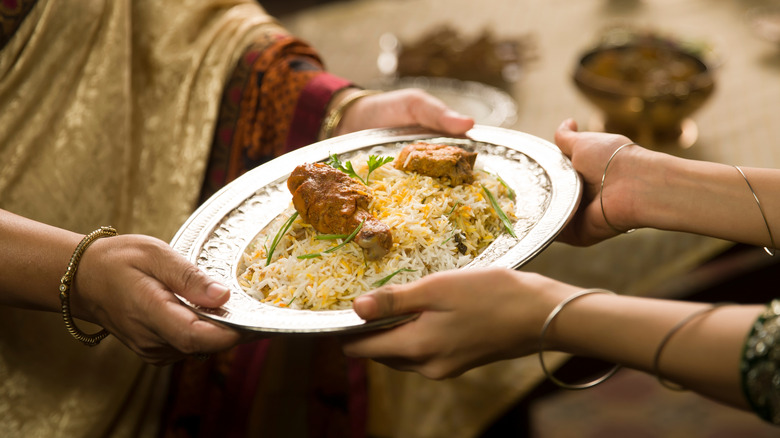
At one of the first family gatherings that my husband attended after our wedding, he observed the drawbacks of his preferred practice of eating food quickly. Every time he cleared an inch of space on his plate, it was enthusiastically filled up again by the hosts. By the time we stumbled out in the evening, he had consumed several portions of the main course and was at the risk of having the same dessert twice.
A full plate is generally considered as an unspoken signal that you have taken as much as you need. However, while Western traditions are grounded in etiquette and restraint, honoring the host's efforts assumes priority at an Indian table. "To a host, food is love on a plate. That's why guests are encouraged to accept — even a little more — as a sign of appreciation," chef Stanley Coelho says. "... The greatest compliment is seeing a guest relish what's served, and a gracious acceptance always deepens the bond between host and diner."
Sana Grover agrees, having found that accepting food honors the love and effort that has been poured into the meal. So, what can you do if you have truly filled your appetite? She has observed that lacing your refusal with a compliment can help soften the blow. "If you're full, the polite way to decline is to place your hand gently over your plate and say with a smile, 'It was delicious, but I can't manage another bite.'"
Never break: Don't leave food on the plate

It sounds like the ultimate catch-22: not refusing any food offered by the host while also ensuring that you finish everything on your plate. But there is no amount of mental gymnastics that Indians are not willing to do to avoid hurting the sentiments of the host, and this includes ensuring that your plate is clean when you get up from the table. "An empty plate is the highest compliment, a silent 'thank you' that every cook treasures," chef Stanley Coelho explains.
However, this respect isn't directed just at the host, but also toward the concept of food in general, which is often considered as sacred in the country. "In India, where food is revered, finishing what's on your plate honors both the ingredients and the effort behind them. Traditionally, it's also a gesture of gratitude," he adds.
In intimate gatherings, the unspoken rule is to leave behind a clean plate. However, Sana Grover believes that there are social concessions for weddings, buffets, and large feasts where one may not be able to realistically finish every single thing they add to their plate. "The graceful approach is to take smaller portions of only what you truly want. The heart of the rule is about mindfulness and gratitude for what is prepared and served," she says.
Ignore: Not sharing food directly from your plate
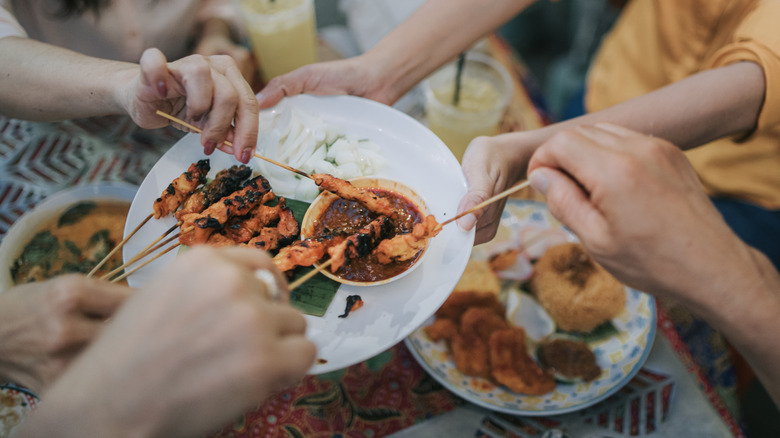
There is a communal aspect of eating that is woven into most cultures around the world, from the mezze platters of the Mediterranean to tapas. Word to the wise: if you are planning on visiting a Spanish restaurant anytime soon, you'll want to brush up on these traditional tapas dishes. While these dishes are often shared with serving tongs, there is leeway within Indian dining contexts for sharing food with your loved ones directly from your plate.
The first time you tip over some kebabs from your plate to someone else's at an Indian restaurant, it might feel like you are infringing on their personal space. But Sana Grover believes this is a nonverbal gesture signifying that you consider someone as family. "Most people grow up passing bites back and forth with siblings or friends, and that habit continues into adulthood," she explains, adding, "Eating together is about bonding as much as it is about the actual food."
According to chef Stanley Coelho, the simple act is rooted in the essence of abundance: "meals aren't measured" here, he explains, but the joy is significantly amplified when eating with others. "While it may not fit Western etiquette, in Indian dining it's an unspoken recipe for warmth, making the act of eating less about 'mine' and more about 'ours,'" he says.
Never break: Always wash your hands before eating

India is a deeply pluralistic country with culinary styles and preferences differing dramatically from the tandoor-loving north to the all-steamed dishes of the south. However, there is one unifying factor that blurs boundaries between these cultures: the insistence on maintaining hand hygiene before and after every meal.
On paper, washing hands before eating seems like a practical endeavor. It has already been established that Indians love to forego impassive cutlery in favor of the tactile experience of eating with our hands, sharing food from your plate is no biggie, and you won't fetch any raised eyebrows for using the same hand for serving and eating. However, the practice of washing hands also ties into the mindful element of savoring every meal.
Since the body is considered to be a temple in the Indian context, Sana Grover believes that handling your food in a hygienic manner is imperative. And since food is looked upon as a sacred blessing in India, she also believes that "eating with clean hands is a way of honoring it." Chef Stanley Coelho agrees. "Handwashing before a meal isn't just hygiene — it's ritual," he says, adding, "This simple gesture is as essential as seasoning — it sets the tone for mindful, respectful dining."
Ignore: Not using bread as a spoon for scooping curry
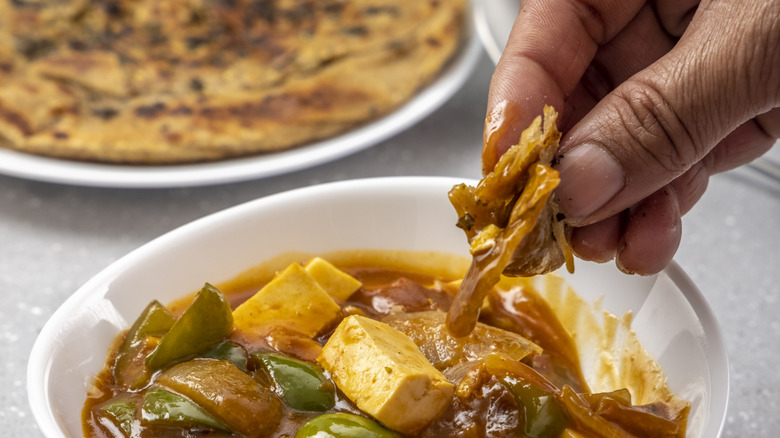
Even as my mother juggled the responsibility of raising four kids alongside a full-time teaching career, every single dinner ever served at our family table always had multiple items. This is because Indian meals are rarely ever a one-stop shop — there is a proverbial "and" hovering over every meal. Rice and curry. Idli and sambar. Gravy and flatbread.
This is a truth you can witness for yourself the next time you draw up a seat at an Indian restaurant. While you may have mastered the difference between the different kinds of Indian bread, it also helps to know the right way to use it. According to chef Stanley Coelho, bread isn't merely a side dish in India, but rather a tactile tool. "Tearing a warm roti or naan, folding it, and scooping up curry is a skill that elevates flavor," he says. "It creates the perfect bite: soft bread, rich gravy, a touch of spice."
There is a way to master this technique without making a mess, and Sana Grover believes that the key lies in moderation. After tearing a medium-sized piece of bread, she recommends folding it gently with your fingers to form a scoop, and then using it for picking up curry. "When done neatly with just your fingertips, it feels both graceful and mess free, and shows how beautifully bread and curry are meant to go hand in hand," she explains.
Never break: Don't argue with the host about paying

While splitting the bill is generally considered the standard practice at the end of the meal, attempting to reach for the bill before your host can devolve into a tug-of-war — and it won't be pretty when you are vetoed. However, beyond social niceties, paying the bill is a matter of pride for the host. "Hospitality in India is a craft in itself," chef Stanley Coelho says. "Just as preparing food is an act of care, hosting is an act of generosity. Insisting on splitting the bill can feel like rejecting that pride."
In his experience, it's best to accept that the host wishes to pay for the meal with grace and respect, and to then express your gratitude with sincerity. For those who wish to respond to the gesture in kind, Sana Grover recommends sending along a thoughtful gift following the dinner or inviting the host around for a meal. It comes as little surprise then that the cycle of hosting and reciprocating flows incessantly among my family and friends in India.
But as chef Coelho reminds me, dining in India or at an Indian restaurant is a chance to honor your relationships, just as much as it is about enjoying the food. "Respecting the host's gesture keeps that bond strong, like the perfect finishing touch to a dish," he concludes.