

18 Foods To Seek Out In The UK Beyond The Classics
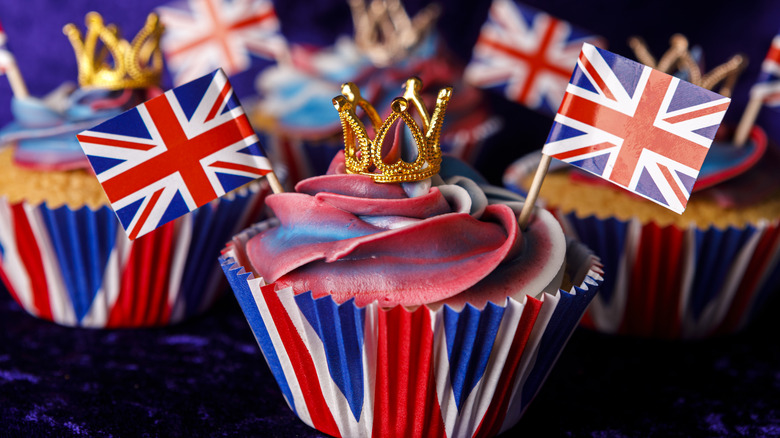
When Americans think of British food, they may think of fish and chips, shepherd's pie, or the full English breakfast. These are indeed classics, but the depth of British cuisine goes much further. As a Brit, I've grown up with these foods being a part of everyday life. It's easy to forget that dishes commonly known to you can be barely known anywhere else. This is why I wanted to create a list of U.K. dishes that fly under the radar. What's fascinating about British cuisine is how it can change drastically from one region to the next. Areas can have their own dishes that may not even be widely known across the islands. These foods can often tell stories about these regions and the people who grew up in them.
There is also the London factor. Even though there are a few dishes here from our famous capital, the outsider view of the country can often be very London-centric. The foods I highlight here divert well away from the tourist trail. They can give you an insight into the rich naval history of Liverpool or perhaps the working-class streets of Lancashire. By the end here, you'll have a much greater understanding into the true nature of British culture. And hopefully, you get inspired to try making some of these dishes at home, too.
Toad in the hole
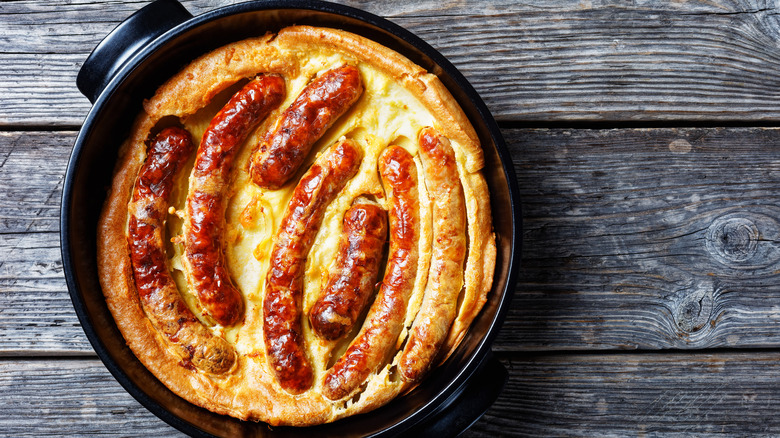
A weird name for a type of food? You better get used to it with this list. When you grow up with dishes like toad in the hole, you never realize how quirky some of their names are until it's pointed out. As you'll probably be relieved to hear, there are no toads in the making of this dish. While you may have never heard of toad in the hole, you probably have heard of a Yorkshire pudding. This dish is effectively a mixture of succulent sausages baked in one big Yorkshire pudding.
The sausages are cooked inside the batter, and it has that quality of being crispy on the outside but beautifully soft on the inside. It works perfectly well with a hearty amount of gravy, and as with many British dishes, it gives you plenty of warming comfort on those cold winter nights. A lot of these meals are born from working families needing to make the most of what they had. Whereas any type of affordable cut of meat may have been used in the past, these days your choice of premium sausage makes it an indulgent comfort food.
Pork pie
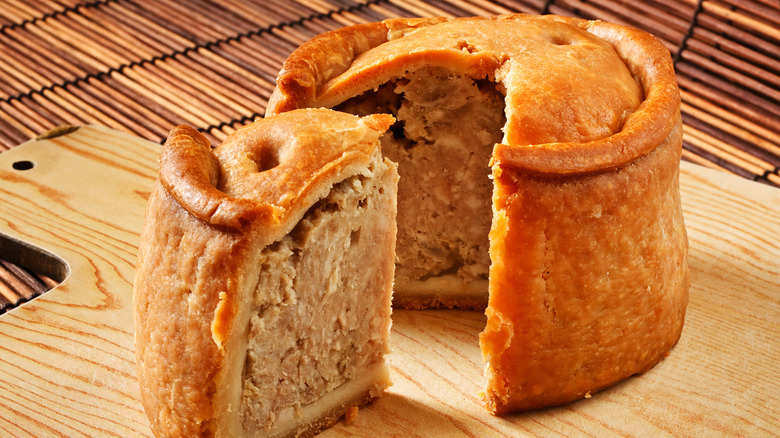
A pork pie is neither a sweet treat nor a hearty pot pie. Instead, it's a savory pastry that is almost always served cold. Here you have a filling of seasoned pork surrounded by savory pork jelly. This filling is then completely encased in crust pastry. These pork pies can either be large and used as the main part of a meal, or small and used as a cold snack.
They are ideal for snacking as they are easy baked goods that feel like you've had some hearty food instead of a sugary treat. You'll also often see them used in picnics and cold buffets. They most famously come from a town in Leicestershire called Melton Mowbray. This classic dish can only be described as having the Melton Mowbray style if it meets traditional quality standards, such as using fresh pork instead of cured pork. It's still much-loved today and easily found ready to eat in almost every British food store.
Stargazy pie
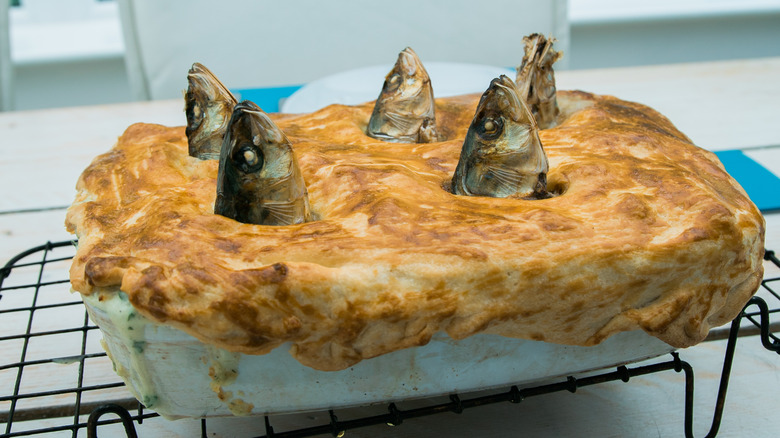
If I'm honest, not all dishes on this list are ones I enjoy, but everyone has their own tastes. A stargazy pie is a highly unique type of pot pie that originates from a fishing village called Mousehole in Cornwall. The pie is made from a mix of fish, eggs, and potatoes. What makes it unique is that the fish, usually pilchards, are baked with their heads (and sometimes tails) sticking out of the pie.
If the curious presentation doesn't put you off, then you may be in for a treat. The story goes that the village was starved of food, and this dish was created after an impressive catch by a local fisherman by the name of Tom Bawcock who braved a winter storm just before Christmas in the 16th century. The visible fish were probably a way to prove the pie was filled with the meat. Whether the story is true has long been debated, but those living in Cornwall still celebrate Tom Bawcock's Eve every year on December 23.
Steak and ale pie
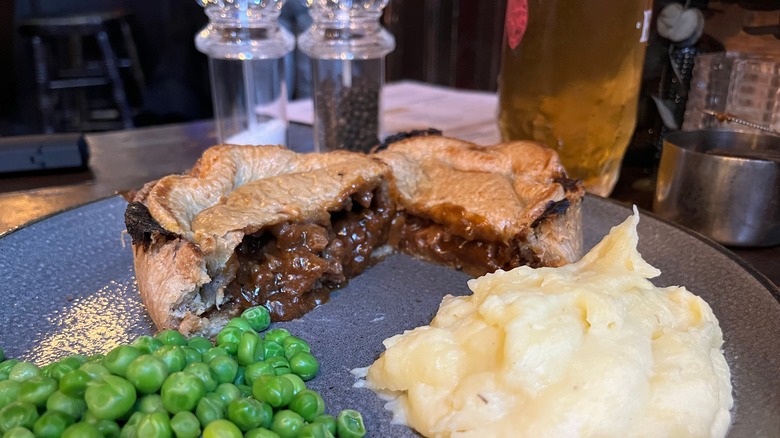
Pot pies are commonly eaten in much of the U.K. While some of these have classic fillings, such as chicken, there are others, like the steak and ale pie, that are a little more curious. As the name goes, this dish is made with tender beef. Malty ale is also used in the cooking process to give it a unique taste. Other ingredients, such as onions and mushrooms, can be added depending on your preferences.
The ale gives the gravy inside a rich and distinctive flavor that can be a welcome change from many other pot pies. With different regional ales used in the recipe, this dish tastes a little different wherever you enjoy it. The dish is commonly found in pubs and is one of what seems like countless variations of pies in the country. While not quite as quirky as the stargazy, the steak and ale pie remains one of the most unique.
Lancashire hotpot
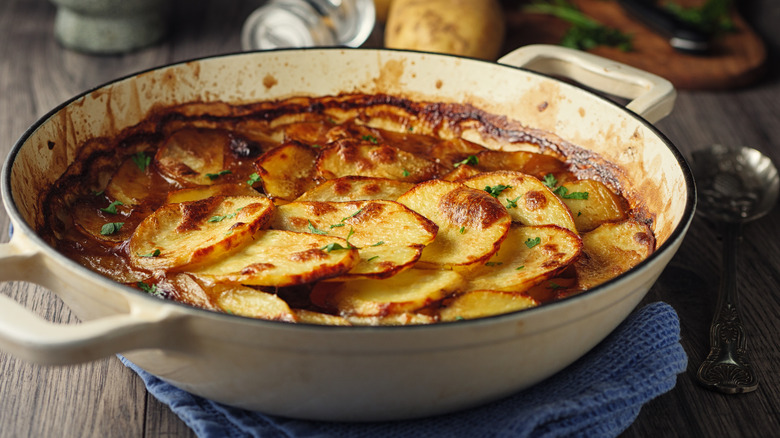
Quite a few of the dishes on this list come from the resourcefulness of low-income, working-class households. Food couldn't be wasted, so meals were often thrown together with the spare bits of food people had. The Lancashire hotpot uses poor-quality cuts of meat. People found that long cook times could tenderize tough mutton and make it a much more palatable dish.
These days this one-pot dish is more likely to be made from lamb, along with onions and other root vegetables. One of the unique parts of this meal is how it has a topping of thinly sliced potatoes that crisp up nicely as it bakes. Not for the last time on this list, it's a warm and filling meal for those cold days. The dish is still a traditional classic, especially in the Northwest where it originated.
Scouse
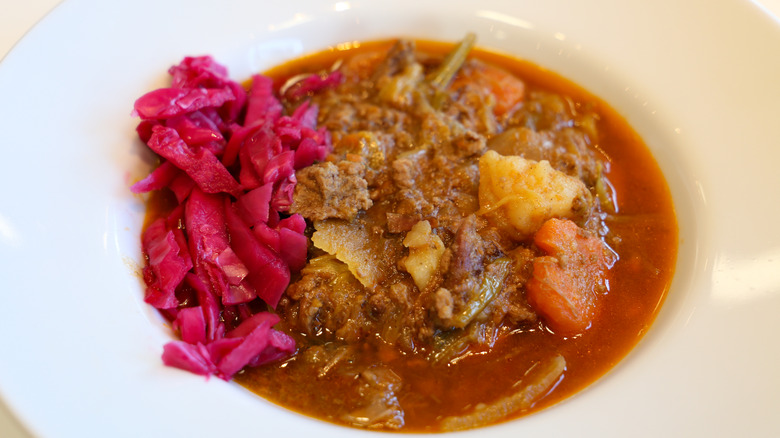
This is probably my favorite dish in the list and was created for similar reasons to the Lancashire hotpot in regard to being a hearty meal for the poor. This is a meat and vegetable stew that is usually made with either beef or lamb, or both. Potatoes, onions, and carrots are then added, and the whole dish works perfectly with some fresh crusty bread. There are many great slow cooker meals out there, and this is one you can add to the list.
When scouse is left to cook for a while, its beautifully warming aroma will fill your home. It's one dish here that probably doesn't have its origins in the U.K. It was a sailor's stew eaten across Northern Europe. With Liverpool having a thriving port, the stew became commonly enjoyed throughout the city. The dish is also why people from the city are called "scousers". It seems apt with Liverpool long having a beautiful mix of cultures and cuisines.
Coronation chicken
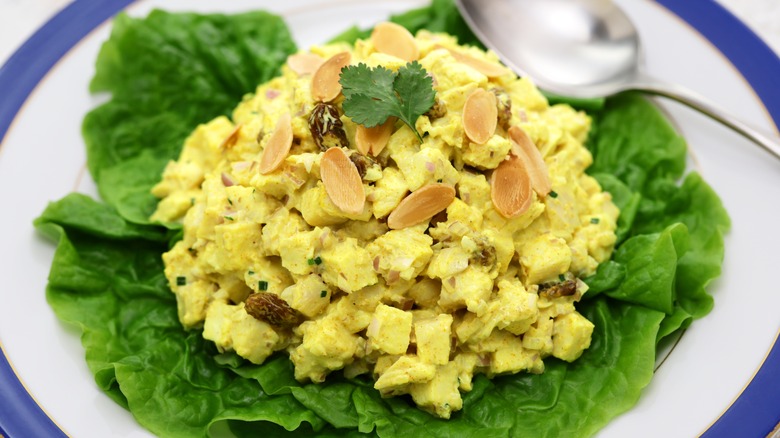
As you can already see, many of these dishes are intertwined with not only Britain's rich history but also the culture it has shared and adopted from other countries. Coronation chicken was created by the famous French-inspired cookery school, Le Cordon Bleu. Its students came up with the dish to celebrate the coronation of Queen Elizabeth II in 1953.
At its heart this dish is a cold chicken salad, but it's the creamy sauce that comes with it that helps set the coronation chicken apart. Along with the French creations of mayonnaise and crème fraiche, it uses turmeric and curry powder, spices that were quite novel at the time. It resulted in a unique dish the country hadn't experienced before.
Welsh rarebit
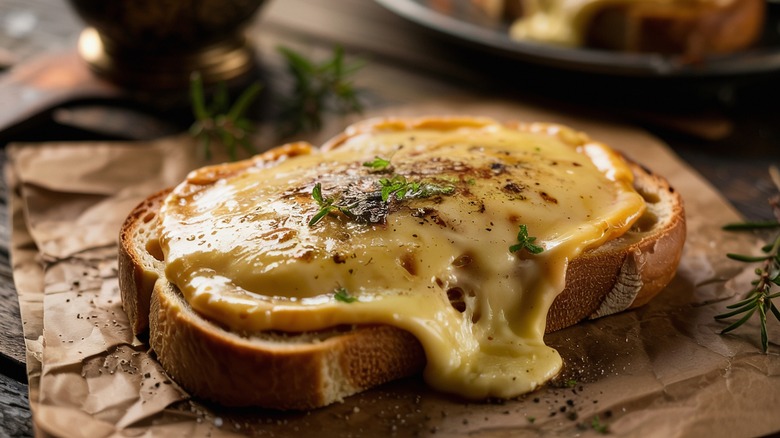
Here we continue the tale of weird names with Welsh rarebit. Firstly, there is no strong evidence that the dish actually originated in Wales. Secondly, "rarebit" is an alternative spelling rabbit. Thirdly, the dish doesn't even contain rabbit. It's thought possible that it was named as a jibe to the Welsh people who couldn't afford meat and used cheese as a substitute.
So, what is this non-Welsh, non-rabbit dish? It's effectively cheese on toast. However, it is a little bit more complicated than that. Instead of just being cheese, it's a savory cheese sauce that includes cheddar cheese, mustard, and Worcestershire sauce. There can also be a splash of ale, or you can simply add any ingredients that you wish, such as bacon. This is then poured onto toasted bread and grilled until it's bubbling. It's simple yet delicious.
Cullen skink
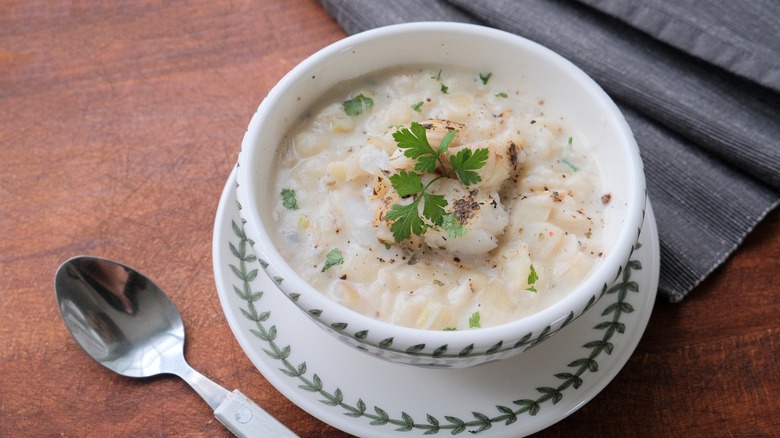
Cullen skink is a deeply comforting Scottish soup. The "skink" part of the name most likely comes from it being a Gaelic word for "essence." As for the "Cullen" part, that's because it comes from a fishing town of the same name in the northeast part of the country.
Haddock has long been a staple catch in the town, and it forms the heart of the dish after being smoked. Along with that, you put in potatoes and onions that are simmered in either milk or cream. This turns it into a thick soup, giving you that deep warming feeling when you taste it. The soup is versatile as it can either be used as a small starter or enjoyed in a big bowl as a main meal.
Sausage roll
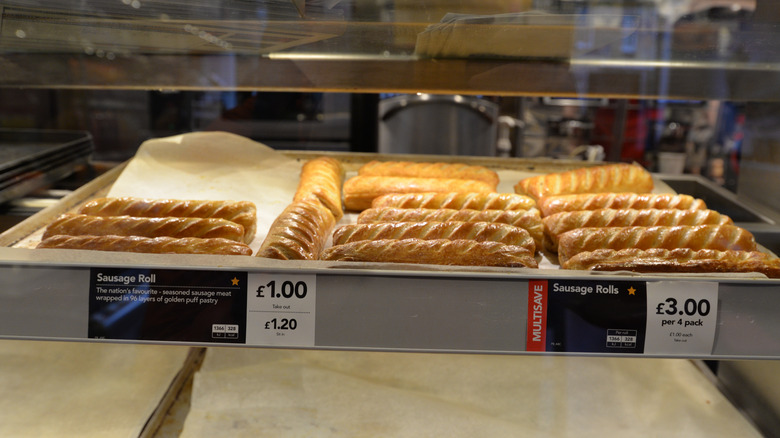
With some of the foods on this list, it's unsurprising they are not known more widely outside of the U.K. However, our humble sausage roll deserves wider recognition. It's a beloved snack food over here and is enjoyed either hot or cold and in small or large varieties. It's a simple meal as it contains sausage meat wrapped in flaky puff pastry. However, the herbs and seasonings intertwined in the sausage meat can vary.
It is also widely associated with the famous bakery chain Greggs, which has seemingly elevated the sausage roll to cult status. The bakery chain now sells over a million sausage rolls every day. Its sausage roll has even been showcased in the famous Madame Tussauds waxworks museum. Given there are many other bakery shops in the U.K. and cold sausage rolls are sold in nearly every food store, this humble snack has immense popularity. As with other foods, both the portability and affordability have always made it a hit with working people, whether they were coming from a Victorian warehouse or a modern office.
Jellied eels
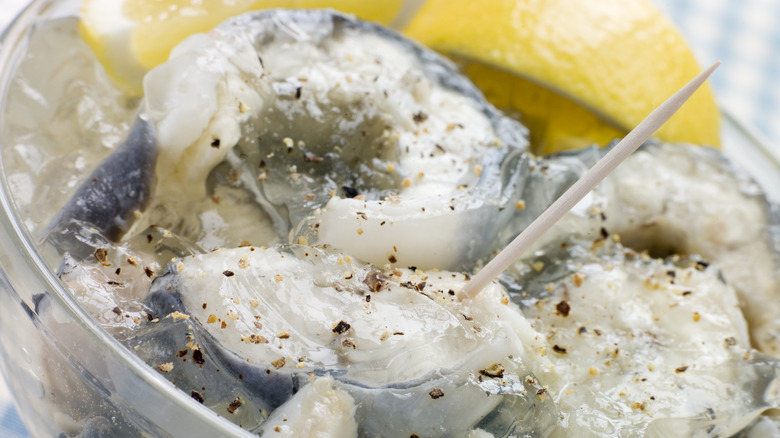
A lot of the meals I've highlighted on this list come from the innovation of the Northern working class. The jellied eels are another meal created by working people, but this dish originates from London, especially in the East of the city. The River Thames was full of eels in the 18th and 19th centuries, so it was an easy and cheap source of protein.
To make this dish, you simply throw chopped eels into a spiced stock. Due to the high level of collagen in the fish, this naturally sets into a jelly when it cools. Sadly, this is one classic British food that is on the decline. It never really gained widespread popularity outside East London, and it seems people have turned away from the idea of eating eels. They are still worth a try as it's another dish with deep historical roots.
Mushy peas
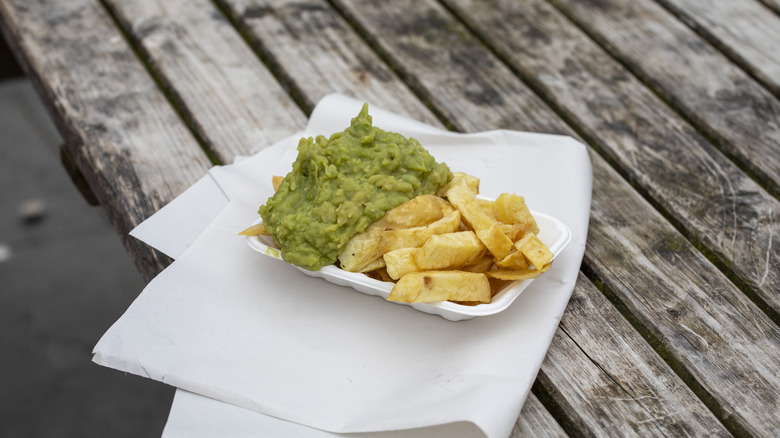
Any American who knows even a little bit about British food culture will know we eat a lot of fish and chips. It's no myth — we love them. What people may not know are some of the other British dishes that are associated with the chippy, which is a fish and chips shop. Mushy peas are a classic pairing for fish and chips, and they can be used in a wide variety of other meals. In contrast to others on this list, this food is exactly what it sounds like. But making it isn't quite as simple as mashing some peas.
Instead, marrowfat peas are soaked overnight and then simmered until they are soft. Following this, they are mashed with a little butter and added salt. This gives them a pureed texture and is again the result of Northerners trying to make the most of any affordable ingredients. It's an unpretentious and filling food that shouldn't be sneered at until you've tried it. There is also the added bonus of them being easy to eat rather than chasing garden peas around your plate with a fork.
Chip butty
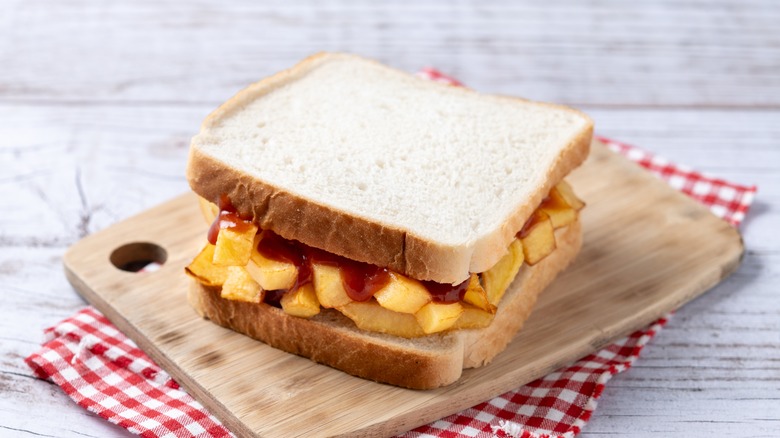
You probably already know that chips are a different thing in the U.K. In case you don't, chips are the name we give to french fries. American chips we call crisps. Another item commonly ordered from a chippy is a chip butty. What can be confusing is this can have different names depending on where you are in the U.K. It always starts with "chip," but it can also be called a barm, cob, roll, sarnie, piece, and bap, among other names.
The actual dish is as simple as it sounds. You put some chips in between some bread rolls (which are like large burger buns) and add whatever condiments you want. Since it is pretty much pure carbs, it's unlikely to be recommended by any nutritionist, but anyone who loves one won't care about that. For workers, it's a quick and cheap way to get full. Despite its simplicity, it remains a staple and will always be on the menu of any decent chippy.
Black pudding
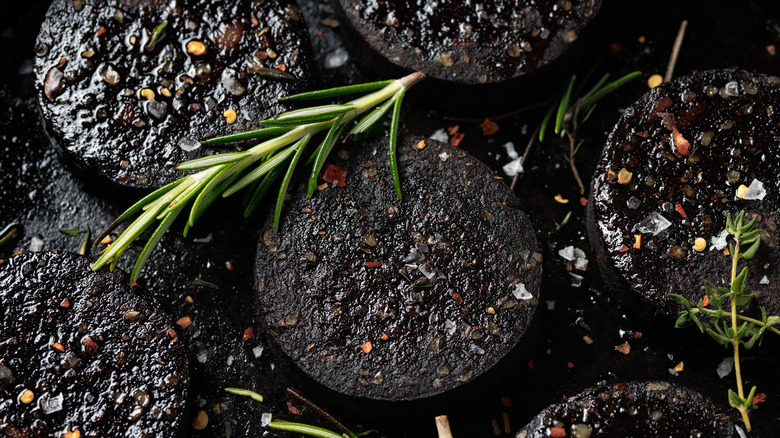
Objectively, I can see why Britian has a bad reputation for food, especially with the likes of black pudding. Two of the main ingredients here are blood and fat. Both of them usually come from a pig and are mixed with grains and onions, along with some seasoning. Traditionally, this was then encased in pig intestine.
If that sounds utterly disgusting, many will agree. However, it has long been a part of a full English breakfast for a reason, as others find it surprisingly delicious with its rich and savory flavor. As is a common theme with many British foods, its invention came from the need to use as much of an animal as possible in poorer times. It remains an acquired taste but has enduring popularity.
Flapjacks
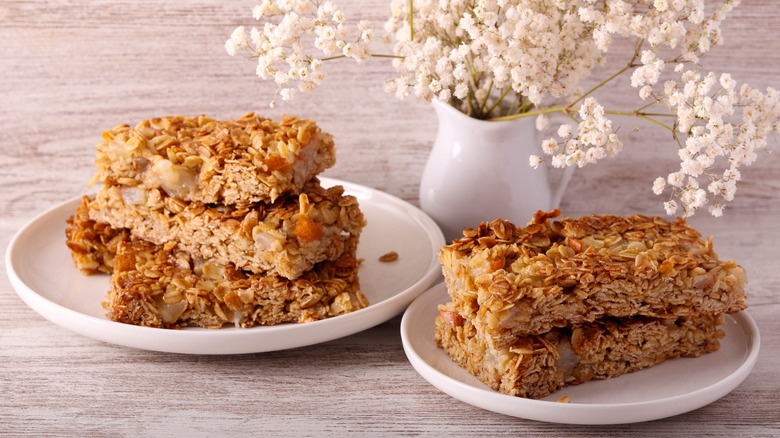
In Britain, flapjacks are not pancakes. Instead, they are chewy oat bars. The basic building blocks of a flapjack are rolled oats, butter, and golden syrup. Along with this, you can add your own small treats. Raisins and nuts are a common addition, but you can even add chocolate chips too.
Once baked, they have a moreish texture that works perfectly well with a nice cup of tea. They are also great as a snack, being a common addition to lunchboxes. They are simple to make and often made in large batches and then cut into rectangles. It's this versatility that also makes them a feature of school canteens. It's a uniquely British comforting snack.
Eccles cake
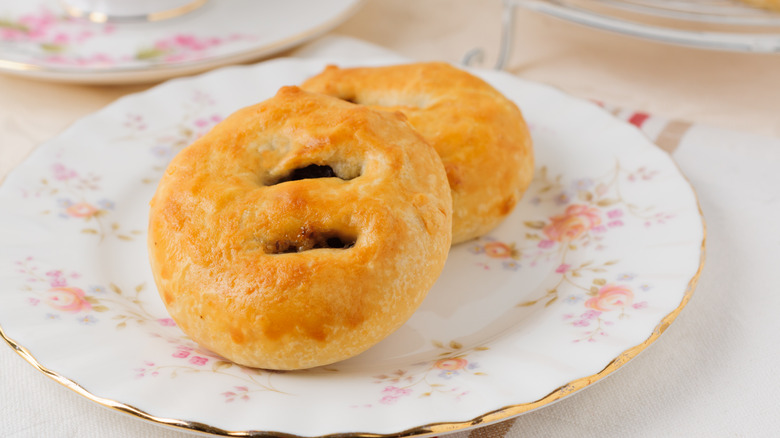
Continuing the common theme of misleading names, Eccles cake is not a cake. Instead, it is a small round pastry hailing from a town in Greater Manchester of the same name. Eccles cakes have been enjoyed in Britian now for more than 400 years and even endured a ban during the 17th century by religious puritans who associated the pastries with revelry.
In terms of the food itself, you get a beautifully crumbly outer casing of puff pastry with the inside being full of spiced currents. After being baked, this filling becomes both rich and sticky, giving it a unique texture. There are a few variations as you can use any type of dried fruit and get the same effect. As with the pork pie, Eccles cake has the portability that makes it a great snack when you're on the go or need a bit more in your lunchbox. As with much of British food, the history of the Eccles cake is intertwined with the history if the island itself.
Spotted dick
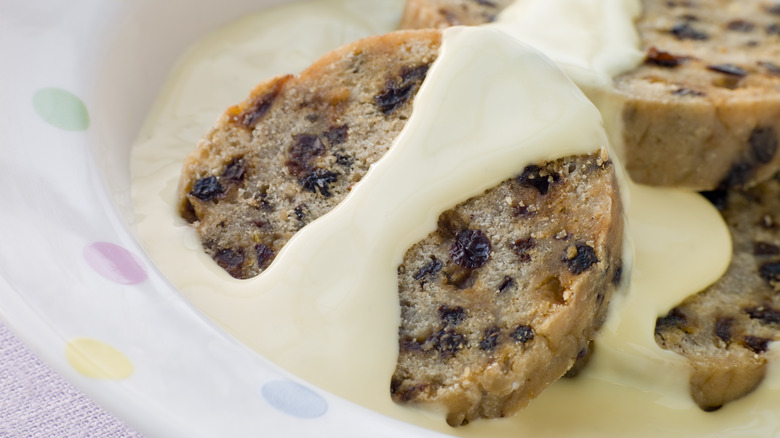
You'll be glad to know that the spotted dick is another dish that isn't what it sounds like. The humorous name is thought to come from the old English word for pudding, which is puddick. The spotted part simply refers to the dried fruits that are studded around the dish, which are usually in the form of raisins or currents.
It is quite simple to make as it's a steamed suet pudding that is usually served with custard. It has a dense yet moist texture that delivers its sweetness beautifully in your mouth. Along with people enjoying its quirky name, it has nostalgic appeal. However, it still stands on its own as a much-loved hearty pudding that can still be commonly found on pub menus.
Battenberg cake
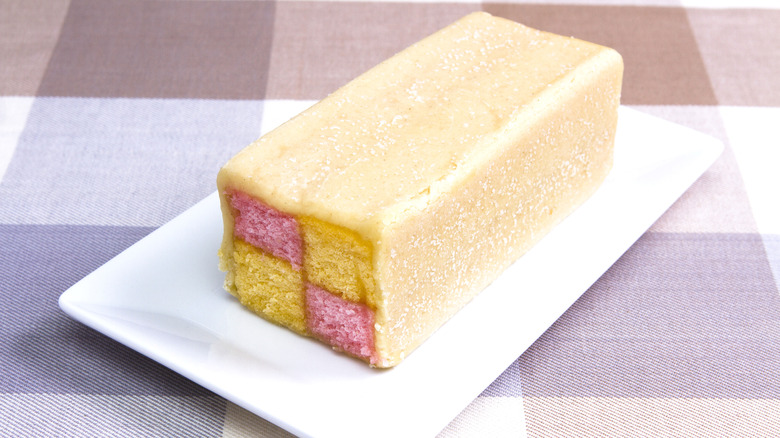
Coronation chicken isn't the only dish on this list that was made to commemorate a royal event, or so the tale goes. The origins of Battenberg cake are disputed, but it was reportedly created in 1884 for the marriage of Queen Victoria's granddaughter to Prince Louis of Battenberg. Regardless of the story, it's an instantly recognizable sweet treat due to its checkerboard design.
The pink and yellow pieces of sponge are held together with apricot jam and encased in a layer of marzipan. It's a whimsical design that has become commonplace whether you're having a picnic, afternoon tea, or simply fancy a tasty slice of cake. With the help of "The Great British Bake Off," baking treats from the islands have never been more popular.