

10 Tips For Growing The Sweetest, Juiciest Strawberries
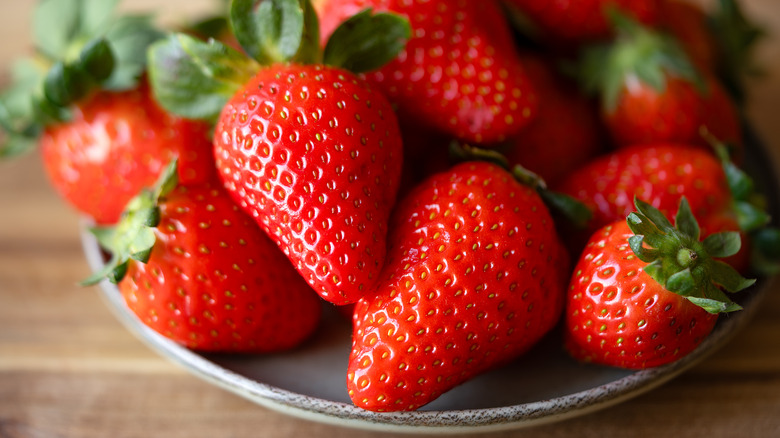
Growing vegetables is highly rewarding and a great thing to do. However, there's something special about tasting fruit that you grew yourself. Perhaps it's because they often need a little extra care, or because the additional effort makes the result taste sweeter. Strawberries are perhaps the best example of this, as they're relatively easy to cultivate, and tasting them straight from the stem is a real treat. As someone who owns their own business and sells strawberry plants, it's something I've been able to do time and time again.
Strawberries are similar to tomato plants in many ways. Once you know what you're doing, growing them is simple, but it's easy to make mistakes at the start. I have many years of experience now, but there was a time I made these mistakes myself. Here, you'll be able to learn from them so you can skip straight ahead to being an expert. This way, you'll not only be able to produce lots of strawberries, but ones that are beautifully sweet and juicy every harvest.
Understand your plant type and variety
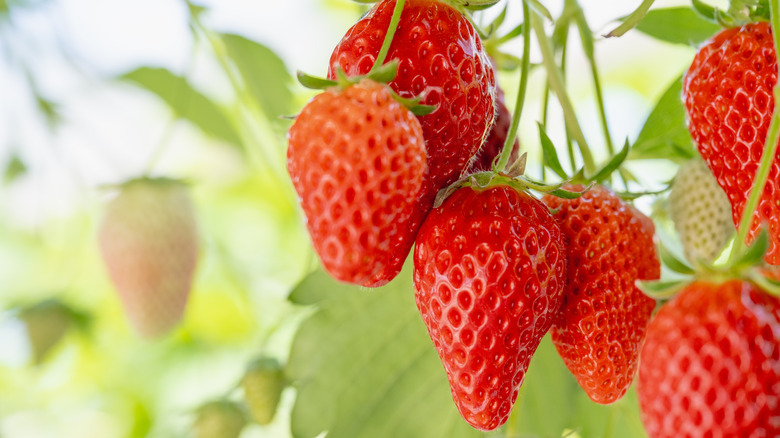
It's incredibly important to know the type of your strawberry plants before growing them. There are three main types you can grow: June-bearing, everbearing, and day-neutral. June-bearing strawberry plants produce one single large crop in the summer. Everbearing plants produce two or three harvests from spring into the fall, and day-neutral ones will fruit continuously until the first frost. Personally, I don't like having to harvest all of my strawberries once, and day-neutral plants are good for that. Within these main types, there are almost endless varieties to choose from. On top of that, there are hybrid seeds designed to get the best parts from multiple varieties.
Before going through all of that effort to nurture your strawberry plants, it's vital to know exactly what you are growing. It could be that you want the juiciest and biggest strawberries out there, or perhaps you are happy with smaller strawberries that come from pretty flowers. The right plant type can depend on your climate, as you may want a plant that is better suited to hot or mild temperatures. Due to this, it's hard to recommend just one type or one variety, as the right variety and type for you not only depends on your growing conditions but also on personal preference. Just make sure to do a little research before purchasing. Know when your plant will harvest, the growing conditions, how big the strawberries will be, and what they will taste like. That way, you'll be able to adapt to the needs of your plant and avoid a disappointing harvest.
Feed your plants properly
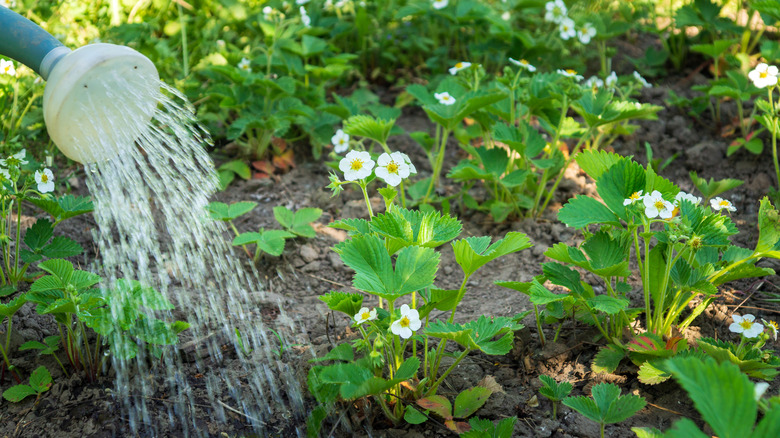
Strawberries need plenty of nutrients to thrive. This starts with the soil. A common gardening mistake is to overlook this step, but you want to plant your strawberries in well-composted and well-draining soil. This will give the plants good access to nutrients and ensures the soil holds moisture without becoming waterlogged. Planting into a container or raised bed is an easy way to control quality. If you're planting them into the ground, ensure that the soil is naturally good-quality or that you use plenty of compost. High-quality soil will be dark in color and should hold together when squeezed, but it should also be easy to crumble. Sandy or clay-heavy soil won't be ideal for strawberries. The presence of worms is also a good sign, as it shows there is plenty of organic matter that plants can use for nutrient intake.
Once you get the soil right, you need to feed your strawberry plant properly. This is easiest done with tomato liquid feed. I've never quite understood why it's called tomato feed, but this type of fertilizer is great for anything that fruits, as it contains a high percentage of potassium, which is crucial for fruit size. How often you should use your feed depends on the manufacturer, as they use different concentrations, so make sure to follow the instructions. Using a general fertilizer isn't advised because the plant will focus too much energy on leaf growth rather than fruiting. You'll still get a healthy plant, but the strawberries won't be as juicy.
Make sure to choose the right spot
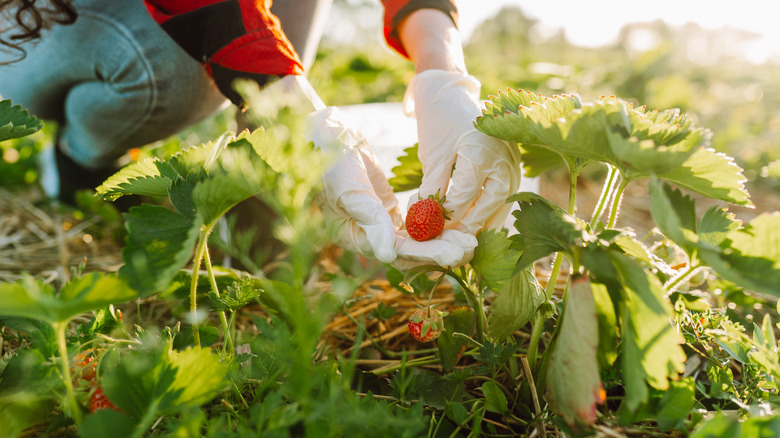
You'll never get sweet and juicy strawberries unless they get enough sunlight. They need at least six hours of direct sunlight per day — ideally eight or more. This sunlight will not only help the strawberries grow to their maximum potential, but also it helps to concentrate the sugars in the fruit. This will give them their maximum sweetness. Choosing the right spot isn't always simple, as everyone's space is different. A great idea for strawberries, and anything else you plant, is to track the sun through the sky and see which parts of your garden, porch, or balcony get the most sunlight.
Generally, the south face of a garden will get the most sunlight, but this can be affected by any buildings, fences, and trees around your yard. You also want to be careful about what you plant next to your strawberry plants. Brassicas, such as broccoli or cabbage, can compete for nutrients. Nightshades, such as tomatoes, are heavy feeders too, but can also quickly spread diseases. It's best to keep your strawberries in their own container or give them plenty of space. Space not only helps with ensuring they get enough nutrients, but it will also improve airflow. Sometimes it's impossible to get all of your plants in the perfect spot, but try to give them as much sun and free-flowing air as possible.
Keep your strawberries protected
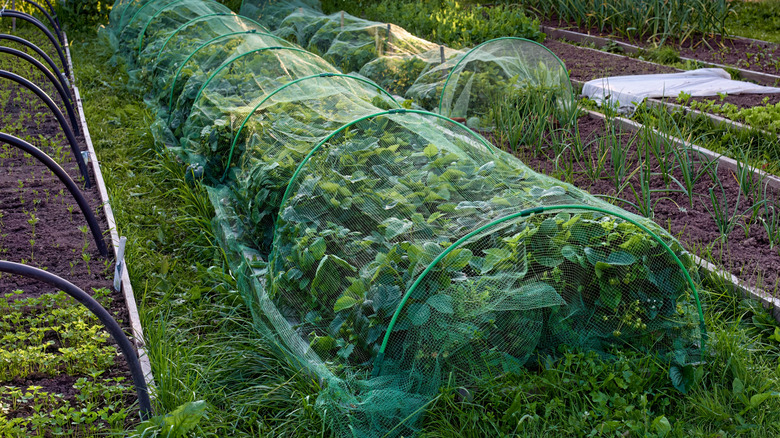
Strawberries are delicious. That's great for us, but sadly, birds, squirrels, and rabbits all feel the same way. They're only a few of the animals that enjoy a fresh strawberry. It's likely that at least one of them will be an issue, so you need to stop them getting to your fruit. This can be done in a few different ways. Personally, I like to use fruit netting bags. These individual mesh bags can be placed over your groups of strawberries. You could also use a mesh sheet to cover the whole plant, or even multiple plants if they are close together. Other options such as a grow tunnel or a greenhouse can give you more permanent protection. If you're growing your strawberries uncovered, decorative wind spinners will keep most birds away while not discouraging important pollinators.
Covering the plants or placing them on an elevated surface like a patio will protect them from slugs and snails. Slug pellets can be used if you don't mind killing slugs, but make sure to use organic pellets that aren't harmful to pets and wildlife. Non-lethal alternatives include using cooper tape, something sharp like eggshells, or coffee grounds. But the easiest way to keep slugs away is to spread straw over your soil. Not only does this discourage slugs and snails, which don't like straw, but it will keep your strawberries clean and off the wet soil.
The animal attack doesn't end there. Aphids and spider mites are common strawberry pests. These can usually be controlled with a spray of mild soap and water. Alternatively, you can use organic insecticides to deter the pests without causing issues to other wildlife. Due to these potential pests, it's always wise to regularly check your plants to quickly identify and solve any issues.
Encourage beneficial insects and pollinators
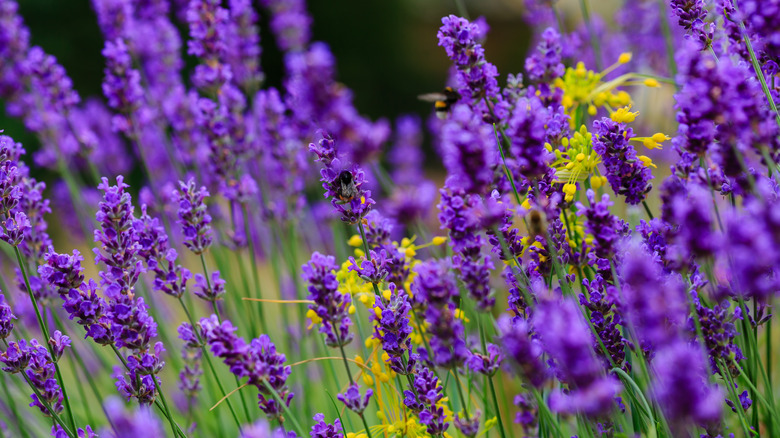
There are many animals you want to keep away from your strawberry plants and others that you want to attract. Strawberries are heavily reliant on pollinators. A well-pollinated plant has a much greater chance of growing a large, well-formed berry. To attract more bees, plant sources of easily accessible nectar nearby, such as lavender, foxglove, and daisies. Bees are also attracted to bright plants such as those with blue, purple, and yellow blooms. Herbs such as rosemary and sage are also great companions, as they lure pollinators, but their strong smell can also deter pests.
Ladybugs and lacewings are also your allies. You can even buy them from some garden centers and online stores for this very reason. They feed on aphids and spider mites, helping to keep your plants pest-free. If you see them on your strawberry plants, you can rest assured that they are indirectly helping your strawberries grow. Many of the same plants that attract bees will also attract these insects, too.
Not that you particularly want to attract them, but wasps are also excellent pest killers and can also help with pollination. I touched on it before, but this is why you want to be extra careful when using a pesticide. Make sure you find an organic one that will attack the specific problem pest without harming anything that may actually be helping your plant.
Water your plants properly
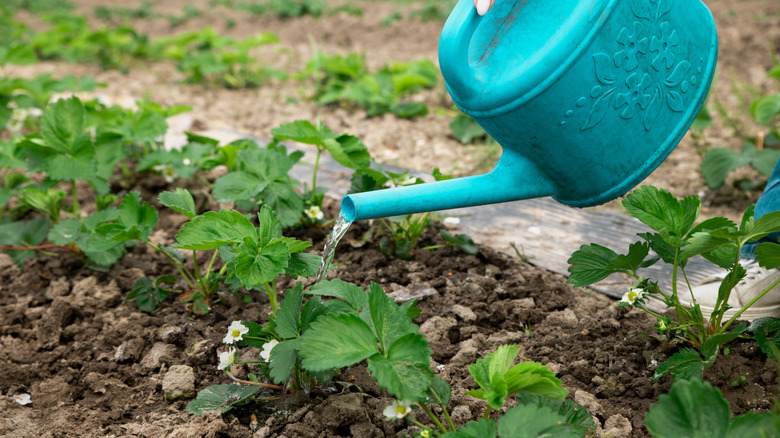
Strawberry plants don't develop extensive root systems, which can be an issue for two reasons. Firstly, even a small drought will dry out the top layers of soil, leaving your plant with minimal moisture. Conversely, it makes your plant more sensitive to roots being waterlogged during rainy periods, as the entire root system can be quickly and easily oversaturated. As with many fruits, the soil should be constantly moist. Don't mistake moist for being sodden; if you press your fingers into the soil, it should feel damp but without any visible pooling of water. When watering, you want to do so deeply so the water can soak through to the soil and allow the roots to grow downward, where they can access more moisture. I generally like to water each plant for around 30 seconds at a time. How often I do this depends on the weather, but as long as the soil is staying moist, you're on the right track.
Ideally, you also want to avoid the leaves when watering, as this can increase the chance of fungal disease. Morning waterings are also better, as the water won't evaporate as quickly and has a better chance to soak into the soil. Due to your soil's need to retain moisture, it's also a great idea to use mulch. This is simply any type of material you place around the plant to help the soil retain moisture by protecting it from evaporation. Decorative options include stones, bark, and gravel, but you can also use natural options such as leaves, straw, grass clippings, and even corn husks. The golden rule is not to let your plant dry out completely, as this will stress it out and affect fruit quality.
Choose the right container
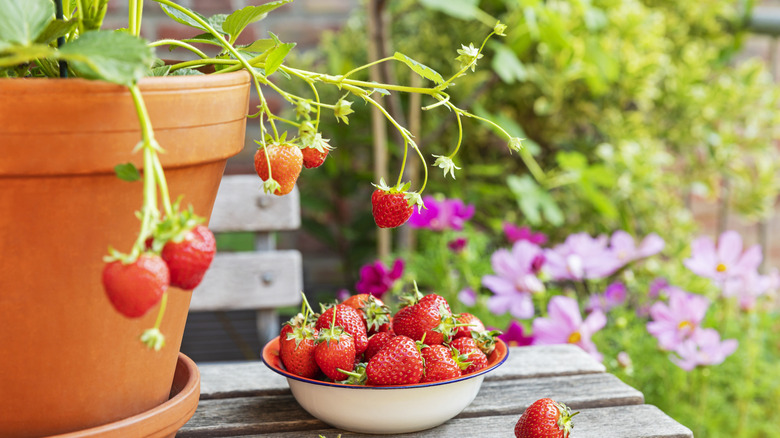
One of the great things about strawberries is how they can be grown in a wide variety of containers. I've found that these containers only need to be around at least 12 inches wide and 8 inches deep for healthy growth. This also means strawberries can be grown in hanging baskets, which can be an especially good idea if you choose a trailing variety with beautiful flowers. Whatever container you choose, you still need to ensure you meet all of its growth requirements. One of the key features of your container needs to be drainage holes. Without them, water will pool at the bottom, and the soil will become waterlogged, causing root rot. Make sure your soil can easily let water pass through. If this is an issue, using perlite or vermiculite can be a good idea, as they improve aeration and drainage.
With containers, it can also make pest control easier, such as applying copper tape around the circumference to deter snails. However, the smaller the container, the more you need to worry about watering. This is because the plant will have less soil to draw moisture from, and therefore it dries out more quickly than with large containers. The same applies to nutrients, too. Strawberries are versatile in how they can grow in a wide range of containers, but always be mindful of how your container will affect the needs of the plant. If the plant doesn't have enough soil or is constantly drying out, the strawberry fruits will never grow to their full potential.
Discard or replant strawberry runners
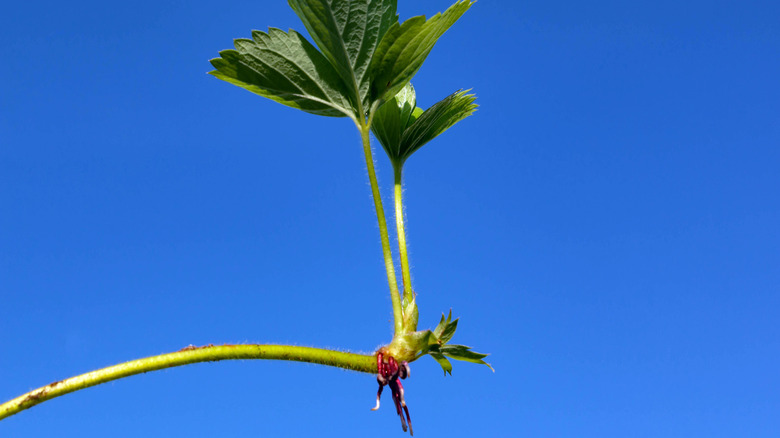
Most strawberry plants send out runners. These are long stems that spread out from the parent plant way beyond the other leaves and flowers. I love runners, but they can be a problem. I love them because they mean you are getting a brand-new strawberry plant. The aim for these runners is to spread out, root in any soil they can find, and grow into a new plant. But this is why they can be an issue. When left unchecked, they can cause your strawberry patch to unexpectedly grow and become wild. Importantly for your berries, the strawberry plant puts a lot of energy into creating them. Removing them allows the plant to focus all its energy on growing the largest strawberries instead of spreading growth. This is especially important for June-bearing varieties, which only produce a single crop.
Depending on your preference, either cut them off as soon as you see one or wait for roots to form and replant them. Don't leave them alone. If they are touching the soil, they will start to root automatically. In this case, you can cut them off the mother plant and replant them. If your runners aren't touching the ground, all you need to do is cut them off and gently press the roots into a compost-filled pot. Replanting runners allows you to create a new generation of plants, but make sure to get rid of any excess ones so your plant isn't wasting energy.
Harvest them at the right time
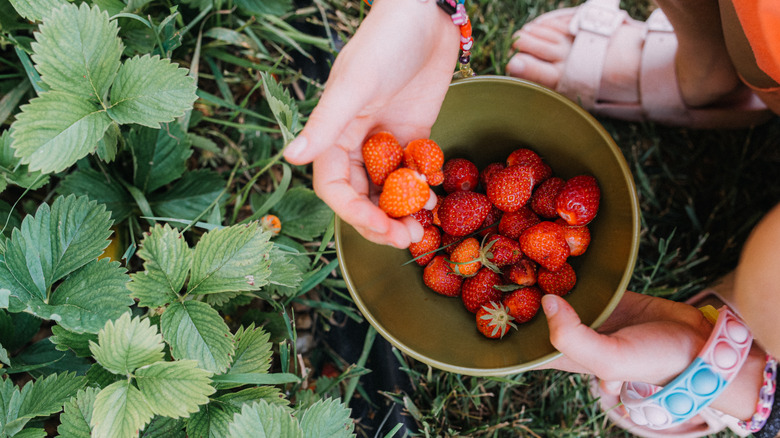
The final step when it comes to enjoying the juiciest strawberries is harvesting them at the right time. Some fruits like tomatoes can ripen after being harvested, but strawberries don't. Picking them too early will result in a blander flavor and a tougher texture. Thankfully, it's pretty easy to judge when they are ready, as it all comes down to appearance and texture. When ripe, they will be red all over and plump to the touch, just like the fresh strawberries you buy from a store. While it's easy to spot when they are ripe, the timing is more difficult.
In my experience, strawberries will only be at their peak juiciness for about one or two days on the stem. After this, they will start to overripen. They can still be tasty if they're overripe, especially if you are using them for a strawberry dessert recipe, but their texture will eventually become mushy. In peak season, it's best to check your strawberries every day.
Unlike raspberries, which are incredibly easy to pull off the stem, strawberries are much more difficult. Pulling them can result in bruising, so it's best to either pinch them off carefully or snip them off. Mornings are the best time to harvest any fruit, as this is when they retain the most moisture and sugars before the heat of the day kicks in. Make sure to put them in the refrigerator, as they can last up to three days when chilled.
Have a long-term plan for your plants
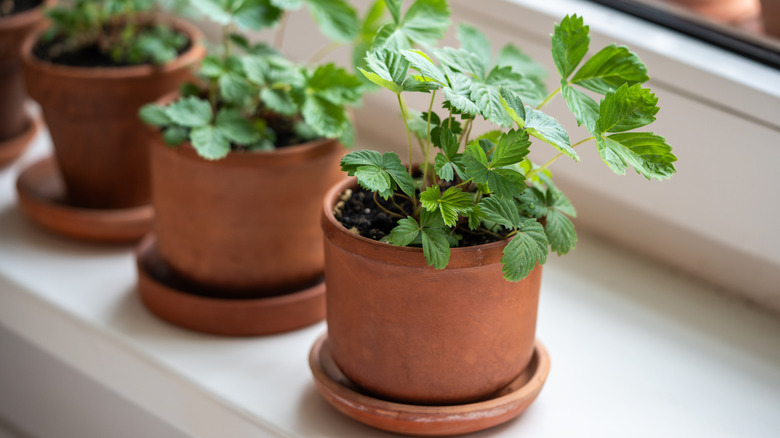
Strawberries are perennial plants. This means they go dormant over the winter but will come back to life in spring. With the right care, you can enjoy continual harvests every summer for several years. So you need to have a long-term plan. A common mistake is leaving them after harvest with no aftercare. The crown of the strawberry plant is what you want to protect, as this is the central root ball from which all leaves grow. The first step to after-season maintenance is pruning any old leaves. This not only reduces the risk of pest and fungal issues, but it also allows more space for vigorous future growth. An added bonus is that it also makes the plant more visually appealing.
Strawberries are remarkably frost-resilient. However, if you live in an area where temperatures can drop below freezing, you want to protect them with mulch or covers just in case they are damaged by extreme cold. While perennial, strawberries have around three years of peak production before they gradually reduce. Due to this, it's a good idea to practice crop rotation and either use seeds or runners to create new plants to eventually replace your current producers. Taking these steps will ensure that you can have a plentiful supply of strawberries year after year.