

How To Design A Bohemian Kitchen On A Budget
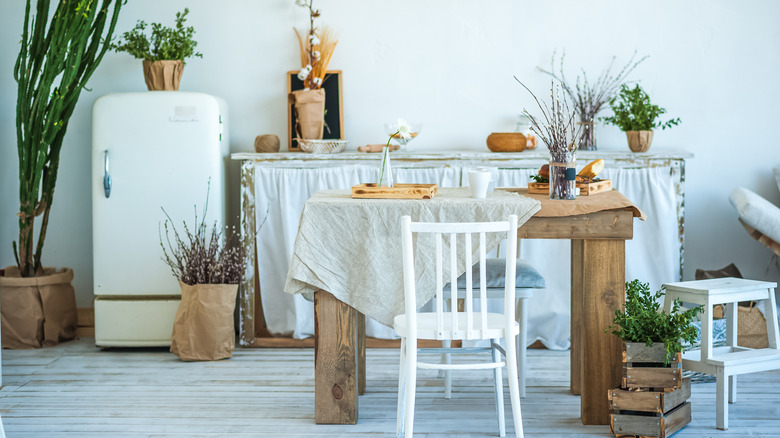
Textures, colors, and patterns, opting for a bohemian kitchen can bring all of these mood-enhancing elements to everyday cooking routine. Unlike other look-but-don't-touch trends dominating the world of interior design, bohemian kitchens invite you to come right in, get cozy, and stay a while.
The first thing you need to keep in mind when attempting to recreate this eclectic spirit in your kitchen? There is no room for showroom-style finesse here. Instead, every nook and cranny of your bohemian kitchen needs to be filled with thoughtfully curated touches, such as mismatched chairs picked up from a thrift store or DIY pottery that you put together over the weekend. If it doesn't have a story attached, it doesn't belong in a bohemian kitchen.
Not quite sure how to nail that rustic-chic vibe without blowing a hole through your budget? The experts are here to help. Mehek Malhotra, founder of Giggling Monkey Studio, and Laura Medicus, interior designer and owner of Laura Medicus Interiors, pool together their best insights to help you capture that free-spirited bohemian vibe in your kitchen without obliterating your budget. From the cabinet finish that doesn't cost a fortune to the celebrity-loved secondhand finds to stock up on, find it all here.
Vintage and thrifted furniture
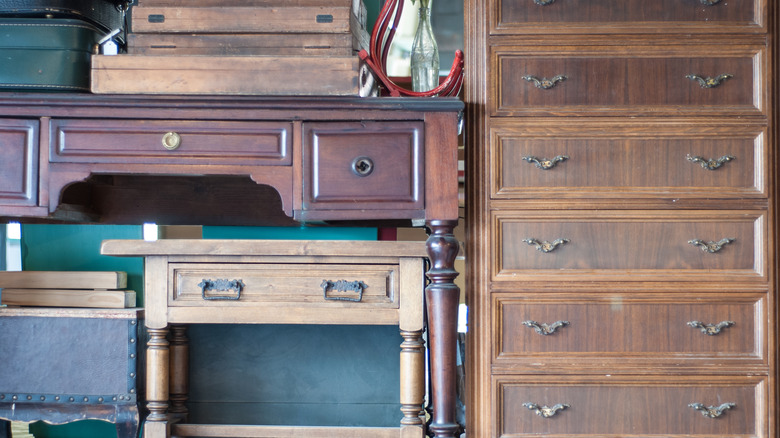
According to Mehek Malhotra, truly valuable vintage finds don't need to scream to make their presence felt. Instead, they draw the eye with heart-warming details, such as a chipped wood or sun-faded marks and the promise of something that's built for longer than a trend cycle. In her experience, it helps to skip the gleaming showrooms. Instead, make a beeline for the messy, disheveled corners of Sunday flea markets and estate sales. Keeping a vigilant eye on local Facebook groups can also help — the photos might be bad, but she promises that the prices will be kinder to your pocket.
Laura Medicus agrees that finding vintage pieces is a time-intensive effort but a satisfying one, nonetheless. "Go to your local Goodwills and Salvation Army stores with regularity. Start following local resellers on Instagram. Most of them put up new pieces on their feed daily," she says. The most important skill of all is being ready to act immediately once you spot the pieces that you like.
Once you have discovered the soulful pieces that will add personality to your bohemian kitchen design, it helps to consider how you will style them. "The trick to blending these finds with modern pieces is not to aim for harmony but for tension; a distressed teak bench next to a sleek steel island, a cane-backed chair beside a ghost one," Malhotra says, supporting the idea that things don't have to exactly match to work well.
Distressed cabinets
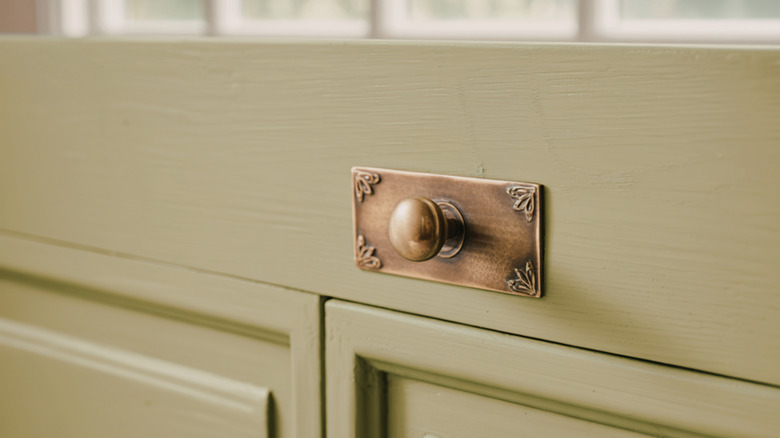
The worst thing you can do when attempting a bohemian kitchen design is to hem in your creativity with rigid rules and diktats. Bohemian design is a bit of a free spirit that refuses to play by the rules — imperfections aren't considered as flaws but rather, as a marker of authenticity. Lean into the memo by opting for design elements that echo this eclecticism by eschewing showroom-perfect cabinets in favor of distressed finishes.
"An older wood piece that's been repurposed as a kitchen cabinet adds so much warmth and life to a kitchen," Laura Medicus raves. If you are looking for a DIY project to keep you busy on long weekends, distressing your existing cabinets can make for a creatively satisfying endeavor. Your options range from lightly sanding your cabinets to using antiquing glaze for creating an intentionally aged finish — just remember to seal in your handiwork with a polyurethane resin as a protective seal on the surface of the wood.
However, you will want to ensure that your distressed finds do not cross the line and veer into shabby territory. For those looking to play it safe, Medicus recommends pairing one new element between two older ones. Picture contemporary appliances sitting among distressed cabinets and a vintage marble countertop in your kitchen. At the end of the day, she believes that the balance needs to look intentional and purposeful.
Secondhand baskets for storage
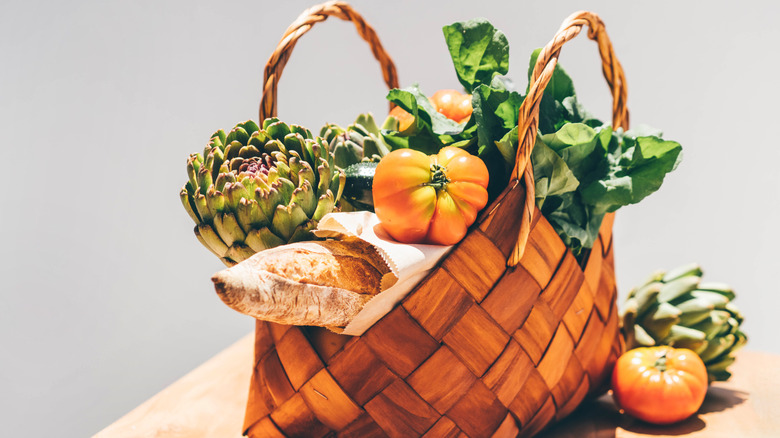
There is nothing quite like an antique basket for adding character to your kitchen — but you don't have to take our word for it. Lifestyle maven Martha Stewart is so devoted to the art of collecting vintage baskets that she has a small house on her Bedford property for storing the collection she has amassed over the years. Laura Medicus believes that they are an affordable storage solution for bohemian kitchens — light on the pocket, heavy on style. "The warmth and texture that they bring to a kitchen cannot be underestimated," she enthuses.
If you are looking to get started on your collection, it helps to follow Stewart's lead and start frequenting auctions and antique fairs. For making the most of this storage staple, Medicus believes that different shapes can be put to use for different purposes. Rectangular baskets make for a handy way to store vegetables in your pantry with uniformity. Rounded and flat baskets, meanwhile, are born to be flaunted on your kitchen island. Also, use them to keep your salt cellar and oil in one place.
If your kitchen is starved for space, you will find that hanging fruit baskets is an easy way to free up crucial inches on your countertop. For ensuring that the end result doesn't look too matchy-matchy, Medicus recommends varying the shape and size of the baskets you are hanging to add some laid-back charm to the space.
Macramé decor
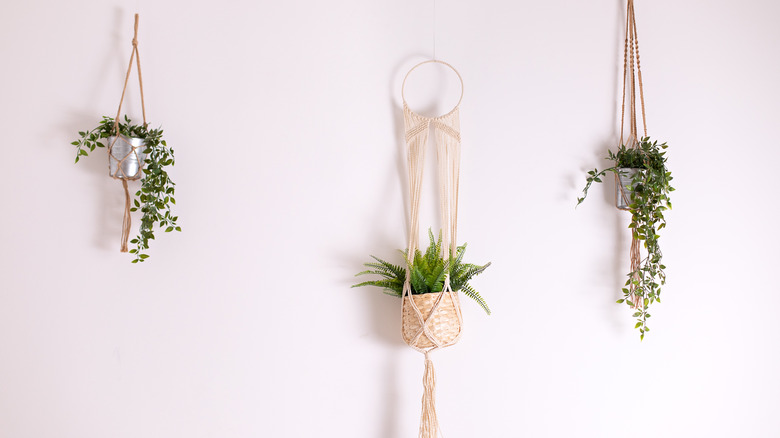
There are some kitchen decor elements that will instantly take you back in time to the '70s — and macramé is chief among them. While this craft dates back to the 13th century, 1970s America was known for its bold rejection of mass-produced goods. This led to the rise of natural crafts and fiber arts, such as macramé. Since the hippie culture of the 1970s served as a thriving ground for bohemian design, you'll want to borrow this decade's love for all things macramé.
"The softness and organic look to macrame really kicks that boho vibe into overdrive," Laura Medicus affirms. Beyond just being a decorative flourish, macramé can also be put to use around the kitchen as a functional member of the design ensemble. She recommends using a hammock for hanging fresh fruit and produce under your cabinets — just one of the many clever storage spaces you are ignoring in your kitchen.
Mehek Malhotra believes that macramé should be used in a bohemian kitchen as subtle punctuation rather than a bold statement. Her favorite ways to make the most of this tactile decor? Hang a macramé plant holder in an unused corner, use a knotted panel for concealing open storage, or allow a tasseled wall hanging to soften the harsh outlines of your kitchen cabinet. "Too much and it becomes a themed cafe; just enough and it feels like someone thoughtful lives here. Think texture, not trend," she advises.
Rattan accents
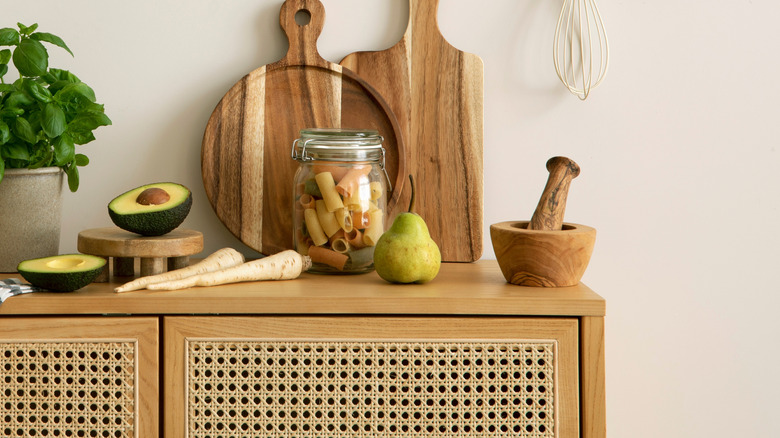
When putting together a bohemian kitchen on a budget, you will want to look for inexpensive additions that can emulate the warmth and charm that this design is known for. Rattan accents check all these boxes, but that is not all that they do.
Need proof? Look no further than Ina Garten and her love of rattan kitchen decor that extends beyond mere aesthetics. The ability to let air through makes rattan ideal for honoring the shelf life of perishable goods in the kitchen, such as bread. A true marriage of form and function, rattan decor also makes for an eco-conscious choice as it regenerates rapidly with a minimal environmental footprint.
"To get some texture and interest in your kitchen, think about using a rattan mesh or webbing in your cabinet doors instead of glass or a solid panel," Laura Medicus suggests. A hanging rattan pendant is also counted among the dining room light fixtures that will elevate your space. Within the kitchen, Medicus recommends hanging woven pendant lights above your island to add drama and texture to the space. Once done, she advises opting for classic rattan cafe stools or chairs at the island to embrace indoor-outdoor living.
Mismatched chairs
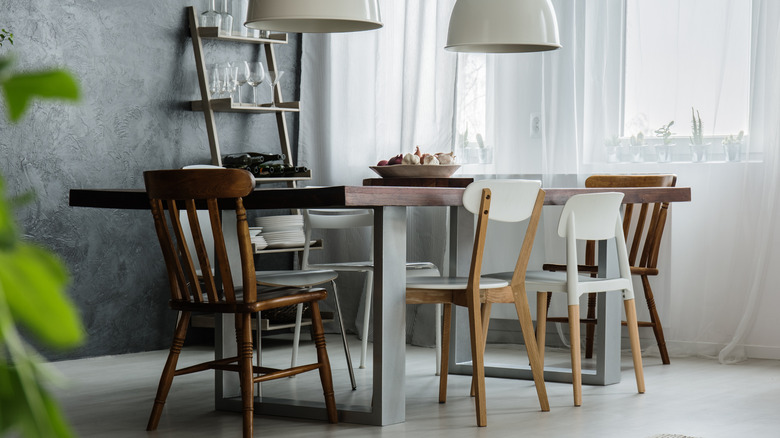
If you are looking to mix modern and vintage elements in your kitchen, mismatched chairs are only too happy to help. There might be symmetry in a coordinated set of chairs, but there is also endless charm and personality in opting for intentionally mismatched designs and textures. The former could have been picked at random from a showroom catalog with a blindfold on, while the latter signals to your dinner guests that every element in your kitchen has been chosen with care.
"Mismatched chairs only work when they commit," Mehek Malhotra states. However, you will want to ensure that your kitchen doesn't descend into visual anarchy with chaotic, clashing patterns. "Don't just pick random seats and hope for chemistry; treat them like characters in a film. Maybe one's a vintage Thonet, another a painted wooden school chair, a third an industrial stool," she adds.
The silver lining, of course, is that mismatched chairs can be added to your kitchen without inflating your budget because finding one-off chairs at thrift and vintage stores is an easy task. But there are certain design missteps to be wary of — you'll want to avoid drawing up six different chairs with six varying patterns at the breakfast nook and calling it a day. Instead, she recommends opting for a unified color palette that can connect all the chairs.
Colorful rugs
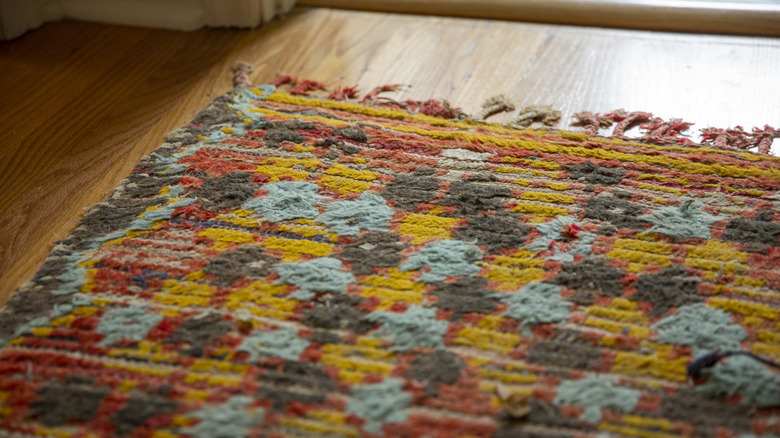
When you are standing on the cold, unforgiving floor next to the stove for long periods of time, you will welcome the reprieve of a soft rug to sink your toes into. However, rugs can pull double-duty in a bohemian kitchen by serving as a crucial element for carrying your design narrative forward — as long as you know the colors and prints to opt for.
For Mehek Malhotra, rugs in kitchens are the visual equivalent of poetry on a spreadsheet. "...Not strictly necessary, but they soften the space in ways that matter," she quips. When deciding the colors, she recommends favoring jewel tones instead of bright hues. Ikat and tribal prints can also make for an eye-catching addition to a bohemian kitchen design. "Think of the rug like a statement scarf, it can be bold, but it should still pull the outfit together," she says.
Laura Medicus concurs but recommends choosing the fabric with care. "Try to avoid natural fiber rugs in kitchens. They look great but the fibers will absorb any stain that comes their way and they are very difficult to clean," she cautions. Instead, she recommends opting for vintage rugs layered over a quality rug pad to prevent any slips. Once you have chosen yours, where should you be placing them in the kitchen? "Runners work well along galley-style counters, while smaller rugs can sit by the sink like quiet rebellions against cold tile," Malhotra says.
Mix-and-match textiles
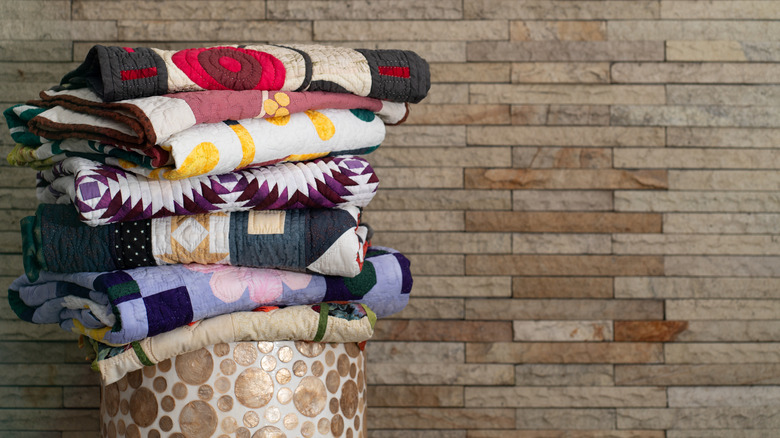
"When mixing textiles, think of it like a dinner party. No one should match, but everyone should get along," Mehek Malhotra declares. And it is easy to grasp the wisdom behind her words. Overly staged touches never belong in a bohemian kitchen — instead, you will need to opt for finishes that look like they have been curated over time, such as mismatched textiles.
In terms of the color palette, she recommends reaching for soft earthy hues and faded greens. Regarding how and where to use them, primarily think of pillows and seats, but don't forget you can also play with fabric panels on open shelves. It shouldn't look pristine.
To bring some method to the madness, Laura Medicus recommends grounding your chosen colors with one cohesive element. "Select fabrics and wallpapers that have at least one color in common to help pull your look together," she advises. Hues that mirror the accent colors of your kitchen are always welcome, and she also recommends opting for washable fabrics for practicality. Linen makes for a handy option as it becomes softer every time you toss it in the machine. Cotton upholstery also makes for a durable workhorse that doesn't fade easily over time.
DIY pottery
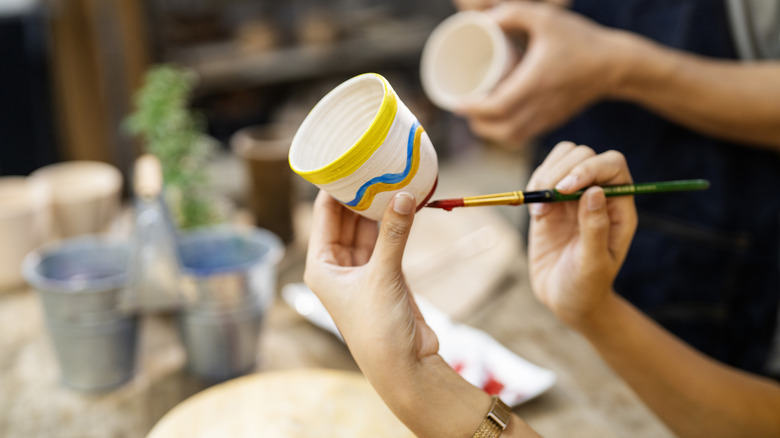
There is no denying the hard work that goes into creating artisanal ceramics, but there is also no ignoring the fact that a good quality piece will wreak havoc on your budget. If you are looking to add a handcrafted touch to your kitchen decor, it helps to get creative by making your own DIY pottery. Don't have the space to stash a pottery wheel and kiln in your crowded backyard? Simply sign up for a local pottery workshop and create the pieces you'd like to see in your kitchen. It helps to start out small with pinch pots and miniature planters before graduating to bigger projects, such as vases and decorative bowls.
Laura Medicus has found that DIY pottery makes a bigger visual impact when it is grouped together rather than hiding in isolated corners around your kitchen. "Install some open shelves or use an open-front cabinet and group your homemade pottery on the shelves together," she suggests.
For a cohesive finish, you can pair pieces in the same color family together, although she has also found that it helps to tuck in a few copper or glass pieces for contrast. To get your kitchen ready for a dinner party, fill a homemade vase on your kitchen window with freshly snipped herbs from the garden.
Terracotta bowls and jars
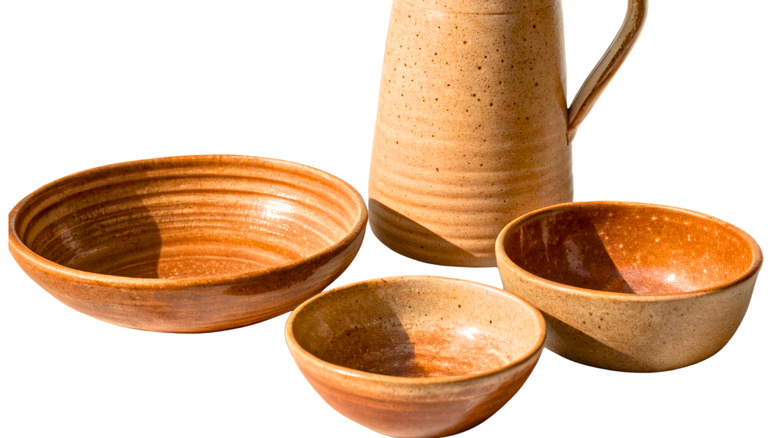
You may have discovered that upcycled clay pots can deliver the perfect crust when making bread. But you can also call upon this earthen material to deliver the perfect finishing touch for your bohemian kitchen. As a more pocket-friendly alternative to prized porcelain, terracotta won't overwhelm your budget. And its earthy hues will also slot in seamlessly with the nature-inspired lens that is so central to bohemian design.
"Terracotta brings such great warmth and charm to a kitchen," Laura Medicus gushes. From yogurt-making to storage, she believes that this bohemian staple has endless uses around the kitchen. "Pantry staples that need moisture and coolness are a good fit for terracotta containers. Think of things like brown sugar, marshmallows, and garlic," she says.
While this material is easy on the pocket, it does require some effort for adequate maintenance in the long run. Since terracotta is a porous material, it will happily soak harsh detergents. As a rule of thumb, it helps to only use warm water for cleaning terracotta crockery and opting for natural cleansers, such as baking soda or lemon, to dislodge stubborn stains. Once it has been air-dried completely, you can store yours with a layer of bubble wrap to prevent any chipping — although bohemian design does seek beauty in imperfection, so there is no loss here.