

Are Americans Really Ditching Their Dishwashers?

The way Americans eat at home is constantly evolving, with new gadgets and technology appearing seemingly every year, but one appliance that seems like it should never go out of style is a dishwasher. Washing dishes by hand was long one of the most arduous tasks in the kitchen, and the ability to pop dirty dishes in a high-quality dishwasher and forget about them until tomorrow was one of the biggest breakthroughs that helped reduce domestic work for Americans. But even more modern developments have some calling the utility of dishwashers into question.
So are homeowners really ditching their dishwashers? It doesn't seem so. While there are some trends like the rise in food delivery that could be leading to fewer people using their dishwashers, none of the measurable stats we have about them show declining usage. The easiest to see is in sales. While this doesn't prove people are using their dishwashers, sales have grown steadily in recent years, and a report from Future Market Insights revealed that the dishwasher market was expected to have an estimated value of $1.2 billion by 2025, and $2.1 billion by 2035. If people have stopped using their dishwashers, there is no signal in the sales numbers.
Food delivery is on the rise, but people are still using dishwashers at the same rate

One of the biggest claims around the supposed decline in dishwasher usage is that a reliance on delivery means fewer dishes at home. There is no doubt that use of services like DoorDash and Uber Eats has risen, with almost 30% of Americans saying they order food for delivery at least once a week, according to YouGov. That's up from 24% in 2019, per The Atlantic.
This is backed up by a Residential Energy Consumption Survey that claimed 20% of people who own dishwashers use them less than once per week. However, the trends tell a different story. Back in 2015, just before food delivery exploded, the U.S. Energy Information Administration reported the rate was 20%. That is essentially no change in dishwasher usage over eight years, despite big jumps in food delivery.
There's also a claim that more compact urban construction makes it hard to maximize small kitchen space for dishwashers. However, the vast majority of U.S. housing growth is in suburbs and exurbs, not dense city centers, and while home sizes in the U.S. have shrunk slightly over the last decade, they are still near historic highs.
Using a dishwasher is still a big saver of both time and money
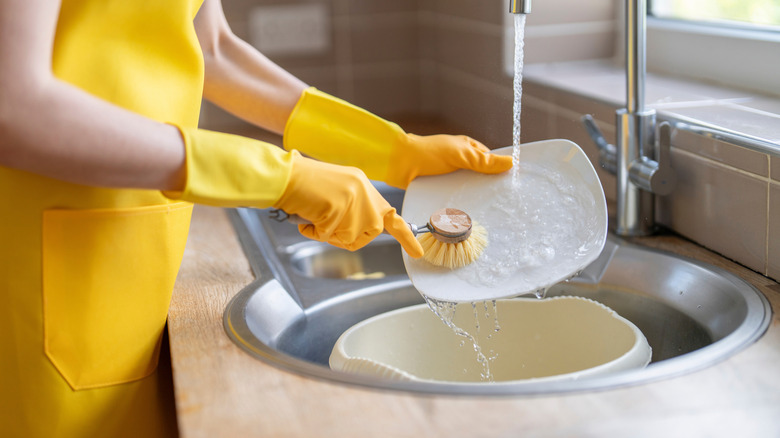
The last possible excuses for why people may be ditching the dishwasher are that they take a long time to clean dishes, and the expense of them favors doing dishes by hand. Normal dish cycles on major brands now take around two hours to complete, but that is hands-off time that people can leave to run when they are sleeping or working on something else, and very few situations actually require the more immediate results of hand washing. The Environmental Protection Agency (EPA) estimates dishwashers save people an average of 10 days of work per year.
As for money, dishwashers are clearly the better choice over the long term. The average cost of buying and installing a dishwasher is around $1000, but with increasing efficiency standards, dishwashers are estimated to save more than $450 a year versus hand washing, via the EPA.
It turns out some percentage of Americans simply don't like using their dishwasher for whatever reason, but that number hasn't budged in the last decade, and there is no sign of any slowdown in the dishwasher market right now. In fact, even if people are cooking less, dishwashers are still such a great modern convenience that even more people should probably be using them.