

10 Fruits To Bake Into Upside-Down Cake That Aren't Pineapple
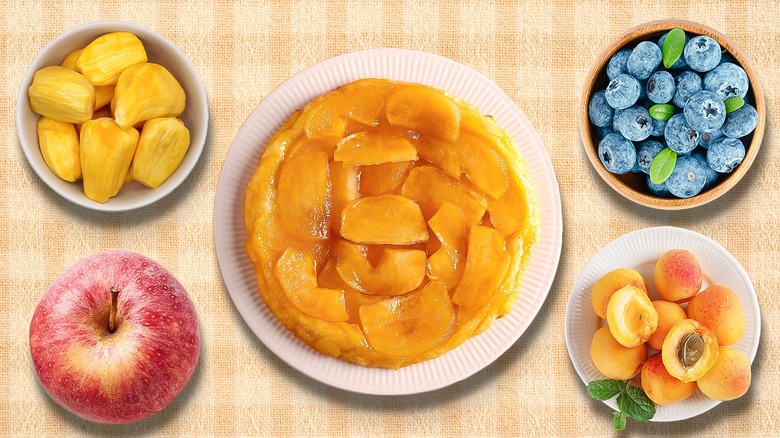
Why has the pineapple upside-down cake taken a backseat in recent years? Although it has a vintage feel, the upside-down cake is the ultimate dessert that's ready to make a resurgence. This unique treat incorporates cake, typically a dense one, along with ultra-sweet fruit and a glaze-like topping. It's never dry, it's never flavorless, and it can be relatively easy to make. And best of all, upside-down cakes are beautiful, no icing needed. While we work on their re-launch in popularity, let's consider some tweaks that may not only modernize the dessert, but also add more complex flavor. As a recipe designer and chef, I love working with vintage recipes and adapting them to fit a particular need. Sometimes that means altering the concept, but in this case, it's best to keep its structure of fruit on top, cake on the bottom. However, who says that fruit needs to be pineapple? There are plenty of fruits you can bake into upside-down cakes that aren't pineapple.
While adjusting the fruit, it's also important to consider the congruency of the full recipe. While maraschino cherries often complemented pineapple, other fruits, spices, herbs, and flavors might be more appropriate to pair with your new fruit selection. In addition, the texture of the cake might benefit from some altering, perhaps incorporating a heartier or rougher grain. Finally, the sweetener chosen to highlight the already sweet notes of the fruit can make all the difference. Let's not default to white sugar when there are so many more flavorful options out there. Now, grab your apron and measuring spoons, and let's get baking.
Orange
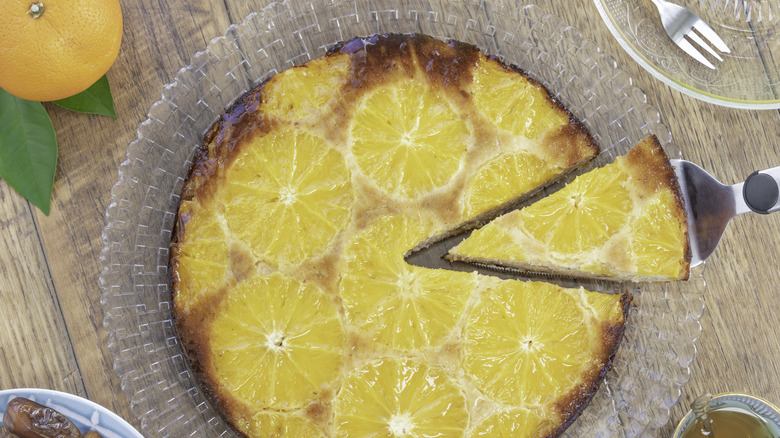
Pineapple is a tropical fruit with a pulpy texture and an ultra-tart and sweet flavor. Can you think of any other fruits that fit a similar description? Oranges, although more delicate and less tangy, can absolutely replace pineapple in an upside-down cake, rind and all. Firstly, you'll want to cut cross sections of your orange, creating small disks for orange goodness. I like to add a layer of parchment paper between the pan and the fruit for easy flipping, so start by placing your orange circles directly on the parchment paper. Over them, I like to drizzle honey to help with the intensity of the sweetness and caramelization process. Oranges and honey are a perfect match, and you can even use orange blossom honey to add to the effect.
For the cake itself, consider mixing in cardamom. Cardamom is an underused spice, in my opinion. It has a wonderful smokey citrus-like flavor that can be used in both a sweet and savory capacity. It's warming and slightly spicy and has a subtle yet detectable mint-like freshness. No wonder it pairs so beautifully with both oranges and honey. If you'd like to play up on the orange coloring, add a small amount of turmeric to your batter. The flavor will go undetected, and it will give the batter more warmth. Whenever using citrus in your baking, be sure to include the zest. Add the citrus zest right in the batter, and if you're feeling daring and bold, consider using some rosemary down in the trenches with the oranges.
Apple
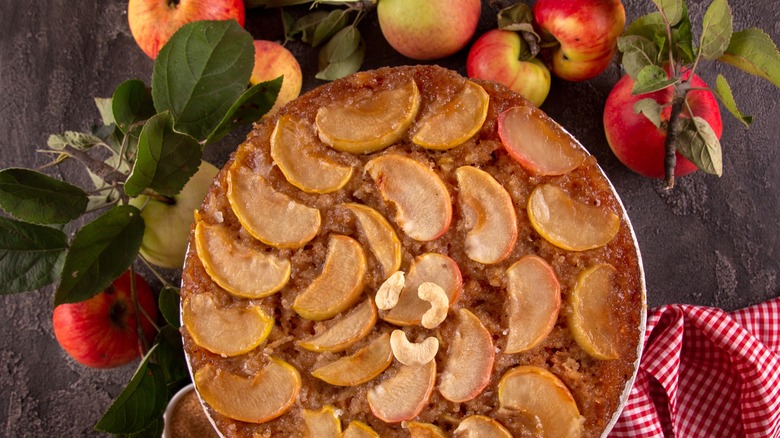
Come fall time, everything is apples, apples, apples up in New England. There is nothing like freshly squeezed cider, except for perhaps apple crisp. But let's be real. Everyone and their brother brings apple crisp to fall-time potlucks. It's time to switch it up. Instead, consider using that massive bag of apples (that you picked yourself, I might add) in an upside-down cake. There are so many directions you could go in, but a crowd-pleasing option would be to incorporate cinnamon and maple syrup into your creation. Do this by mixing in plenty of cinnamon, nutmeg, allspice, ginger, and other warming spices into the batter, and then mix another generous amount into the apples.
Arrange your cinnamon apples in the base of the pan and drizzle them with maple syrup. Top with the spiced-up batter, and there you have it. Alternatively, try a salted caramel apple upside-down cake, and enjoy the sticky, buttery, salty classic pairing of caramel and apples. Don't hold back on the cinnamon here, either. Choose the best apples for baking: Cortland or Granny Smith. But if you've picked a variety, then roll with whatever option you have on hand. However, it's best to avoid baking with McIntosh, Red Delicious, and Gala apples to avoid a watery, mushy mess. If your recipe calls for any liquid in the cake batter, like whole milk, try a 2:1 ratio with milk to apple cider. Add a little extra oil to the mix to bring back any fat lost from the swap. This will give your cake an extra boost of apple-flavor.
Jackfruit
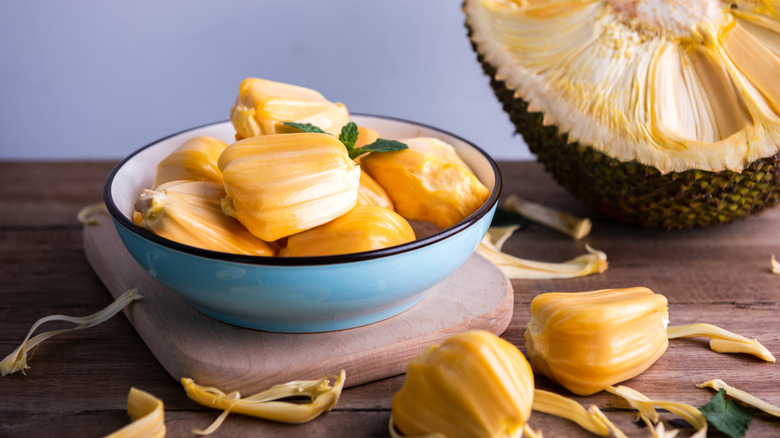
Ever heard of jackfruit? If you haven't, you're not alone. Jackfruit is a massive, tropical fruit that's ultra spikey, green, and heavy. It's likely you haven't seen whole jackfruit in the grocery store, but you may have come across it canned. The flesh looks somewhat like pineapple and has a similar stringy texture, although it's less intensely sweet. It's most popularly known as a vegetarian pulled-pork swap, but it can and should be used in a dessert capacity as well. If you buy canned jackfruit, be sure to really wash the salty brine off, but it's best if you can get your hands on fresh jackfruit. If you're going with fresh jackfruit, take your time breaking it down, and be sure it's fully ripe, as it will be sweeter.
Jackfruit works magically with brown sugar or molasses. There's something about the burnt caramel-like intensity of flavor that pairs beautifully with the mild and chewy fruit. Brown butter, vanilla extract, and a little lime juice can all help to bring the jackfruit upside-down cake together. Consider serving it with butter pecan ice cream while it's still hot, and enjoy this dessert all year round, as it's both tropical and comforting. To lean more into the tropical aspect of the jackfruit, increase the amount of lime juice used, and serve with coconut ice cream or coconut whipped cream. You can even top with toasted coconut shreds to really send the message home.
White peach
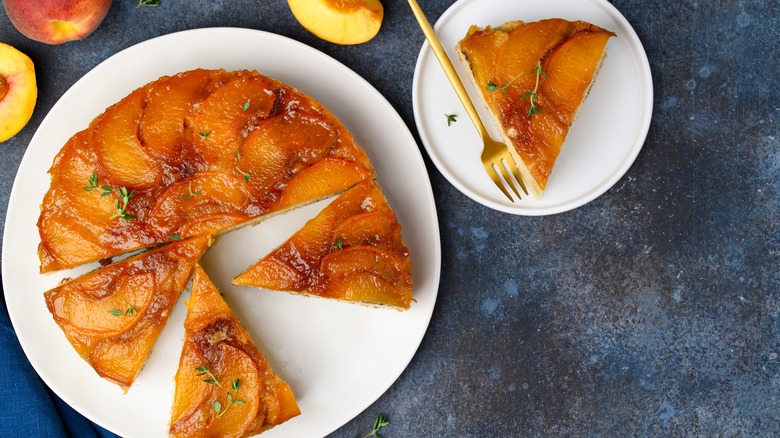
One of my favorite fruits to bake into an upside-down cake that isn't pineapple is white peaches. Yes, you can certainly use yellow peaches for a stronger, tangier flavor and will be perfectly happy with the results. Freestone peaches would be your best variety option here. However, I like to use white peaches because they are sweeter, and then I add my own tanginess with citrus. The aesthetic of a white peach upside-down cake is also very delicate and whimsical. It makes for a perfect dessert to serve at a garden tea party.
Because white peaches are rather mellow in flavor, aside from their intense sweetness, I like to keep the supporting ingredients fairly simple. Just a splash of vanilla extract or vanilla paste will do the trick. Alternatively, try using almond extract. Almond flour can also be used in place of some of your regular flour, and although it has a more coarse mouthfeel, it also melts in your mouth and has a toasted nutty flavor that plays beautifully with peaches. Honey can be used as a sweetener, as both peaches and honey have a similar floral undertone. And don't forget to use lemon juice and a small amount of lemon zest to help add a little punch to the dessert. If you're feeling fancy, top the cake with edible flowers and fresh lemon peel for extra whimsy.
Blueberry
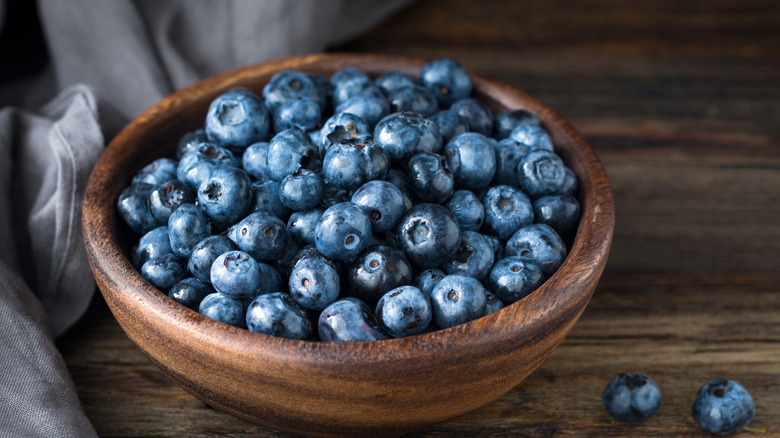
Living up in Maine, I have learned that just about everything can incorporate blueberries. Blueberry barbecue sauce, pickled blueberries, blueberry salsa, blueberry wine ... the list goes on and on. Although a bit less radical, blueberries are a fantastic choice of fruit to bake into an upside-down cake, particularly if you've chosen to make it with wild Maine blueberries. Blueberries are known for sinking in desserts, so why not embrace the problem by baking blueberry desserts upside down? Wash and sprinkle those bad boys into the bottom of the pan, and mix them with lemon juice, along with some butter and some honey or maple syrup.
For the batter, consider taking direction and using some polenta in place of about ¼ of your flour. You could also use corn flour for a finer mouthfeel. This will add some texture, as blueberries are a lot softer than pineapple. There is something about a blueberry lemon polenta upside-down cake that is so flavorful and delicious. In addition, consider using some lemon zest in your batter. Plus, a small dash of turmeric can create a more intense polenta appearance and contrast beautifully with the deep blue of the blueberries. Just the tiniest pinch will do for a subtle yellow glow. This antioxidant-packed dessert will be sure to become a summertime classic in your household.
Dark cherry
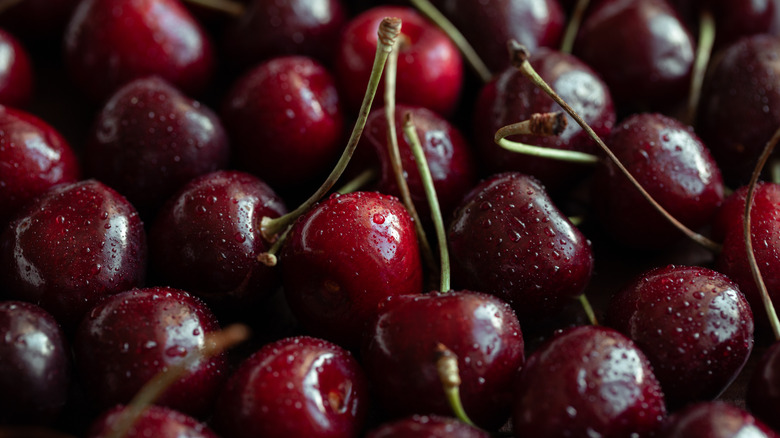
Okay, let's talk about intensity. Dark cherries should have more of a spotlight in baked goods and desserts, as they are the deepest and most intense of the stone fruit family (or at least at the top of the list). Bing cherries, sand cherries, Van cherries, English Morello cherries, Kordia cherries, Tieton cherries, or even lapins cherries work best. Essentially, look for a darker coloring when selecting the type of cherry to use in your upside-down cake. Cherries can hold their own with dark chocolate, so if you've ever considered a chocolate-based upside-down cake, then cherries should be your fruit of choice. However, my favorite pairing has to be dark cherries with lemon and thyme.
Use lemon juice along with your dark cherries, sweetened with a little honey or maple syrup. Mix lemon zest into your batter, along with a small amount of thyme. Alternatively, you could use thyme mixed in with the cherries, and leave the batter a bit more mellow, accenting the fruity top. In addition, consider serving your dark cherry upside-down cake with a little smear of mascarpone. It can help to mellow the intensity of the fruit, and what better pairing for fruit and herbs than cheese? If that feels like too much of a stretch, consider mascarpone ice cream, or just vanilla ice cream or gelato.
Pear
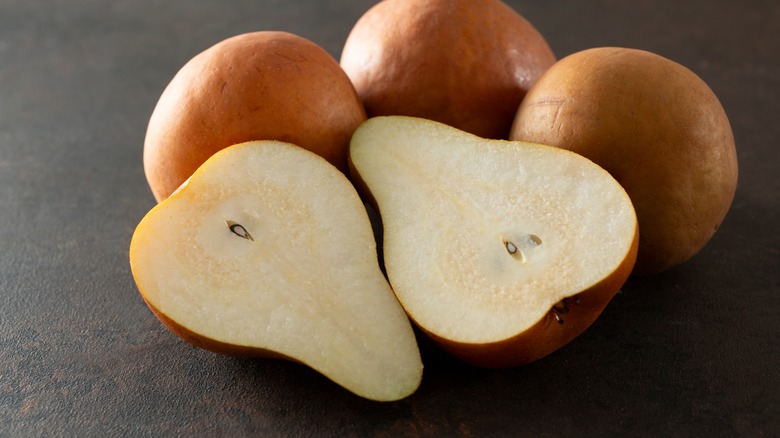
Pears are known for their honey-like mellow sweetness, with very little tartness. But pears can also be mushy, so it's important to know your pears and select the right one for baking. Bosc pears tend to hold their shape best, so if your goal is to create a flawless pear upside-down cake, then she's your gal. Because of the delicateness of a pear's flavor, it's important to not overwhelm the palate with too much competition. I like to flavor the pears themselves with honey and brown butter. The butter will add a little fat to elevate the consistency and create a richer mouthfeel. If you'd like to add some tanginess, add a little lemon juice to the bottom of the pan as well.
Next, let's talk about the cake. Ginger spice can be a mouthwatering ingredient to pair with pear (see what I did there?), but be sure to add it in moderation. Cardamom is another wonderful option that's subtle enough not to overwhelm the pears. For an alternative sweetener, consider using date syrup. It has a rich, brown sugar-like flavor without the intensity. It almost tastes like roasted vanilla (which you can also add to the batter) or maple syrup. It's also popular in the health-food community as a sweetener that won't spike your blood sugar quite as much as most refined sweeteners. Serve with a simple vanilla ice cream or sweet cream ice cream and a sprig of chamomile, flower and all.
Grapefruit
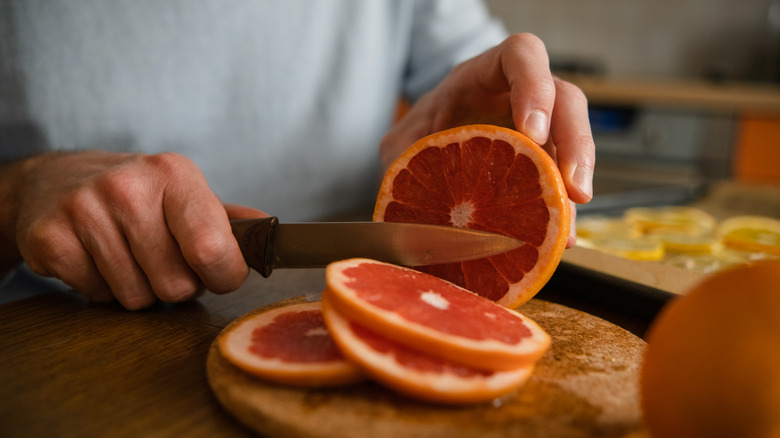
Unlike oranges, grapefruits have a less-sweet, more bitter orientation. I absolutely love grapefruit-flavored baked goods because their bitterness and distinct flavor play up the contrast between the classically rich and dense nature of baked goods and the light and tangy freshness of grapefruit. Because grapefruit is so tart and tangy, I like to use extra virgin olive oil in my upside-down cake batter. Ever heard of olive oil cake? It has a similar mellow bitterness, along with floral notes, and the ever-so-delectable smoothness and denseness of a rich and buttery olive oil. Consider using honey as a sweetener to highlight the botanical, floral notes.
In your cake batter, use honey as well. It's a fantastic sweetener and is so much more flavorful than white sugar. If you're feeling herby and want to play up on those botanical notes, add a little rosemary to the cake mix. Rosemary is intense and can easily become overpowering, so just add a small amount of toasted or dried rosemary. Uncooked, it might play up too much on the bitterness of the grapefruit. Like you would with an orange, leave the rind on and cut the grapefruit into cross-section disks to lay in your pan as the base. The pink coloring will be very aesthetic, and the outcome is unique and intensely flavorful. Just don't skimp on the honey!
Apricot
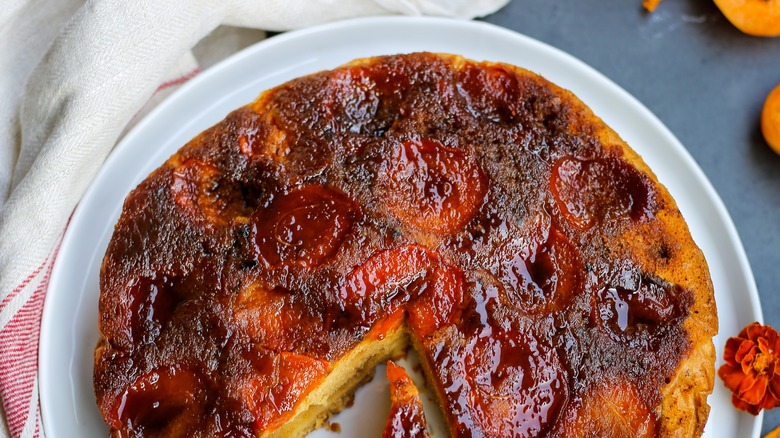
Among the legendary stone fruits, apricot is perhaps the meatiest. It's dense, chewy, smooth, and juicy all in one fuzzy little package. Fresh apricots are a must for making an upside-down cake. You can slice them into cross sections or half-moons for your base. Honey is an obvious choice as a sweetener for stone fruit, but feel free to experiment with date syrup and brown sugar with butter as well. If you lean in the direction of using honey with the fresh fruit, consider also mincing in some fresh ginger and lemon rind. This will make for a strong, fragrant, and flavorful topping for your upside-down cake.
For the flour, consider mixing in some almond flour or pistachio flour in place of about ¼ of your all-purpose flour. This nutty flavor will be welcomed with open arms by the honey-like sweetness of the stone fruit. Use lemon rind in the mix and consider buttermilk (like this recipe for apricot buttermilk coffee cake does) to add some tang to contrast with the mellow apricot. If you've decided to use ginger in your fruity topping, then consider some dried ginger spice in the cake itself. Just use a small dash to tie things together. You don't want the base to read anything close to gingerbread, as it would be too overpowering. Lastly, consider a drizzle of high-quality extra virgin olive oil over the cake, adding density and flavor. Alternatively, consider a light icing drizzle to enhance the sweetness and appearance of the finished product.
Plum
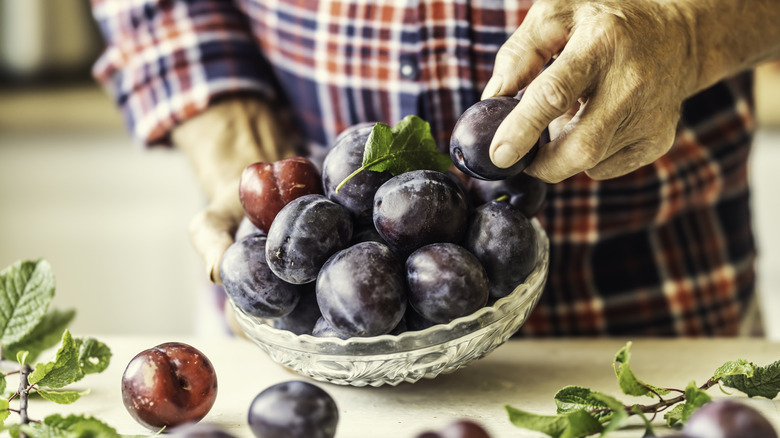
Plums have a reputation as being fairly watery, ultra mellow, and incredibly beautiful. Their mysterious purple coloring, coupled with a sometimes-yellow hue in the center makes them just about one of the most sophisticated-looking fruits out there, so let's play up on that by baking them into an upside-down cake. Slice the fruit in half, remove the pit, and place the cut side down at the bottom of the pan. You'll want to use a lot of butter and brown sugar to help them caramelize.
Use brown sugar in the cake batter as well, along with a hefty amount of vanilla. This combination will give the cake a caramel-like flavor, and the sticky plums will help to replicate that texture. Serve your plum upside-down cake with cardamom ice cream, sour cream ice cream, or bourbon-infused ice cream. Personally, sour cream ice cream is my favorite, as the tangy undertone helps to mellow the rich sweetness of the brown sugar. If you're one of those people who prefers the natural sweetness of fruit, just add a small sprinkle of brown sugar to the butter for the plums to swim in, and cut the brown sugar in the cake in half. If you're displeased with the lack of sweetness when the cake comes out, drizzle it with honey or maple syrup, or you can even glaze it. However, I find that if the fruit in an upside-down cake caramelizes properly, then there's little need for such quantities of sugar.