

10 Mistakes You're Making With Butternut Squash Soup
We may receive a commission on purchases made from links.
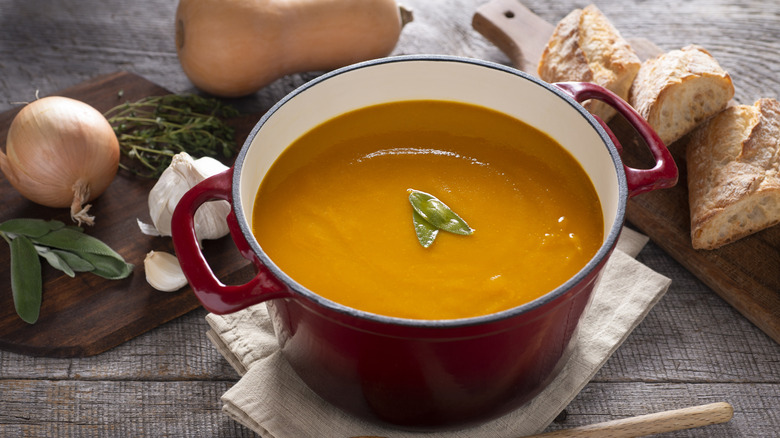
When the weather finally starts to cool down, pumpkins start to appear at seemingly every store you walk into, and apple pies start replacing popsicles, then you know it's time to embrace fall. One of the absolute best ways to do so is to lean into seasonal produce. There are so many delicious fruits and veggies to eat during the fall months, but butternut squash has to be one of our favorites. It has a subtle sweetness to it, along with a bold earthiness that lends itself well to savory flavors. When you turn that squash into a soup, it becomes the warming, comforting meal you need as summer slips into fall.
But even if you're a pro soup maker, there's a good chance that you're still making some mistakes when it comes to butternut squash soup. After all, it's not the simplest soup you could make, and it takes some practice to get it right. By reading up on some of the most common butternut squash mistakes, you can ensure you never make any of them again. Your next batch of butternut squash soup is about to be your best.
1. Forgetting to roast the squash first
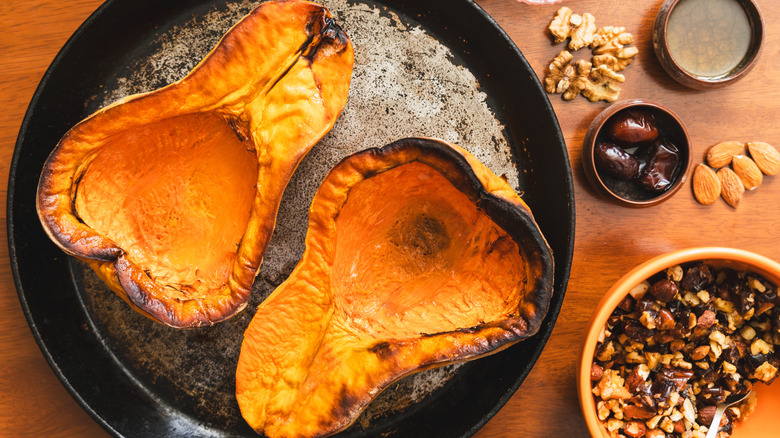
You're trying to get dinner on the table quickly, and the idea of going through the hassle of roasting your butternut squash before making the soup sounds like a complete waste of time. But hear us out when we say that this is an incredibly important step that you definitely should not skip. Roasting your squash is beneficial for many reasons. First of all, it softens the squash, which makes it much easier to turn into a smooth purée. Otherwise, you're liable to break your blender when you throw in a handful of raw butternut squash.
But roasting is also important to develop the squash's flavor since it concentrates the natural flavors of the squash and also brings out its sweetness as it starts to caramelize. This is what gives this soup its signature rich, savory-sweet profile. Make sure you don't skip this all-important step if you want to ensure the best bowl of soup possible.
2. Not topping it with something crunchy for texture
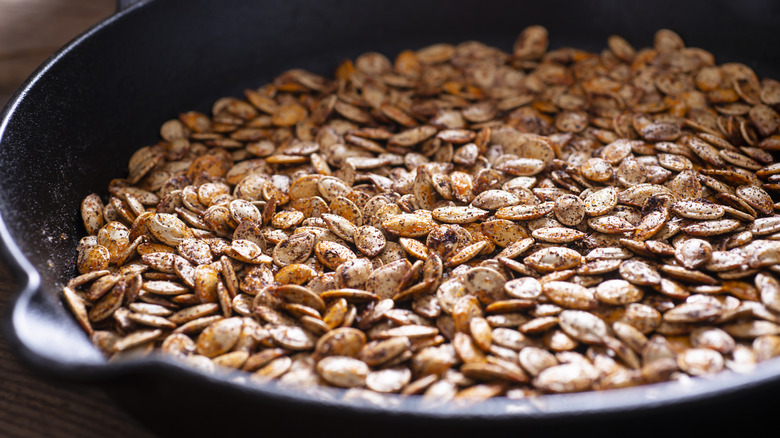
We love the flavor of butternut squash soup, but it's a dish that does have one major flaw: its lack of texture. Once you purée the squash and whatever other ingredients you're including in the mix, you get a baby food-like texture that's just not very appealing after a few bites. That's why it's so important to incorporate some other textures into the mix. Crunchy toppings work particularly well, since they create a super interesting textural contrast that'll keep you going back for spoonful after spoonful.
Roasted pumpkin seeds are great for creating crunch in your soup, and since they're also in season at the same time as butternut squash, it's a great excuse to pair them together. However, there are plenty of other ways to incorporate an element of crunch into your butternut squash soup. Croutons can be a nice touch, but just make sure they don't hang out in the soup for too long or they'll turn soggy. Crispy fried bacon or tempeh can also be an interesting addition if you're also looking for a way to add more protein to the dish.
3. Forgetting to sauté aromatics before adding them to the soup
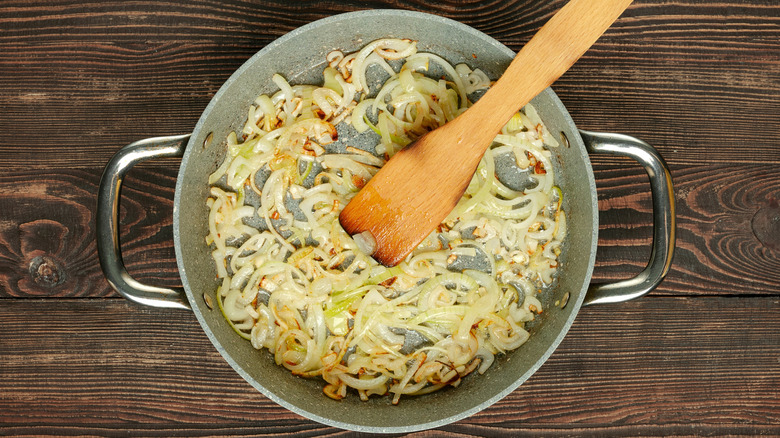
Have you ever made a butternut squash soup only to realize that it just wasn't very flavorful? There's a good chance that's because you didn't use any (or enough) aromatics. Or perhaps you did and you just didn't sauté them. But sautéing aromatics before adding them to your soup mix is an essential way to build flavor in the dish. This process, called sweating, helps the aromatics release their flavors, which then work their way into the final dish. Otherwise, you'll be left with a bland soup that doesn't have the interesting savory flavors you're probably trying to achieve.
So, which aromatics should you include in your soup? You can get creative with whatever you have on hand, but we particularly like working with onions, garlic, ginger, and leeks along with herbs like sage and rosemary. Make sure not to skip them if you want your butternut squash soup to taste as good as it can.
4. Assuming you have to add heavy cream to make the soup rich and creamy
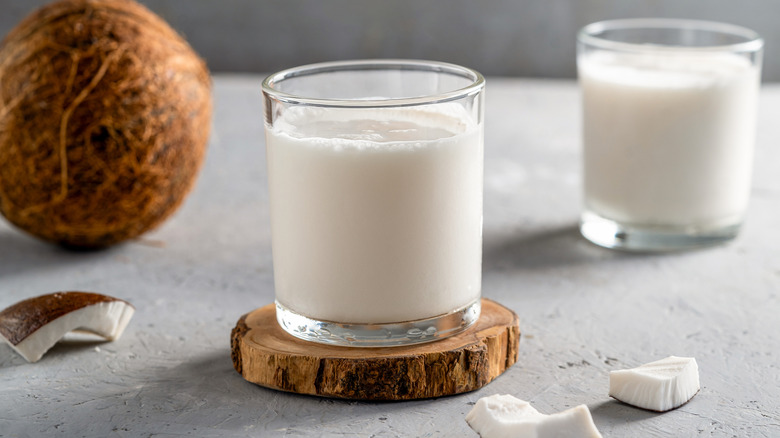
Take a close look at a lot of butternut squash soup recipes, and you might notice that they call for heavy cream. Because butternut squash itself doesn't have much richness or fattiness to it, incorporating a thick, creamy ingredient like heavy cream can make the soup much thicker, more substantial, and more satisfying. But just because you're looking for that kind of texture in your soup doesn't mean you absolutely have to use heavy cream.
An alternative you can use that's more appropriate for vegans or those who try to avoid too much dairy in their diets is coconut milk. Keep in mind, though, that you're going to want to find full-fat coconut in a can. The stuff that comes in a carton in the refrigerated section of the grocery store is going to be far too thin to give your soup the kind of creamy texture you're going for.
5. Adding in too many sweet elements
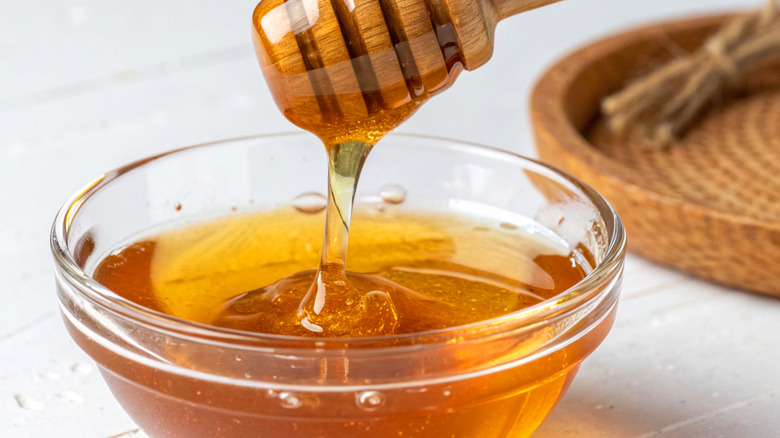
One of the best features of butternut squash soup is its ability to walk the line between sweet and savory. Sure, you're probably going to include a lot of savory ingredients, like the aforementioned aromatics, but at the same time, roasting butternut squash draws out its sweetness, which is a significant part of its appeal. Therefore, playing up that sweetness can be a really nice touch, especially when it complements the soup's saltier, more savory qualities.
However, it's far too easy to go overboard when it comes to incorporating sweet ingredients into your soup. A small drizzle of honey, for example, builds complexity in a soup, while too much honey can completely overpower the other flavors you're working with. When in doubt, start slow with the sweet ingredients. You can always add more if you feel like the soup is still lacking in sweetness, but you can't reduce the sugar content of your soup once you've added too much of it to the dish.
6. Not adding enough salt
Since butternut squash soup can be so bland on the textural front, it's really important that it delivers when it comes to flavor. This is why it's such a big mistake to not add enough salt to your soup. Without enough salt, butternut squash soup may taste earthy or even sweet, but it's still going to fall flat on the palate. Salt naturally enhances the other flavors, like sweetness, already in the soup and cuts down on bitter, sour, or other less-than-pleasant flavors.
Unless you're following a specific butternut squash soup recipe, though, it can be difficult to determine just how much salt you should add to the dish. Your best bet is to taste as you go. Every time you taste the soup and you feel like it's missing salt, add another small dash, stir, and taste again. Once you work through this process a few separate times, you'll gain a better understanding of just how salty you like your soup.
7. Forgetting to add liquid slowly
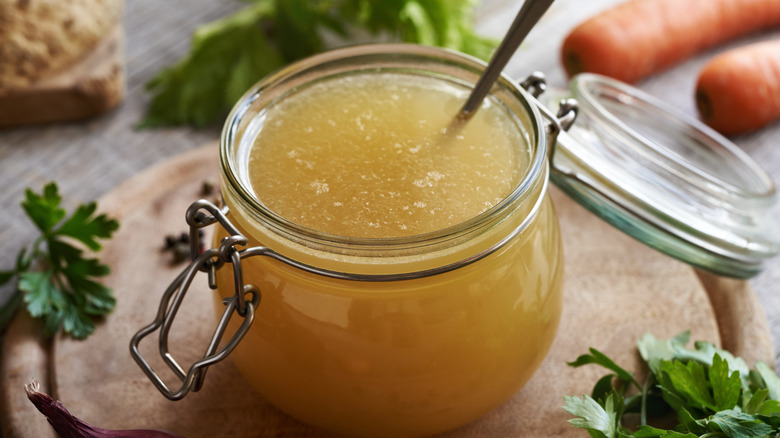
If you just throw some roasted butternut squash into a blender along with a few other solid ingredients, you're going to get a soup that's quite thick — too thick to truly enjoy. This is why you'll want to add some liquid, usually in the form of broth or stock, to the mix. However, unless you're measuring carefully, it's not a good idea to add a ton of liquid all at once. That makes it far too easy to add too much liquid to the pot, making your soup too thin with an unpleasant runny texture. And the only thing worse than super-thick butternut squash soup is super-thin butternut squash soup.
Therefore, you should treat liquid just like you do salt: Add it a little bit at a time to see what kind of effect it has on the soup. Once you've reached your desired consistency, you can stop adding liquid and let the soup simmer until all those flavors meld together perfectly.
8. Not stirring some bourbon into the soup

If you've added plenty of salt, aromatics, and creaminess to your butternut squash soup and find that it just keeps falling flat on flavor anyway, then you need to find a way to add a little extra complexity to the dish. Perhaps the best way to do that is to stir in a splash of bourbon. Sure, it may sound strange to the uninitiated, but cooking with liquor is a great way to incorporate the kinds of flavors you wouldn't be able to achieve any other way. A good bourbon has a distinct smokiness to it that works really well, and the various ingredients already in the soup cut down on the bourbon's intense bitterness.
So, what kind of bourbon should you use for your next batch of butternut squash soup? You should get one that's nice enough to drink on its own but that isn't necessarily high-end. After all, you're not really going to be able to taste its nuances in the soup anyway. Just make sure that you're not too heavy-handed with the bourbon, as it can detract from the other flavors you're working with.
9. Using a weak or low-quality blender
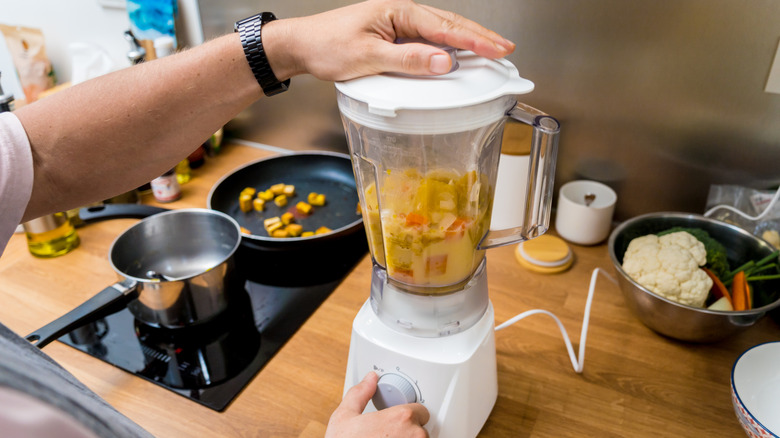
You know that super cheap blender you have in the back of your cabinets that you barely ever use? You know, the single serving-size one that works to blend up water and protein powder but not a lot else? Well, that blender probably isn't going to do the job when it comes to blending up all of your butternut squash soup ingredients. Even though you'll be roasting most of the ingredients that go into your soup, rendering them softer than they would be in their raw forms, you still need to be working with a blender that can tackle roasted butternut squash and potentially carrots, onions, and other vegetables.
If you do choose to use a weak or lower-quality blender, you're likely to end up with a chunky or just overall texturally unenjoyable soup. If this is a dish you plan to make on the regular, it may be a good idea to invest in a really solid blender, like the Vitamix E310 Explorian Blender. Once you start working with a high-quality blender, you'll never want to go back to your old one again.
10. Not including enough fat in the soup for richness and texture
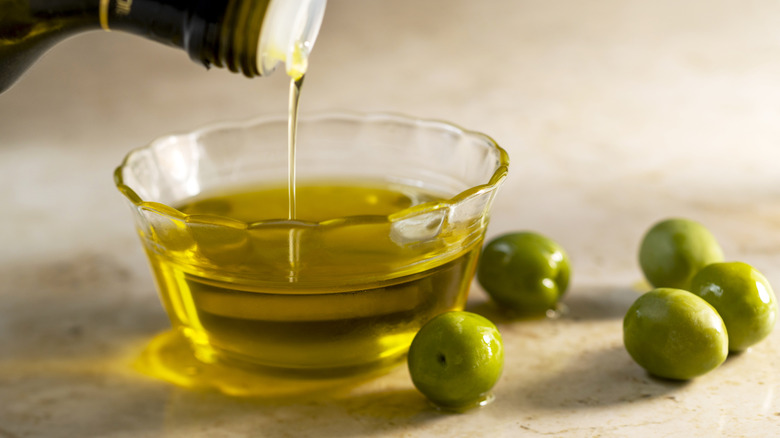
One reason we love butternut squash soup so much is the fact that it makes for a relatively healthy dish. It contains a ton of healthy produce that's packed with vital nutrients, and it's relatively light for a meal that's usually reserved for the cooler months of the year. But if you're just working with produce and other really light ingredients, then your soup probably isn't going to have the weight, depth, or texture that you're craving. This is why it's so essential to add plenty of fat into this soup.
There are so many ways to incorporate fat into the recipe. To keep things feeling relatively fresh, opt for a drizzle of olive oil. Many butternut squash soup recipes call for heavy cream or coconut milk. You can even add a pat of butter to the top of your bowl to keep things simple. Just don't forget this step if you want your soup to taste as rich and luscious as possible.