

Is It Necessary To Wash Fruit With Baking Soda?
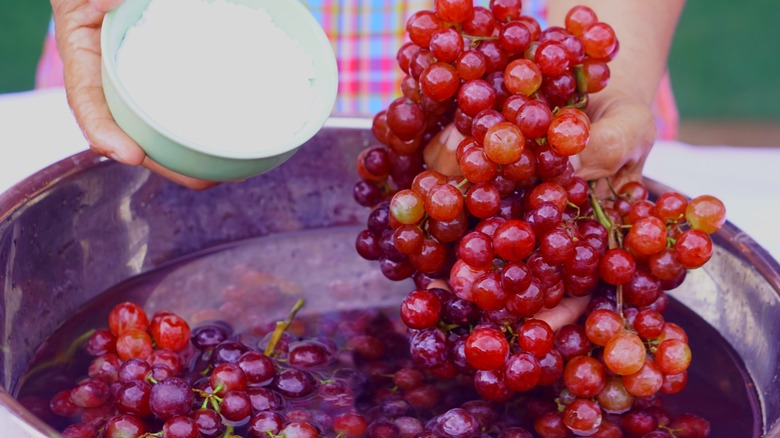
When you think too much about the germs, pesticides, and other yucky stuff on your fresh produce, you might never feel like biting into an apple again. Unfortunately, reported cases of foodborne illnesses associated with contamination from dangerous bacteria and viruses like salmonella, E.coli, and listeria have been increasing since 2024. This makes it more important than ever to learn food safety precautions that can protect you from illness.
You might have noticed a trend over the last few years of people claiming that washing strawberries or other fruit with baking soda removes dangerous germs. Baking soda is abrasive, which is why people swear by it as an all-natural cleaning agent. It doesn't contain any disinfecting or germ-killing powers, though, so it won't remove viruses and bacteria from your produce.
While baking soda is more effective than just using water at removing pesticide residue, it may actually be damaging to the skin of your fruit. According to a 2017 study published in the Journal of Agricultural and Food Chemistry, researchers indicated that it took between 12-15 minutes to remove pesticide residue from apples when soaking them in baking soda and water. Apples have a tougher skin than some other fruits and vegetables, and they can better withstand the abrasiveness of baking soda. Fruit like berries and grapes have delicate skin that may degrade when in contact with baking soda for that long. Regardless of the skin type of the fruit you're cleaning, using baking soda alone doesn't remove contaminants and pathogens that can cause serious illnesses.
How to properly wash fruit before eating
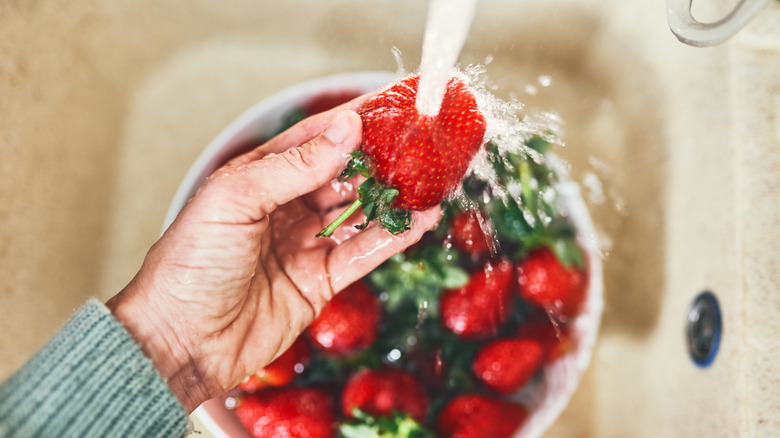
While no cleaning method will remove 100% of harmful microbes, the best way to wash fruits and vegetables is using clean, cool, running water. Don't wash fruit or produce before storing it, as storing it while wet may actually speed up bacteria growth and cause the food to spoil faster. Before washing fruit or produce, wash your hands and any food preparation surfaces or containers you plan on using.
One of the biggest food safety myths is that you don't need to wash fruit like oranges and melons that will be peeled. Though you will remove the peel, any germs that are on it when you cut the fruit open could still contaminate the fruit underneath, so you should still wash fruit that will be peeled before eating. Hold it under cool running water for 20 seconds while rubbing the surface of the peel with your hands. Melon skins can be cleaned gently with a vegetable brush under running water.
To wash grapes, strawberries, and other fruit that won't be peeled, rinse them under running water, soak them for 10 minutes in a bowl of clean water and a teaspoon of baking soda, and then rinse again. Don't soak or wash fruit in any type of cleansing agent or disinfectant, including dish soap, hand soap, or bleach. It is also safer to buy fruit that hasn't already been cut or prepared, as that process increases the risk of pathogens coming into contact with the fruit.