

The Difference Between Cane And Beet Sugar, Explained
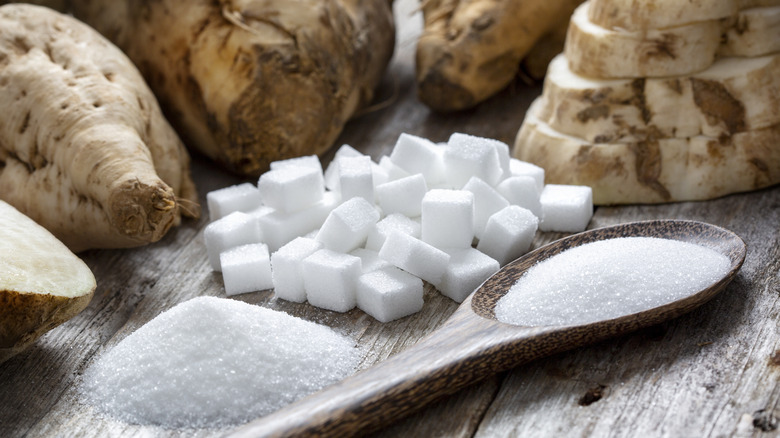
Both cane and beet sugar are harvested from plants and used to produce sucrose, which is then refined into a white granulated sugar, brown sugar, or molasses. Cane and beet sugar are chemically identical, which means that they are going to behave in similar ways when used for cooking or baking. While many people don't notice a difference in taste between the two types of sugar, those with a refined palate can detect subtle differences. Some people find that beet sugar has a neutral taste that isn't very sweet, and some detect an earthy, burnt sugar flavor. Others think that cane sugar has a sweeter, richer flavor with under-notes of caramel or molasses.
The two sugars also affect the texture of food and baked goods differently. Cane sugar retains some natural molasses during the refining process, making it much easier to caramelize. It also creates a softer, more tender crumb when baking cookies, cakes, and brownies. Beet sugar adds a crunchier texture to foods and baked goods and doesn't caramelize well. Some chefs also notice that brown sugar made from beet root results in a dryer baked good, and therefore prefer to use cane sugar. Cane sugar is very versatile and can be used in almost any form of baking and cooking, while beet sugar is more widely used in food processing plants and production facilities.
When should you use cane sugar vs beet sugar when baking?

If you need to caramelize sugar for crème brûlée, you should use cane sugar. You should also use cane sugar if you are baking or cooking something that needs an added boost of sweetness or needs to retain a delicate flavor or texture — cane sugar has a sweeter and more complex flavor profile. You should use beet sugar if you are cooking or baking something that needs a little extra crisp or crunch, like crunchy chocolate chip cookies, peanut brittle, or kugel.
Cane sugar is less refined, so some chefs and bakers prefer it for its natural properties. Beet sugar requires immense amounts of water and pesticides for growth and it is highly refined after being harvested. This makes it less sustainable than cane sugar and harder to find in organic or GMO-free varieties. However, beet sugar is often used in vegan recipes, like pies and cornbread, because its refining process doesn't require the use of animal products or byproducts. Some cane sugar processing facilities use bone char to remove impurities and give the sugar its white color.
Ultimately, for everyday cooking and baking, the differences between the two sugars are so small that they can be used interchangeably. After tasting each sugar for yourself and trying it out in a recipe or two, you will quickly develop a preference for one over the other. The main differences to remember are the taste and refining process for each type of sugar.