

The 3 Words That Help You Keep Only What Matters In Your Kitchen
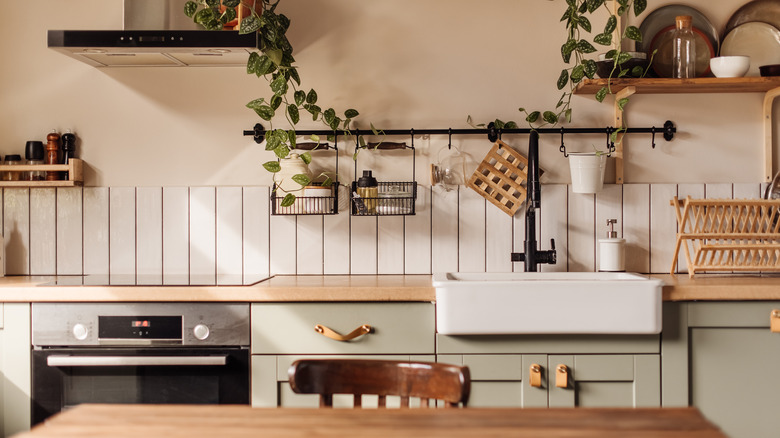
Kitchen drawers and cabinets have a way of filling up without intention or encouragement, and clutter breeds more clutter. An extra whisk from a wedding registry seems to lead into a half-melted spatula you swore you'd replace, adding to the chaotic nest of lidless containers you keep out of habit. Over time, these items crowd out the tools you actually use and make what should be a space of utility feel overwhelming and discombobulated. Instead of waiting for a major purge, a simple three-word filter can guide everyday decisions: "best," "favorite," and "necessary." It's a mantra short enough to remember in the moment but flexible enough to respect both function and sentiment.
"Best" makes you consider quality. Do you really need three sheet pans, or do you reach for the one that heats evenly and never warps? That's the keeper. "Favorite," on the other hand, is about joy. Maybe you own sturdier, matching mugs, but the slightly chipped, vintage McDonald's collectable cup you reach for every morning deserves a permanent spot. "Necessary" is in regard to practicality. The garlic press might not be beloved, but if it saves you time each week, it's earned its place. Items that fail all three tests reveal themselves quickly once you start asking the tough questions.
Unlike more rigid decluttering systems, this one doesn't force you to strip down to bare essentials. It leaves room for sentiment and acknowledges that usefulness doesn't always look shiny. It's also immediate and continuous, because you can apply it to a single drawer the moment you open it as you go about your next cooking project. You'll certainly feel the difference the next time you're cooking in the kitchen.
Managing the best, favorite, and necessary in your kitchen

The power of the mantra shows up in neglected corners. Check the knife block; are you keeping a coterie of dull blades or sharp ones with bizarrely obscure purposes (unless you actually eat a lot of fish)? Look in the baking drawer. Do you really need three rolling pins, or is there one that does the job every time? What about the linens? Is that massive back stock of ratty kitchen towels necessary? Even under-the-sink storage should be examined, where cleaners, sponges, and empty spray bottles pile up. This space is one of the most overlooked, but it's where expired products and forgotten duplicates often hide.
Just as clutter snowballs, working drawer by drawer builds momentum. Each time you apply the test, you're left with items that are either better quality, genuinely enjoyable, or clearly useful. The payoff is functional, because cooking gets easier when you're not rummaging past dull knives or burned pans to reach the tools you love. Even cleaning speeds up when there are fewer objects to shuffle around.
Additionally, the meaning of the mantra evolves with you. A college student with one pot and a wooden spoon will have a different idea of "necessary" than a parent cooking nightly meals. Your "favorite" mug might eventually crack, making way for another. The test doesn't lock your kitchen into minimalism; it gives you a framework to make ongoing choices as your life shifts. Pair it with other simple habits, like asking whether an item sparks joy or starting a seasonal tradition of a deeper sweep before holidays, and you'll keep clutter from sneaking back. The best kitchens aren't the ones with the most gadgets, but the ones where every tool dutifully (and consistently) serves its purpose.