

13 Retired '90s Candies We're Nostalgic For
We may receive a commission on purchases made from links.
Look at the biggest trends, TV shows, and movies from the last few years, and one thing is clear: '90s nostalgia is a seriously profitable business. Those who remember the last decade of the 20th century are willing to pony up quite a bit of cash to see a return of their all-time favorites, from fashion to music to interior design.
For those who were kids in the '90s — or kids at heart — there are some specific things you might associate with the decade. Things like cartoons, video games, and of course, candy. What did you save up your allowance to buy? What TV commercials made you think candy bars could actually be magic?
If you want to revisit those '90s favorites, there are plenty of classic candies you can buy today. Major hits like Bubble Tape and Sour Patch Kids are still readily available. But some candies of the era are seemingly gone for good. Despite online petitions, endless social media posts, and the consumer power of nostalgia, some people will have to savor their favorite sweets in memory only.
Shockers
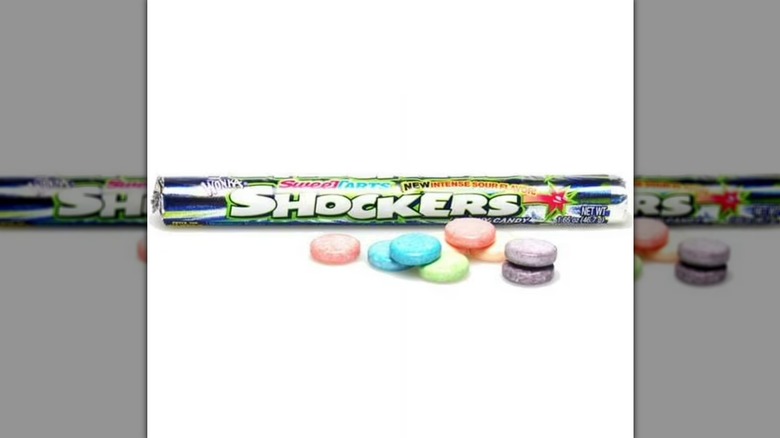
Most '90s kids will fondly remember Shockers, chewy candy bites that capitalized on the decade's sour craze. The origins of the candy actually date back to the 1960s, when Sunline Inc. (later renamed Sunmark Candy Company) released a mouth-puckering treat called SweeTarts.
SweeTarts used the same recipe as the sugary powder that makes up Pixy Stix and Fun Dip. Nestle eventually acquired the company, and in the early 1990s, it released a revamped version of the product; it was now called Shockers and fell under the umbrella of the Wonka Candy Company brand. The candies were packaged to reflect both the Wonka brand and the trends of the '90s; bright, colorful packaging that emphasized their powerful sour punch.
Shockers were seemingly everywhere, and for many, were one of the best — and strongest — sour candies around. Eventually, Shockers were replaced by SweeTarts Chewy Sours, which were also later discontinued. Today, original and chewy SweeTarts — minus any sour designation — are all that's left of the once-popular candy.
Butterfinger BBs
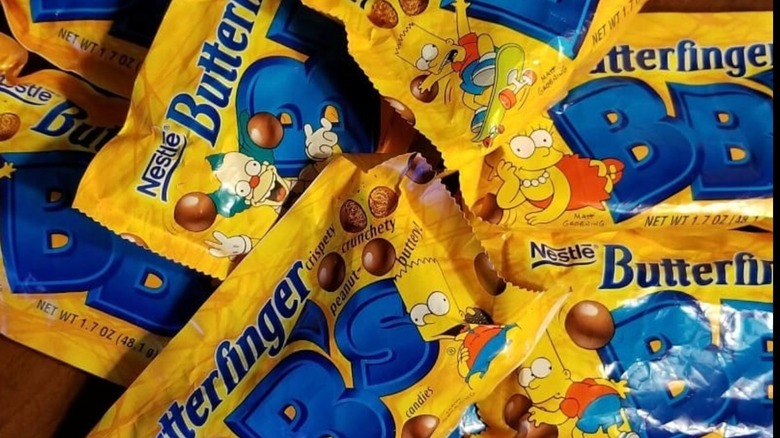
Butterfinger BBs were little, spherical versions of the iconic sweet candy bar. The bite-sized Butterfinger balls were extremely popular, due in part to their ad campaign featuring "The Simpsons." The familiar faces of the titanically popular television show certainly helped boost the candy's cool factor among the '90s youth, but it made a name for itself on snackability alone. Many preferred them to the original candy bar due to their lighter texture and small size, and they were ubiquitous at movie theaters during the decade.
However, while "The Simpsons" have stood the test of time, their confectionery friends did not fare as well. What happened to Butterfinger BBs? Well, the candy was discontinued in 2006, much to the confusion and anger of its countless fans. Unfortunately, despite their popularity, Butterfinger BBs are a thing of the past, so now we all must make do with the classic candy bar.
Magic Ball (and then Wonder Ball)
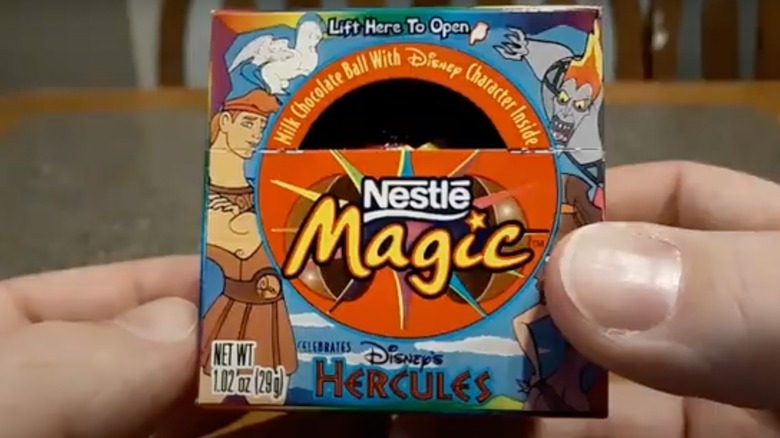
For some reason, this candy had '90s kids completely obsessed. It may be because it combined two of their most profound interests: sugar and toys. Pez did this 40 years prior with their character-themed dispensers, and Magic Ball took the formula and inverted it; this time, the candy would hold the toy, not the other way around. Essentially, they were large, hollow chocolate balls that, upon being opened, revealed a small toy, always a popular Disney character at the time — think Buzz Lightyear or Hercules. The foil-wrapped balls were the stars of some of the most iconic '90s TV commercials.
This was extremely exciting for the young consumer, but it was also apparently extremely dangerous; it was discontinued in 1997 due to choking hazard concerns. It was brought back as Wonder Ball — this time with an edible candy inside instead of a toy — but it was never the same. That, too, was eventually discontinued in 2007 — but revived once again in 2016.
Soda-Licious
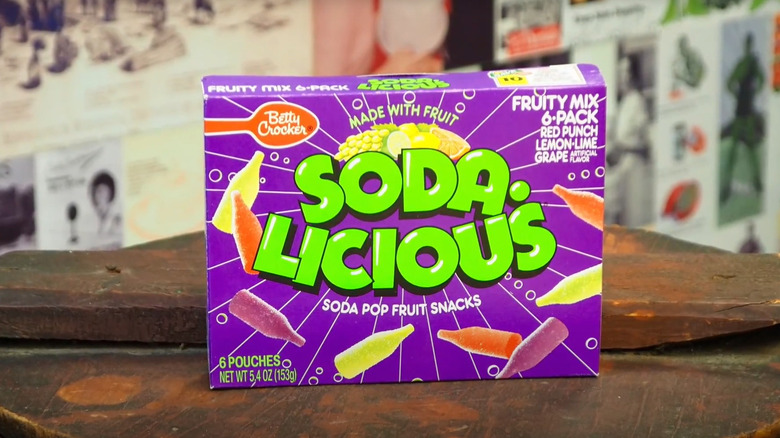
While the Betty Crocker name is most associated with cake mixes, the General Mills brand was also the home of the most beloved chewy candies of the '80s and '90s, like Fruit Gushers and Fruit by the Foot. But while those products have stood the test of time, one Betty Crocker candy never made it to the new millennium.
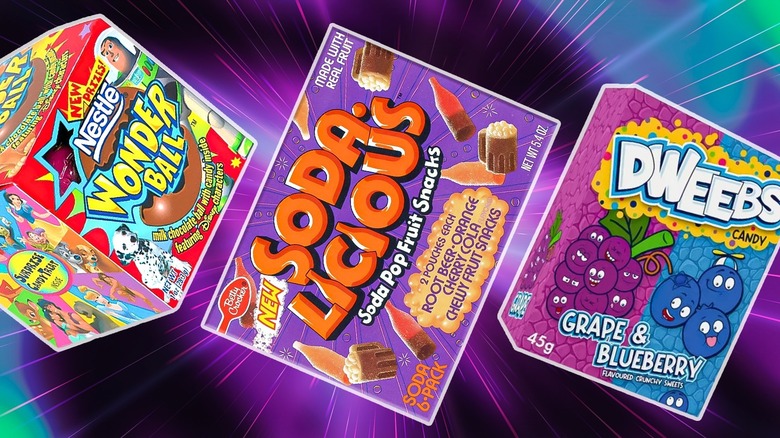
One such candy was called Soda-Licious, which was a gummy shaped like a glass soda bottle. Soda-Licious was a sugary snack that offered a variety of flavors, each inspired by soda. Each pack of Soda-Licious contained delicious, chewy bites with fun flavors like orange, grape, root beer, and cherry. The soda concept was driven home by the candy's fizzy coating, which evoked the sensation of carbonation. The candy quickly became a kid favorite, but its bright light burned out all too quickly. It disappeared in 1998, after a few years of dwindling popularity. Now, kids must look elsewhere for their soda-candy combo.
Dweebs
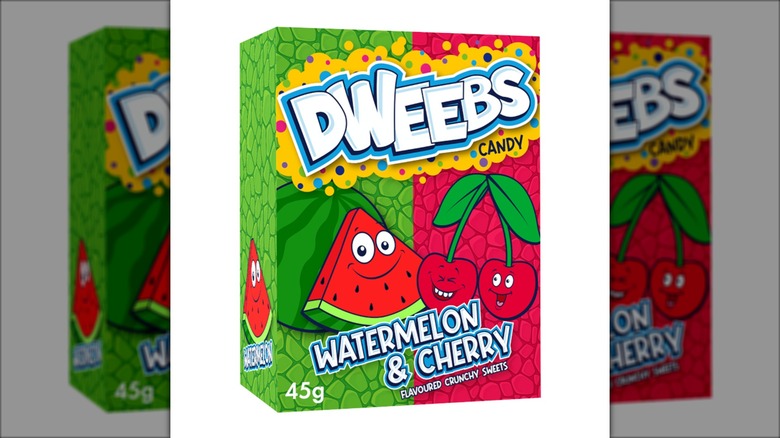
Dweebs were introduced in the early 1990s by the Wonka Candy Company as a companion to Nerds (Nerds, Dweebs, get it?). They were pretty similar to Nerds, but with a few minor differences. They were slightly larger and softer than their counterparts, and came in different flavors, such as orange, cherry, and strawberry. One other difference was in the packaging; while Nerds boxes have two compartments, each with a different candy flavor, Dweebs had three different flavors in each package.
Unlike Nerds, which remain very popular, Dweebs only survived a few years. This could be because the two products were not distinct enough, and Candy Town wasn't big enough for both of them. For whatever reason, Dweebs could never match up to their nerdy sibling and were discontinued soon after launching. They disappeared almost without a trace, and searching the internet for the story behind the discontinuation will mostly yield results from loyal Dweebs fans trying to do the same.
The good news is that the candy was reintroduced in 2022; the bad news is that it was only in Europe. That being said, Dweebs fans in North America can order them online, as long as they are willing to pay for the additional cost of international shipping. Interestingly, the revived version of Dweebs is now packaged as two compartments instead of three.
PB Max
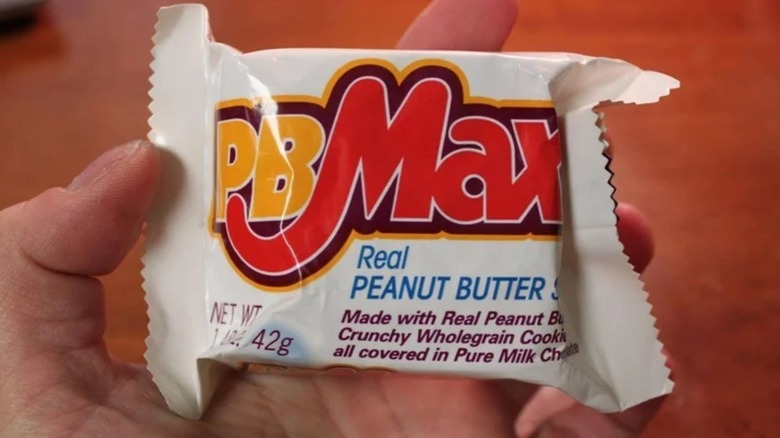
Mars launched PB Max in 1989. The candy bar consisted of a cookie base topped with peanut butter, all enrobed in chocolate. Its texture set it apart from Reese's, and it became a favorite for many. Like many products of the era, its name suggested something extreme, cool, and adventurous.
Sounds good, right? Consumers thought so too, and it was a commercial success. But for some mysterious reason, they were still discontinued by Mars by 1994. A persistent rumor surrounds the decision, claiming it was made on personal grounds. Word is that the discontinuation was actually due to a Mars family preference; the family still ran the company at the time, and apparently, they were not fans of peanut butter. If true, it is a difficult choice to understand. Not only was the product selling well, but many '90s peanut butter candy lovers were severely put out.
String Thing
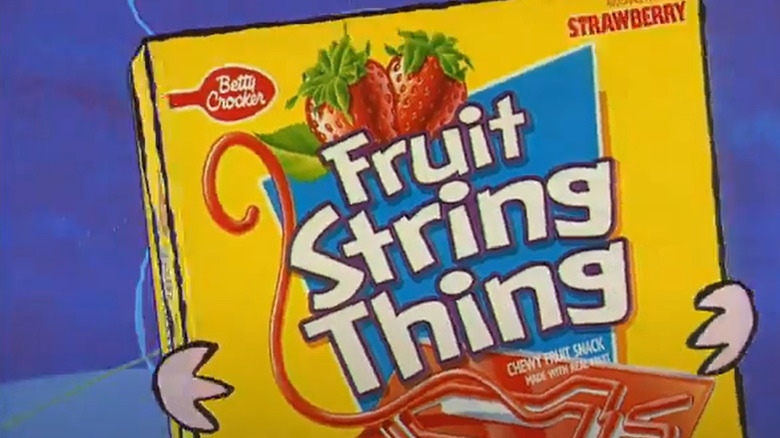
This aptly named candy was, well, a string thing. A long, thin, tubular piece of fruity gummy was attached to a piece of cardboard, allowing kids to slowly pull the noodle-like candy away one bite at a time. It was what the '90s candy world was all about: products that were fun, hands-on, and imaginative. The candy wasn't just a sweet bite; it was an experience. Ads showed energetic kids pulling the candy from the paper excitedly, "ooh-ing" and "aah-ing" at its cool factor. Its name also lent it some coolness; it was weird and slightly aloof.
String Thing was another candy from the confectionery minds over at Betty Crocker. Unfortunately, despite the product's unique packaging and exciting interactivity, it went the same way as Soda-Licious. String Thing disappeared by the mid-2000s, tragically leaving future generations without a zany, cardboard-connected treat.
Tongue Splashers
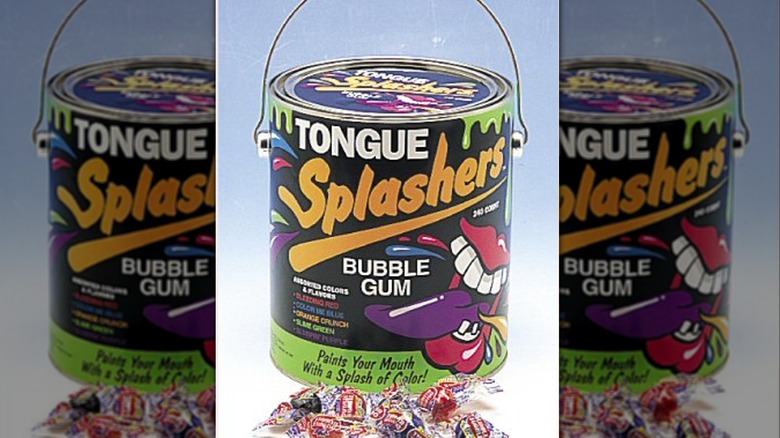
Tongue Splashers took the novelty-obsessed candy market by storm in 1993. The candy was cleverly packaged in a neon-bright container designed to resemble a bucket of paint. As the name suggests, Tongue Splashers had the ability to dye your tongue bright colors. This was, in fact, a selling point for kids. Tongue Splashers were just gum balls, but their pigmented, splashy center made them something new. The product was exciting and fun, colorful, and a standout in the candy aisle.
Unfortunately, Tongue Splashers may have captured the zeitgeist a little too well, and as time went on, the product could not be sustained solely on novelty. The tongue-painting gumballs bowed out in 1999, making way for a new generation of sugary sweets. Although Tongue Splashers did not have a lot of market longevity, Dubble Bubble (the original manufacturer) has a modern alternative that just may satisfy your craving: Painterz mouth-coloring gumballs.
Bonkers
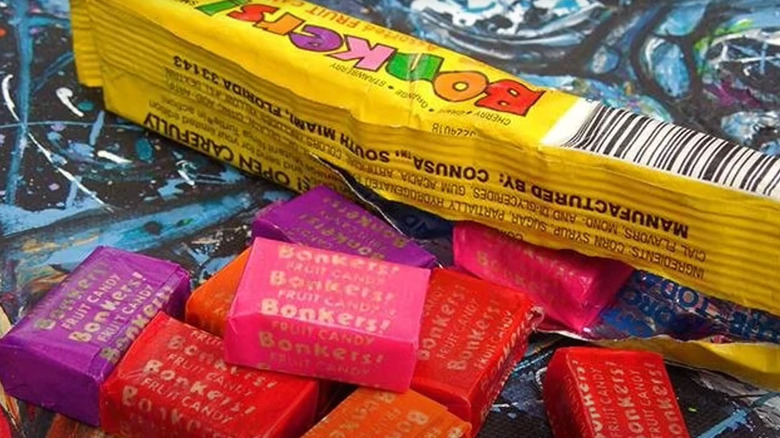
Nabisco unleashed Bonkers fruit candy onto the market in 1985, and it was something that felt truly novel. Sure, it was a package of stacked, chewy, fruity squares, which hadn't been anything new for decades. But biting into one of those squares revealed its true, sugary brilliance. The chewy, tangy outside layer of each piece gave way to a softer, sweeter, juicier center. It created a candy that was complex in both texture and flavor, while also being a lot of fun to eat.
But Bonkers' real impact on the candy world came with its ad campaigns. Beginning in the '80s, Nabisco started a series of television ads that showed dull, dour people biting into Bonkers and being crushed by giant pieces of fruit as they laughed hysterically. The tagline? "Bonkers! Bonks you out!" Then, in 1989, the candy partnered up with the cultural phenomenon that was "Teenage Mutant Ninja Turtles." Bonkers had become one of the most media-present candies out there.
However, over the course of the '90s, the ad campaigns slowed, and Bonkers became more difficult to find on shelves. Despite those splashy early years, the candy quietly disappeared in the late '90s. That could very well have been the end of Bonkers, but in 2012, a glimmer of hope emerged when Leaf Brands purchased the trademark for the candy. The initial plan was to start distributing the candy in 2015, which then got bumped to summer of 2018. So far, we're still waiting. Bonkers fans are holding on to hope, though, since the company still lists Bonkers on its website.
Starburst Hard Candy
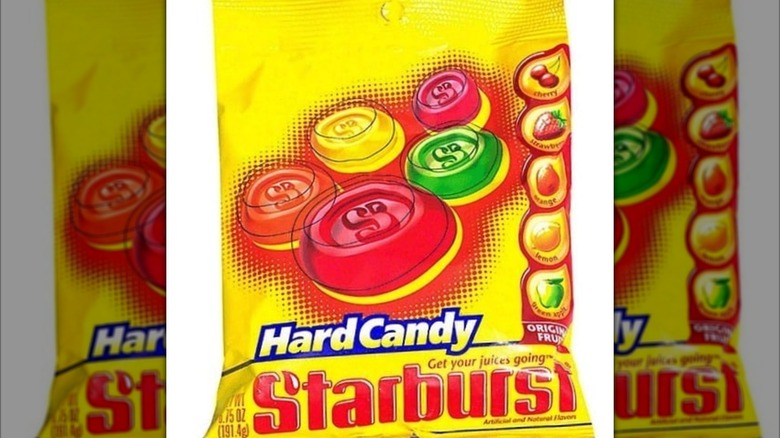
Likely introduced as an answer to the popular hard candy Jolly Ranchers, the exact release year of Starburst Hard Candy is somewhat unclear. They were the antithesis of the original Starburst candy, which is juicy, soft, and chewy. They did, however, follow the Starburst tradition of bright, fruity flavors. They came in the classic strawberry, orange, and cherry flavors, but also came in apple flavor.
Like so many new candies of the time, marketing efforts targeted the too-cool, perpetually bored youth. TV commercials pitched Starburst Hard Candy as the ideal cool candy for disaffected teens who found their lives brought back to life after a taste of the stuff. Unfortunately, the candy never really measured up to its competition and was discontinued in the 2000s. It's another variety on a long list of Starburst flavors and spinoffs that were eventually pulled from market shelves; who among us does not remember Berries and Crème?
Life Savers Holes
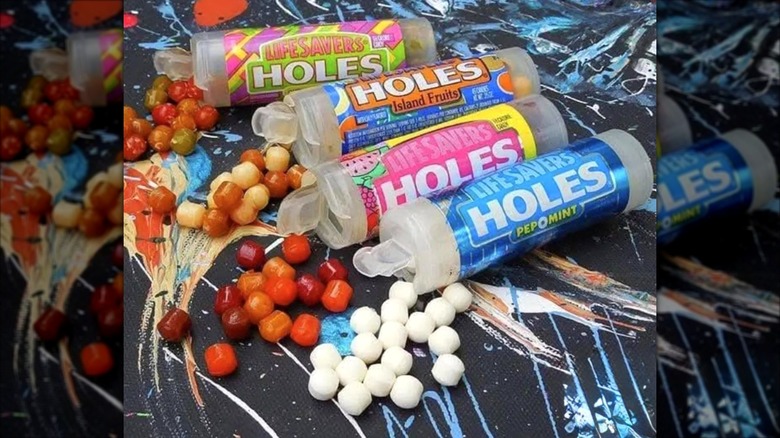
Have you ever eaten a Life Saver and wondered, What happened to the center? Probably not, but Life Savers took up the call anyway. Life Savers Holes, introduced in the early '90s, were simply the punched-out pieces of regular Life Savers. Essentially, they were small, circular Life Savers candy balls. It was a smart idea, as it essentially created a new product from a byproduct of the original, and it became a popular micro-snack. Cute television ads showed Life Savers Holes as babies, cared for by their doting parent Life Savers.
One might assume that the product was too similar to the original to survive, but that's not what really happened to Life Savers Holes. Life Savers were packaged in coin-like rolls, so Life Savers Holes were packaged in a plastic tube to allow for easy pouring. Unfortunately, this packaging was the downfall of the product. In several incidents, kids bit off the plastic flip-top cap and either swallowed it or choked on it. The product was quickly discontinued as a choking hazard, making its name a lot more ironic than was probably intended.
Bubble Beeper
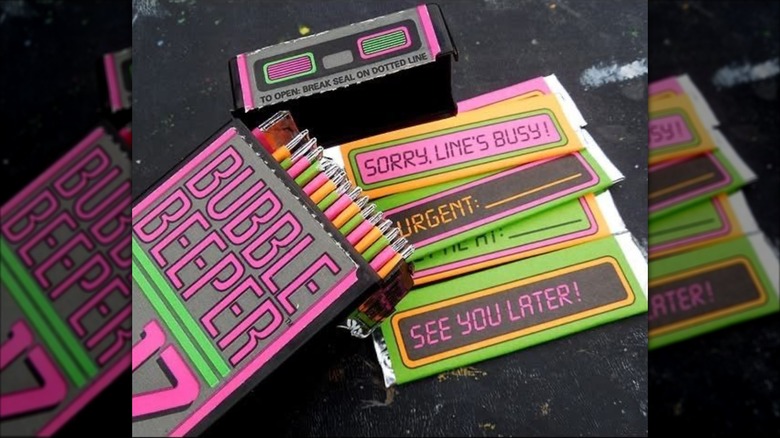
Bubble Beepers were playfully packaged, brightly colored bubble gum strips that were introduced in the early '90s. The name was a reference to beepers, a common communication tool at the time that allowed people to send very brief messages and their phone numbers to another person. The wrappers on the individual strips of gum displayed typical phrases one might send via beeper.
The fact that we need to explain this now-archaic technology is probably a hint as to why this candy no longer exists. But in fact, it may not just be its lack of relevance that caused its removal from the candy aisle; beepers had a rather unsavory association at the time that had '90s parents scandalized. At the time, the low-tech and easily anonymized mode of communication was used by drug dealers to communicate. While all kinds of people used beepers back then, the connection stuck. This gave the innocent bubble gum candy some unexpected baggage, and it likely played a part in its downfall.
Reese's Peanut Butter Bites
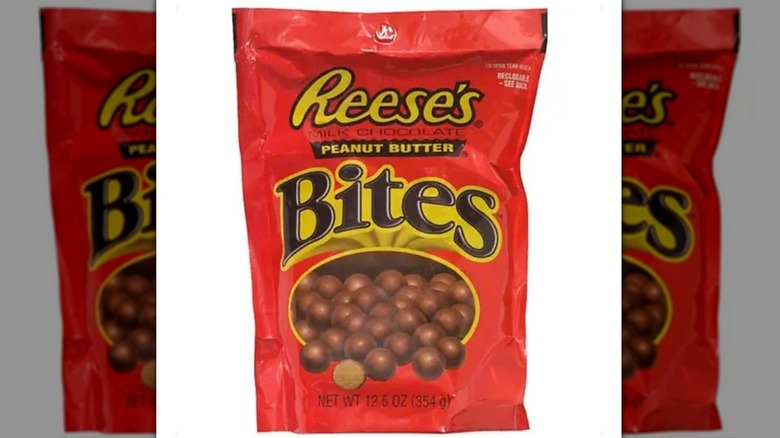
Reese's wanted a piece of the market that products like Whoppers and Butterfinger BBs were dominating; candy bar favorites were being turned into bite-sized treats. The brand made its attempt in Reese's Peanut Butter Bites, small balls of peanut butter with a chocolatey coating. Like so many Reese's candy varieties, these were widely adored: What's not to love about endless orbs of Reese's with a perfected peanut-butter-to-chocolate ratio? The only drawback to the candy was how difficult it was to put down, let alone share.
Despite being a favorite for movies at home and in theaters, the company did not keep them around for long. They were discontinued in 2007 due to choking hazard concerns (something of a theme here). It became another recent Reese's product to bite the dust; Reese's Swoops, which were thin, peanut butter-swirled chocolates shaped and packaged like potato chips, joined the list of discontinued snacks just one year earlier in 2006.