

Stop Ruining Your Sandwiches By Storing Them In Plastic Baggies
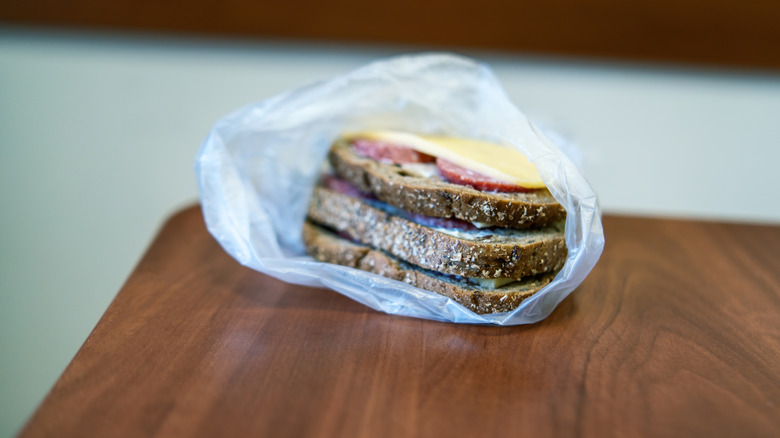
Skimping on the moisture component is a major sandwich-building no-no. No one likes biting into a dry sando. However, that moisture component means (shocker) wetness — and when water molecules get trapped with no place to go, it can lead to soggy bread. For this reason, ditch the plastic sandwich bags for wrapping and storing your sammies.
Whether packing a lunch or storing sandwiches for later enjoyment, plastic sandwich bags and plastic clingfilm both trap moisture inside and cause the bread to become soggy. Sandwiches are arguably the most easily portable entrees in the food world. They can even be pre-assembled ahead of time for hosting events like tea parties (bring out the finger sandwiches!), but transporting or storing that plush, absorbent bread in plastic wrapping is a surefire way to degrade all your prep work.
Instead, opt for a porous wrapping material that allows the sandwich to breathe. Parchment paper makes a fabulous fit for the job. The material is often used to prevent baked goods from sticking to trays and pans in the oven. But, versatile parchment paper is made from cotton fiber or a wood pulp blend treated with a thin layer of silicone for moisture resistance – an ideal tool for wrapping and transporting bodega-worthy lunches. Porous parchment paper allows foods to breathe by keeping the airway passages open. An airtight seal may be necessary to prevent oxidation during long-term storage, but for wrapping a sandwich short-term, blocking off the airways is neither necessary nor beneficial.
Plastic bags trap moisture, leading to soggy bread
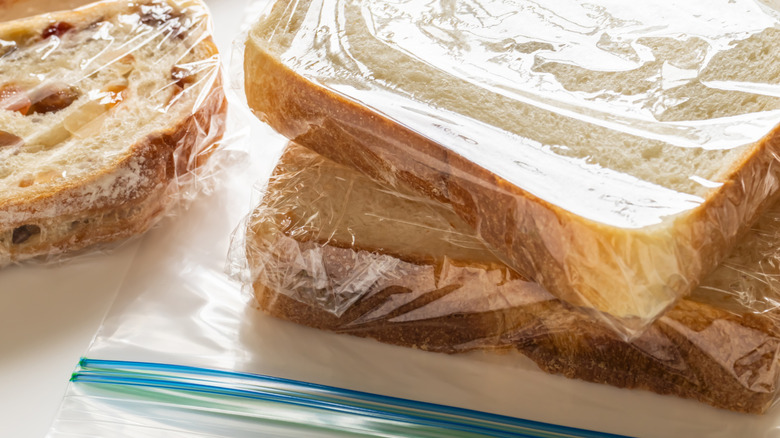
Wrapping sammies in parchment paper isn't just better for the meal, it's also better for the environment and the body. One plastic bag takes between 100 to 1,000 years to fully decompose. This is because plastic bags are made from petroleum-based polyethylene, a material designed to resist organic decomposition processes. Instead, prolonged UV-ray exposure gradually breaks those plastic sandwich bags down into smaller and smaller fragments (hello, microplastics!). While its thin silicone coating prevents parchment paper from being compostable, parchment paper naturally breaks down within several weeks up to a few months – a much shorter duration compared to plastic wrap and without the fragmented shedding. Ditch those plastic bags to keep synthetic polymers out of landfills, and to keep microplastics out of the body. Just fold up a snug parchment paper swaddle and transport your sammy in style, sans sogginess.
Another pro-tip for keeping sogginess at bay: Lightly toast one side of your bread in a toaster oven. Alternatively, foodies can even smear their wet ingredients directly onto the meat or cheese filling rather than onto the bread, facilitating minimal moisture exposure. This strategy can be particularly helpful when pre-making sandwiches ahead of time, in cases when they will be sitting for a while before being eaten. To help foodies construct the world's greatest sandwich, we've rounded up 11 more common mistakes that everyone makes with building sammies.